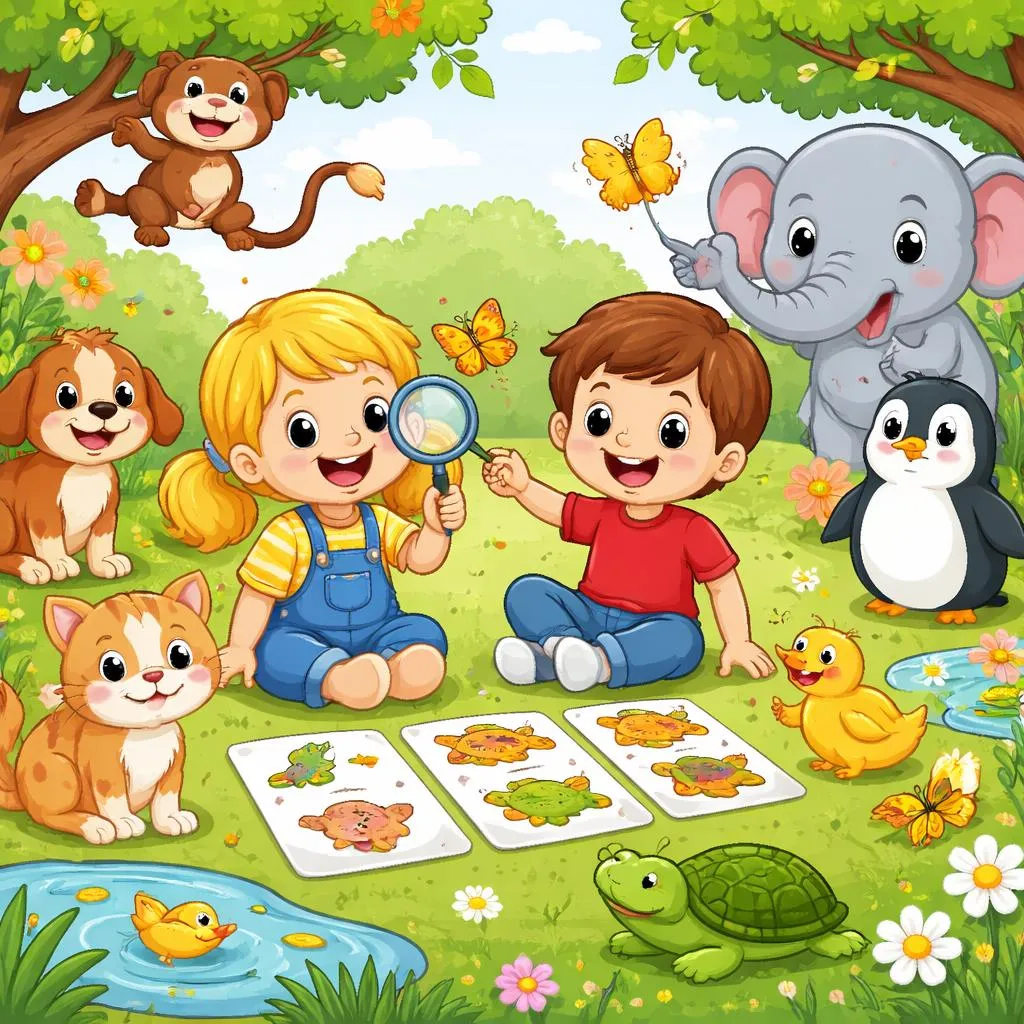

What is basic animals?
Hello, animal friends. Today, we are going to learn about some of the most wonderful creatures on Earth. We are going to learn about basic animals. What are basic animals. They are the animals that are most common and easiest for kids to learn about. They are the animals you see in picture books, in songs, and maybe even in your own home.
Think of basic animals as your first friends in the animal kingdom. They are the ones with simple names and shapes that are easy to remember. A dog, a cat, a bird, and a fish are all basic animals. Learning the names of basic animals is a fun and important first step. It helps you talk about the world around you. Let's start our animal adventure.
Meaning and explanation
So, what do we mean by basic animals. These are the animals that are most familiar to children. They are often the first words we learn for animals. Basic animals are usually easy to recognize. They have clear features. A dog has four legs and barks. A bird has wings and feathers. A fish has fins and lives in water.
Knowing the names of basic animals helps you build your vocabulary. It is the starting point for learning about more animals later. When you know basic animals, you can follow simple stories. You can sing songs like "Old MacDonald Had a Farm." You can tell your mom about the dog you saw at the park. Basic animals are the building blocks of your animal knowledge.
Categories or lists
We can put basic animals into groups. This makes them easier to learn. Let's look at three main groups of basic animals.
Pets: These are animals that live with people in their homes. They are our friends. Dog: A furry friend that barks and wags its tail.
Cat: A soft animal that purrs and meows.
Fish: A colorful animal that swims in a tank.
Rabbit: A soft animal with long ears that hops.
Hamster: A small, furry animal that runs on a wheel.
Farm Animals: These animals live on farms. They give us food like milk and eggs. Cow: A big animal that says "moo" and gives us milk.
Pig: A pink animal that says "oink" and likes mud.
Sheep: A fluffy animal that says "baa" and gives us wool.
Chicken: A bird that says "cluck" and lays eggs.
Duck: A bird that says "quack" and swims in ponds.
Common Wild Animals: These animals live in forests, jungles, or near our homes. Lion: A big, strong cat with a mane. The king of the jungle.
Elephant: A very big animal with a long trunk.
Monkey: A playful animal that swings in trees.
Bear: A big, furry animal that likes honey.
Bird: An animal with feathers and wings that can fly.
Daily life examples
You can see and talk about basic animals every day. Here are two fun places to look.
In Your Own Home or Backyard: Do you have a pet. That is a basic animal right in your house. You can say, "This is my dog, Max." Look out the window. You might see a bird on a tree. You can say, "I see a bird." Even a little spider in the corner is an animal. Your home is a perfect place to start learning about basic animals.
At the Playground or Park: When you go to the park, look around. You might see a squirrel running up a tree. You can say, "Look, a squirrel!" You might see ducks in a pond. You can say, "The ducks are swimming." You might even see a butterfly. You can say, "A butterfly is flying." Pointing out and naming basic animals on a walk turns it into a fun discovery mission.
Printable flashcards
Printable flashcards are a super way to learn about basic animals. You can create "Animal and Sound" cards.
Make cards with pictures of animals on one side. On the other side, write the animal's name and the sound it makes. For a dog, the back would say: "Dog. Sound: Bark!" For a cow, it would say: "Cow. Sound: Moo!" Kids can look at the picture, guess the name and sound, then flip the card to check. This builds vocabulary in a fun, interactive way.
Another great printable is a "Habitat Sorting" mat. Create a simple poster with three sections: "Home (Pet)," "Farm," and "Forest/Jungle." Then, print out small pictures of basic animals. Kids can sort the animals by where they usually live. Does the dog go in "Home" or "Farm." This teaches categorization and animal homes.
You can also make a "Baby Animal Match" game. Create cards that show adult animals and their babies. One card shows a cat, and the matching card shows a kitten. Do the same for dog/puppy, cow/calf, and chicken/chick. Kids can play a memory game to find the matching pairs. This expands their vocabulary in a sweet and memorable way.
Learning activities or games
Let's play "Animal Charades." This is a classic and fun game. Write the names of basic animals on small pieces of paper: dog, cat, lion, elephant, monkey. Players take turns picking a paper and acting out the animal without talking. Can the others guess "elephant" from a trunk motion. Can they guess "bird" from flapping arms. This game gets everyone moving and laughing.
Try the "Animal Sounds" game. One player makes the sound of a basic animal. "Moo!" The other players must guess the animal. "Cow!" Then, the guesser gets to make the next sound. This game is great for listening skills and connecting the animal to its sound. You can also play a version where you say the name and the kids make the sound.
Create a "Basic Animal Bingo" game. Make bingo cards with pictures of different basic animals in the squares. The caller has cards with the animal names. They call out "Dog!" and players look for the dog picture on their card. The first to get a line shouts "Bingo!" This game helps with word and picture recognition and is always a hit.
You can also have a "Zoo Day" at home. Gather all the stuffed animals or toy animals. Help your child set up different areas: a pet area, a farm area, a jungle area. They can be the zookeeper, giving tours and telling you about each animal. "This is a lion. He lives in the jungle. He roars." This imaginative play reinforces the names, habitats, and characteristics of basic animals in a creative and personal way.