
Meaning
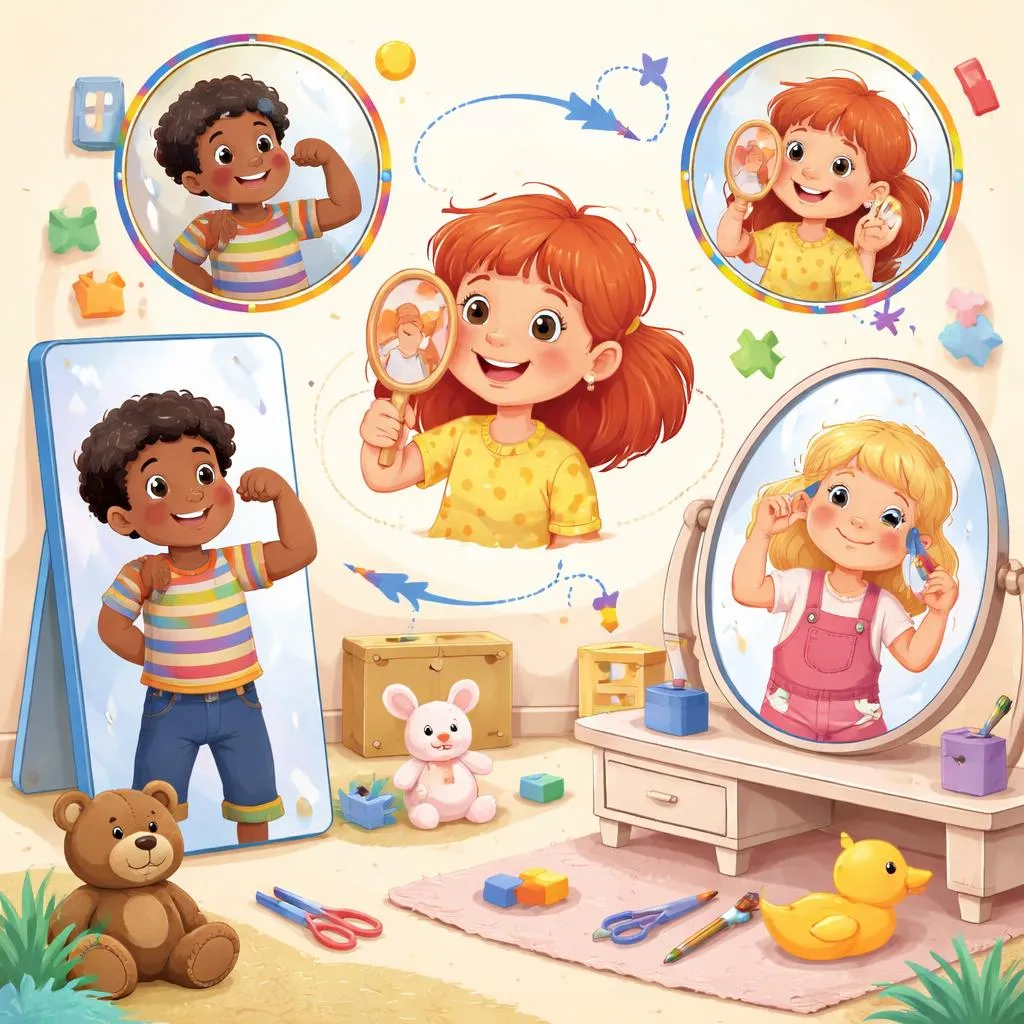
Hello, word explorers. Today, we are going to learn about a special group of words that are all about you. We are going to learn about reflexive pronouns. The word "reflexive" is related to "reflect," like a mirror. A reflexive pronoun reflects the action in a sentence back to the subject. It shows that the person doing the action is also the person receiving the action.
Let me explain. In the sentence "I see a cat," I am doing the seeing, and the cat is receiving the seeing. But what if I look in a mirror? I see myself. The person doing the seeing (I) and the person being seen are the same. The word "myself" is a reflexive pronoun. It bounces the action of seeing right back to me. The most common reflexive pronouns end in "-self" for one person and "-selves" for more than one person. They are like little word mirrors.
Conjugation
Reflexive pronouns must match the subject of the sentence. They change depending on who is doing and receiving the action. This is their conjugation. Here is the important list you need to know.
For one person or thing, we use: -self. I ➔ myself
You ➔ yourself (or yourselves for plural 'you')
He ➔ himself
She ➔ herself
It ➔ itself
For more than one person or thing, we use: -selves. We ➔ ourselves
You ➔ yourselves
They ➔ themselves
You must match them carefully. You cannot say "I saw himself." You must say "I saw myself" or "He saw himself." The reflexive pronoun is a perfect mirror of the subject.
Present tense
We use reflexive pronouns in the present tense to talk about actions we do to ourselves right now or as habits. Let's look at many examples.
I teach myself a new word every day. You should believe in yourself. He is talking to himself. She bought herself a new dress. The cat cleans itself. We need to take care of ourselves. Please, help yourselves to some cookies. They are enjoying themselves at the party. In these sentences, the action comes back to the person who is doing it. I teach me. He talks to him. The cat cleans it. The reflexive pronoun makes that clear.
Past tense
We also use reflexive pronouns to talk about actions we did to ourselves in the past. The pronoun form does not change for the past, but the main verb does.
I cut myself yesterday. You should have told yourself to be careful. He hurt himself playing soccer. She made herself a sandwich. The robot turned itself off. We found ourselves lost in the story. Did you kids behave yourselves? They introduced themselves to the new teacher. Even though the action (cut, hurt, made) happened in the past, the reflexive pronoun (myself, himself, herself) still perfectly mirrors the subject who performed that past action on themselves.
Future tense
We can use reflexive pronouns to talk about things we will do for ourselves in the future. We use "will" or "going to" with the reflexive pronoun.
I will buy myself an ice cream later. You are going to teach yourself how to swim. He will build himself a treehouse. She is going to make herself famous. The machine will turn itself on. We will treat ourselves to a movie. Will you guys prepare yourselves for the test? They are going to enjoy themselves on vacation. The reflexive pronoun still points back to the subject, even when we are talking about their future plans and actions.
Questions
We can ask questions using reflexive pronouns. These questions often check if someone did something alone or for their own benefit.
Did you make that cake yourself? (Meaning: alone, without help?) Can he tie his shoes by himself? Why is she talking to herself? Should we go by ourselves? Did they paint the room themselves? How do I see myself in ten years? The reflexive pronoun in the question emphasizes the subject's own role in the action. A very common and useful question is: "Did you do it yourself?"
Other uses
Reflexive pronouns are also used for emphasis. We call this the intensive use. In this case, they are not essential to the sentence's grammar, but they add strong emphasis, meaning "that person and no one else."
I myself saw the rainbow. (I personally saw it.) The teacher herself said it was okay. You should tell him yourself. The president himself will be there. We built this ourselves. You can do it yourself. In these sentences, you could remove the reflexive pronoun and the sentence would still be correct. "I saw the rainbow." But adding "myself" makes it much stronger and more personal. It's like pointing a word-finger at the subject for extra attention.
Learning tips
A great way to learn reflexive pronouns is to use a matching chart. Make two columns. In the first column, write the subject pronouns: I, you, he, she, it, we, you, they. In the second column, write their reflexive partners: myself, yourself, himself, herself, itself, ourselves, yourselves, themselves. Look at this chart and say the pairs out loud every day. "I - myself. You - yourself. He - himself..."
Act them out. The best way to understand "myself" is to do an action to yourself. Look at yourself in a real mirror. Brush your own hair and say "I am brushing my hair myself." This physical connection makes the meaning clear. Play the "I Can Do It Myself" game. Name things you can do without help. "I can get dressed by myself. I can tie my shoes by myself."
Educational games
Let's play "Reflexive Pronoun Charades." Write down sentences that use reflexive pronouns on cards. "I am teaching myself to juggle." "She is looking at herself in the mirror." "They are making themselves lunch." Players pick a card and act out the sentence. The other players must guess the full sentence, including the correct reflexive pronoun. "You are teaching yourself to juggle!" This connects the grammar to physical action.
Try the "By Myself" sorting game. Gather pictures from magazines or draw simple scenes. Some scenes show someone doing something alone (a child reading a book alone). Some show someone getting help (a dad helping a child tie a shoe). Kids sort the pictures into two piles: "By Myself/Himself/Herself" and "With Help." For each "By Myself" picture, they must say a sentence. "He is reading by himself." This reinforces the concept of self-action.
Create a "Classroom Talent Show" activity. Each child thinks of one thing they can do well by themselves. They then introduce their talent to the class using a reflexive pronoun. "Hello, I am Alex. I can draw a dinosaur by myself." or "Myself, I am very good at singing." This activity builds confidence and provides a real, personal context for using these pronouns correctly and meaningfully. It makes the grammar lesson about celebrating individual abilities.