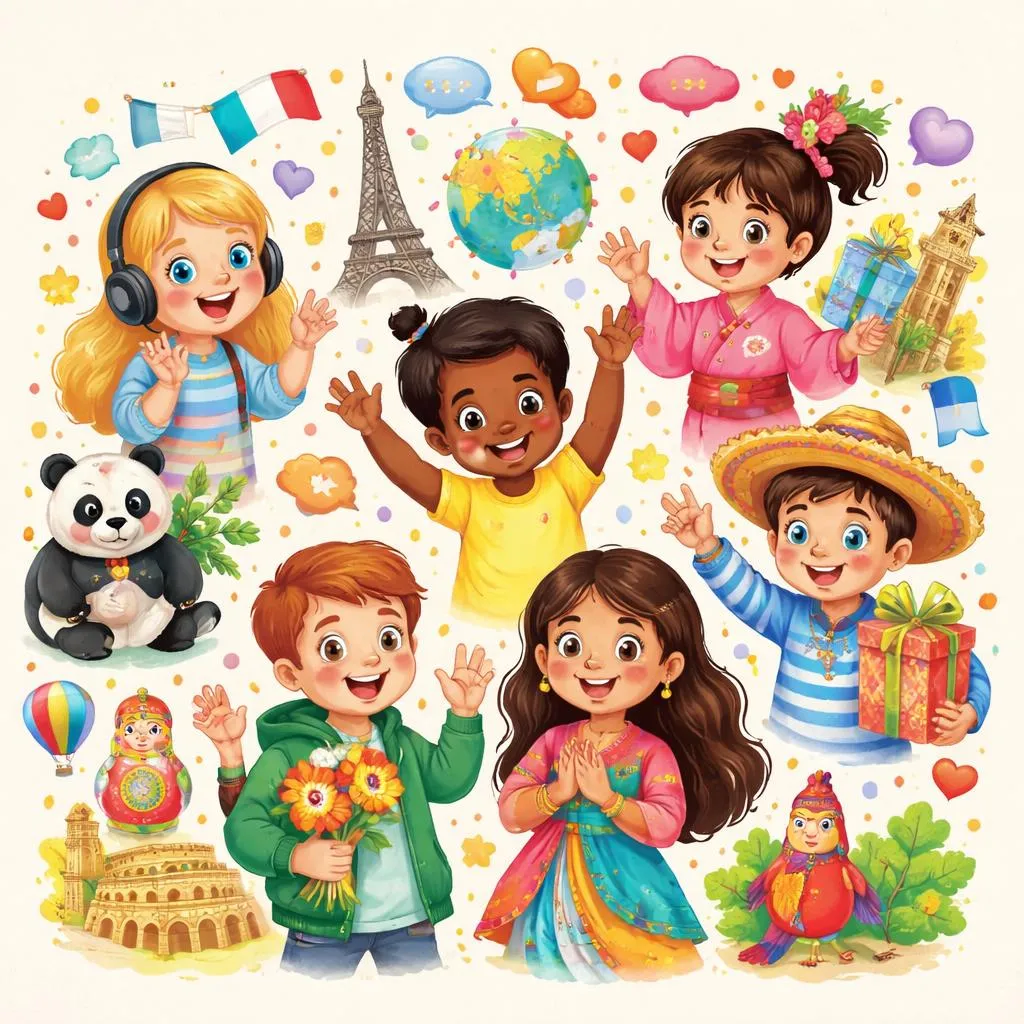

What is thank you in other languages?
Hello, global citizens. Today, we are going on a wonderful trip around the world. We are going to learn a superpower. This superpower is gratitude. The best way to show gratitude is to say thank you. But did you know thank you sounds different all over the world. Today, we are going to learn how to say thank you in other languages. This is a fun and kind thing to do.
Think of thank you as a magic word. In English, the magic word is "thank you." In Spanish, the magic word is "gracias." In Japanese, it is "arigatou." The magic feeling is the same, but the sound changes. Learning how to say thank you in other languages helps you make friends everywhere. It shows you care about other people's way of talking. Let's go on a trip around the world with our magic word.
Meaning and explanation
So, why should we learn how to say thank you in other languages. Saying thank you is a way to show appreciation. It means you are grateful for something someone did. It is a key part of good manners. When you say it in someone's own language, it is extra special.
It is like giving them a small gift. It shows you took the time to learn about their culture. Every language has its own music. The French "merci" sounds soft. The German "danke" sounds strong. The Arabic "shukran" has a unique sound. By learning these words, you are not just learning sounds. You are learning to connect with people from all over our amazing world. You are becoming a global citizen.
Categories or lists
Let's learn how to say thank you in other languages from many places. We will group them to make it easy to remember.
Popular European Languages: Spanish: Gracias (GRAH-see-ahs)
French: Merci (mehr-SEE)
German: Danke (DAHN-kuh)
Italian: Grazie (GRAHT-see-eh)
Portuguese: Obrigado (boy) / Obrigada (girl) (oh-bree-GAH-doo / dah)
Widespread Asian Languages: Mandarin Chinese: Xièxie (shieh-shieh)
Japanese: Arigatou (ah-ree-gah-toh)
Korean: Gamsahamnida (gahm-sah-hahm-nee-dah) - formal
Arabic: Shukran (SHOOK-rahn)
Other Languages from Around the World: Russian: Spasibo (spah-SEE-bah)
Swahili (Africa): Asante (ah-SAHN-teh)
Turkish: Teşekkür ederim (teh-shehk-KUR eh-deh-reem) or Sağol (sah-ol)
Daily life examples
You can practice how to say thank you in other languages every day. Here are two perfect times.
At an International Restaurant or Festival: This is a great place to try. If you visit a Mexican restaurant, you can say "¡Gracias!" to the server. At a school cultural fair, find the Japanese booth. Say "Arigatou" to the person sharing origami. When you try Chinese food, say "Xièxie" to the cook. It is a real-life moment to use your new words. You will see people smile with surprise and happiness.
When You Meet a New Friend: This is the best reason to learn. If you make a friend who speaks another language, ask them to teach you. You can say, "Can you teach me how to say thank you in your language?" Then practice it with them. You could say "Shukran" to your Egyptian friend or "Merci" to your French classmate. It is a powerful way to show you are happy to be their friend and to learn about their world.
Printable flashcards
Printable flashcards can turn your learning into a fun game. You can create a "Global Thank You" card set.
Make cards that look like passport stamps. Each card has the flag of a country, the word for thank you, and a simple pronunciation guide. The "France" card has a drawing of the Eiffel Tower and "Merci (mehr-SEE)." Kids can collect the cards, trade them, and practice. This is a fun way to learn about thank you in other languages and geography.
Another great printable is a "Thank You Around the World" coloring poster. Print a large world map. Around the map, write "Thank You" in 10-12 different languages with dotted lines. Kids can trace the words and color the countries. This activity combines art, geography, and language learning in one beautiful project.
You can also make a "Gratitude Spinner" game. Print a circle divided into sections. In each section, write "Thank You" in a different language and draw a small flag. Attach a paper clip spinner. Kids spin it and must say the phrase it lands on. Then, they think of something they are thankful for. This game practices the phrases and encourages positive thinking.
Learning activities or games
Let's play "Thank You Relay Race." This is an active game. Set up a simple obstacle course. At the end, place a basket of cards, each with a country's name and the word for thank you. The first runner goes, picks a card, runs back, and says "Thank you in [Country] is [Word]!" For example, "Thank you in Japan is Arigatou!" Then the next runner goes. The fastest and most accurate team wins. It combines energy with language recall.
Try the "Gratitude Song Circle." Learn the song "If You're Happy and You Know It" but with thank you words. Sit in a circle. Sing: "If you're happy and you know it, say Gracias!" Do the actions. Next verse: "If you're happy and you know it, say Merci!" Go around the circle letting different kids choose the next language. Music makes the words stick.
Create a "World Cafe" role-play game. Set up little tables as different "cafes" (Italian Cafe, Japanese Tea House). Use printables for simple menus and flags. Kids take turns being servers and guests. The guest orders pretend food. The server brings it. The guest must say thank you in the correct language for that cafe. "Grazie for the pizza!" This imaginative play builds confidence in using the phrases in a fun, pretend context. It is the perfect way to make learning how to say thank you in other languages a memorable, shared adventure.