
What is the animals?
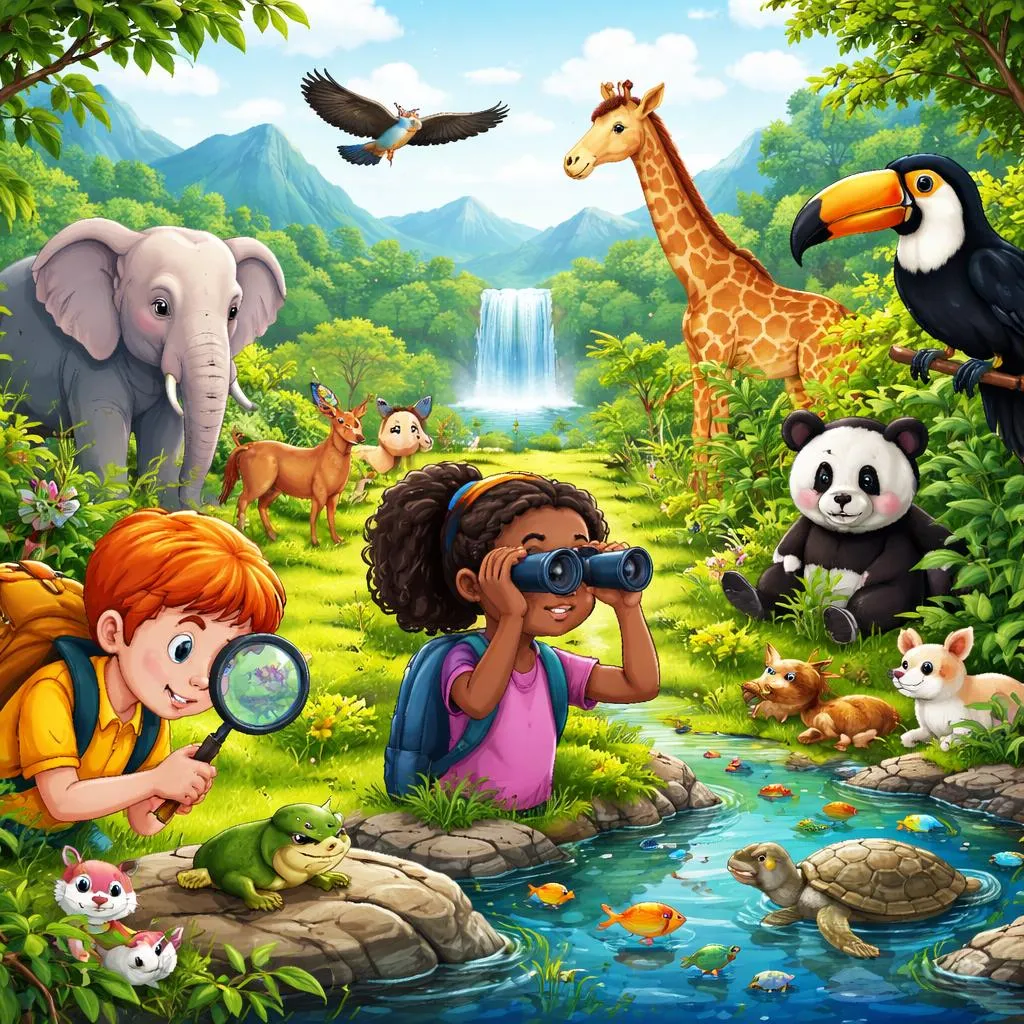
Hello, curious explorers! Today, we are going on a wonderful journey to meet some of the most amazing friends on our planet. We are going to talk about the animals!
So, what are the animals? The animals are all the living creatures that are not plants or humans. They can move around, eat food, grow, and have babies. From the tiny ant crawling on the ground to the giant whale swimming in the ocean, they are all part of the incredible animal kingdom.
The animals come in every shape, size, and color you can imagine. They have different homes, called habitats, like forests, oceans, deserts, and even our own backyards. Learning about the animals helps us understand our big, beautiful world and how to take care of all its creatures. Are you ready to learn more? Let's go!
Meaning and explanation
Let's think more about what the animals mean. The word "animal" comes from an old word meaning "a living being that breathes." And that's exactly what they are! The animals are alive, just like you and me.
All animals need certain things to live. They need to breathe air (or get oxygen from water). They need to eat food for energy. They can feel things and respond to the world around them. Most animals can move from place to place on their own. This is different from plants, which usually stay in one spot.
The animals are also our relatives in the big family of life on Earth. Scientists group them into categories to help us learn about them. Some have backbones, like dogs, birds, and fish. These are called vertebrates. Others, like insects, spiders, and worms, do not have backbones. These are called invertebrates. Every single one is important.
Categories or lists
There are so many animals! To help us learn, scientists sort them into big groups. Let's look at some of the main categories of the animals.
Mammals are animals that usually have fur or hair. They are warm-blooded, and mother mammals feed their babies milk. Can you think of some? Dogs, cats, elephants, whales, and even humans are mammals! Birds are animals with feathers, wings, and beaks. They lay eggs. Robins, eagles, penguins, and ostriches are all birds.
Fish live in water. They have gills to breathe and fins to swim. Goldfish, sharks, and clownfish are fish. Reptiles are animals with dry, scaly skin. They are cold-blooded and often lay eggs on land. Snakes, lizards, turtles, and crocodiles are reptiles. Amphibians are animals that often start life in water and later live on land. They have moist skin. Frogs, toads, and salamanders are amphibians.
The last big group is invertebrates, animals without backbones. This is the biggest group of all! It includes insects like butterflies and ants, spiders, worms, jellyfish, and starfish. So many amazing creatures!
Daily life examples
You can learn about the animals every day, right where you are! Let's see where we meet them.
At breakfast time, you can think about the animals. The milk in your cereal comes from a cow, which is a farm animal. The honey on your toast was made by busy bees. Even the eggs on your plate come from chickens. Our food often connects us to the animals.
On the way to school or at the park, look for the animals. You might see birds flying in the sky or squirrels running up a tree. You might see a ladybug on a leaf or a worm after the rain. These are local wildlife animals sharing our city space.
When you visit a zoo, a farm, or an aquarium, you meet the animals from all over the world. You can see a tall giraffe, a playful dolphin, or a colorful parrot. These places help us see and learn about animals we might never find in our own neighborhood. It's a special trip to see your global animal neighbors!
Printable flashcards
Let's make learning about the animals fun with pictures! Here are ideas for flashcards you can print and play with.
Create "Animal Group" cards. Make a card with a picture of a dog. At the top, write "MAMMAL." On the back, list simple facts: "Has fur, drinks mother's milk, warm-blooded." Make other cards for a robin (BIRD), a goldfish (FISH), a frog (AMPHIBIAN), and a butterfly (INVERTEBRATE).
Make "Baby Animal" cards. Kids love baby animals! On the front, draw a cute baby animal like a kitten, puppy, or chick. Write "BABY CAT." On the back, show the adult animal and write "The baby is called a KITTEN. The mother is called a CAT." Do this for other animals to learn special names.
Design "Habitat" cards. Draw a simple scene like a forest, ocean, desert, or farm. On the "FOREST" card, draw a bear, a fox, and an owl on the front. On the back, list these animals and say "These animals live in the forest. They find food and shelter there." This teaches where the animals call home.
Learning activities or games
Playing games is the best way to become an animal expert! Here are some fun activities.
Play "Animal Charades." Write the names of different animals on pieces of paper. Take turns picking a paper and acting out that animal without making any sounds! Can you hop like a kangaroo? Swing your arm like an elephant's trunk? Slither like a snake? The others guess the animal. It's a hilarious way to learn how animals move.
Go on a "Backyard Safari." Grab a notebook and a pencil. Go outside to your yard, a park, or just look out the window. Be a quiet scientist and watch for animals. How many birds can you see? Can you find any insects? Draw or write down what you see. Are they big or small? What colors are they? What are they doing? This activity teaches careful observation.
Have an "Animal Sound Match" game. Record or find online the sounds of different animals (like a cow mooing, a dog barking, a bird chirping). Make cards with pictures of those animals. Play the sound and see if your friends can hold up the correct picture card. This connects what animals look like with what they sound like.
Remember, the animals are all around us, and they are fascinating. Every time you learn a new animal's name, discover what it eats, or see where it lives, you are becoming a better friend to our planet. Keep watching, keep wondering, and keep caring for all the animals, big and small. Our world is full of wonderful creatures waiting for you to discover them