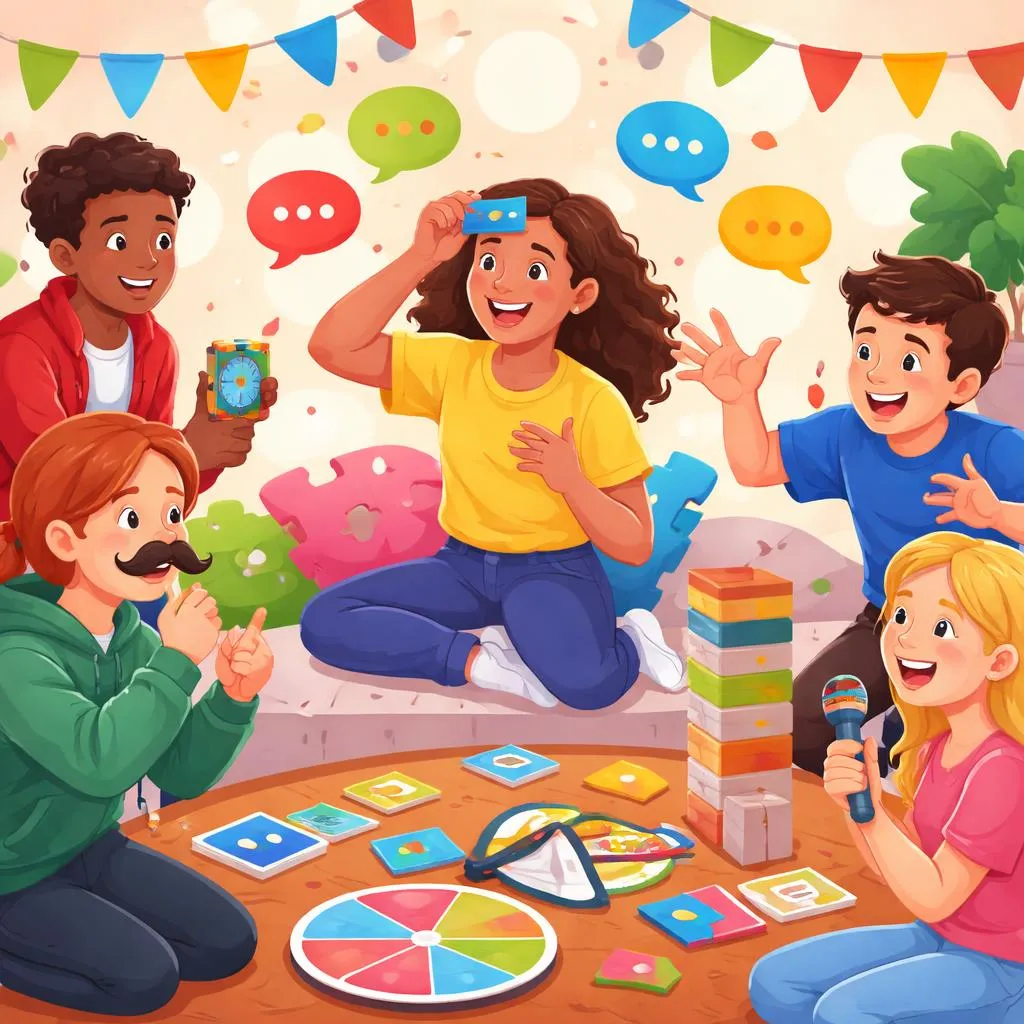

Teaching communication to young people requires a different approach than working with young children. Youth learners need activities that feel relevant and engaging. They want to practice real-world skills without feeling like they are in a traditional lesson. Today, we are going to explore fun communication games for youth that build speaking, listening, and interpersonal skills in an enjoyable way.
What Are Communication Games? Communication games are structured activities designed to practice how we share information with others. They focus on speaking clearly, listening carefully, and understanding messages. These games create safe spaces for youth to practice skills they need in school, work, and relationships.
For youth learners, communication games serve multiple purposes. They build confidence in speaking. They teach active listening. They show how body language affects messages. They demonstrate the importance of clear instructions. Most importantly, they do all this through play rather than lecture.
The games we choose should feel relevant to youth experiences. They should involve topics that interest young people. They should allow for creativity and self-expression. When youth enjoy the activity, they practice more and learn faster.
Why Games Work for Youth Traditional communication lessons often feel like work. Youth may resist direct instruction about how to talk to others. Games remove this resistance. The focus shifts from learning to playing. While they play, they practice the very skills we want them to develop.
Games also provide immediate feedback. If a message is unclear, the game fails. Youth see the results of poor communication right away. This is more powerful than a teacher telling them they need to speak more clearly. The game itself provides the lesson.
Games create low-stakes environments. Youth can try new ways of communicating without fear of judgment. If they make a mistake, it is part of the game. They can laugh and try again. This builds confidence that carries over to real situations.
Categories of Communication Games We can group communication games by the specific skills they develop. This helps us choose the right game for our goals.
Speaking and Explaining Games: These games focus on how we share information. Players must describe things clearly. They must give instructions others can follow. They learn to choose words carefully and organize their thoughts.
Listening and Understanding Games: These games focus on how we receive information. Players must pay close attention. They must remember details. They must follow directions accurately. They learn that listening is an active skill.
Non-Verbal Communication Games: These games focus on messages without words. Players use gestures, facial expressions, and body language. They learn how much information travels without speaking. They become more aware of their own non-verbal signals.
Collaborative Problem-Solving Games: These games require teams to work together. Players must share information, negotiate meaning, and reach consensus. They learn that good communication leads to better solutions.
Back-to-Back Drawing Game This classic game teaches the importance of clear description and careful listening. Pair up the youth. They sit back to back so they cannot see each other. One person gets a simple picture. The other gets a blank paper and pencil.
The person with the picture describes it without saying what it is. "Draw a circle in the middle. Above the circle, draw two smaller circles. Inside each small circle, draw a dot." The listener draws based only on these verbal instructions.
After five minutes, they compare drawings. The results are often funny and surprising. Then they switch roles with a new picture. This game shows how easily messages can be misunderstood. It teaches the value of specific language and checking for understanding.
The Instruction Game This game practices giving and following directions. Choose a simple task like folding a paper airplane or drawing a specific shape. One person knows how to do the task. They must give instructions to the group without showing them.
The group follows the instructions exactly as given. They cannot ask questions. Afterward, they compare results. Usually, the results are very different from what the instructor expected.
Then try the same task again. This time, the group can ask questions. The instructor can clarify. The results improve dramatically. This game demonstrates the power of two-way communication. It shows that asking questions leads to better understanding.
Story Chain Game This game builds listening and creativity together. Sit in a circle. One person starts a story with one sentence. "Once upon a time, a young person found a mysterious box in the park." The next person adds another sentence. The story continues around the circle.
The challenge is to listen carefully to what came before. Each new sentence must build on the previous ones. The story can go in surprising directions. After everyone has added a sentence, the last person must end the story.
This game teaches active listening. You cannot add to the story if you were not paying attention. It also shows how communication builds shared understanding. The group creates something together that no one could create alone.
Telephone Game with a Twist The classic telephone game has been around for generations. Players sit in a line or circle. The first person whispers a message to the next. It passes from person to person. The last person says the message aloud. It is usually very different from the original.
For youth, we can add twists to make it more relevant. Use messages about their interests. Use song lyrics they know. Use quotes from movies or social media. Time how long it takes for the message to travel.
After the game, discuss why messages change. What causes misunderstandings? How could we communicate more accurately? This leads to rich conversations about how information spreads and changes in real life.
Find Someone Who Bingo This game combines communication with getting to know each other. Create bingo cards with descriptions in each square. "Has traveled to another country." "Plays a musical instrument." "Has a pet dog." "Likes the same music as you."
Youth must mingle and talk to each other. They find someone who matches each description and write that person's name in the square. The goal is to fill a row or the whole card.
This game encourages conversation. Youth must approach others and ask questions. They learn about their peers. They practice starting conversations and showing interest in others. It builds community while building communication skills.
Role Play Scenarios Role play gives youth safe practice for real situations. Create scenarios they might actually face. Asking a teacher for help. Resolving a conflict with a friend. Interviewing for a part-time job. Making a phone call to request information.
Pair up youth and give them a scenario. They act it out while others watch. After each role play, discuss what worked well. What could they do differently? What communication skills did they use?
Role play builds confidence. Youth can try different approaches and see what feels right. They learn that communication is a skill they can improve with practice. They see that even difficult conversations become easier with preparation.
Two Truths and a Lie This classic game builds speaking and listening skills. Each person thinks of two true facts about themselves and one lie. They share all three with the group. The group asks questions and then guesses which statement is the lie.
This game encourages youth to share about themselves. They practice telling stories and answering questions. Listeners practice picking up on inconsistencies and asking good questions. Everyone learns interesting things about each other.
After everyone has a turn, discuss what gave the lies away. Was it the words they used? Their body language? Their hesitation? This leads to conversations about how we communicate truth and how we detect deception.
Group Story Building with Objects Place various objects in a bag or box. Ordinary items work well: a key, a coin, a feather, a small toy. Pass the bag around. Each person pulls out an object without looking. Then they must incorporate that object into a group story.
The first person starts the story and includes their object. The next person continues and includes their object. The story builds until everyone has added their object. The challenge is to create a coherent story from random elements.
This game builds creative thinking and collaboration. Players must listen to what came before. They must find ways to connect their object to the existing story. It shows how communication builds shared meaning from different contributions.
Silent Line-Up This game focuses entirely on non-verbal communication. Do not allow any speaking. Give the group a task to complete silently. Line up in order of birthday. Line up by height. Line up alphabetically by first name.
Without words, youth must find ways to communicate. They use gestures, pointing, and showing. They hold up fingers to show numbers. They arrange themselves through trial and error.
After completing several line-ups, discuss the experience. How did they communicate without words? What worked well? What was frustrating? This builds awareness of non-verbal communication and its limits.
Communication Games for Digital Natives Today's youth communicate extensively through screens. We can incorporate this into our games. Create scenarios using text messages, social media posts, or emails. Practice communicating clearly without voice tone or body language.
One game involves writing instructions for a simple task. Another person must follow the written instructions exactly. This shows how careful we must be when writing without immediate feedback.
Another game involves interpreting text messages with different emotions. The same words can mean different things depending on tone. Youth try saying "fine" in different ways to show different meanings. This builds awareness of how much tone matters, even in digital communication.
Building Communication Habits Games provide practice, but real improvement requires habits. After playing games, we can help youth identify skills they want to develop. Perhaps they want to ask more questions. Perhaps they want to listen without interrupting. Perhaps they want to speak more clearly.
We can create simple challenges for the week. "Today, ask three people a question about themselves." "Today, practice repeating back what someone said to check understanding." These small challenges turn game skills into daily habits.
We can check in regularly about these challenges. What did they try? What happened? How did it feel? This reflection deepens the learning from games and transfers it to real life.
As we bring fun communication games for youth into our classrooms and groups, we create spaces for genuine skill development. Youth practice speaking and listening without pressure. They learn from each other. They discover that good communication is not just useful but also enjoyable. These games build foundations for relationships, school success, and future careers, all through the power of play.