
What is english names for animals?
Hello, animal friends. Today we are going on a fantastic safari. We will learn the English names for animals. This is one of the most fun parts of learning English. Knowing what to call different creatures helps us talk about the amazing world around us.
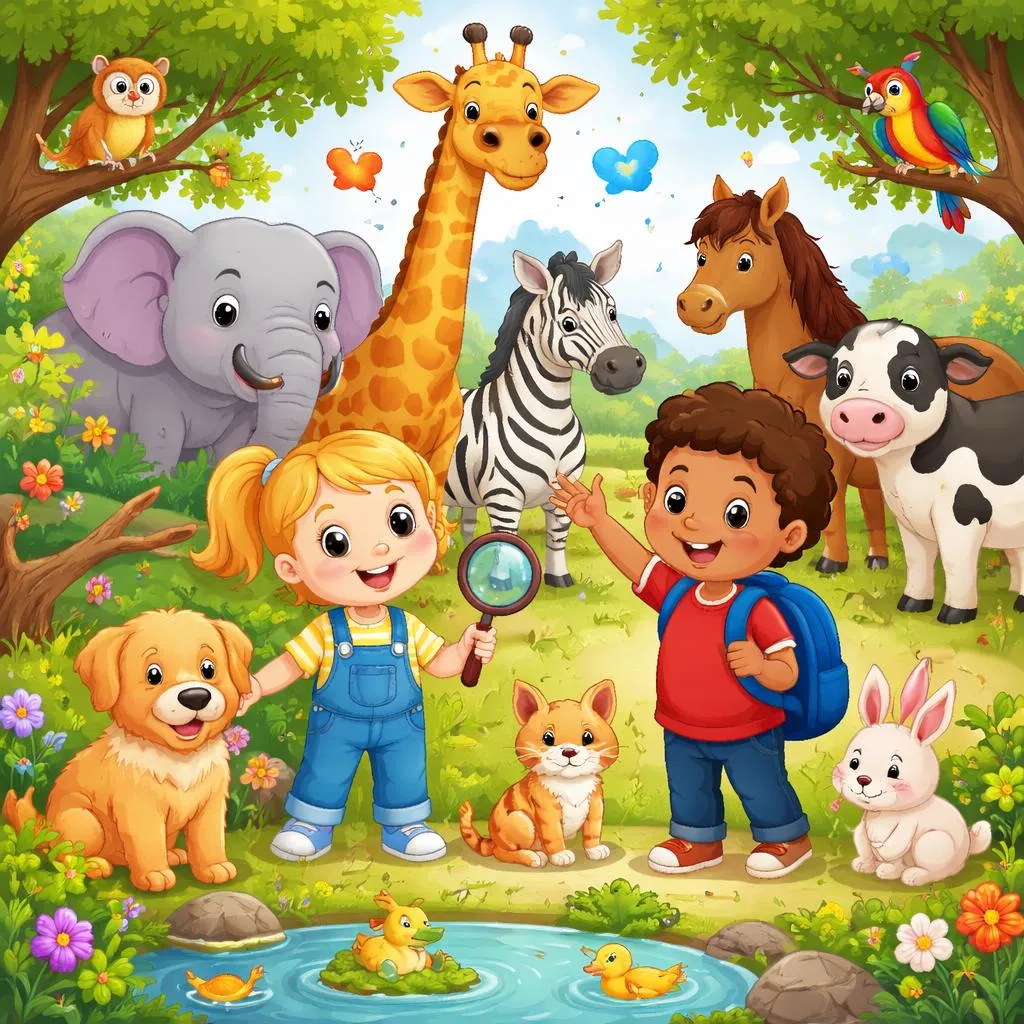
Think about the animals you see in books, at the zoo, or in your home. Each one has a special name in English. A furry friend that says "meow" is a cat. A big, gray animal with a trunk is an elephant. A colorful bird that can talk is a parrot. These are all English names for animals.
Learning these names is like collecting treasures. Every new animal word you learn is a treasure for your brain. It helps you tell stories, sing songs, and ask questions. Let us start our collection today.
Meaning and explanation
So, what do we mean by English names for animals. It is simple. It is the special word we use in the English language to talk about a specific animal. Just like you have a name, each animal type has a name too.
These names help everyone understand which animal we are talking about. If I say "dog," you picture a furry pet that barks. If I say "goldfish," you picture a small, orange fish in a bowl. The name gives us a clear picture in our mind.
Some animal names sound like the noise the animal makes. This is called onomatopoeia. The animal "cuckoo" is named for its call. The "bobwhite" bird is too. Many English names for animals come from very old words. Learning the names helps us connect with nature and stories from all over the world.
Categories or lists
Let us put our English names for animals into fun groups. This makes them easier to remember.
Farm Animals: These are animals you often find on a farm. They help farmers or give us food. Cow, pig, sheep, goat, horse, chicken, duck, rooster, turkey, donkey.
Wild Animals: These animals live in nature, like in forests, jungles, or oceans. Lion, tiger, bear, elephant, giraffe, monkey, zebra, kangaroo, penguin, dolphin.
Pets: These are animals that live with people in their homes. Dog, cat, rabbit, hamster, guinea pig, parrot, canary, turtle, goldfish, hermit crab.
Forest and Garden Animals: Smaller creatures we might see nearby. Squirrel, butterfly, bee, ladybug, snail, frog, owl, hedgehog, deer, fox.
Ocean Animals: Creatures that live in the sea. Fish, shark, whale, octopus, jellyfish, seahorse, starfish, crab, lobster, seal.
Daily life examples
You can practice English names for animals all day long. Here are some easy scenes.
At Breakfast Time: Look at your cereal box. Many have animal mascots. You can say their names. "I see a tiger on my box." Look out the window. "I see a bird in the tree." "A squirrel is running on the fence." If you have a pet, greet it. "Good morning, Cat." or "Hello, Dog."
On the Way to School: Look at the world around you. If you see a dog being walked, say quietly, "There is a brown dog." If you pass a pond, you might say, "Look, ducks." In a garden, you might see "a bee on a flower" or "a butterfly." Naming what you see turns your walk into a vocabulary adventure.
At the Supermarket: The supermarket is a great place for animal names. Go to the dairy section. "We need milk from a cow." At the meat counter, you might see chicken or fish. In the pet food aisle, you see pictures of dogs and cats on the bags. You can even see seafood like shrimp and lobster. It is a real-life animal naming game.
Printable flashcards
Printable flashcards are a super tool for learning English names for animals. You can make a whole zoo on paper.
Create cards with clear, friendly pictures. On the front of the card, have a big, colorful picture of one animal. For example, a picture of a smiling lion.
On the back of the card, write the animal's name in large, clear letters. LION. Under the name, write a simple fact or sound. "The lion roars." Or "Lions live in groups called prides." You can also add a small picture of where it lives, like a savanna.
Sort your flashcards into the groups we learned: Farm, Wild, Pets, etc. You can play matching games. Spread out the picture cards. Hold up the word card "ELEPHANT" and find the right picture. You can also play memory. Turn all cards face down and try to find matching pairs of picture and word.
Learning activities or games
Let's play some active games to learn these names.
Animal Sound and Name Game: One person makes an animal sound. "Moo!" The other players must shout the correct English name. "Cow!" Then, it is someone else's turn to make a sound. This connects the sound directly to the name in a fun way.
"I Spy at the Zoo" Game: Even if you are not at the zoo, you can pretend. Use picture books or your flashcards. One player says, "I spy with my little eye an animal that has a long neck." The others guess: "Giraffe!" The player who guesses correctly gets to spy the next animal. "I spy an animal that is black and white and swims." "Penguin!"
Animal Charades: Write the names of animals on small pieces of paper and put them in a hat. Players take turns picking a paper and acting out the animal without making any sounds. Can the others guess "elephant" from the trunk motion. Can they guess "frog" from the jumping. This game gets everyone moving and laughing while practicing the vocabulary.