
What Are Adjectives to Describe?
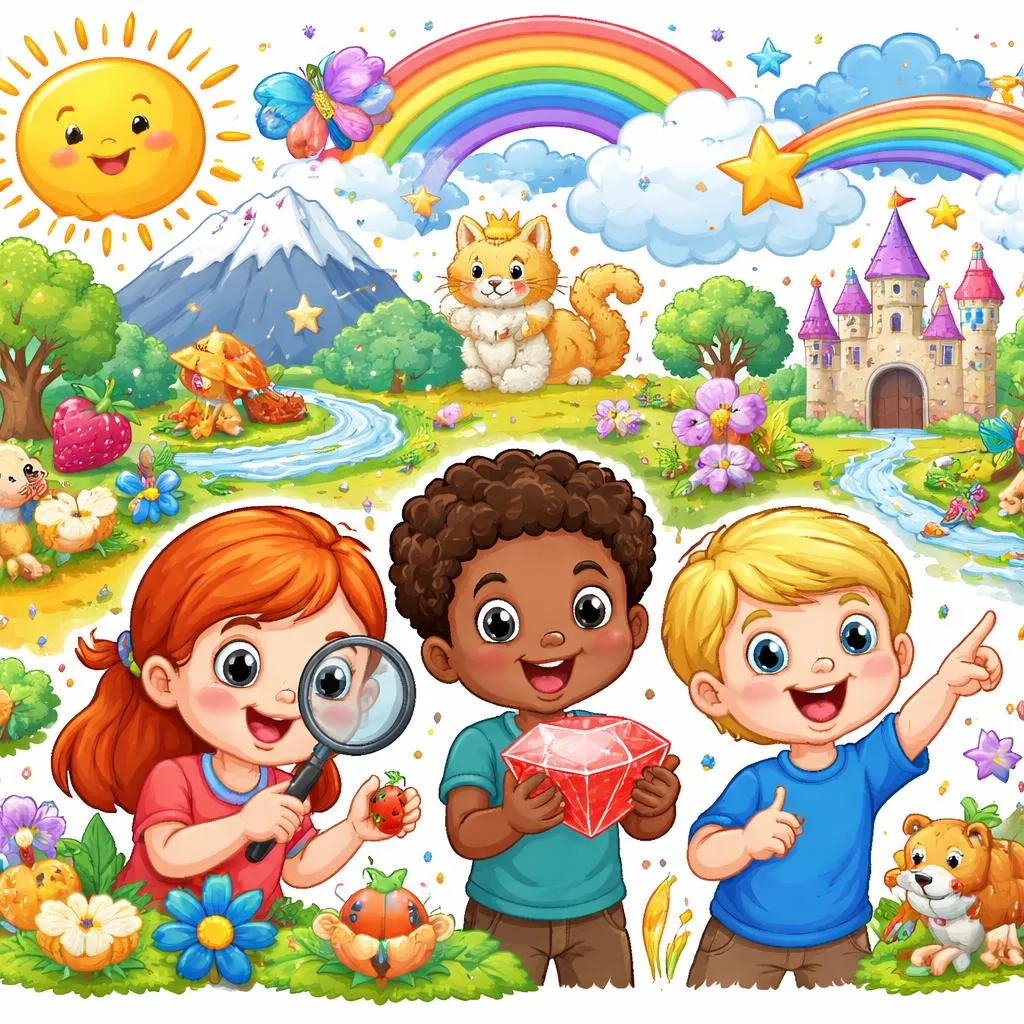
Let’s go on a word adventure! Our mission is to find the best words for sharing what we see, hear, feel, and imagine. These special words are called adjectives. An adjective is a word that describes a noun. A noun is a person, a place, a thing, or an animal.
Think of adjectives as your word toolbox. When you want to tell a friend about your new toy, you don’t just say, “I have a toy.” You say, “I have a cool, red, fast toy car!” The words cool, red, and fast are adjectives. They paint a picture in your friend’s mind.
We use adjectives to describe every day. They answer simple questions: What kind is it? How does it look? How does it feel? How many are there? For example, “the fluffy cat” tells us what kind of cat. “The three cookies” tells us how many cookies. These words make our stories and sentences colorful and clear.
Using adjectives is like being an artist with words. The more adjectives you know, the better you can share your wonderful ideas with everyone. Let’s explore the different kinds of adjectives we can use to describe our amazing world.
Categories of Descriptive Adjectives
Our adjective toolbox has many sections. Each section holds words for a different job. Knowing these categories helps us pick the perfect word every time.
First, we have adjectives for how things look. These describe size, color, and shape. Words like big, tiny, blue, square, round, long, and short are in this group. You can say “a huge mountain” or “a sparkling star.” These help people see with their minds.
Next, we have adjectives for how things feel. These describe texture and temperature. Words like soft, rough, smooth, cold, warm, sticky, and fuzzy are perfect here. Feel your desk. Is it smooth or hard? Feel your sweater. Is it fuzzy and warm?
Another great category is adjectives for how things seem or sound. These describe personality, mood, and noise. Think of words like happy, loud, quiet, funny, scary, brave, and peaceful. A funny clown makes us laugh. A brave firefighter helps people. A loud siren gets our attention.
Using Adjectives to Describe People
People are wonderful to describe! We can use adjectives to talk about how someone looks, how they act, and how they make us feel. This helps us tell stories about our friends and family.
Let’s start with how people look. We can use friendly and kind words. You might have a tall brother or a friend with curly hair. Your teacher might wear colorful glasses. Your grandma might have a kind smile. These words help others imagine the person.
Even more important are words for how people act and feel. Is your friend helpful on the playground? Is your sister creative when she draws? Maybe you feel proud after learning a new word. We can say a person is honest, silly, smart, or caring.
Remember to use words that make people feel good. Saying “You are a good listener” or “Thank you for your helping hands” uses adjectives in a positive way. It’s a wonderful habit to describe the great things you see in others.
Using Adjectives to Describe Places
Every place has its own feeling. A park feels different from a library. Your classroom feels different from a birthday party. Adjectives help us share the mood and look of any place we visit.
Think about your favorite place. What do you see there? You might see a sunny park with green grass. You might see a busy street with noisy cars. You could visit a quiet beach with soft sand. The adjectives set the scene.
How does a place make you feel? A cozy bedroom feels safe and warm. A spooky attic might feel a little scary. A crowded mall feels exciting and loud. An empty playground feels calm and open. These feeling words are very powerful.
You can be a place detective. Next time you go somewhere new, look for three adjectives to describe it. Is the grocery store bright, big, and clean? Is the forest path dark, winding, and mysterious? Sharing these words makes great stories.
Using Adjectives to Describe Things and Animals
Our world is full of amazing objects and creatures. Adjectives help us explain exactly what we’re talking about, from a tiny bug to a giant truck.
To describe objects, think about their size, material, and condition. You might eat a crunchy apple. You might read a thick book. You might play with a plastic, yellow shovel. A window can be clear. A mirror can be shiny. A stuffed animal can be worn-out and loved.
Animals are fantastic to describe! Think about a furry rabbit with long ears. Imagine a slimy frog. Picture a colorful parrot that can talk. A turtle is often slow. A cheetah is famously fast. A kitten is playful and tiny.
Try a guessing game. Think of an object or animal. Describe it to a friend using only adjectives. “It is small, electronic, rectangular, and fun.” Did they guess it was a video game? “It is big, gray, strong, and has a long trunk.” Yes, an elephant! Adjectives are the best clues.
Learning Activities with Descriptive Adjectives
Learning is more fun when you play! Here are some simple activities to practice your new describing words. You can do these alone, with your family, or in your classroom.
Try an Adjective Art Gallery. Draw a simple picture of a scene, like a garden or a room. Then, write five adjectives on the back that describe your drawing. Trade pictures with a friend. Can they guess which adjectives match your art?
Go on an Adjective Nature Walk. Take a walk outside with a notebook. Find five different things. Write the noun and two adjectives for each. For example: “Leaf – green, crinkly.” “Rock – heavy, gray.” “Cloud – fluffy, white.” This connects words to the real world.
Play Silly Sentence Builders. Write nouns on one set of cards (like monster, pizza, car). Write adjectives on another set (like gigantic, slimy, shiny). Pick one card from each pile and make a silly sentence. “The gigantic pizza flew away!” This makes grammar practice full of laughs.
Printable Games and Practice
Sometimes, holding a game in your hands is the best way to learn. Here are ideas for printable materials you can use again and again. Ask a grown-up to help you print them.
Create Adjective Flashcard Pairs. Make two sets of cards. On one set, draw or paste pictures of nouns (a dog, a sun, a house). On the other set, write matching adjectives (friendly, bright, cozy). Lay all cards face down and play a memory matching game. Turn over two cards and see if the picture matches the adjective.
A Describing Wheel is a fun printable. In the center of a circle, write a noun like “ICE CREAM.” Draw lines out from the circle like wheel spokes. At the end of each line, write an adjective that describes ice cream: cold, sweet, creamy, delicious, melting. You can make a wheel for your pet, your favorite toy, or your best friend.
You can also print an Adjective Scavenger Hunt checklist. The list will have adjective clues like: “Find something… soft… round… striped… fragrant… noisy.” Take the list around your house or school and check off the items you find. It turns a regular day into a word-finding mission.
Keep practicing with a smile. Every time you use a new adjective, you add a new color to your word box. Soon, you will be able to describe anything in the world with confidence and joy. Your stories will come alive for everyone who listens