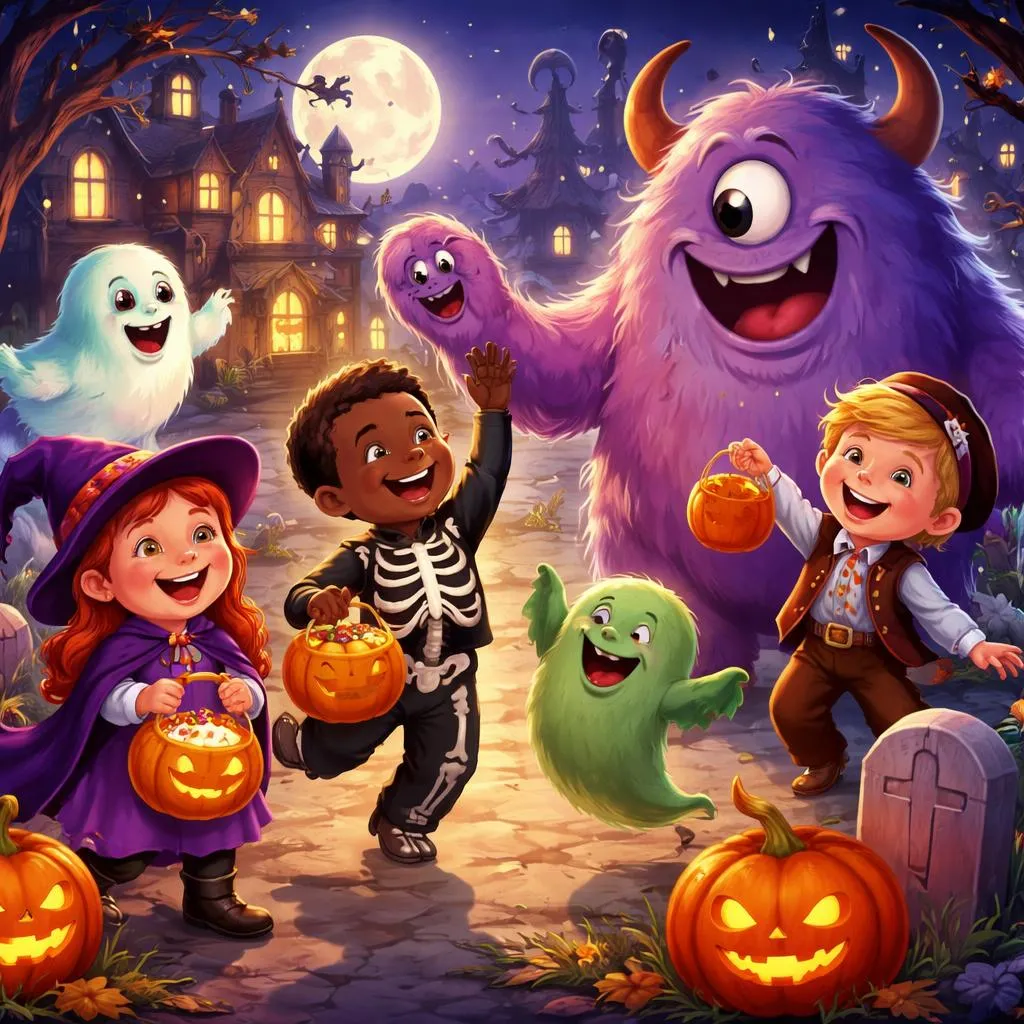

Halloween arrives with costumes and candy, pumpkins and decorations. For young children, it brings both excitement and a little shiver. The line between fun and fear can feel thin. A Halloween children's story helps navigate this line perfectly. It introduces spooky elements in safe ways. It shows characters dressing up, going trick-or-treating, and facing gently scary situations. The story always ends with comfort and joy. This article explores how teachers can use Halloween stories to build language skills while helping children enjoy this unique holiday.
What Is a Halloween Children's Story? A Halloween children's story is a narrative centered on Halloween traditions and themes. The story typically features costumes, trick-or-treating, jack-o-lanterns, and other holiday elements. Characters might be children celebrating or friendly ghosts, witches, and monsters. The spooky elements are always gentle. A ghost who just wants a friend. A witch who is clumsy with magic. A monster who is more scared of children than they are of it. The stories create just enough tension to be exciting, then resolve happily. They validate both the fun and the slight nervousness children feel about Halloween. By the end, everyone feels safe and ready to enjoy the celebration.
Meaning and Explanation Behind Halloween Stories Halloween stories serve several important purposes for young children. First, they provide safe exposure to mildly scary things. Children encounter ghosts, witches, and monsters in stories before meeting them on decorations or in costumes. The story context makes these figures friendly rather than frightening.
Second, they explain holiday traditions. Why do people carve pumpkins? Why do children wear costumes? Why do we say "trick or treat"? Stories answer these questions in ways children understand.
Third, they model how to handle the holiday. Characters get dressed up. They go out after dark. They knock on strangers' doors. They receive candy. Children see what will happen and feel prepared.
Fourth, they validate mixed feelings. It is okay to feel a little nervous. It is okay to be excited. Other children feel the same way. The characters feel it too.
Finally, they emphasize the fun. The candy. The costumes. The decorations. The time with family and friends. Halloween is ultimately about joy, and stories make this clear.
Categories or Lists of Halloween Stories Halloween children's stories come in several types.
Friendly Ghost Stories: Ghosts who are not scary at all.
A ghost who wants to play but everyone runs away.
A ghost who helps children find lost things.
A ghost family decorating their haunted house.
Costume Adventure Stories: Focus on choosing and wearing costumes.
A child deciding what to be for Halloween.
A costume that comes alive in a good way.
Friends with coordinating costumes.
Trick-or-Treat Stories: Following children on their Halloween rounds.
The first time trick-or-treating.
A special house with amazing treats.
What happens after the candy is collected.
Pumpkin Stories: Tales centered on jack-o-lanterns.
Picking the perfect pumpkin.
Carving faces and lighting candles.
A pumpkin who does not want to be carved.
Not-So-Scary Monster Stories: Monsters who are more funny than frightening.
A monster who is afraid of the dark.
A monster who loves to bake cookies.
A monster who wants to be friends.
Halloween Party Stories: Classroom or neighborhood celebrations.
Preparing for the class party.
Games and treats at the celebration.
The costume parade.
Daily Life Examples from Halloween Stories A Halloween children's story connects directly to children's experiences. Many will go trick-or-treating. They will wear costumes. They will see jack-o-lanterns. They might attend a party. The stories prepare them for these experiences.
Teachers can draw these connections. "Remember how the character in our story felt putting on their costume? How will you feel when you put yours on?" "The story showed children saying 'trick or treat.' Let's practice saying it together."
The stories also provide language for talking about feelings. Children can name their excitement. They can express any nervousness. The story characters give them words for both.
After Halloween, stories help children process what happened. They can compare their real experiences to the story. This builds comprehension and connection between literature and life.
Vocabulary Learning from Halloween Stories Halloween stories introduce rich seasonal vocabulary.
Halloween Words: Halloween, costume, trick-or-treat, candy, jack-o-lantern, pumpkin, ghost, witch, monster, bat, spider, skeleton.
Costume Words: Costume, mask, dress up, pretend, character, superhero, princess, animal, scary, funny.
Pumpkin Words: Pumpkin, carve, scoop, seed, face, light, candle, glow, orange, stem.
Spooky Words (Gentle): Spooky, creepy, scary, frightened, brave, courage, shadow, dark, moon, night.
Treat Words: Candy, chocolate, lollipop, treat, goody, bag, bucket, collect, share.
Teachers can introduce these words before reading. Point them out in the story. Use them during Halloween activities. Create a Halloween word wall with pictures.
Phonics Points in Halloween Stories Halloween words offer excellent phonics practice.
Beginning Sounds: Halloween starts with H. Ghost starts with G. Witch starts with W. Monster starts with M. Pumpkin starts with P. Practice these beginning sounds.
Digraphs: Ghost has GH making the G sound. Witch has TCH at the end. Shadow has SH. These digraphs appear.
Syllable Practice: Halloween words help with syllable counting. Ghost has one. Pumpkin has two. Skeleton has three. Jack-o-lantern has four. Practice clapping.
Rhyming Halloween Words: Bat and cat rhyme. Ghost and toast rhyme. Moon and soon rhyme. Treat and feet rhyme. These build phonemic awareness.
Teachers can pause during reading to notice these patterns. The Halloween theme makes phonics practice festive.
Grammar Patterns in Halloween Stories Halloween stories provide natural grammar instruction.
Questions About Costumes: Costume stories include questions. What are you going to be? Who are you dressed as? Where did you get that costume? These model question forms.
Prepositions of Place: Trick-or-treating uses location words. Go to the door. Knock on the door. Stand on the porch. Put candy in the bag. These prepositions become concrete.
Future Tense for Anticipation: Leading up to Halloween, stories use future. We will put on costumes. We will go trick-or-treating. We will get candy. This builds anticipation grammar.
Past Tense for After: Stories about Halloween night use past. We put on costumes. We went to houses. We got lots of candy. This models narrative past tense.
Teachers can point out these patterns during reading. The grammar learning happens within the holiday fun.
Learning Activities for Halloween Stories Activities bring Halloween stories to life.
Activity 1: Costume Parade After reading costume stories, have a classroom costume parade. Children wear costumes (real or drawn). Walk around the room or school. Celebrate each costume.
Activity 2: Pumpkin Decorating Provide small pumpkins or paper pumpkin shapes. Children decorate them without carving. Paint, stickers, markers. Display around the room.
Activity 3: Trick-or-Treat Practice Practice trick-or-treating in the classroom. Set up doors. Practice knocking, saying "trick or treat," receiving treats, saying "thank you." This builds confidence and manners.
Activity 4: Halloween Story Sequencing Create picture cards showing events from a Halloween story. Children arrange them in correct order.
Activity 5: Monster Craft Create friendly monsters using craft materials. Give each monster a name and a story. This builds creativity and writing skills.
Activity 6: Halloween Sensory Bin Fill a bin with orange and black items. Plastic spiders, bats, pumpkins. Children explore while discussing Halloween vocabulary.
Printable Materials for Halloween Stories Printable resources extend Halloween story learning.
Halloween Coloring Pages: Pumpkins, ghosts, costumes, and scenes for coloring.
Halloween Word Search: Holiday vocabulary hidden in a letter grid.
Costume Design Sheet: Template for children to design their own costume and label parts.
My Halloween Story Writing Paper: Pages with Halloween border for writing original stories.
Halloween Flashcards: Pictures of Halloween items with words for matching.
Trick-or-Treat Social Story: Simple booklet showing what happens on Halloween night for children who need preparation.
Educational Games for Halloween Stories Games make Halloween learning playful.
Game: Halloween Bingo Create bingo cards with Halloween images and words. Call out items. Children cover matches.
Game: Pin the Nose on the Pumpkin Like Pin the Tail on the Donkey, but with a pumpkin and a nose to place.
Game: Monster Match Create pairs of monster cards. Children play memory match to find pairs.
Game: Costume Charades Act out different costume ideas without speaking. Others guess what the costume is.
Game: Spider Web Walk Create a spider web on the floor with tape. Children walk the web without stepping off, like balancing a treat.
Connecting Halloween Stories to Other Subjects Halloween stories connect across the curriculum.
Science Connection: Learn about pumpkins. How do they grow? What is inside? Explore spiders and bats as real creatures, not just Halloween symbols.
Math Connection: Count candy (real or pretend). Sort by type. Create graphs of favorite Halloween treats. Measure pumpkins.
Art Connection: Create Halloween art in various media. Pumpkin paintings. Ghost prints. Monster collages. Spider webs with string.
Social Studies Connection: Learn how Halloween is celebrated in different places. Compare traditions. Discuss why people wear costumes.
Music Connection: Learn Halloween songs. "Five Little Pumpkins." "The Skeleton Dance." Create spooky sound effects with instruments.
The Comfort of Safe Scares A Halloween children's story offers something special. It lets children experience a little fear in the safest possible way. The ghost is friendly. The monster is funny. The dark ends with light. The story always ends well.
This safe experience builds emotional muscles. Children learn that they can feel scared and still be okay. They learn that scary things often turn out to be not scary at all. They learn that facing a little fear can lead to fun.
The stories also build anticipation and joy. Halloween becomes something to look forward to. The traditions become familiar and welcome. The holiday becomes a celebration rather than a confusion.
For teachers, Halloween stories open doors to rich learning. Vocabulary. Phonics. Grammar. Comprehension. All wrapped in costumes and candy and jack-o-lantern grins. The children learn without knowing they are learning. They are just enjoying the story, and the story is teaching them everything.