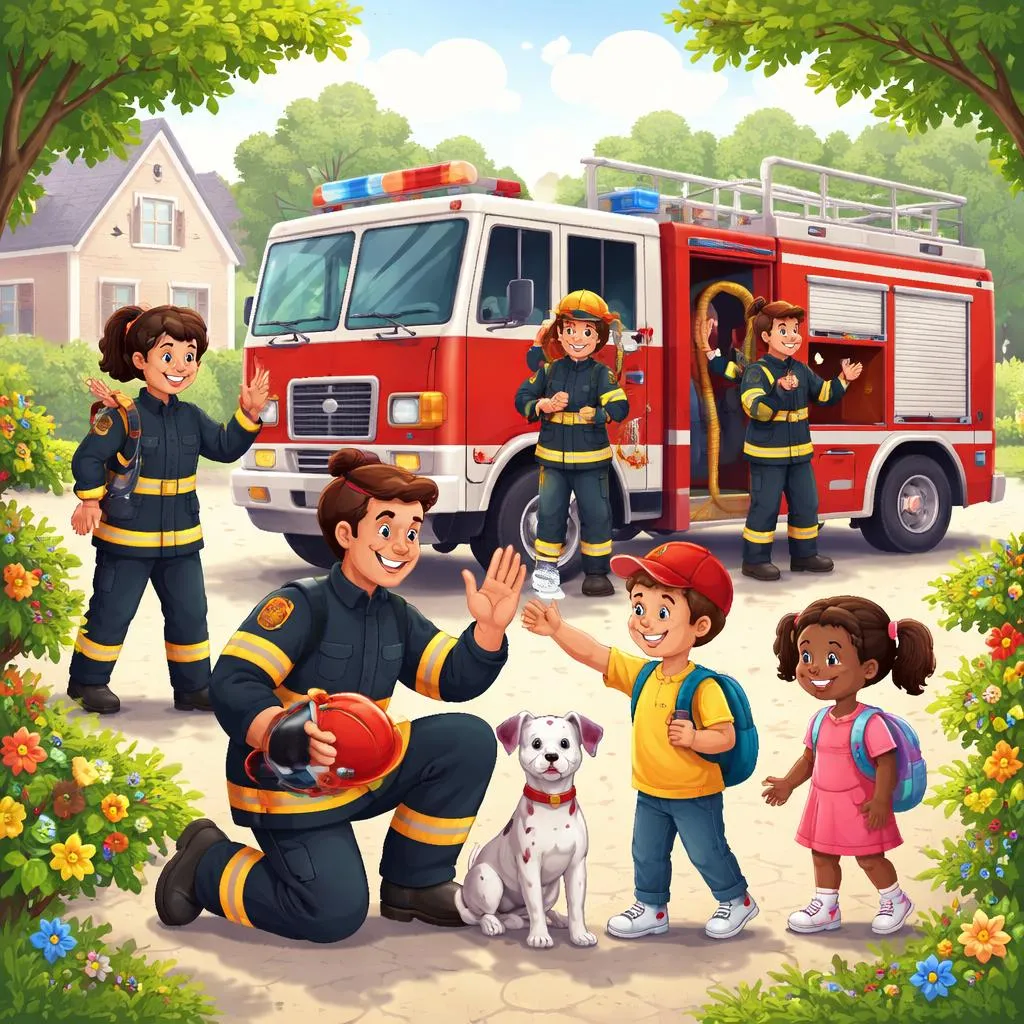

What Are Children's Stories About Firemen? Let us explore this exciting genre of children's literature together. Children's stories about firemen focus on firefighters and their important work. They show firefighters as brave community helpers who save lives. The stories follow firefighters through their daily duties at the station. Characters slide down poles when alarms sound urgently. They put on special gear to protect themselves from fire. They drive big red trucks with flashing lights and sirens. They use hoses, ladders, and axes to fight fires. The stories show them rescuing people and animals from danger. Children learn that firefighters are friends who help everyone. The stories also teach fire safety tips in engaging ways. Young readers come to see firefighters as heroes they can trust.
Meaning and Purpose of Firefighter Stories These stories serve several important purposes in children's development. They introduce children to an important community helper role. Children learn what firefighters do and why they matter. The stories also build positive associations with firefighters. Children learn that firefighters are helpers, not people to fear. This is crucial in case of real emergencies. Children who know firefighters are friends will seek their help. The stories also teach fire safety in memorable ways. Stop, drop, and roll becomes a story element. Get out and stay out becomes part of the narrative. The stories also inspire courage and heroism in children. Characters model bravery in dangerous situations. Children learn that ordinary people can do extraordinary things.
Common Elements in Firefighter Stories We can identify several elements common to firefighter narratives. The fire station is a central setting in these stories. Children see where firefighters live and work. Fire trucks appear as exciting vehicles children love. The big red trucks with ladders fascinate young readers. Firefighter gear including helmets, coats, and boots appears. Children learn why each piece of equipment matters. The alarm sounding creates excitement and urgency. Firefighters rush to respond immediately. A fire or emergency creates the story's problem. Someone needs help, and firefighters provide it. The rescue shows firefighters saving people or animals. The happy ending celebrates the firefighters' success. Fire safety tips are woven naturally into the plot.
Categories of Firefighter Stories We can organize firefighter stories into several helpful categories. Station life stories show what firefighters do between calls. Cooking, exercising, and cleaning equipment appear. Rescue stories focus on exciting emergency calls. Cats in trees, house fires, and car accidents appear. Fire safety stories teach prevention and emergency response. Stop, drop, and roll is featured prominently. Animal rescue stories feature firefighters saving pets. Dogs, cats, and even wild animals get rescued. Historical stories show firefighting long ago. Old-fashioned equipment and methods appear. Female firefighter stories feature women in this role. Girls see themselves represented in these stories. Multicultural firefighter stories show diversity in fire departments.
Daily Life Connections Through Firefighter Stories Firefighter stories connect to children's experiences in meaningful ways. Children see fire trucks in their neighborhoods sometimes. They hear sirens and wonder where the trucks are going. Fire station visits are common school field trips. Many children have seen a fire station up close. Fire safety drills happen at school regularly. Children practice what to do in fires. Smoke detectors at home beep when batteries are low. Parents talk about fire safety with children. Firefighters sometimes visit schools for presentations. Children meet real firefighters in person. We can point out these connections during reading. "Remember when we saw a fire truck on our street?" "You practiced stop, drop, and roll at school."
Vocabulary Learning from Firefighter Stories Firefighter stories introduce important community helper vocabulary. Firefighter means a person whose job is to put out fires. Fire station means the building where firefighters live and work. Fire truck means a vehicle equipped for fighting fires. Hose means a flexible tube for conveying water to fires. Ladder means a device used for climbing to high places. Helmet means a hard hat worn for protection. Siren means a loud warning device on emergency vehicles. Alarm means a signal that warns of danger or emergency. Rescue means saving someone from dangerous situations. Safety means being protected from danger or harm. We can teach these words with picture cards showing examples. Use them in sentences about firefighters and their work.
Phonics Points in Firefighter Stories Firefighter stories provide useful phonics practice with community helper vocabulary. Firefighter has the long I and short I and ER and ER. Station has the ST blend and long A and SH sound. Truck has the TR blend and short U and CK digraph. Hose has the H sound and long O and silent E. Ladder has the short A and DD and ER ending. Helmet has the short E and short E and T sound. Siren has the long I and short E and N sound. Alarm has the short A and AR combination and M sound. Rescue has the short E and long U. Safety has the long A and long E. We can focus on one sound pattern from each story. Find all words with that sound in the firefighter tale. Write them on fire truck or helmet shapes for practice.
Grammar Patterns in Firefighter Narratives Firefighter stories model useful grammar for young readers naturally. Present tense describes what firefighters do every day. "Firefighters drive big red trucks to emergencies." Past tense tells what happened in a specific story. "Yesterday the firefighters rescued a cat from a tree." Future tense shows what firefighters will do next. "The firefighters will check their equipment after each call." Questions explore firefighter roles and responsibilities. "What do firefighters wear to protect themselves?" "How do they know when there is a fire?" Commands appear in fire safety instructions. "Stop, drop, and roll." "Get out and stay out." Descriptive language paints action scenes vividly. "The brave, strong firefighters climbed their tall ladder toward the smoke." Prepositional phrases describe locations. "At the station, on the truck, through the smoke." We can point out these patterns during reading.
Learning Activities for Firefighter Stories Many activities deepen understanding of firefighter themes. Visit a local fire station for a real-life tour. Meet real firefighters and see their equipment. Practice stop, drop, and roll until it becomes automatic. Children learn this life-saving skill through movement. Create a fire truck from a large cardboard box. Paint it red and add details like hoses and ladders. Dress up as firefighters with simple homemade gear. Use yellow raincoats, construction paper helmets, and boots. Draw a map of escape routes from home or classroom. Practice fire drills using the planned routes. Make a fire safety poster with important rules. Display it where everyone can see and remember. These activities make fire safety tangible and memorable.
Printable Materials for Firefighter Learning Printable resources support deep engagement with firefighter themes. Create firefighter gear labeling pages with vocabulary words. Label helmet, coat, boots, gloves, and oxygen tank. Design fire safety rules posters with simple illustrations. Stop, drop, roll, get out, stay out, call 911 included. Make vocabulary cards with firefighter words and definitions. Firefighter, station, truck, hose, ladder, helmet, siren included. Create a fire truck diagram for children to label. Cab, ladder, hose, wheels, lights, siren parts identified. Design a fire escape plan template for home use. Draw rooms and mark two ways out of each. Make a thank you card for firefighters to color and write. Deliver to local fire station as community appreciation. These printables structure firefighter exploration activities effectively.
Educational Games About Firefighters Games make firefighter learning playful and interactive. Play "Firefighter Says" like Simon Says with firefighter actions. "Firefighter says spray the hose." "Firefighter says climb the ladder." Create "Gear Up Relay" racing to put on firefighter gear. Use simple costume pieces for children to don quickly. Play "Rescue Mission" hiding stuffed animals to be saved. Children locate and rescue them like firefighters. Design "Stop, Drop, and Roll Freeze" dance game. Music plays, children dance, freeze when music stops and practice stop, drop, roll. Play "Fire Safety Bingo" with safety rules on cards. Stop, drop, roll, get out, stay out, call 911 included. Create "Match the Tool" pairing firefighter equipment with uses. Match hose with water, ladder with climbing, helmet with protection. These games build firefighter knowledge through active participation.
Teaching Fire Safety Through Stories Firefighter stories naturally teach essential fire safety lessons. Stop, drop, and roll appears in many stories. Children learn this through the narrative, not just instruction. Get out and stay out is another key message. Stories show characters escaping and not going back inside. Know two ways out of every room appears in stories. Characters practice escape plans in the narrative. Never hide from firefighters is an important lesson. Stories show children that firefighters are friends, not scary. Crawl low under smoke appears in fire stories. Characters demonstrate this life-saving technique. The stories make these lessons memorable and meaningful.
Reducing Fear of Firefighters Some children find firefighters in gear frightening. The masks and oxygen tanks look strange and scary. Stories show firefighters putting on gear gradually. Children see the familiar person become the geared-up hero. They learn that the person inside is still the same helper. The stories explain why each piece of gear is needed. The mask helps them breathe in smoke. The coat protects them from heat. Understanding reduces fear and builds trust. Children learn that firefighters in gear are still friends. This knowledge is crucial in real emergencies. Children will not hide from firefighters who come to help.
Appreciating Community Helpers Firefighter stories build appreciation for all community helpers. Children learn that firefighters risk their lives for others. They work hard to keep everyone safe. The stories inspire gratitude for these brave workers. Children can express thanks through cards and visits. They learn to appreciate others who help in the community. Police officers, doctors, and teachers also help. The appreciation extends to all who serve others. This builds a foundation of gratitude and respect. Children grow up valuing those who make communities work. The seeds planted early bloom throughout life.