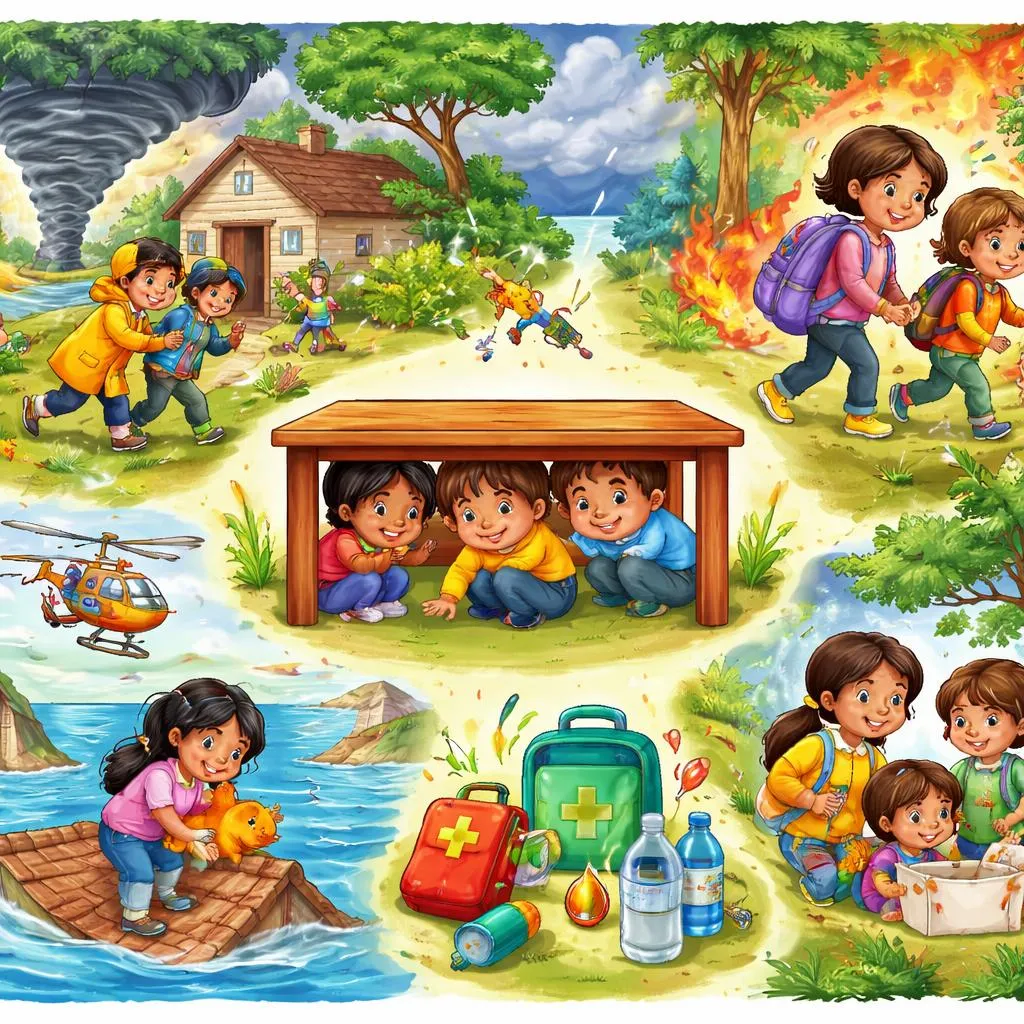

What Are Children's Stories About Natural Disasters? Let us explore this important educational genre together. Children's stories about natural disasters explain powerful forces of nature. They describe events like earthquakes, floods, hurricanes, and tornadoes. The stories show what happens during these events in child-appropriate ways. Characters experience the disaster and must stay safe. They follow emergency plans and listen to helpers. The stories emphasize preparation and calm during emergencies. They explain why disasters happen in simple terms. The focus is on safety, not sensationalism. After the disaster, communities come together to help. The stories show recovery and rebuilding after the event. Children learn that people survive and help each other.
Meaning and Purpose of Natural Disaster Stories These stories serve several important purposes in children's education. They prepare children for possible emergencies in their area. Knowing what to do reduces panic if disaster strikes. The stories also demystify frightening natural events. Understanding why things happen reduces fear. The narratives also emphasize the importance of emergency plans. Families who plan together stay safer together. The stories also build empathy for disaster victims elsewhere. Children understand what others are going through. The narratives also show community resilience and helping. People come together to support each other after disasters. This builds hope and faith in human goodness. Children learn that even terrible events can be overcome.
Common Elements in Natural Disaster Stories We can identify several elements common to these narratives. The normal world is shown before the disaster strikes. Everything is ordinary and peaceful. Signs of approaching disaster appear gradually. Weather changes, ground shakes, or water rises. Characters follow safety procedures they have learned. They go to safe places and listen to instructions. The disaster event itself is described but not dwelled on. The focus stays on safety and coping. Helpers like firefighters and police arrive to assist. Communities work together during and after the event. Recovery and rebuilding happen after the danger passes. The story ends with hope and community strength.
Categories of Natural Disaster Stories We can organize natural disaster stories into helpful categories. Earthquake stories explain why the ground shakes. They teach drop, cover, and hold on safety. Hurricane stories describe big storms with wind and rain. They emphasize evacuation and sheltering safely. Flood stories show water rising and people moving to high ground. They teach never playing in flood water. Tornado stories explain these powerful rotating winds. They teach going to the basement or interior room. Wildfire stories show fires spreading and people evacuating. They teach creating defensible space around homes. Tsunami stories explain giant waves after earthquakes. They teach moving to high ground immediately. Blizzard stories describe dangerous winter storms. They teach staying inside and being prepared.
Daily Life Connections Through Natural Disaster Stories These stories connect to children's experiences in meaningful ways. Weather is part of everyday life everywhere. Children experience storms, wind, and rain regularly. Emergency drills happen at school for various situations. Fire drills and lockdown drills are familiar. News reports sometimes show disasters in other places. Children hear about these events and have questions. Families may have emergency kits and plans. Parents discuss what to do in emergencies. Some children live in areas prone to certain disasters. They may have experienced actual events. The stories validate their experiences and concerns. We can point out these connections during reading. "That's why we practice drills at school." "Our family has an emergency kit too."
Vocabulary Learning from Natural Disaster Stories These stories introduce important earth science and safety vocabulary. Natural disaster means a destructive event caused by nature. Earthquake means shaking of the ground from tectonic plates moving. Hurricane means a large storm with strong winds and rain. Tornado means a violently rotating column of air. Flood means an overflow of water onto normally dry land. Wildfire means an uncontrolled fire burning in wild areas. Tsunami means a long high sea wave caused by earthquake. Blizzard means a severe snowstorm with strong winds. Evacuation means moving people from dangerous areas to safety. Emergency means a serious, unexpected situation requiring action. We can teach these words with picture cards showing examples. Use them in sentences about different natural events.
Phonics Points in Natural Disaster Stories These stories provide useful phonics practice with science vocabulary. Disaster has the short I and short A and short A and ER ending. Earthquake has the EAR combination and long A and QU blend and silent E. Hurricane has the HUR combination and short I and long A. Tornado has the TOR combination and long A and long O. Flood has the FL blend and long OO and D sound. Wildfire has the long I and long I and silent E. Tsunami has the T sound and SU and long A and long E. Blizzard has the BL blend and short I and ARD ending. Evacuation has the long E and short A and long U and long A. Emergency has the long E and ER and short E and long E. We can focus on one sound pattern from each story. Find all words with that sound in the disaster tale. Write them on safety kit or shelter shapes for practice.
Grammar Patterns in Natural Disaster Narratives These stories model useful grammar for young readers naturally. Past tense tells what happened during the disaster. "The family evacuated when the hurricane approached." Present tense describes what happens generally during disasters. "During an earthquake, you drop, cover, and hold on." Future tense shows what will happen to stay safe. "We will go to the shelter if there is a tornado warning." Questions explore safety knowledge and understanding. "What should you do during a flood?" "Where is the safest place in a storm?" Commands appear in safety instructions. "Go to high ground." "Cover your head." Descriptive language paints scenes without sensationalism. "The strong, powerful storm brought heavy rain and wind to the town." Prepositional phrases describe locations and movements. "In the basement, to higher ground, under the table." We can point out these patterns during reading.
Learning Activities for Natural Disaster Stories Many activities deepen understanding of disaster preparedness. Create an emergency kit for the classroom or home. Include water, food, flashlight, radio, and first aid supplies. Practice emergency drills for different disaster scenarios. Drop, cover, hold on for earthquakes; evacuate for fire. Draw a home safety plan showing escape routes. Mark where to go for different types of disasters. Learn the warning signs of different natural disasters. What does the sky look like before a tornado? Research what disasters are most common in your area. Prepare specifically for those possibilities. Create a family communication plan for emergencies. Know how to reach each other if separated. These activities make preparedness practical and empowering.
Printable Materials for Disaster Learning Printable resources support deep engagement with safety themes. Create disaster safety cards with instructions for each type. Earthquake: drop, cover, hold on; Tornado: go to basement. Design an emergency kit checklist for home or classroom. Water, food, flashlight, radio, batteries, first aid included. Make vocabulary cards with disaster words and definitions. Natural disaster, earthquake, hurricane, tornado, flood, evacuation included. Create a family emergency plan template to complete. Meeting places, contact numbers, special needs noted. Design a weather watch chart for tracking storms. Record storm types and safety steps taken. Make a disaster preparation coloring book with safety scenes. Children color while learning important safety rules. These printables structure disaster education activities effectively.
Educational Games About Natural Disasters Games make disaster learning playful and interactive. Play "Safety Says" like Simon Says with safety actions. "Safety says drop, cover, and hold on." "Safety says evacuate to high ground." Create "Match the Disaster" pairing disasters with safety steps. Match earthquake with drop, cover, hold on; flood with go to high ground. Play "Emergency Kit Relay" racing to gather needed items. Teams collect correct items for emergency kit. Design "Disaster Bingo" with safety items on cards. Flashlight, water, radio, first aid, blanket, whistle included. Play "What Would You Do?" with disaster scenario cards. Discuss and act out appropriate safety responses. Create "Prepare or Not?" sorting actions that help or don't. Prepare kit helps; ignore warning doesn't help. These games build safety awareness through active participation.
Teaching Calm During Emergencies Natural disaster stories emphasize staying calm during emergencies. Panic leads to poor decisions and danger. Calm minds remember safety procedures correctly. Characters in stories stay calm and follow plans. They listen to adults and helpers for instructions. Children learn that staying calm is part of being safe. They can practice calm through breathing and focus. Knowing what to do helps maintain calmness. Preparation reduces fear of the unknown. The stories model this connection repeatedly. Children internalize that calm + plan = safety.
The Role of Community Helpers These stories highlight the importance of community helpers. Firefighters, police, and emergency workers arrive to help. They are trained to handle disaster situations. Children learn to trust and listen to these helpers. The stories also show neighbors helping neighbors. Communities work together during and after disasters. This builds faith in human goodness and cooperation. Children learn that they are not alone in emergencies. Many people are ready to help them. This knowledge reduces fear and increases security.
Hope and Recovery Natural disaster stories always include hope and recovery. The disaster ends, and rebuilding begins. Communities come together to support each other. People help neighbors and strangers alike. Life gradually returns to normal over time. The stories emphasize that even terrible events pass. Children learn that recovery happens after every disaster. This builds resilience and hope for the future. They understand that difficult times are temporary. The human spirit is strong and resilient. Communities can rebuild and become stronger. These messages are crucial for emotional health.