
What is the lingua franca?
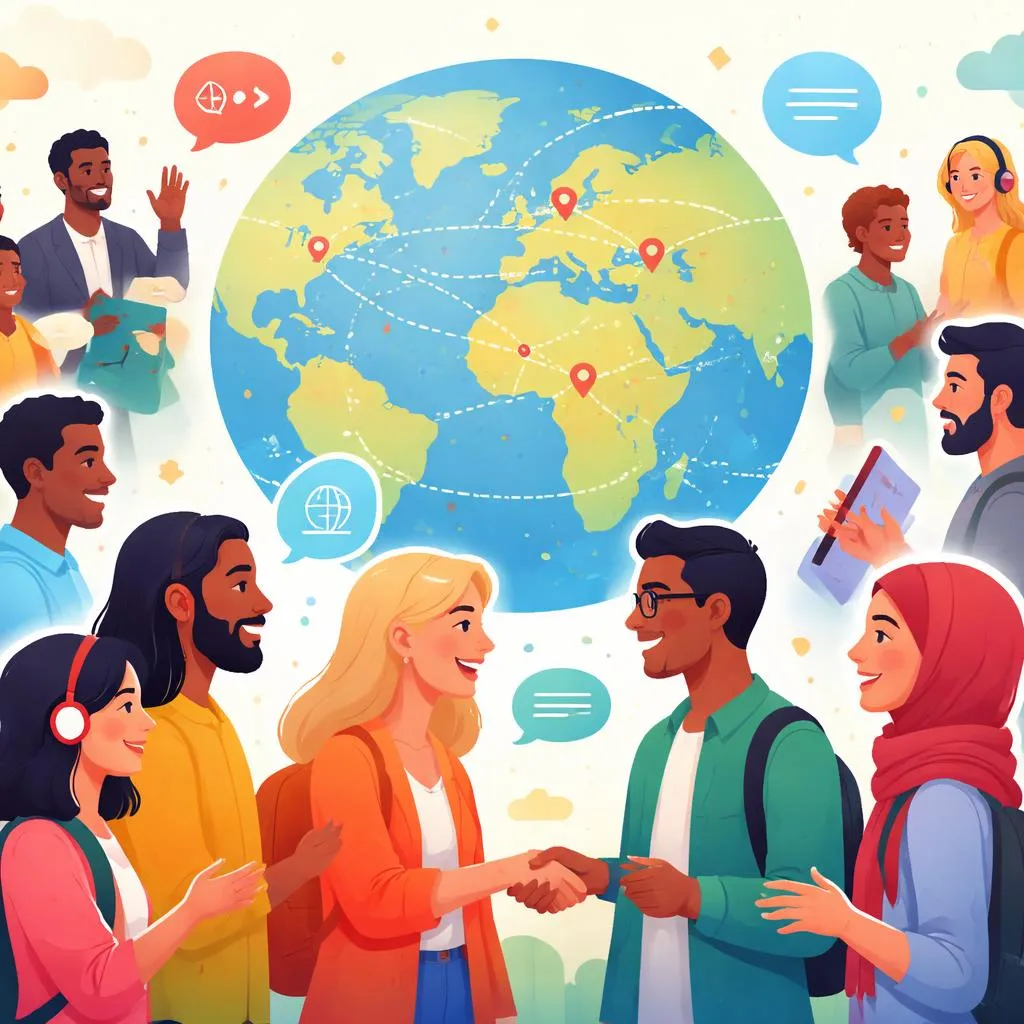
Hello, global communicators. Today, we are going to learn about a very special idea. We are going to ask, what is the lingua franca. This is a fun phrase from history. A lingua franca is a common language. People use a lingua franca to talk to each other when they speak different native languages. It is like a bridge made of words.
Think of a big playground with kids from many countries. Everyone has their own language at home. But to play tag or soccer together, they need to understand the rules. They might all use a few simple words in one common language to play. That common language is like a lingua franca for the playground. It helps everyone connect and have fun together. Let's discover more about this wonderful word bridge.
Meaning and explanation
So, what is the real meaning of a lingua franca. The word "lingua" means "tongue" or "language" in Latin. "Franca" comes from an old word. Together, they mean a language used for communication between groups of people who do not share a native language.
A lingua franca is not anyone's first language. It is a shared tool. Long ago, traders and travelers used a lingua franca to buy, sell, and share news. Today, scientists, pilots, business people, and tourists often use a lingua franca. It makes global teamwork possible. It helps share ideas and make friends across borders. Understanding what is the lingua franca helps us see how the world stays connected.
Categories or lists
There have been many lingua francas throughout history and in different parts of the world. Let's look at some examples.
Historical Lingua Francas: These were common languages used long ago in certain regions. Latin: Used across the Roman Empire and later by scholars and scientists in Europe for centuries.
Koine Greek: A common form of Greek used in the ancient Mediterranean world after Alexander the Great.
Arabic: Became a lingua franca across the Middle East, North Africa, and beyond with the spread of Islam, especially for trade, science, and religion.
Sanskrit: An ancient language of India used for scholarly and religious texts across South and Southeast Asia.
Modern Global Lingua Franca: English: This is the most widespread lingua franca in the world today. It is the main language of international business, air travel, science, the internet, and popular culture. A scientist from Japan and a scientist from Germany might publish their research in English.
Regional Lingua Francas: These are common languages used in a specific part of the world. Swahili: Used as a lingua franca in many parts of East Africa.
Russian: Still serves as a lingua franca in parts of Eastern Europe and Central Asia.
Hindi/Urdu (Hindustani): Understood by many across Northern India and Pakistan.
Mandarin Chinese: The most spoken native language, it acts as a lingua franca within China among speakers of different Chinese dialects.
Daily life examples
You can see and hear the idea of a lingua franca in your own world. Here are two places.
At an International Airport or a Tourist Spot: Listen to the announcements. They are often in the local language and then in English. Look at the signs for gates, restrooms, and baggage claim. They have symbols and often English words. This is because English acts as a lingua franca for travelers from all over. People use it to ask for directions or help. This is a real-world example of what is the lingua franca.
Watching the Olympics or an International Science Fair on TV: Listen to the interviews with athletes from different countries. Many will answer questions in English, even if it's not their first language. At a science fair, students from around the world explain their projects in a common language so judges and visitors can understand. These events show a lingua franca in action, helping people share their achievements globally.
Printable flashcards
Printable flashcards can make learning about this concept fun. Create "Lingua Franca Scene" cards.
Each card shows a picture of a situation where people from different places need to talk. One card shows an international airport control tower. Another shows a United Nations meeting. Another shows kids playing an online game from different continents. On the back, the card asks, "What lingua franca might they use?" and gives a simple answer. This builds critical thinking about real-world communication.
Another idea is a "Language Passport" activity. Print a small "passport" booklet. Each page is for a different historical or modern lingua franca. The page has a flag or symbol, the language's name, and a simple fact. "Language: Latin. Used by: Roman soldiers and medieval scientists." Kids can collect "stamps" as they learn about each one, turning the abstract concept of what is the lingua franca into a collectible adventure.
Learning activities or games
Let's play "International Airport Role-Play." Set up a simple airport check-in desk. One child is the airline agent. Others are "passengers" from different countries (give them country cards like France, Japan, Brazil). The rule is that everyone at the check-in desk must use the shared lingua franca (English) to communicate. "Passport, please." "Here is my boarding pass." This imaginative play teaches the practical purpose of a common language.
Try the "Lingua Franca Bingo." Create bingo cards with pictures of international scenarios: a satellite, a music festival, a hospital with doctors from different countries, a sports team with foreign players. The caller describes the scene. "People here need to share medical research quickly!" Players mark a square that shows doctors talking. The first to get a line shouts "Bingo!" and must say, "They use a lingua franca like English to share research."
Create a "Build-a-Bridge" storytelling project. Tell a short story starter about a problem that needs solving by people from different countries. "A storm damaged a famous sea wall. Engineers from the Netherlands, Japan, and Egypt need to fix it." In small groups, kids must continue the story, showing how the characters use a lingua franca to share plans and solve the problem. They can act it out or write a few sentences. This activity emphasizes cooperation and makes the answer to what is the lingua franca something powerful and positive—a tool for building and helping across the world.