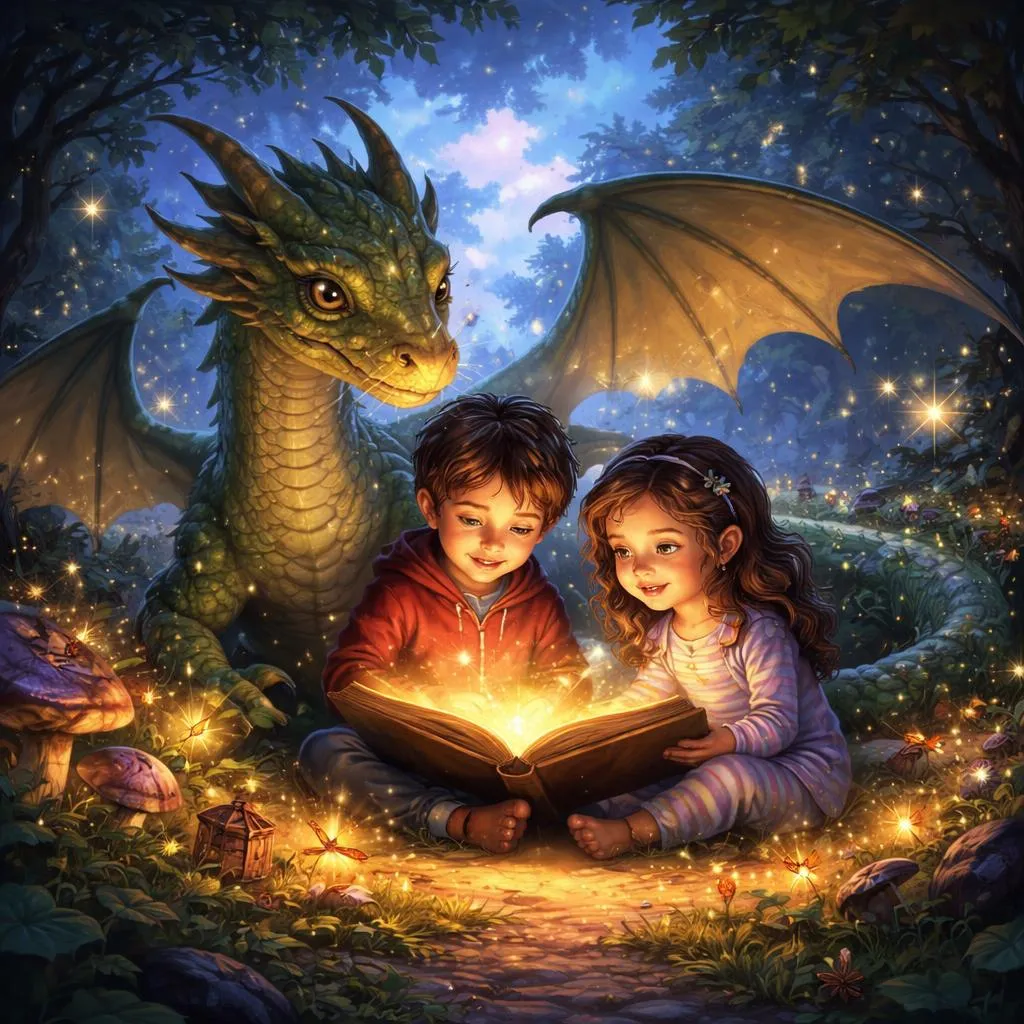

Dragons have fascinated children for generations. These magnificent creatures appear in stories from cultures around the world. Children's dragon stories offer something special for young readers. They combine the thrill of the fantastic with lessons about courage, friendship, and understanding differences. Dragons can be scary or friendly, huge or tiny, wise or foolish. This variety means every child can find a dragon story that speaks to them. This article explores how teachers can use these magical tales to build literacy skills while nurturing imagination.
What Are Children's Dragon Stories? Children's dragon stories are narratives that feature dragons as central characters. These tales come from many traditions. European stories often present dragons as fearsome beasts to be defeated. A brave knight must slay the dragon to save the kingdom. Asian stories frequently show dragons as wise and benevolent creatures. They bring good luck and protect worthy people. Modern stories often blend these traditions. Dragons become characters with personalities, feelings, and problems. They might be lonely and looking for a friend. They might be clumsy and cause accidental trouble. They might be small and need protection themselves. The variety is endless. Each story uses dragons to explore themes that matter to children.
Meaning and Explanation Behind Dragon Stories Dragon stories carry rich meaning beneath their fantastic surfaces. Dragons often represent things children need to understand and master. A fierce dragon might represent a fear to be overcome. A friendly dragon might represent the unknown becoming known. A misunderstood dragon might teach about judging others too quickly.
The hero who faces a dragon learns courage. The child who befriends a dragon learns that differences need not separate us. The village that fears a dragon learns that what we do not understand often seems scarier than it really is. These lessons arrive wrapped in adventure and magic. Children absorb them without feeling taught.
Dragons also represent the power of imagination itself. They do not exist in the real world. Yet they feel completely real in stories. This paradox teaches children something profound. The mind can create entire worlds. Stories can bring impossible things to life. This understanding opens the door to creativity and original thinking.
Categories or Lists of Dragon Stories Children's dragon stories fall into several natural categories. Each offers different experiences for young readers.
Friendly Dragon Stories: These feature dragons who become friends with human characters.
A dragon who helps children solve problems.
A dragon who feels lonely and seeks companionship.
A dragon who is misunderstood by fearful villagers.
Courage and Adventure Stories: These involve characters who must face dragons.
A brave child who discovers the dragon is not scary.
A knight who learns that fighting is not the answer.
A quest to find a dragon for a peaceful purpose.
Silly Dragon Stories: These use humor to make dragons approachable.
A dragon who cannot breathe fire properly.
A dragon who is afraid of mice.
A dragon who loves to bake cookies.
Cultural Dragon Stories: These draw on specific cultural traditions.
Chinese dragons who bring good fortune.
Welsh dragons from ancient British legend.
Dragon stories from Native American traditions.
Baby Dragon Stories: These feature young dragons with growing-up problems.
A hatchling finding its way in the world.
A young dragon learning to control its fire.
A dragon child starting school.
Wordless Dragon Picture Books: These tell dragon stories entirely through illustrations.
Beautiful art that invites storytelling.
Children create their own words for the pictures.
Accessible to pre-readers and English learners.
Daily Life Examples from Dragon Stories Children's dragon stories connect to everyday experiences in surprising ways. A dragon who cannot control its fire is like a child learning to control emotions. A dragon who feels lonely is like any child wanting friends. A dragon who is different from others connects to every child's experience of feeling unique.
Teachers can draw these connections during discussion. "Remember how the dragon felt when everyone ran away? Has that ever happened to you?" "The dragon had to practice breathing fire many times before getting it right. What do you practice until you get better?"
The stories also provide language for talking about feelings. A child who feels angry can think about the dragon's fire. A child who feels left out can remember the lonely dragon. The fantasy element creates safe distance while exploring real emotions.
Vocabulary Learning from Dragon Stories Children's dragon stories introduce rich vocabulary in engaging contexts.
Dragon Words: Fire, smoke, wings, scales, claw, tail, roar, breathe, fly, hoard, treasure, cave.
Fantasy Words: Magic, spell, castle, knight, princess, kingdom, quest, legend, myth, creature.
Emotion Words: Brave, scared, lonely, proud, fierce, gentle, curious, surprised, grateful.
Action Words: Soar, swoop, guard, protect, rescue, explore, discover, hide, seek.
Teachers can introduce these words before reading. Point them out during the story. Use them in discussion after. Create a dragon word wall with pictures. The vocabulary becomes meaningful through connection to exciting stories.
Phonics Points in Dragon Stories The language in dragon stories offers excellent phonics practice opportunities.
Beginning Sounds: Dragon starts with DR. Practice this blend. Drum, dress, drink, draw. Fire starts with F. Feel the sound. Feather, funny, family, forest.
Onomatopoeia: Dragon stories include wonderful sound words. Roar, swoosh, crackle, boom. These words demonstrate the connection between sounds and letters directly.
Rhyming Words: Many dragon stories include rhyme. Dragon and wagon. Fire and higher. Cave and brave. These patterns build phonemic awareness.
Syllable Practice: Dragon words help with syllable counting. Drag-on has two. Fire has two. Magic has two. Castle has two. Kingdom has two. Treasure has two. Practice clapping syllables.
Teachers can pause during reading to notice these patterns. The exciting story provides motivation to pay attention to words.
Grammar Patterns in Dragon Stories Dragon stories provide natural contexts for grammar instruction.
Past Tense for Storytelling: Most dragon stories use past tense. The dragon lived in a cave. He guarded his treasure. A knight came to the castle. This models narrative past tense naturally.
Descriptive Language: Dragons need many adjectives. The enormous dragon. The fiery breath. The glittering hoard. The ancient legend. These descriptions enrich language.
Prepositions of Place: Dragon stories involve location. In the cave. On the mountain. Under the bridge. Behind the castle. These prepositions become concrete through story settings.
Dialogue Patterns: Dragons and characters speak to each other. "Who are you?" asked the dragon. "I am looking for treasure," said the child. This models question and answer patterns.
Teachers can point out these patterns gently during reading. The grammar learning happens within the exciting story context.
Learning Activities for Dragon Stories Activities bring children's dragon stories to life in the classroom.
Activity 1: Build a Dragon Cave Use blankets, boxes, or classroom furniture to create a dragon cave reading area. Add pillows and dragon books. Children take turns reading in the cave. This immersive environment makes stories physical.
Activity 2: Design a Dragon Give children art supplies to create their own dragon. What color is it? How many wings? Does it breathe fire or ice? Is it friendly or fierce? Give the dragon a name and write a short story about it.
Activity 3: Dragon Egg Hunt Hide plastic eggs around the room. Inside each egg, place a dragon story question or activity. Children find eggs and complete the task inside. This combines movement with learning.
Activity 4: Dragon Puppets Create simple dragon puppets using paper bags, socks, or craft sticks. Children use them to retell dragon stories or create new adventures. This builds speaking and narrative skills.
Activity 5: Dragon Movement Pretend to be dragons. Soar through the sky. Breathe fire (carefully). Guard treasure. Curl up to sleep. This kinesthetic activity connects body and story.
Printable Materials for Dragon Stories Printable resources extend learning from any dragon story.
Dragon Coloring Pages: Create outline drawings of different dragon types. Children color while listening to dragon stories.
Design a Dragon Template: A page with space to draw a dragon and answer questions about it. Name, color, special powers, favorite food, where it lives.
Dragon Story Map: A simple graphic organizer for planning or retelling dragon stories. Characters, setting, problem, solution.
Dragon Word Search: Create word searches using dragon vocabulary. Fire, wings, scales, cave, treasure, knight.
Dragon Bookmarks: Create bookmarks featuring dragons and encouraging messages. "Be brave like a dragon." "Read dragon stories."
Educational Games for Dragon Stories Games make reviewing dragon stories playful and engaging.
Game: Dragon, Dragon, Knight Play like Duck, Duck, Goose but with dragon themes. Children sit in a circle. One walks around tapping heads saying "dragon, dragon, dragon" then taps a head saying "knight." The knight chases the dragon around the circle.
Game: Dragon Treasure Hunt Hide a "treasure" somewhere in the room. Give children clues related to dragon stories to find it. "Look where the dragon would sleep." "Search near something shiny."
Game: Dragon Bingo Create bingo cards with dragon story elements. Call out descriptions. Children cover matching pictures or words.
Game: Dragon Charades Write dragon actions on slips of paper. Flying, breathing fire, guarding treasure, hatching from an egg. Children act them out for others to guess.
Game: Pass the Dragon Egg Sit in a circle with a small egg-shaped object. Play music while passing. When music stops, the child holding the egg answers a dragon story question.
Connecting Dragon Stories to Other Subjects Dragon stories connect naturally to many curriculum areas.
Science Connection: Explore real animals that inspired dragon legends. Komodo dragons. Flying lizards. Fire-breathing beetles. Study habitats where dragons might live. Discuss what dragons would need to survive.
Social Studies Connection: Compare dragon stories from different cultures. Chinese dragons vs. European dragons. Map where different dragon legends come from. Learn about the cultures that created them.
Art Connection: Study dragon art from around the world. Create dragon art in different styles. Dragon puppets. Dragon masks. Dragon paintings.
Math Connection: Count dragon scales. Measure dragon wingspans. Calculate how much treasure a dragon might have. Create dragon math problems.
Music Connection: Create dragon songs and chants. Use instruments to create dragon sounds. Thunder for dragon footsteps. Cymbals for fire bursts.
The Appeal of Dragons Across Ages Dragons hold a special place in children's literature for good reason. They are powerful enough to be exciting. They are magical enough to inspire wonder. They are varied enough to represent almost anything. A dragon can be a villain to defeat or a friend to cherish. A dragon can be a problem to solve or a helper who solves problems. This flexibility means dragon stories work for children at every developmental stage.
Very young children enjoy gentle dragon stories with simple plots and friendly characters. Older children can handle more complex dragon tales with moral ambiguity and detailed world-building. The same creature grows with the child. This is part of the magic.
Dragons also cross cultural boundaries. Every culture has dragon-like creatures in its traditions. This universality makes dragon stories excellent for multicultural classrooms. Children from different backgrounds can share their own dragon traditions. They discover both differences and similarities. They learn that humans everywhere tell stories about magnificent creatures.
The appeal of dragons ultimately comes down to one thing. They represent possibility. If dragons can exist in stories, anything can exist. The world of imagination has no limits. For children just discovering the power of stories, this is an important lesson. The door to creativity opens wide. And once opened, it never fully closes again.