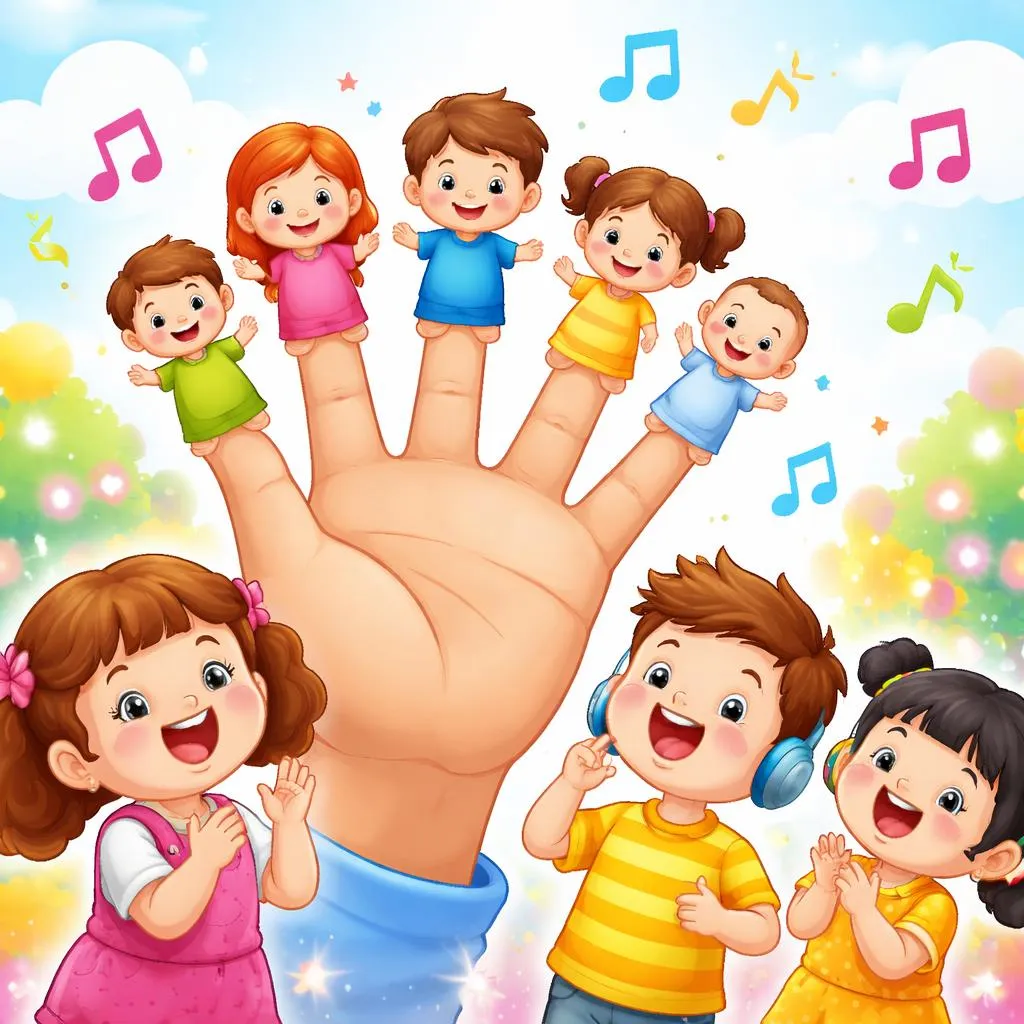

Hello, wonderful teachers and caring parents! Today we explore a song that children everywhere adore. It involves fingers and family. It has a simple, catchy tune. Children learn it quickly and sing it happily. The song is the Family Finger Family. Each finger becomes a family member. Daddy finger, mommy finger, brother finger, sister finger, baby finger. Children hold up their fingers as they sing. This song teaches family vocabulary. It builds fine motor skills. It creates connection and fun. Let us discover the Family Finger Family together. Let us learn how to use this song for joyful English learning.
What Is the Family Finger Family Rhyme? The Family Finger Family is a popular children's song and finger play. It introduces family members through the fingers on a hand. Each finger represents a different family member. The thumb is usually daddy finger. The index finger is mommy finger. The middle finger is brother finger. The ring finger is sister finger. The little finger is baby finger.
The song likely started as a simple nursery rhyme. It became widely popular through videos and animations. Now children all over the world know it. The simple tune and actions make it perfect for young learners. They can participate immediately. They feel successful and proud.
The song has a repetitive structure. Each verse follows the same pattern. First we ask where a finger is. Then the finger appears and says hello. This pattern builds anticipation. Children love waiting for each finger to appear. They love saying hello to each family member.
The Lyrics of the Nursery Rhyme Let us look at the complete Family Finger Family lyrics. Many versions exist. Here is the most common version.
Daddy finger, daddy finger, where are you? Here I am, here I am. How do you do?
Mommy finger, mommy finger, where are you? Here I am, here I am. How do you do?
Brother finger, brother finger, where are you? Here I am, here I am. How do you do?
Sister finger, sister finger, where are you? Here I am, here I am. How do you do?
Baby finger, baby finger, where are you? Here I am, here I am. How do you do?
Some versions add more family members. Grandma finger, grandpa finger, or even pet finger. The pattern stays the same. This flexibility allows teachers to adapt the song to different family structures.
Vocabulary Learning from the Song This simple song teaches many useful words. Let us explore them together.
Family words: The song introduces basic family vocabulary. Daddy, mommy, brother, sister, baby. These are essential words for young children. They learn to name the people in their own families. This helps them talk about their lives.
Finger names: The song teaches finger names indirectly. Children learn which finger is which. They learn that each finger has a name and a role. This builds body awareness.
Question words: The song teaches the question "where are you?" This is a common and useful question. Children learn to ask about location. They learn to answer with "here I am."
Greetings: The song teaches the greeting "how do you do?" This is a polite way to say hello. Children learn social language through the song. They practice greeting others politely.
Pronouns: The song uses "I" and "you." These are important pronouns. Children learn to talk about themselves and address others directly.
Phonics Points in the Rhyme The Family Finger Family song offers good phonics practice. Let us look at some important sounds.
Listen to the "f" sound. It appears in "finger" and "family." The "f" sound is made by biting the lower lip and blowing. Practice together. "F-f-finger." "F-f-family." This sound appears in many important words.
Listen to the "m" sound. It appears in "mommy" and "my." The "m" sound is made with closed lips. Practice together. "M-m-mommy." "M-m-my." This is a comforting, easy sound for young children.
Listen to the "b" sound. It appears in "brother" and "baby." The "b" sound is a quick popping sound. Practice together. "B-b-brother." "B-b-baby." This sound appears in many family words.
The repetitive nature of the song reinforces these sounds. Children hear them many times. They practice them through singing. This builds strong phonemic awareness.
Grammar Patterns in the Song The song contains useful grammar patterns for young learners.
Questions and answers: The song uses a question and answer format. "Where are you?" "Here I am." This teaches basic conversation structure. Children learn to ask and answer questions. This is fundamental to communication.
Present tense verbs: The song uses present tense throughout. "Where are you?" "Here I am." This describes current state. Children learn to talk about where things are right now.
Pronouns: The song uses first and second person pronouns. "I" and "you." These are essential for conversation. Children learn to refer to themselves and the person they are talking to.
Prepositions: The song teaches location words indirectly. "Here" means this place. Children learn to indicate where they are. This builds spatial language.
Learning Activities for the Song The song lends itself to many activities. Here are some ideas to extend learning.
Finger Puppets: Create simple finger puppets for each family member. Draw small faces on paper. Tape them into rings that fit on fingers. Children put on the puppets and sing the song. Each finger puppet appears when its verse comes. This makes the song visual and interactive.
Family Drawing: Ask children to draw their own family. They can draw daddy, mommy, brothers, sisters, and baby. Then they can hold up the drawing and name each person. This connects the song to their real lives. It makes the vocabulary personal and meaningful.
Finger Play Practice: Practice the finger movements without singing first. Hold up one finger at a time. Name each finger as it appears. "This is daddy finger." "This is mommy finger." Children copy the movements. This builds fine motor skills and finger awareness.
Where Are You? Game: Play a hiding game inspired by the song. Hide small pictures of family members around the room. Children search and say, "Where are you?" When they find a picture, they say, "Here I am!" This practices the question and answer pattern.
Printable Materials for the Song Printable resources support learning from the song. They provide visual reinforcement.
Finger Puppet Templates: Create printable templates for finger puppets. Each template has a face and a name. Daddy finger, mommy finger, brother finger, sister finger, baby finger. Children color and cut them out. They tape them into rings. This combines craft and language learning.
Family Flashcards: Create flashcards showing different family members. Each card has a picture and the word. Daddy, mommy, brother, sister, baby. Use these for vocabulary review. Hold up a card and children name the family member. Match the cards to fingers on a hand.
Coloring Pages: Create coloring pages showing the finger family. A hand with each finger labeled. Children color each finger. They practice saying the names as they color. This reinforces vocabulary quietly.
Lyrics Poster: Create a colorful poster with the full lyrics. Add pictures of fingers for each verse. Display the poster during singing time. This supports reading development. Children begin to connect written words to the song they know.
Educational Games for the Song Games make learning from the song even more fun.
Finger Family Matching: Create cards with finger names. Create another set with pictures of fingers. Children match the name to the correct finger. This builds word recognition and finger awareness.
Family Dress Up: Provide simple dress-up items. A hat for daddy. A scarf for mommy. A bow for sister. A cap for brother. A bib for baby. Children dress up as different family members. They sing the song from that character's perspective. This builds imaginative play and language.
Finger Family Hide and Seek: One child hides their fingers behind their back. They bring out one finger at a time. Others guess which family member it is. "Is that daddy finger?" This builds observation and vocabulary.
New Family Members Game: Ask children to suggest new family members for the song. Grandma finger, grandpa finger, cousin finger, pet finger. Sing new verses with these characters. This builds creativity and expands vocabulary.
Feelings Finger Family: Add feelings to the song. "Daddy finger, daddy finger, how are you?" "I am happy, I am happy, how are you?" Children make faces showing different feelings. This teaches emotional vocabulary alongside family words.
Through this simple song, children learn about family. They learn finger names. They practice greetings and questions. They develop fine motor skills. The Family Finger Family creates a warm, loving atmosphere. Each finger becomes a beloved character. Children connect language learning with positive feelings. They remember the words because they connect to their own hands and their own families. The song becomes a part of them, always ready to sing and play.