
Fun Introduction
Last Friday, Mia played with her toy train set. She loved being the conductor. After two hours, her eyes felt heavy. Mia decided to retire to her room. She put the trains away. Later, Mia left to go to the park. She grabbed her bike. Both actions meant stopping one thing. But retiring felt peaceful and final. Leaving felt quick and moving. Mia wondered about the difference. She asked her dad. Dad smiled and explained. Retiring ends something gently. Leaving moves away fast. Let’s learn together.
Mia felt sleepy in the warm room. Train tracks stretched across the floor. She yawned and turned off the engine. Then she ran outside. Wind blew through her hair. Her dad watched. He said retiring is like closing a book. Leaving is like walking out the door. Mia understood now.
Word Breakdown
Core Principle
We reject boring dictionary definitions. We use pictures in your mind. We add functions and memory hooks. This helps you remember forever.
Retire To Do
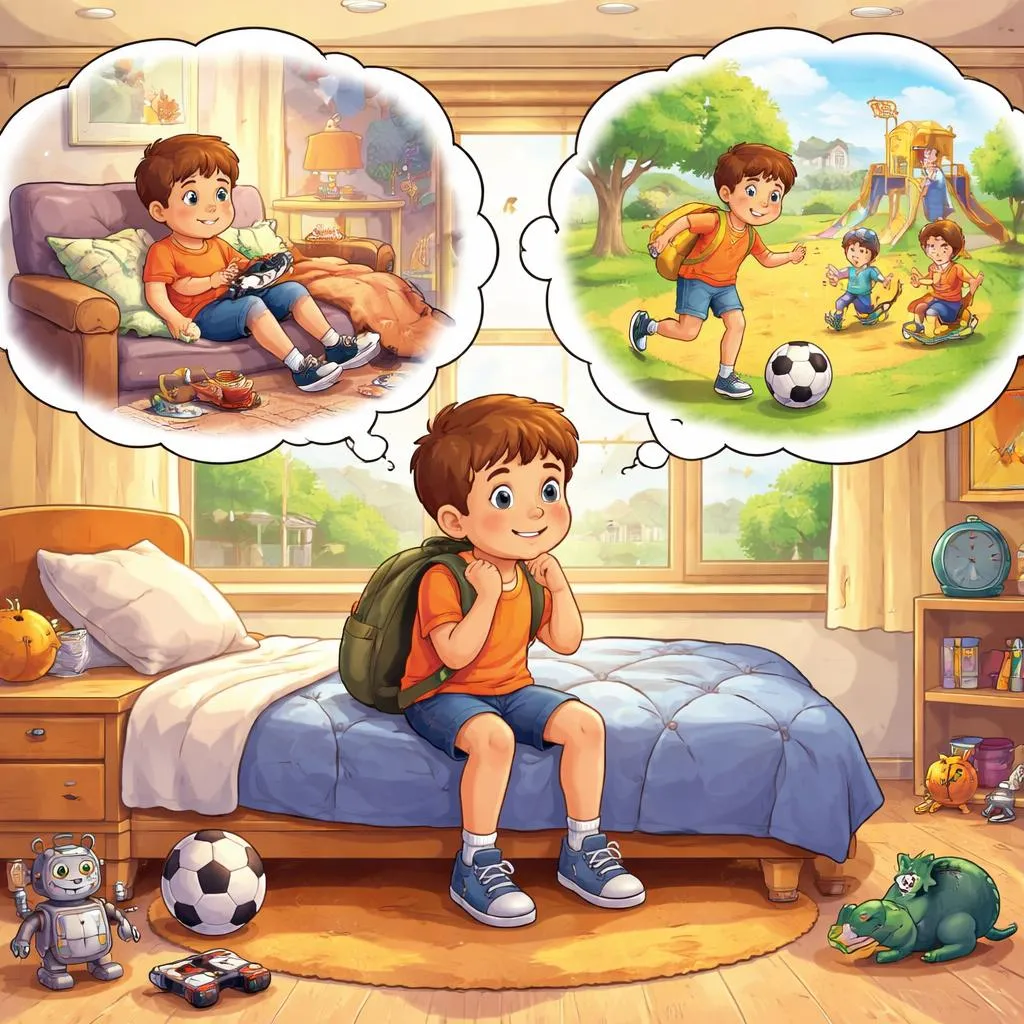
Image: Imagine retiring from a game of tag. You sit on a bench. You smile and rest. That is retire to do. It means ending an activity peacefully.
Function: It is for finishing something calmly. Like retire from a game. Or retire to bed.
Sensory Description: You feel relaxed muscles. You see a quiet spot. Your breathing slows down.
Memory Anchor: A child sitting on a bench after playing. See the calm face? That is retire to do.
Leave To Do
Image: Think of leaving the playground. You hop on your bike. You pedal fast toward home. That is leave to do. It means going away quickly.
Function: It is for moving from one place. Like leave the classroom. Or leave for lunch.
Sensory Description: You hear wheels spinning. You feel wind on your face. Your legs move fast.
Memory Anchor: A kid riding a bike away. See the motion blur? That is leave to do.
Advanced Comparison
Retire ends peacefully in place. Leave moves away quickly. Retire uses calm energy. Leave uses active energy. Use retire for finishing. Use leave for departing.
Scene Comparison
Scene One happens in the playroom. Mia retires from building blocks. She places the last block. She smiles and sits back. This is retire to do—peaceful ending.
Scene Two takes place at the park. Mia leaves to go home. She hops on her scooter. She zooms down the path. This is leave to do—quick departure.
Scene Three occurs in the kitchen. Ben retires from helping bake cookies. He licks the spoon. He washes his hands. Mia leaves to walk the dog. She clips on the leash. Notice the shift. Retiring finishes gently. Leaving moves actively.
Pitfalls Deep Reminder
Mistake One is saying “I retired to the store.” Why wrong? Stores require leaving. Retiring is staying put. Funny result? You sit in the store forever. Correct phrase is I left to go to the store. Memory trick: Retire means stay.
Mistake Two is saying “I left my bedtime story.” Why wrong? Bedtime stories end with retiring. Leaving means going away. Funny result? You run out during the story. Correct phrase is I retired after the story. Memory trick: Retire for endings.
Mistake Three is saying “I retired from the soccer field.” Why wrong? Soccer fields need leaving. Retiring means stopping play calmly. Funny result? You sit on the field. Correct phrase is I left the soccer field. Memory trick: Leave locations.
Mistake Four is saying “I left the puzzle unfinished.” Why wrong? Unfinished puzzles need retiring. Leaving means abandoning abruptly. Funny result? Pieces scatter. Correct phrase is I retired from the puzzle. Memory trick: Retire incomplete tasks.
Interactive Exercises
Read each sentence. Pick retire or leave.
I will ___ to my room after homework. (retire/leave)
She ___ the party early with a smile. (retire/leave)
We ___ from the game when it got dark. (retire/leave)
He ___ to the couch for a nap. (retire/leave)
They ___ the classroom for recess. (retire/leave)
Act with a friend. Use the phrases.
Scene A: Retiring Peacefully
A: I am done playing now.
B: Time to retire and rest.
Scene B: Leaving Quickly
A: Let us go outside.
B: I will leave right now.
Spot the Mistake
Which sentence sounds odd? Explain why.
Sentence: I retired to the playground.
Reason: Playground requires leaving. Use leave instead.
Sentence: I left my book halfway through.
Reason: Halfway books need retiring. Use retire instead.
Sentence: I retired from the bus stop.
Reason: Bus stops need leaving. Use leave instead.
Create Sentences
Use both phrases.
Retire to do: I retire to my bed after reading.
Leave to do: I leave to visit my friend.
Bonus Challenge
You finish your drawing and put crayons away. Do you retire or leave? Answer: Retire. You end calmly.
Rhyme Time
Retire to rest, leave to go.
One ends soft, one moves slow.
Finish calm? Choose retire.
Move away? Leave, do not tire.
Homework Task
Pick one activity. Complete it this week. Share with family.
Option One: Observation Journal. Get a small notebook. Draw three pictures. Write a sentence under each.
Picture One: You retire something. Sentence: I retired from my puzzle after dinner.
Picture Two: You leave somewhere. Sentence: I left to the park with my dad.
Picture Three: You retire something else. Sentence: I retired to my room to read.
Show your journal to a parent. Explain the differences.
Option Two: Role Play. With a parent, act out moments. Use phrases correctly.
You: Mom, I will retire from helping now.
Parent: Good job, go relax.
You: Dad, I will leave to ride my bike.
Parent: Wear your helmet please.
Practice until it feels natural.
Option Three: Sharing Time. Tomorrow at school, tell a friend. Describe one retire and one leave. Say: Yesterday I retired from the game. I left for the library. Ask your friend about theirs.
Life Practice
Week Challenge: Try one task. Complete within seven days. Share your success.
Task One: Observation Log. For three days, note retire and leave moments. Draw icons.
Day One: Retire from play. Draw a toy icon.
Day Two: Leave a place. Draw a door icon.
Day Three: Retire to rest. Draw a bed icon.
Show your log to your teacher. Place it on the classroom wall.
Task Two: Action Demo. Use both phrases in real actions.
Step One: Retire calmly. Say: I retire to finish gently.
Step Two: Leave actively. Say: I leave to move forward.
Demonstrate to a sibling. Explain the difference.
Task Three: Social Mission. Use phrases with others.
Retire to help a friend. Say: I retire from the game so you can play.
Leave to help a friend. Say: I leave to get you a drink.
Record a short voice message. Send it to your teacher.
Task Four: Creative Story. Write a short tale. Include both phrases.
Title: The Quiet Evening.
Story: I retired from building blocks. Then I left to walk my dog. The moon was bright.
Share your story in class.
Remember, practice makes perfect. Use these phrases often. Soon they will feel easy.