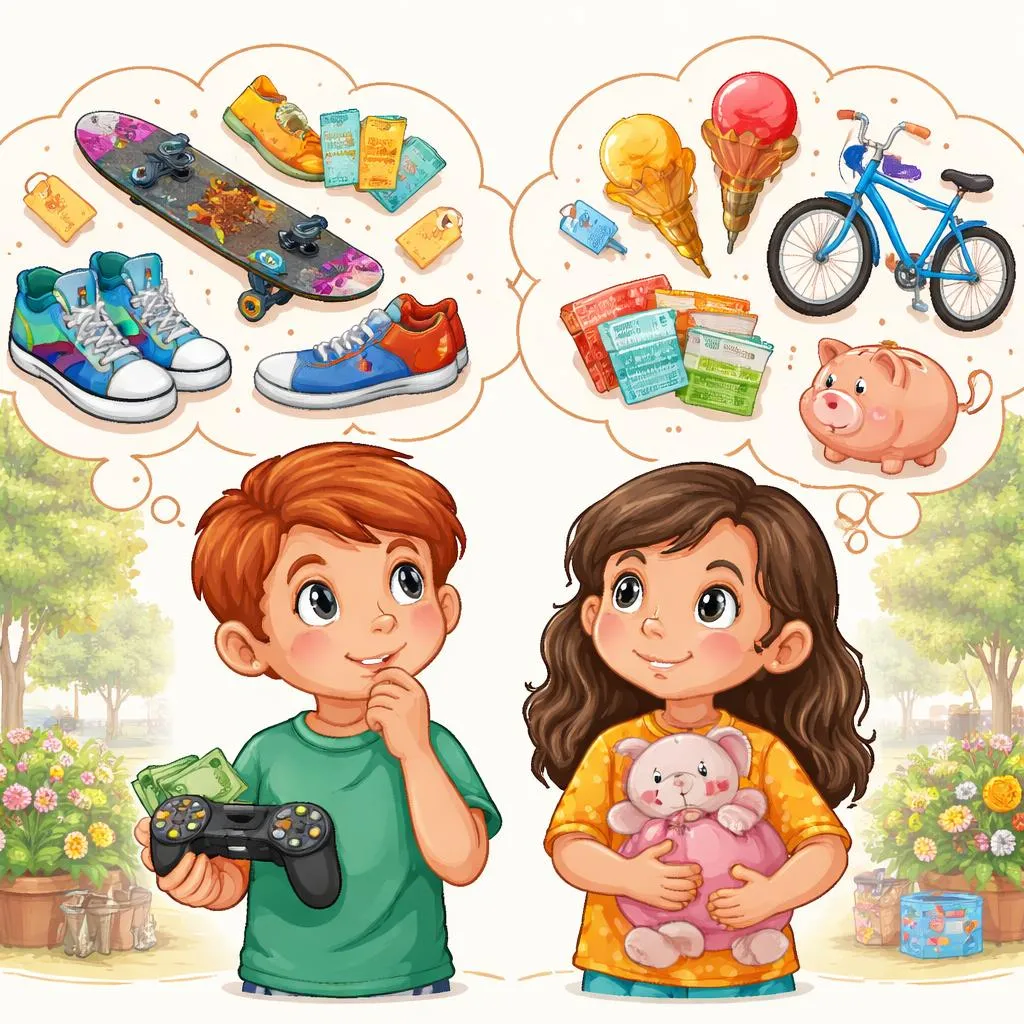

Fun Introduction
Last Saturday, Mia helped her mom at the lemonade stand. She sold a cup to her neighbor. The coins felt heavy in her pocket. Later, Mia bought a pack of stickers. She gave the cashier two dollars. Both actions involved money. But selling gave money away. Buying received goods. Mia wondered about the difference. She asked her dad. Dad smiled and explained. Selling lets go of items. Buying gains new things. Let’s learn together.
Mia felt proud in the sunlight. She counted the coins. Her dad clapped. He said selling is earning. Buying is spending. Mia understood now.
Word Breakdown
Core Principle
We reject boring dictionary definitions. We use pictures in your mind. We add functions and memory hooks. This helps you remember forever.
Sell To Do
Image: Imagine selling your old toys at a garage sale. You hand them to a buyer. You receive money. That is sell to do. It means giving items for payment.
Function: It is for earning cash. Like sell lemonade. Or sell crafts.
Sensory Description: You hear coins clink. You see items leave. Your hands wave goodbye.
Memory Anchor: A kid holding a piggy bank. See the coins going in? That is sell to do.
Buy To Do
Image: Think of buying an ice cream cone. You give money to the seller. You get a cold treat. That is buy to do. It means paying for goods.
Function: It is for acquiring items. Like buy candy. Or buy books.
Sensory Description: You smell sweet flavors. You feel the cold treat. Your hands hold the prize.
Memory Anchor: A child licking an ice cream. See the happy face? That is buy to do.
Advanced Comparison
Sell gives items for money. Buy pays money for items. Sell loses possessions. Buy gains possessions. Use sell to earn. Use buy to acquire.
Scene Comparison
Scene One happens at the lemonade stand. Mia sells a cup to Mr. Johnson. He hands her a dollar. She says thank you. This is sell to do—earning money.
Scene Two takes place at the store. Mia buys a sticker pack. She gives two dollars. The cashier gives stickers. This is buy to do—spending money.
Scene Three occurs at the park. Ben sells his old comic book. He gets five dollars. Mia buys a new jump rope. She spends three dollars. Notice the shift. Selling earns. Buying spends.
Pitfalls Deep Reminder
Mistake One is saying “I bought my old toys at the garage sale.” Why wrong? Old toys are sold. Buying means getting new. Funny result? You pay to give away toys. Correct phrase is I sold my old toys. Memory trick: Sell old stuff.
Mistake Two is saying “I sold the new video game from the store.” Why wrong? New games are bought. Selling means letting go. Funny result? Store pays you for their game. Correct phrase is I bought the new video game. Memory trick: Buy new things.
Mistake Three is saying “I bought lemonade to my neighbor.” Why wrong? Lemonade is sold. Buying is receiving. Funny result? Neighbor gives you money for your drink. Correct phrase is I sold lemonade to my neighbor. Memory trick: Sell drinks.
Mistake Four is saying “I sold the stickers with my allowance.” Why wrong? Stickers are bought. Selling earns money. Funny result? You lose money for stickers. Correct phrase is I bought the stickers. Memory trick: Buy with allowance.
Interactive Exercises
Read each sentence. Think of the right word.
I will ___ my old bike for fifty dollars. (sell/buy)
She ___ a new dress for the party. (sell/buy)
We ___ cookies to raise money for school. (sell/buy)
He ___ a gift for his friend’s birthday. (sell/buy)
They ___ their handmade crafts at the fair. (sell/buy)
Act with a friend. Use the phrases.
Scene A: Selling Items
A: I want to sell this to you.
B: How much does it cost?
Scene B: Buying Items
A: I will buy this from you.
B: Here is the money.
Spot the Mistake
Which sentence sounds odd? Explain why.
Sentence: I bought my old skateboard to my friend.
Reason: Old skateboard is sold. Use sell instead.
Sentence: I sold the new book from the library.
Reason: New book is bought. Use buy instead.
Sentence: I bought lemonade to my dad.
Reason: Lemonade is sold. Use sell instead.
Create Sentences
Use both phrases.
Sell to do: I sell my old toys to earn money.
Buy to do: I buy new crayons with my savings.
Bonus Challenge
You give your friend a toy and get money. Is that sell or buy? Answer: Sell. You let go of the toy.
Rhyme Time
Sell to earn, buy to gain.
One gives away, one gets the same.
Earn some cash? Choose sell.
Get a treat? Buy, do not yell.
Homework Task
Pick one activity. Complete it this week. Share with family.
Option One: Observation Journal. Get a small notebook. Draw three pictures. Write a sentence under each.
Picture One: You sell something. Sentence: I sold my old cards to my brother.
Picture Two: You buy something. Sentence: I bought a new notebook with my money.
Picture Three: You sell something else. Sentence: I sold lemonade to my neighbor.
Show your journal to a parent. Explain the differences.
Option Two: Role Play. With a parent, act out moments. Use phrases correctly.
You: Mom, I will sell my old video game.
Parent: How much will you ask for it?
You: Dad, I will buy a new soccer ball.
Parent: Save your allowance for it.
Practice until it feels natural.
Option Three: Sharing Time. Tomorrow at school, tell a friend. Describe one sell and one buy. Say: Yesterday I sold my comic. I bought a sticker pack. Ask your friend about theirs.
Life Practice
Week Challenge: Try one task. Complete within seven days. Share your success.
Task One: Observation Log. For three days, note sell and buy moments. Draw icons.
Day One: Sell a toy. Draw a toy icon.
Day Two: Buy a snack. Draw a snack icon.
Day Three: Sell a craft. Draw a craft icon.
Show your log to your teacher. Place it on the classroom wall.
Task Two: Action Demo. Use both phrases in real actions.
Step One: Sell confidently. Say: I sell to earn money.
Step Two: Buy wisely. Say: I buy to get something good.
Demonstrate to a sibling. Explain the difference.
Task Three: Social Mission. Use phrases with others.
Sell to help a friend. Say: I sell you my extra eraser.
Buy to help a friend. Say: I buy you a drink with my money.
Record a short voice message. Send it to your teacher.
Task Four: Creative Story. Write a short tale. Include both phrases.
Title: The Lemonade Stand.
Story: I sold cups of lemonade. Then I bought a new book. My wallet felt heavier.
Share your story in class.
Remember, practice makes perfect. Use these phrases often. Soon they will feel easy.