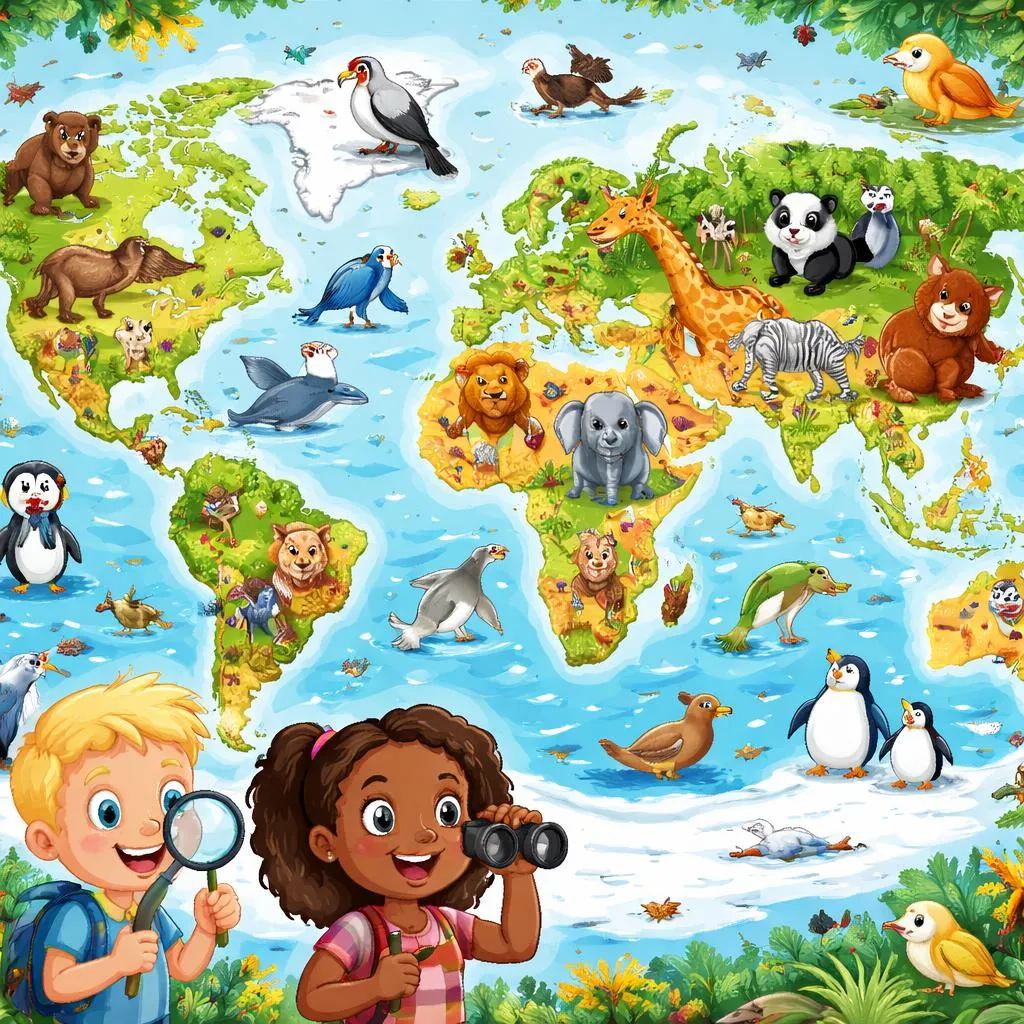

What is animal from?
Hello, young explorers. Today, we are going on a wonderful trip around the world. We are not packing bags. We are using our minds. We are going to discover where animals come from. This is a fantastic question. When we ask, "Where is this animal from?" we are asking about its original home. Its home is called its native habitat.
Every animal has a place where its family first lived. A place where the weather, plants, and land are just right for it. A kangaroo is from Australia. A penguin is from Antarctica. A tiger is from Asia. Learning where animals are from helps us understand the world. It is like a big, living map. Let's start our journey to find animal homes.
Meaning and explanation
So, what do we mean by an animal's home. It is not just where an animal lives in a zoo. It is the wild place where that animal's kind naturally belongs. This is where it finds its food, raises its babies, and lives its life. Scientists call this its "natural habitat."
Knowing where an animal is from teaches us about adaptation. This means how an animal's body and habits are perfect for its home. A polar bear's thick fur and white color are perfect for the snowy Arctic. A camel's hump that stores water is perfect for the dry desert. The place an animal is from shaped it to be amazing. When we learn about animal from places, we learn about the incredible variety of life on Earth.
Categories or lists
Let's travel to different continents and meet animals from each one. Continents are the big pieces of land on our planet.
Animals from Africa: Africa is a land of sunshine, big grasslands, and deserts. Savanna Animals: Lion, elephant, giraffe, zebra, cheetah. These animals love wide-open spaces.
Desert Animals: Camel, fennec fox, scorpion, meerkat. These animals are experts at living with little water.
Jungle Animals: Gorilla, chimpanzee, parrot, okapi. These animals live in the thick, green rainforests.
Animals from Asia: Asia is the biggest continent, with jungles, mountains, and cold forests. Jungle and Forest Animals: Tiger, panda, orangutan, rhinoceros, peacock.
Mountain Animals: Snow leopard, yak. These animals live high up where it is cold.
Unique Animals: The Komodo dragon, a giant lizard, is from islands in Asia.
Animals from North America: This continent has forests, mountains, plains, and deserts. Forest Animals: Black bear, raccoon, moose, bald eagle, beaver.
Grassland Animals: Bison, prairie dog, coyote.
Desert Animals: Rattlesnake, roadrunner, Gila monster.
Animals from South America: This continent has the huge Amazon Rainforest and the Andes mountains. Rainforest Animals: Jaguar, sloth, toucan, macaw, anaconda, poison dart frog.
Mountain Animals: Llama, alpaca, condor.
Animals from Australia: Australia is an island continent with very special animals. Unique Marsupials: Kangaroo, koala, wallaby, wombat. Many carry their babies in a pouch.
Other Special Animals: Platypus, echidna, emu, kookaburra.
Animals from Europe: Europe has forests, mountains, and coastlines. Forest Animals: Red deer, fox, brown bear, wolf, hedgehog.
Mountain Animals: Alpine ibex, marmot, golden eagle.
Animals from Antarctica: This is the coldest, iciest continent. Cold Climate Animals: Penguin, seal, walrus, albatross, blue whale (in the ocean nearby).
Daily life examples
You can be a detective for animal homes every day. Here are two fun ways.
At the Zoo or Aquarium: This is the best classroom. Look at the sign on each animal's home. It will often say where the animal is from. "Native to: The savannas of Africa." Point to the map on the sign. Say, "The lion is from Africa." "The penguin is from Antarctica." "The panda is from China in Asia." Connecting the animal you see to a place on a map makes the visit an adventure.
Watching Nature Shows or Reading Books: When you watch a show about tigers, listen. The narrator will say, "In the forests of India..." That tells you the tiger is from Asia. When you read a book about koalas, it will talk about Australia. Be a detective. Pause and find the country on a globe or map. This turns screen time and reading time into a geography lesson about animal from locations.
Printable flashcards
Let's make learning with printables fun. Create "Animal Passport" cards.
Each card is for one continent. The front has the continent's name and shape. The back has pictures of three animals from that continent. The "Africa" card has pictures of a lion, giraffe, and elephant. The "Australia" card has a kangaroo, koala, and platypus. Kids can collect the cards like passport stamps from their world tour of animals.
Another great printable is a "Match the Animal to the Map" game. Print a simple world map with continents colored differently. Then, print small cards with animal pictures. Laminate them and add a sticky dot. Kids place the animal card on the correct continent. Does the tiger go on South America. No. It belongs in Asia. This is a hands-on geography quiz.
Learning activities or games
Let's play a game called "Continental Bingo." Make bingo cards with pictures of animals instead of numbers. The caller holds up a picture of a continent or says its name. "I'm thinking of Africa!" Players look on their card for an animal from Africa (like a zebra) and mark it. The first to get a line shouts "Bingo!" This practices quick recall of where animals are from.
Try the "Habitat Role-Play" game. Assign each corner of the room a different habitat: African Savanna, Amazon Rainforest, Arctic Ice, Australian Outback. Give each child a picture or name of an animal. Play music. When the music stops, call out a habitat. "Find your home in the Amazon Rainforest!" All the animals that belong there (jaguar, toucan, frog) must run to that corner. This active game teaches classification in a fun way.
Create a "Where in the World?" guessing game. One player thinks of an animal. The other players ask yes or no questions about where it is from. "Is your animal from a hot place?" "Does it live in a forest?" "Is it from Asia?" The goal is to guess the animal using clues about its home continent and habitat. This game builds critical thinking and reinforces all the knowledge about animal from places around our wonderful planet.