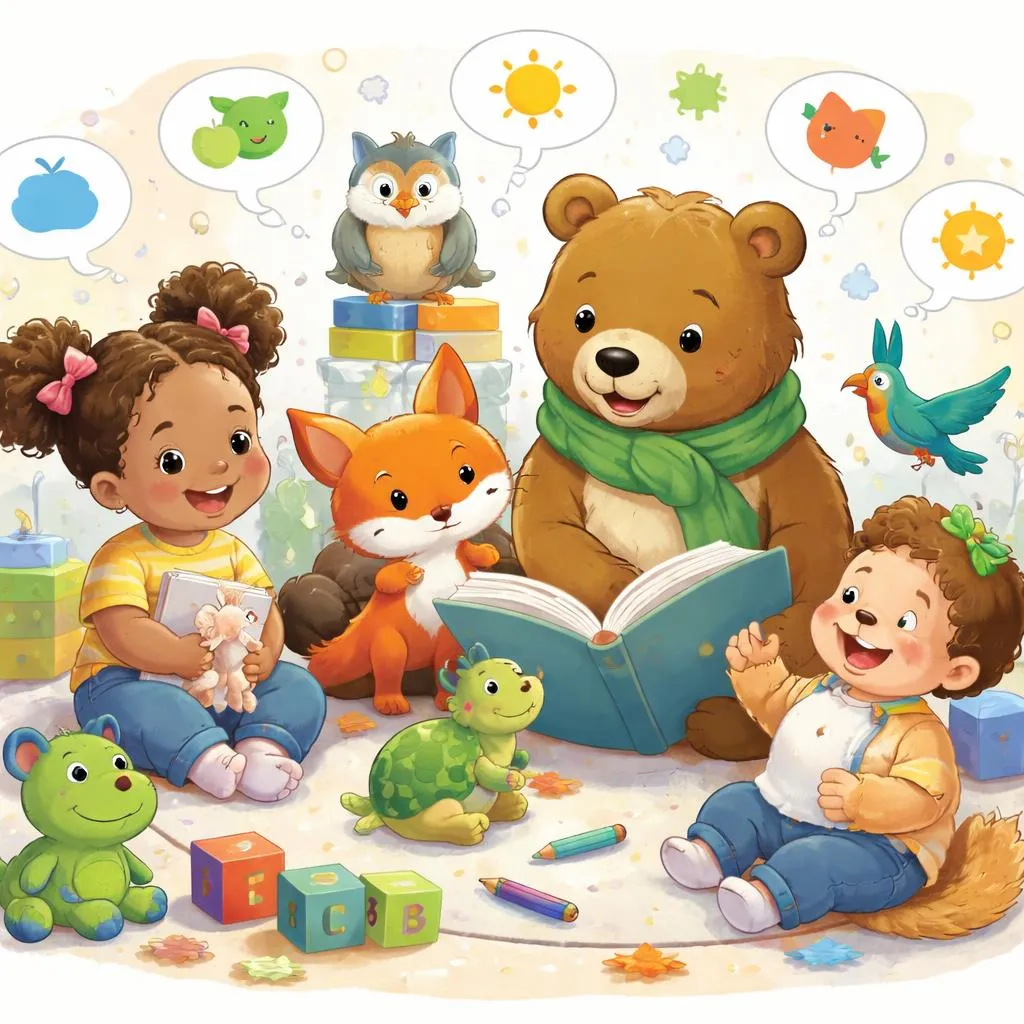

Many educators and parents observe how young learners connect with tales featuring furry or feathered characters. This natural affinity makes children's stories about animals a powerful tool in language development. These narratives create a safe, imaginative space where vocabulary and comprehension grow organically. This article explores the methods for using these stories effectively in teaching.
What Defines a Children's Animal Story?
A children's story about animals typically places creatures in the leading roles. These characters often display human-like qualities, such as talking, wearing clothes, or experiencing emotions. This literary device, known as anthropomorphism, helps bridge complex ideas for a young mind. The setting might be a realistic farm or a fantastical forest. The core purpose remains to entertain while often gently introducing a lesson or moral.
The stories simplify the world into relatable scenarios. A tale about a slow turtle and a speedy hare teaches patience without lecturing. A narrative about a lost duckling explores feelings of fear and belonging. By using animals, the content removes direct human judgment, making it easier for a child to absorb the message. The focus stays on the character's journey.
Why Choose These Stories for Teaching English?
Using children's stories about animals offers distinct advantages in the classroom or at home. First, the characters are universally appealing and non-threatening. A child who feels shy might relate more to a timid mouse than a human character. Second, animal behaviors provide clear contexts for action verbs. A story about a frog jumping or a fish swimming makes those words visual and memorable.
These stories often feature repetitive phrases and predictable plots. This repetition builds confidence in a young learner. Hearing the same descriptive words for a sly fox or a busy bee reinforces understanding. The narrative structure provides a natural framework for introducing new language. It moves beyond isolated words and places them into a living, breathing context.
Exploring Different Categories of Animal Tales
Animal stories fall into several broad categories, each offering unique learning opportunities. Understanding these categories helps in selecting the right material for specific language goals.
Traditional Fables and Folktales These are classic tales passed down through generations. Stories like "The Lion and the Mouse" or "The Three Little Pigs" fall into this group. They often conclude with a clear moral. Linguistically, they use rich, descriptive language and dialogue. They expose learners to cultural wisdom and simple cause-and-effect sentence structures.
Modern Picture Books Contemporary authors create wonderful animal characters for new generations. Think of stories about a bear looking for a home or a penguin who wants to fly. These books often use vibrant, modern language. They can focus on specific themes like friendship, diversity, or problem-solving. The vocabulary is usually very current and relatable.
Factual Animal Adventures Some stories blend narrative with real animal facts. A story about a butterfly's migration journey teaches both language and science. This category is excellent for cross-curricular learning. It introduces descriptive vocabulary related to habitats, diets, and animal behaviors in an engaging story format.
Incorporating Animal Stories into Daily Life
The magic of these stories extends beyond a dedicated lesson time. Look for opportunities to connect the narrative to the real world. A trip to the park can become a chance to retell a story about squirrels. A visit to a farm brings tales of cows and sheep to life. This connection solidifies the language learned.
When a child sees a bird building a nest, a teacher or parent can say, "Remember how the little sparrow in our story gathered twigs?" This simple link transforms abstract words into concrete understanding. It shows the child that the language from the story exists all around them. This encourages observation and natural conversation.
Vocabulary Learning from Animal Stories
Stories provide a rich environment for introducing new words. The key is to present vocabulary in a meaningful context. Do not just present a list. Instead, explore the words as they appear in the tale.
For example, in a story about a badger building a sett, new words might include: tunnel, cozy, dig, and earth. A teacher can pause and ask guiding questions. "What does the badger use to dig?" "How does the story describe the tunnel?" This turns word learning into a discovery process.
Children's stories about animals often use sound words, or onomatopoeia. The "buzz" of a bee, the "hoot" of an owl, or the "splash" of a frog. These words are fun to say and easy to remember. They add a playful element to vocabulary building. Encourage the learners to make the sounds as they encounter them in the text.
Simple Phonics Points in Animal Tales
Animal stories are perfect for introducing phonics in a gentle, enjoyable way. The repetitive nature of the text highlights specific sounds. A story about a cat might repeat the short 'a' sound frequently. "The fat cat sat on a mat." This allows learners to hear and then see the sound pattern.
Teachers can point out alliteration, where words start with the same sound. "Peter Piper picked a peck of pickled peppers" is a tongue twister, but simpler examples like "Danny the dancing duck" are common in stories. Focusing on the initial sound of the character's name or a descriptive word builds phonemic awareness.
Rhyming is another powerful tool common in these stories. "The frog on a log" or "the mouse in a house" creates a memorable pattern. Recognizing rhymes helps learners identify word families. It makes decoding new words easier. If they can read "log," they can begin to figure out "fog" or "dog" when they encounter them.
Exploring Grammar Patterns Through Narrative
Grammar lessons can feel abstract, but a story provides a concrete framework. Children's stories about animals naturally use a range of grammatical structures. A teacher can guide learners to notice these patterns without needing to name the complex rule.
Focus on verb tenses. Many stories use the simple past tense to narrate events. "The monkey swung from the tree. He saw a banana." The context makes the meaning of "swung" and "saw" clear. Compare this to dialogue within the story, which might use present tense. "I want that banana," he said. This contrast shows how tense changes based on context.
Prepositions of place are very easy to teach with animal stories. "The owl sat on the branch." "The fish swam under the boat." "The rabbit hid in the bush." The visual imagery from the story, whether from pictures or the learner's imagination, directly supports the meaning of these small but important words.
Learning Activities to Reinforce Concepts
Active engagement helps solidify the language from the story. Here are some activities that move learning from passive listening to active use.
Story Retelling with Props Use simple puppets or toys to represent the animal characters. After reading the story, guide the learners to retell the main events using the props. This activity builds narrative skills and encourages the use of story-specific vocabulary. It transforms comprehension into production.
Animal Action Game Ask learners to move like the animals in the story. "Can you stomp like the elephant?" "Can you hop like the rabbit?" This physical activity, or Total Physical Response (TPR), connects language to movement. It is especially effective for kinesthetic learners and for remembering action verbs.
Character Description Charts Create a simple chart on a board or large paper. Write the names of two or three animal characters from the story. Ask the learners to describe them. What do they look like? How do they act? This builds descriptive language and comparative thinking.
Drawing and Labelling Ask learners to draw their favorite scene or character from the story. Then, guide them to label parts of their drawing with words from the text. A drawing of a bear might have labels like "fur," "claws," and "cave." This combines creative work with literacy skills.
Educational Games Inspired by Animal Stories
Games make learning feel like play. They provide low-stakes repetition and practice. Design games that connect directly to the animal stories you are using.
Animal Matching Pairs Create a set of cards. Half the cards have pictures of animals from the stories. The other half have words or short phrases describing them. For example, a picture of a fox might match with a card reading "clever and quick." Learners take turns flipping two cards to find a match. This reinforces vocabulary associations.
Story Bingo Create bingo cards with pictures of animals or objects from the stories. As the teacher calls out words or short descriptions, learners cover the corresponding picture. The first to complete a row wins. This game builds listening comprehension and word recognition.
What Happens Next? Pause the story at an exciting moment. Ask the learners to guess what the animal character will do next. They can act out their prediction or draw it. This encourages creative thinking and the use of future tense or modal verbs like "might" or "will." It builds anticipation and engagement with the narrative.
Printable Materials for Continued Practice
Having tangible materials allows learners to continue exploring the story independently. These resources can be sent home or used in a quiet learning corner.
Simple Story Sequencing Cards Create a set of simple drawings that show the main events of the story in sequence. Learners can cut out the cards and put them in the correct order. This activity checks comprehension of the plot. It also provides a visual outline for retelling the story in their own words.
Character and Setting Worksheets Design a worksheet with two columns. One column is labeled "Characters" and the other is "Setting." At the top, include small pictures from the story. Learners can draw or write the names of the characters and where the story takes place. This focuses attention on the core elements of any narrative.
"My Favorite Part" Drawing Page Provide a page with a large blank box for drawing and a few lines for writing. The prompt is simple: "Draw your favorite part of the story. Tell me why you like it." This encourages personal connection to the text and beginning writing skills. It values the learner's opinion and emotional response.
Flashcard Ideas for Key Vocabulary Create flashcards with an image of the animal on one side and the word on the other. Use them for quick recall games. For more advanced learners, add a simple adjective on the back, like "a sly fox" or "a busy bee." This expands the single word into a useful phrase.
The lasting value of using children's stories about animals lies in their ability to create a shared world of wonder. Through the adventures of a brave little bird or a kindhearted bear, language ceases to be a set of rules to memorize. It becomes the key to unlocking a story. The goal is to guide learners into that world, help them understand it, and give them the words to describe their journey through it. Each story read together builds a foundation for a lifelong curiosity about language and the wider world.