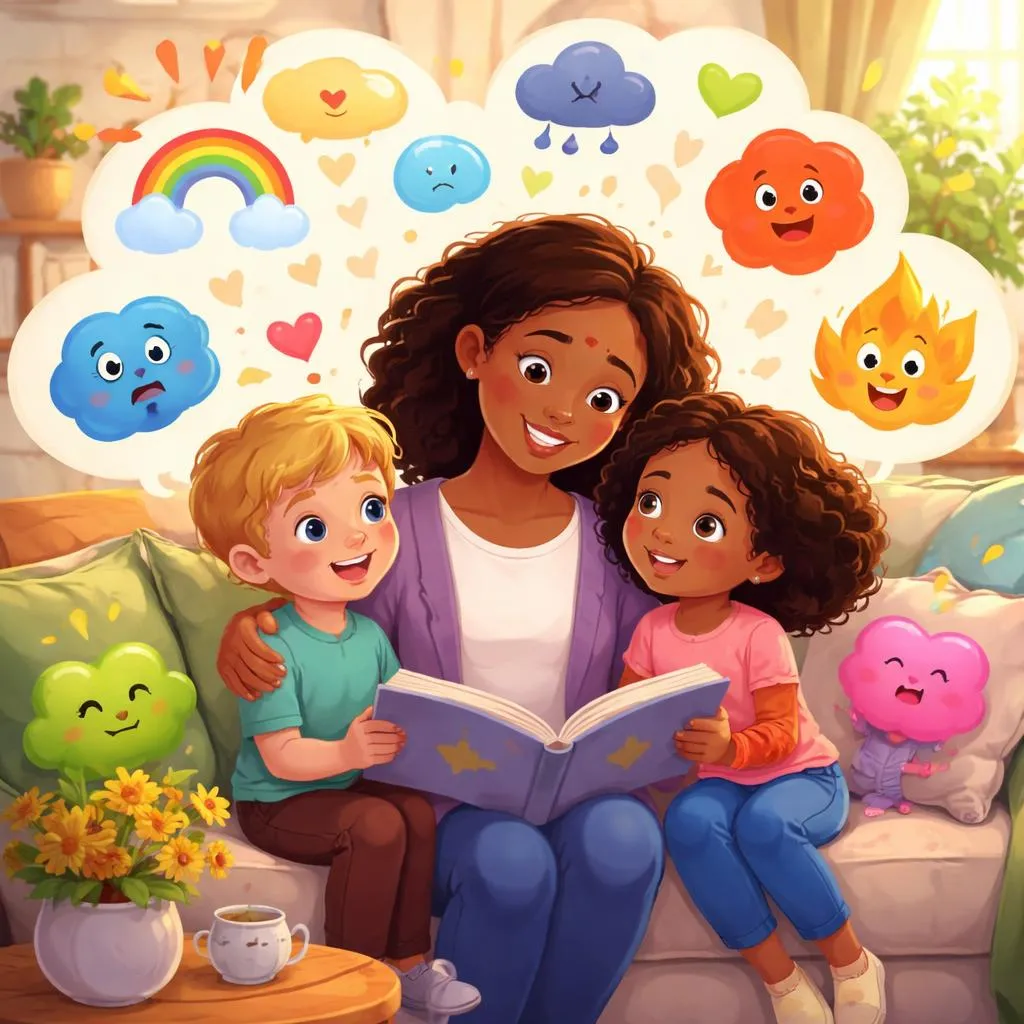

What Are Children's Stories About Feelings? Let us explore this important genre of children's literature together. Children's stories about feelings focus on emotions and their expressions. Characters experience joy, sadness, anger, or fear throughout the tale. The story shows how feelings arise from different situations. A lost toy brings sadness to a character. A surprise party brings joy and excitement. A loud noise brings fear and uncertainty. The characters learn to name what they are feeling. They discover that all emotions are normal and human. The stories model healthy ways to handle feelings. A character might take deep breaths when angry. Another might ask for a hug when feeling sad. The tales validate the full range of human experience. Young readers see themselves in these emotional journeys.
Meaning and Purpose of Feelings Stories These stories serve crucial purposes in children's emotional development. They build emotional vocabulary gradually and naturally. Children learn words for complex feelings they experience. Frustration, disappointment, and excitement become nameable. The stories validate that all feelings are acceptable. No emotion is bad, though some actions need limits. This reduces shame around natural emotional responses. The tales also teach emotional regulation strategies. Characters model coping skills within the narrative. Breathing, talking, moving, and resting all appear. Children internalize these strategies through story connection. The stories build empathy for others' feelings too. Readers see how actions affect characters emotionally. This develops perspective-taking abilities essential for relationships.
Common Feelings in Children's Stories We can identify several emotions commonly explored in these tales. Happiness appears as joy, excitement, and contentment. Characters celebrate, laugh, and share good news. Sadness shows as disappointment, grief, and loneliness. Loss, separation, and letdowns trigger these feelings. Anger manifests as frustration, irritation, and rage. Injustice, obstacles, and teasing provoke these responses. Fear includes worry, anxiety, and terror. New situations, loud noises, and darkness trigger fear. Jealousy emerges when others have what characters want. Attention, toys, or abilities cause envy. Love appears as affection, caring, and connection. Family, friends, and pets receive this feeling. Each emotion gets story time to be understood.
Vocabulary Learning from Feelings Stories Feelings stories introduce rich emotional vocabulary for children. Basic emotion words appear in simpler stories. Happy, sad, mad, and scared form the foundation. Advanced emotion words appear in richer tales. Frustrated, disappointed, anxious, and content expand understanding. Physical sensation words connect feelings to body. Tingly, heavy, warm, and tight describe internal experiences. Intensity words describe feeling strength. Furious is stronger than annoyed. Ecstatic is stronger than happy. Cause words explain why feelings arise. Because, since, and when connect events to emotions. Coping words describe handling strategies. Breathe, talk, rest, and ask appear regularly. We can teach these words with picture cards showing expressions. Use them in sentences about story events. "The character felt frustrated when the puzzle wouldn't work."
Phonics Points in Feelings Stories Feelings stories provide useful phonics practice with emotional language. Happy has the short A and double P. Sad has the short A and D ending. Mad shares the same pattern, good for word families. Angry has the ANG combination and long E. Scared has the SC blend and ED ending. Worried has the OR combination and ED ending. Body sensation words contain valuable patterns. Tingly has the ING ending and long E. Heavy has the EA digraph and long E. Warm has the AR combination. Coping words provide phonics elements. Breathe has the EA digraph and silent E. Talk has the AL combination and silent L. Rest has the short E and ST blend. We can focus on one sound pattern from each story. Find all words with that sound in the feelings tale. Write them on feeling face shapes for practice.
Grammar Patterns in Feelings Narratives Feelings stories model useful grammar for young readers naturally. Present tense appears in direct feeling statements. "I feel scared when it gets dark." Past tense describes emotional experiences. "Yesterday she felt sad about moving away." Future tense expresses emotional expectations. "Tomorrow I will feel excited for the party." Questions explore emotional causes. "Why are you crying?" "What made you so happy?" Descriptive language paints feeling pictures. "A warm, fuzzy feeling spread through her chest." Comparative words show emotional changes. "He felt better after talking than before." Prepositional phrases describe feeling contexts. "In the morning, after the argument, during the hug." We can point out these patterns during reading. Notice how characters describe what they feel and why.
Daily Life Connections Through Feelings Stories These stories connect directly to children's everyday experiences. Morning routines bring feelings about school. Saying goodbye might bring sadness or worry. Playground interactions trigger joy, frustration, or jealousy. Sharing, turn-taking, and including others all involve feelings. Sibling relationships provide rich emotional ground. Love and annoyance often appear together. Bedtime brings fears, comfort, and connection. Stories validate these common experiences. We can point out connections during reading. "You felt that way when your tower fell." "Remember being scared of the dark like the character?" "That happy feeling is like when we have pizza day." These links make emotional learning personal and immediate.
Learning Activities for Feelings Stories Many activities deepen understanding of emotional themes. Create a feelings chart showing story emotions. Draw faces for each feeling the character experienced. Act out emotional scenes from the story without words. Others guess the feeling being portrayed. Draw pictures of times children felt like the character. Share and discuss these personal connections. Create a feelings journal for recording daily emotions. Use words and drawings to capture each day. Practice breathing exercises like story characters. Blow out birthday candles or smell the flower breaths. Make feeling masks showing different emotions. Wear them while discussing when we feel each way. These activities build emotional awareness through multiple channels.
Printable Materials for Feelings Learning Printable resources support deep engagement with feelings themes. Create emotion cards with faces and feeling words. Use for identification and discussion games. Design a feelings thermometer showing intensity levels. Children point to how strongly they feel something. Make coping choice cards showing regulation strategies. Breathe, talk, move, rest, and ask for help. Create a feelings journal template with daily prompts. "Today I felt..." "It helped when I..." Design body maps for coloring where feelings are felt. Color the tummy for butterflies, head for headache. Make situation cards for discussing emotional responses. "Someone takes your toy. How do you feel?" These printables structure emotional learning activities.
Educational Games About Feelings Games make feelings learning playful and interactive. Play "Feelings Charades" acting out emotions without words. Others guess the feeling being portrayed. Create "Emotion Bingo" with feeling faces on cards. Call out situations, children cover matching feelings. Play "Feelings Freeze Dance" with music and emotion prompts. Freeze making a happy, sad, or surprised face. Design "Feelings Memory Match" pairing feeling words with faces. Play "Feeling Detectives" looking at eyes and mouths in pictures. Guess the emotion from facial clues. Create "Emotion Dice" with feelings on each side. Roll and share a time you felt that way. These games build emotional vocabulary through active participation.
Teaching That All Feelings Are Okay A core message in feelings stories deserves emphasis. All emotions are normal and acceptable. There are no bad feelings, only challenging ones. What matters is how we respond to what we feel. Anger itself is not wrong. Hitting because of anger needs limits. Sadness is not wrong. Staying in bed all day needs balance. Stories model this crucial distinction. Characters feel angry but find safe expression. They feel sad but eventually engage again. We can reinforce this message during discussions. "It's okay to feel jealous. Everyone does sometimes." "Feeling scared keeps us safe. We just need courage too." This validation reduces shame and increases emotional honesty.
Recognizing Feelings in Others Feelings stories build empathy through character identification. Readers learn to recognize emotions in story figures. Facial expressions, body language, and words provide clues. Characters may say one thing but feel another. This builds sophisticated emotional reading skills. After story understanding, we can practice on real people. Look at family members and guess their feelings. Notice how voice tone conveys emotion. Observe how posture shows mood. Children become better friends through this practice. They notice when classmates feel sad or left out. They respond with kindness instead of indifference. The stories plant seeds of emotional attunement. Reading faces and bodies becomes natural practice.
Creating a Feelings-Friendly Classroom Feelings stories help create emotionally safe learning environments. Display a feelings chart for daily check-ins. Children point to how they feel each morning. Establish a calm-down corner with feeling books and tools. Soft items, breathing prompts, and cozy space help. Use feeling language throughout the school day. "You seem frustrated. Want to talk about it?" Reference story characters when discussing emotions. "Remember how the bear felt when he lost his toy?" Validate all feelings that appear in the classroom. Name them without judgment or shame. This emotional safety allows children to be fully present. They do not waste energy hiding feelings. They can focus on learning instead.