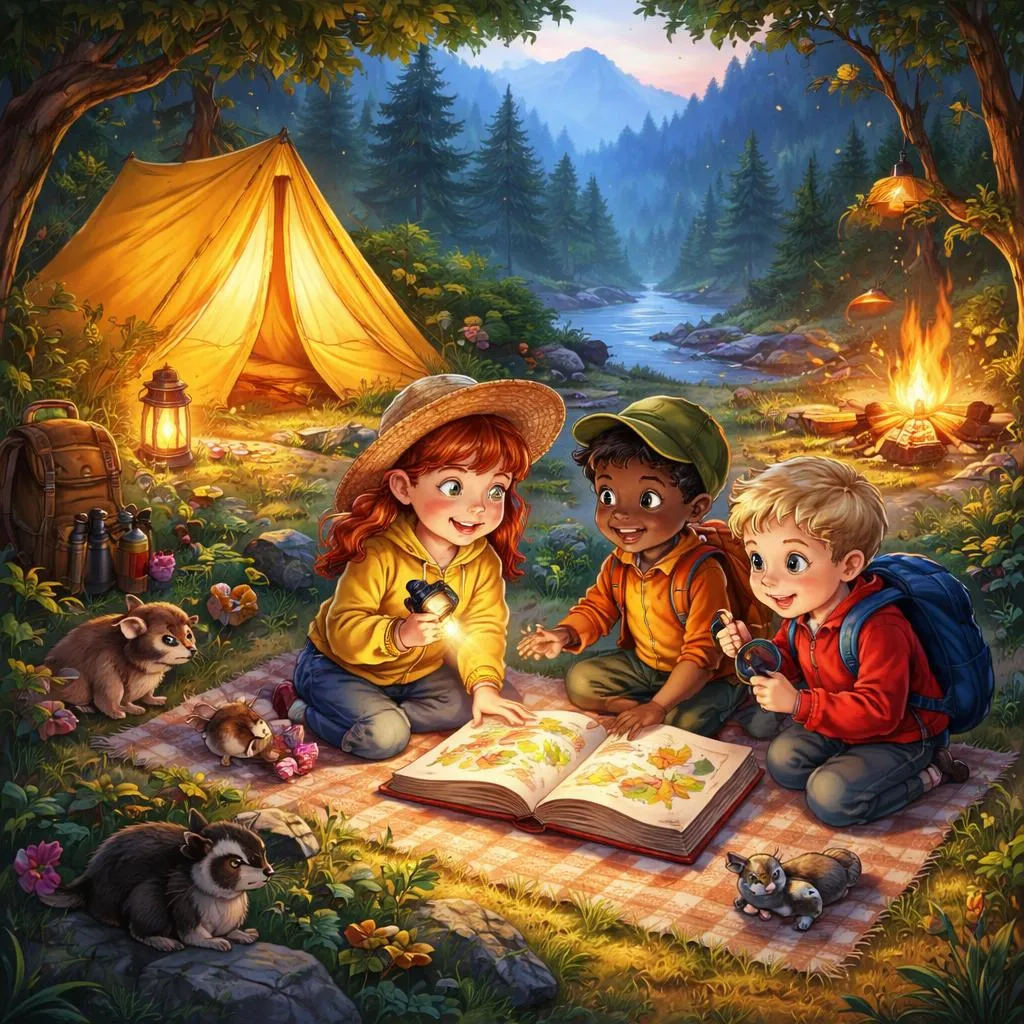

What Are Children's Story Books About Camping? Let us explore this adventurous genre of children's literature together. Children's story books about camping take readers into the great outdoors. Characters pack tents, sleeping bags, and camping gear for adventures. They travel to forests, mountains, lakes, or campgrounds. The stories follow families or friends on camping trips together. Characters learn to pitch tents and build campfires. They cook meals over open flames and tell stories after dark. Night brings new experiences like sleeping under stars. Strange sounds in darkness create both fear and excitement. Morning brings fishing, hiking, and exploring nature trails. The books capture the magic of sleeping outdoors completely. They show both the joys and challenges of camping life.
Meaning and Purpose of Camping Books These books serve several important purposes in children's development. They prepare children for real camping experiences they might have. Reading about camping reduces anxiety about the unknown. Children know what to expect when they go camping. The stories also build appreciation for nature and the outdoors. Characters notice trees, animals, stars, and weather patterns. This encourages children to observe nature more carefully. The narratives also model family bonding and quality time. Camping removes distractions like screens and busy schedules. Families connect through shared experiences in nature. The books also teach practical outdoor skills and safety. How to build a fire, set up a tent, and stay safe appear. Children learn these skills through engaging stories.
Common Elements in Camping Books We can identify several elements common to camping narratives. Packing for the trip appears at the beginning often. Characters gather everything needed for their adventure. Travel to the campsite involves cars, hikes, or boats. The journey itself becomes part of the adventure. Setting up camp requires pitching tents and organizing gear. Characters work together to create their temporary home. Campfire scenes provide warmth, cooking, and storytelling. Songs, ghost stories, and marshmallows appear here. Nighttime brings both wonder and sometimes fear. Stars, animals, and strange sounds fill the darkness. Outdoor activities like hiking, fishing, and swimming happen. Characters explore the natural area surrounding their camp. Breaking camp at the end shows packing up and leaving. The adventure ends with memories to treasure forever.
Vocabulary Learning from Camping Books Camping books introduce rich outdoor vocabulary for children. Camping means staying overnight in a tent or outdoors. Tent means a portable shelter made of fabric and poles. Sleeping bag means a warm bag for sleeping outdoors. Campfire means an outdoor fire for warmth and cooking. Marshmallow means a soft candy roasted over fire. Flashlight means a portable light powered by batteries. Backpack means a bag carried on the back for supplies. Hiking means walking for pleasure in natural areas. Fishing means trying to catch fish with rod and line. Compass means an instrument showing direction for navigation. We can teach these words with picture cards showing examples. Use them in sentences about camping experiences and plans.
Phonics Points in Camping Books Camping books provide useful phonics practice with outdoor vocabulary. Camping has the short A and MP blend and ING ending. Tent has the short E and NT blend. Sleep has the SL blend and long E. Bag has the short A and G sound. Fire has the long I and silent E. Marshmallow has the AR combination and short A and OW diphthong. Flashlight has the FL blend and short A and long I. Backpack has the short A and CK and short A. Hiking has the long I and ING ending. Fishing has the short I and ING ending. Nature words offer valuable sound patterns. Forest has the FOR combination and short E. Mountain has the OUN combination and short A. River has the short I and ER ending. We can focus on one sound pattern from each book. Find all words with that sound in the camping tale. Write them on tent or campfire shapes for practice.
Grammar Patterns in Camping Narratives Camping books model useful grammar for young readers naturally. Past tense tells what happened during the camping trip. "The family hiked to the lake yesterday afternoon." Present tense describes what happens generally when camping. "Campfires keep everyone warm at night." Future tense shows plans for upcoming adventures. "Tomorrow we will explore the forest trail." Questions express curiosity about nature and camping. "What made that sound in the dark?" "Where did the raccoons go?" Commands appear in camping instructions and safety. "Stay close to the trail." "Don't touch that plant." Descriptive language paints outdoor scenes vividly. "The dark, quiet forest surrounded their small, warm tent." Prepositional phrases describe locations in nature. "Under the stars, beside the lake, through the woods." We can point out these patterns during reading.
Daily Life Connections Through Camping Books Camping books connect to children's experiences in meaningful ways. Sleeping somewhere different from home happens sometimes. Staying at grandparents' house shares some camping feelings. Being in nature occurs on playgrounds and in backyards. Trees, sky, and bugs exist everywhere children go. Cooking outside happens at picnics and barbecues sometimes. The open-air meals feel special and different. Darkness and night sounds occur everywhere after sunset. Shadows and noises can seem scary anywhere. Family time without screens happens on special occasions. These moments of connection mirror camping experiences. We can point out these connections during reading. "Remember when we cooked outside at the picnic?" "The dark can seem scary anywhere, not just camping."
Learning Activities for Camping Books Many activities deepen engagement with camping themes. Create a classroom campsite with a pretend tent and campfire. Use blankets, chairs, and paper flames for setting. Practice camping skills like knot tying and tent setup. Use ropes and practice simple useful knots. Make pretend s'mores with paper and cotton balls. Brown, white, and brown layers represent graham cracker, marshmallow, chocolate. Go on a nature walk observing things from camping books. Look for trees, birds, insects, and animal signs. Create a camping packing list for imaginary trips. Include everything needed for a successful adventure. Tell stories around a pretend campfire in classroom. Practice storytelling skills like camping characters do. These activities make camping concepts tangible and engaging.
Printable Materials for Camping Lessons Printable resources support deep engagement with camping themes. Create a camping gear matching game with pictures and names. Match tent, sleeping bag, flashlight, and campfire. Design a camping scavenger hunt for nature walks. Find pinecones, feathers, interesting rocks, and animal tracks. Make a campfire story planning sheet for writing. Characters, setting, problem, and solution sections included. Create a camping packing list template for children to complete. Draw or write items needed for camping trip. Design a camping bingo game with outdoor items on cards. Trees, birds, clouds, bugs, and rocks appear. Make a camping journal page for recording nature observations. Date, location, weather, and discoveries spaces included. These printables structure camping exploration activities effectively.
Educational Games About Camping Games make camping learning playful and interactive. Play "Camping Charades" acting out camping activities. Hiking, fishing, pitching tent, roasting marshmallows appear. Create "What's in My Backpack?" guessing game with camping items. Describe item without naming it, others guess. Play "Campfire Stories" taking turns adding to group story. Each person adds one sentence to continue tale. Design "Tent Relay" race setting up pretend tent quickly. Use blankets and chairs for structure building. Play "Animal Sounds" guessing animals by their calls. Record or make sounds, children identify animal. Create "Flashlight Tag" in dimmed room with boundaries. Practice being brave in semi-darkness with friends. These games build camping knowledge through active participation.
Teaching About Camping Safety Camping books provide opportunities to discuss outdoor safety. Staying with the group prevents getting lost in woods. Knowing what to do if separated from adults matters. Telling someone your plans before exploring alone helps. Being prepared with proper clothing and gear protects. Weather can change quickly in outdoor settings. Knowing plants to avoid like poison ivy matters. Understanding wildlife safety keeps everyone protected. Never approach wild animals, no matter how cute. Fire safety around campfires prevents accidents always. Water safety near lakes and rivers matters greatly. These lessons apply to all outdoor experiences children have. The books introduce safety concepts without being frightening.
The Magic of Campfire Stories Campfire storytelling appears in many camping books delightfully. Characters gather around fire to share tales together. Some stories are funny, making everyone laugh together. Others are scary, creating shared thrills in darkness. Some stories teach lessons or share family history. The tradition connects people across generations always. Children learn that stories bring people together. They experience the magic of oral storytelling themselves. Classroom versions of campfire stories build community. Sitting in circle with dimmed lights creates atmosphere. The shared experience bonds classmates like campers. Children remember these moments long after they pass.
Nighttime in Camping Books Nighttime scenes create some of camping books' most memorable moments. Darkness transforms familiar places into something mysterious. Ordinary trees become shadowy shapes moving slightly. Every sound seems louder and more significant at night. An owl's call or cricket's chirp fills the silence. Stars appear in ways city children never see them. The Milky Way stretches across the black sky. The moon casts silver light on everything below. These scenes capture wonder and slight fear together. Characters learn that nighttime can be beautiful too. They discover that darkness holds magic, not just threats. Children gain courage through these literary experiences.
Building Resilience Through Camping Stories Camping books show characters handling challenges successfully. Rain might soak everything despite careful planning. Bugs bother everyone but campers learn to cope. Cold nights require bundling up and sharing warmth. Food might burn or taste different cooked outside. Sleeping on ground feels strange and uncomfortable sometimes. Characters face these challenges and manage anyway. They learn that discomfort does not ruin adventure. They discover they are stronger than they thought. Children reading these stories internalize this resilience. They learn they can handle difficult situations too. Camping becomes metaphor for facing life's challenges bravely. The small struggles prepare for larger ones ahead.