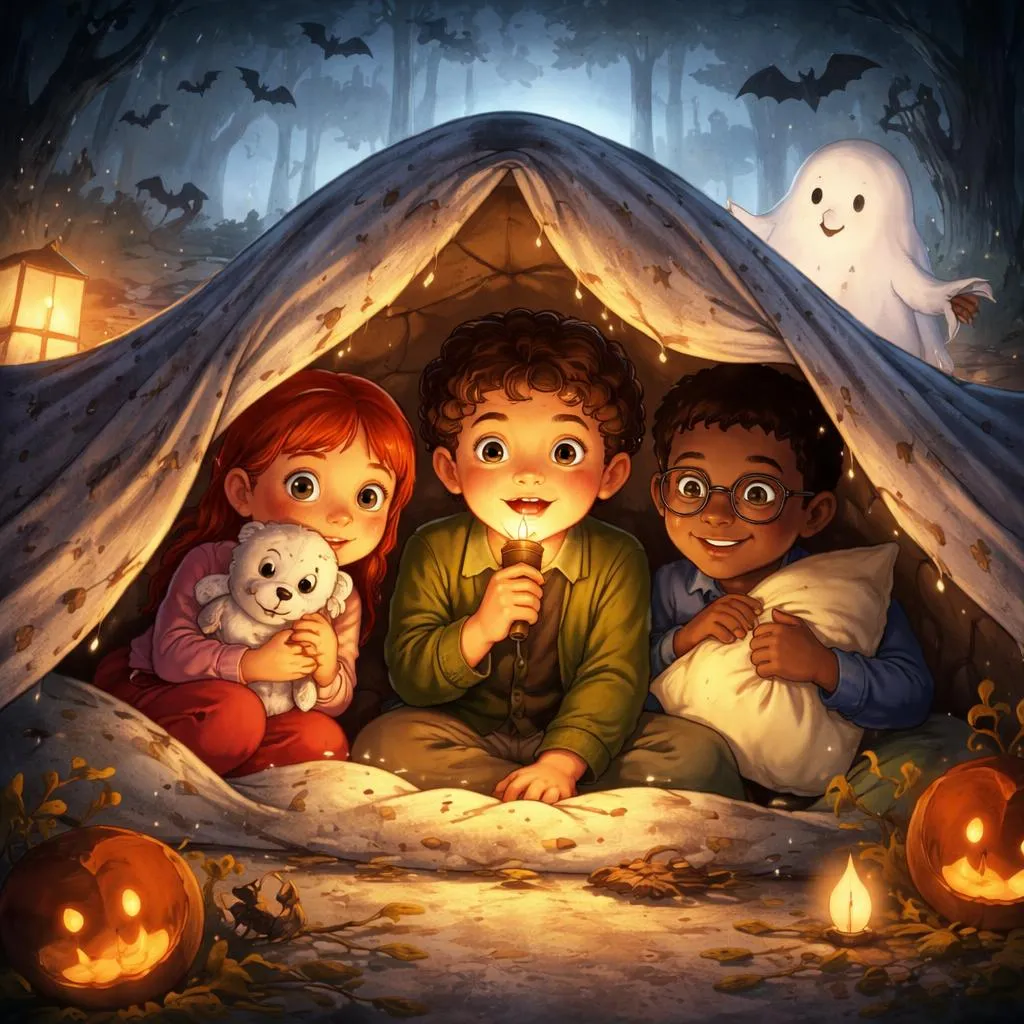

A creak on the stairs. A shadow that moves. A whisper with no one there. Children's ghost stories tap into something both scary and exciting. They make hearts beat faster. They make listeners snuggle closer. But the best ones do something更重要. They show that fear can be faced and that not everything scary is bad.
Let us explore together how gentle ghost stories can help children understand fear and find courage.
<h2>What is the story?</h2> Children's ghost stories come in many forms. Some are funny. Some are sweet. Some have just enough spookiness to thrill without terrifying.One beloved ghost story is "Georgie" by Robert Bright. Georgie is a little ghost who lives in the Winsome family's attic. Every night he creaks the stairs. Every night he squeaks the parlor door. The family expects these sounds. They help everyone sleep.
But one day Mr. and Mrs. Winsome decide to fix the creaky stairs and squeaky door. Georgie has nothing to do. He feels useless. He decides to leave and find a new home.
Herman the cat follows Georgie. They meet animals along the way. But no place feels right. Finally they return home. The Winsomes have missed Georgie. They oil the stairs just enough to creak and the door just enough to squeak. Georgie is happy again.
Another classic is "The Ghost Family" by Meindert DeJong. A family moves into a new house. Strange things happen. Pictures turn sideways. Doors open by themselves. The children discover the house already has a family. A ghost family lives there too.
The ghost children want to play. The living children are scared at first. But they learn that the ghosts are lonely. They play together. The ghosts show the children where hidden treasures are. When it is time for the ghosts to move on, both families are sad but grateful.
A more modern story is "Bunnicula" by Deborah and James Howe. A family finds a baby rabbit at the movies. They bring him home. Strange things happen. Vegetables turn white. Juice is drained from them. The family cat and dog suspect the rabbit might be a vampire bunny.
The story is funny, not scary. The cat and dog try to solve the mystery. They learn that Bunnicula is just different, not dangerous. The scares are all silly.
<h2>The message of the story</h2> Children's ghost stories carry important messages about facing fears. Georgie shows that what seems scary can be friendly. The ghost just wants to help the family sleep.The Ghost Family teaches that being different does not mean being bad. The ghost children are lonely. They just want friends. The living children overcome their fear and gain playmates.
Bunnicula shows that things are not always what they seem. A bunny that might be a vampire turns out to be harmless. Jumping to conclusions causes unnecessary fear.
These stories also teach that home and belonging matter. Georgie leaves but comes back. The ghost family moves on but is remembered. The Winsomes miss Georgie. Everyone wants to belong somewhere.
We can ask our children, What would you do if you met a friendly ghost? Why were the children in The Ghost Family scared at first? What helped them stop being scared?
<h2>Vocabulary learning</h2> Children's ghost stories introduce special words for spooky things.Ghost means the spirit of someone who has died that some believe can appear to the living. In children's stories, ghosts are usually friendly.
Spooky means scary in a fun way. A spooky story makes you shiver but not hide.
Creak is the sound old stairs and doors make. Georgie made the stairs creak.
Attic is the space under the roof where Georgie lived. Attics are often dark and full of old things.
Vampire is a creature that drinks blood. Bunnicula might be a vampire bunny, but it is very funny.
Haunted means visited by ghosts. A haunted house might have ghost residents.
After reading, we can use these words naturally. When you hear an old house sound, you might say, That sounds like Georgie. When something seems scary but turns out fine, you might say, That was spooky but friendly.
<h2>Phonics points</h2> The words in children's ghost stories give us phonics practice.Ghost has one syllable. Gh-ost. The GH is silent! Ggg-ost. The O makes a long O sound. The ST blends. Ghost. This word teaches that sometimes letters are silent.
Georgie has two syllables. Geor-gie. The G at the beginning can sound like J. Jjj-georgie. The EOR makes an or sound. The GIE makes a jee sound. Geor-gie.
Creak has one syllable. Cr-ea-k. The CR blends. The EA makes a long E sound. The K is sharp. Creak. It sounds like what it means.
Bunnicula has four syllables. Bun-ni-cu-la. The B pops. The U is short. The N is nasal. The I is short. The C is hard. The U is short. The L lifts tongue. The A is short. Bun-ni-cu-la.
We can play with these sounds by finding other words with the same patterns. Ghost and go both start with G but ghost has a silent H. Georgie and George both start with Geor. Creak and creek sound the same but mean different things.
<h2>Grammar patterns</h2> Children's ghost stories use language patterns that build atmosphere.Sound words appear often. Creak, squeak, whisper, rustle. These words help children hear the story.
Questions create suspense. Who made that sound? What was that shadow? Is someone there? Questions make readers wonder.
Short sentences increase tension. The stairs creaked. Something moved. Georgie listened. Short sentences feel like heartbeats.
Dialogue reveals character. "I'm lonely," whispered the ghost child. "Will you play with me?" The ghost's words make them sympathetic, not scary.
After reading, we can notice these patterns. The story used the word creak many times. Why? Because creaking stairs are part of Georgie's job. He helps the family sleep with his sounds.
<h2>Learning activities</h2> Children's ghost stories inspire gentle activities that make fear fun.Create a friendly ghost craft. Use white fabric or paper to make a ghost. Add a smiling face. Hang it where you can see it. Talk about friendly ghosts like Georgie.
Make creaky stairs sounds. Find a creaky step in your house or make creaking sounds with your mouth. Practice making the sound Georgie made.
Draw a picture of a haunted house that is actually friendly. Show ghosts playing, smiling, being kind. What would a friendly haunted house look like?
Act out meeting a ghost. One person pretends to be a ghost. The other pretends to meet them. Practice being scared, then practice being friendly. How does the ghost feel when you are friendly?
<h2>Printable materials</h2> Many wonderful printable materials exist for children's ghost stories.Look for coloring pages of friendly ghosts. Georgie on the stairs. Ghost children playing. Bunnicula with vegetables. Children can color while you talk about each story.
Find printable ghost puppets. Cut out ghost shapes. Add faces. Attach to sticks. Use them to act out stories.
Some websites offer printable spooky word searches with words from ghost stories. Ghost, creak, attic, friendly, spooky. Find the words and talk about what they mean.
You might also printable friendly ghost bookmarks. A little ghost saying "I'm a friendly ghost!" Use them while you read.
<h2>Educational games</h2> Games based on ghost stories help children process fear through play.Play friendly ghost or scary ghost. Make different ghost faces. Happy, sad, funny, scared. Talk about how ghosts might feel. Are they scared too?
Create a ghost sound game. Make different sounds. Creaking, whispering, knocking. Your child guesses what makes each sound. Talk about how sounds can be scary until you know what makes them.
Play what would you do? Present situations. You hear a creak at night. You see a shadow. A friendly ghost wants to play. Your child says what they would do. Practice brave responses.
For younger children, play a simple matching game matching ghosts to their houses. Georgie to the Winsome attic. Ghost children to their haunted house. Bunnicula to the family home.
These games show that ghost stories can be playful and fun. Children explore fear while having fun together.
<h2>Choosing gentle ghost stories</h2> Not all ghost stories work for children. Some are too scary. When choosing children's ghost stories, look for these qualities.Look for friendly ghosts. Ghosts who want friends, not to scare. Ghosts who help, not hurt. Ghosts with feelings and problems of their own.
Look for humor. Funny ghosts are less scary. Bunnicula makes children laugh. Laughter chases fear away.
Look for resolution. The story should end well. Ghosts and children become friends. Fears are overcome. Everyone is safe.
Look for warmth. The best ghost stories are really about belonging, friendship, and home. The ghost is just a way to explore these themes.
Know your child. Some children love gentle scares. Others find any ghost scary. Choose what fits your child.
<h2>The gift of ghost stories</h2> Children's ghost stories give a special gift. They let children feel scared in a safe place. Sitting on a parent's lap, wrapped in blankets, a child's heart beats faster. But they are safe. The scary part ends. The light comes on.This teaches something important. Fear can be felt and survived. The story ends. The child is still safe. Next time real fear comes, they remember. They have survived fear before.
Ghost stories also teach empathy. Friendly ghosts are lonely. They want friends. Children learn that even beings who seem scary might need kindness.
Most of all, ghost stories create connection. Children snuggle closer during spooky parts. Parents squeeze back. The story becomes a shared experience of moving through fear together.
When we share children's ghost stories with our children, we give them practice with fear. We show them that not everything scary is bad. We teach them that courage means feeling afraid and doing the right thing anyway.
So find a gently spooky story. Turn down the lights just a little. Snuggle close. Let the creaks and whispers begin. When the story ends, turn up the lights and talk about it. The fear fades. The love remains. And your child learns that they can face scary things, one story at a time.