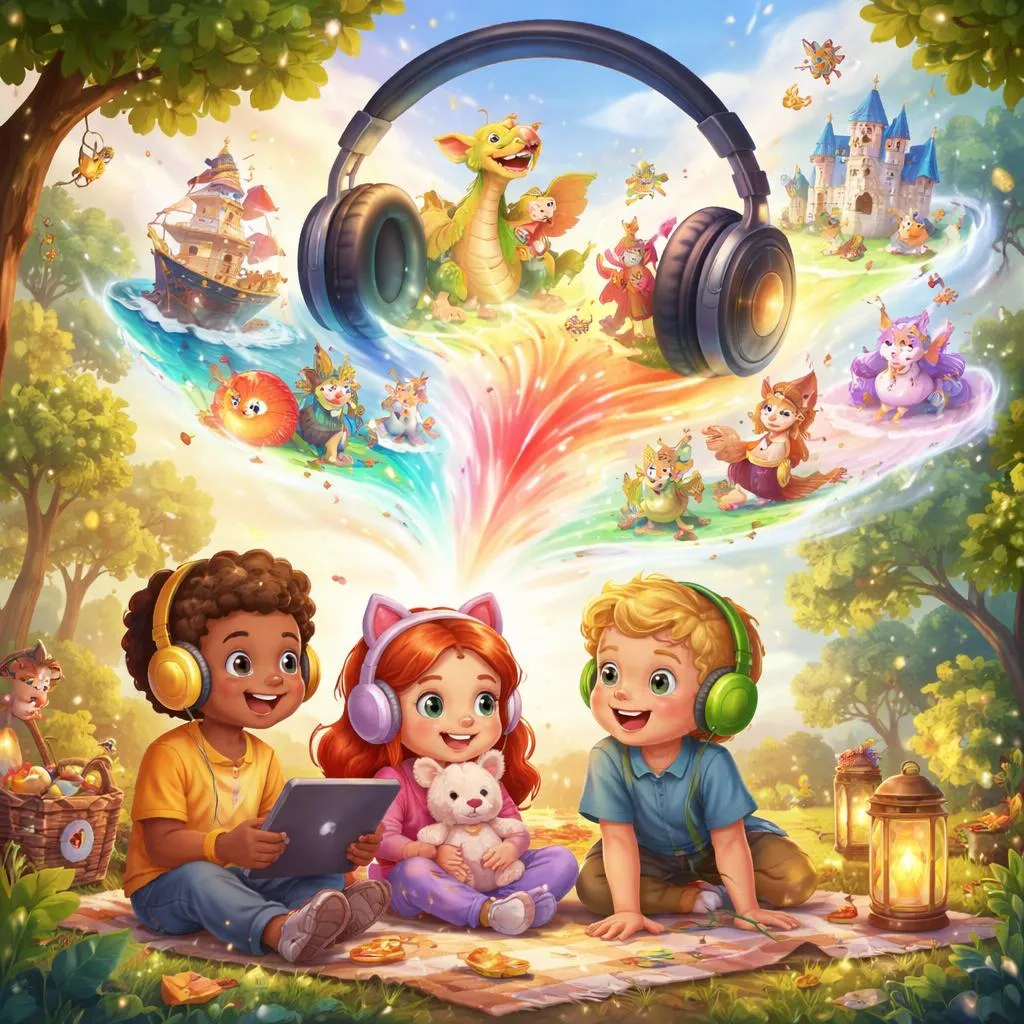

A voice speaks through headphones. Stories unfold while riding in cars or lying in bed. No pages to turn. No screens to watch. A children's story podcast travels anywhere listeners go. It turns ordinary moments into adventures. This article explores methods for using these audio treasures in teaching.
What Defines a Children's Story Podcast?
A children's story podcast delivers narratives through audio format made for young listeners. Episodes typically run from five to twenty minutes. Short enough for attention spans. Long enough for complete stories.
Professional storytellers bring these tales to life. Different voices for different characters. Sound effects that create worlds. Music that signals emotions. All elements work together through sound alone.
Some podcasts feature original stories. Others adapt classic tales. Some present series with recurring characters. Others offer standalone episodes. Variety keeps young listeners engaged.
Why Use Podcasts for Language Learning?
Children's story podcasts offer several advantages for language development. First, they build listening comprehension without visual support. Learners must attend fully to words. This focused listening strengthens auditory processing.
Second, podcasts provide pronunciation models. Narrators demonstrate fluent speech with proper intonation. Learners internalize these patterns through repeated hearing.
Third, podcasts support flexible learning. Children listen during car rides, quiet times, or while drawing. This flexibility increases story exposure throughout the day.
Fourth, podcasts level playing field. Struggling readers access same stories as fluent readers. Everyone experiences narrative equally through listening.
Vocabulary Learning Through Podcast Stories
Podcasts introduce vocabulary through context alone. New words appear surrounded by explanatory language. Skilled narrators may pause slightly before key words. Tone may suggest meaning. These vocal cues support understanding.
Repetition in podcast series helps vocabulary stick. Key words reappear across episodes. Each appearance reinforces learning without feeling like drill.
Descriptive language gains power through vocal delivery. When narrators describe a "gloomy forest," voices become darker. This vocal painting makes descriptive words more memorable.
Children's story podcasts also introduce words for sounds. Onomatopoeia comes alive through actual sound effects. Crash, whisper, and creak become real through audio.
Simple Phonics Points in Podcast Stories
Podcasts provide excellent phonics support. Learners hear sounds clearly modeled. Narrators articulate carefully. This clarity helps distinguish similar sounds like short i and short e.
Rhyming becomes especially noticeable in audio. The ear catches sound patterns that might be missed in print. Rhyming stories become games of prediction. Listeners guess what word comes next based on sound.
Alliteration stands out when heard. "Peter Piper picked" delights the ear. This auditory experience builds phonemic awareness naturally.
Exploring Grammar Through Audio Narratives
Grammar patterns become audible in podcasts. Learners hear how sentences connect in natural speech. They notice where pauses fall. Questions rise in pitch at the end. This prosodic information supports grammatical understanding.
Verb tenses gain meaning through story context. Narrator voice may shift slightly between past narration and present dialogue. Learners absorb these distinctions without explicit instruction.
Pronoun references become clear through story events. Listeners must track who "he" or "she" refers to throughout narrative. This builds anaphoric reasoning essential for comprehension.
Learning Activities with Podcast Stories
Active engagement with podcast narratives deepens learning. These activities move from listening to active language use.
Prediction Pause Activity Play a podcast episode and pause at exciting moments. Ask what might happen next. Learners share predictions based on what they heard. Resume playing to check predictions. This builds comprehension and anticipatory thinking.
Sound Effects Scavenger Hunt Before listening, list sound effects learners might hear. During podcast, they check off each sound when heard. Afterward, discuss how sounds contributed to story. This builds auditory discrimination.
Mental Picture Drawing After listening to a descriptive passage, ask learners to draw what they imagined. Compare drawings afterward. Notice how the same words created different mental images. This builds visualization skills and comprehension.
Podcast Review Station Create a listening station with podcast episodes. Learners listen independently and complete simple review cards. Title, what happened, favorite part, rating. This builds comprehension and opinion expression.
Educational Games with Podcast Stories
Games add playful interaction with audio narratives. These activities work well for groups.
Podcast Bingo Create bingo cards with story elements likely to appear in upcoming episode. Characters, objects, or events. As learners listen, they mark elements they hear. First to complete row wins. This builds focused listening.
Voice Character Match Play excerpts featuring different character voices. Learners match voices to character descriptions. This builds listening for distinguishing features.
Sound Story Creation After experiencing several podcasts, create original sound stories. Learners plan story and decide what sounds to include. Record using simple devices. This builds creative and production skills.
Printable Materials for Podcast Learning
Tangible resources support extended exploration of audio narratives. These materials work well for independent practice.
Podcast Response Page Create a simple page with prompts about a podcast episode just heard. Episode title, characters, what happened, favorite part, new words heard. This builds comprehension and personal response.
Sound Word Collection Sheet Create a page for collecting sound words from podcasts. Learners add new onomatopoeic words as they encounter them. Splash. Creak. Rustle. Whoosh. This builds personal sound vocabulary.
Podcast Listening Log Create a simple log for tracking listening experiences. Date, episode title, new words heard, favorite part, rating. This encourages regular listening practice and reflection.
Episode Review Cards Create small cards for quick episode reviews. Title, rating out of five stars, one sentence summary. Learners build a collection of recommended episodes. This builds evaluation and summary skills.
The lasting value of a children's story podcast lies in its accessibility. Stories travel anywhere. Long car rides become adventures. Quiet times become journeys. Waiting becomes opportunity. Children build listening skills without feeling they are working. They simply enjoy good stories. Each episode heard builds vocabulary, comprehension, and love of narrative. The classroom becomes a place where listening is valued as much as reading. And children discover that stories can live anywhere, ready to be heard whenever a podcast episode begins.