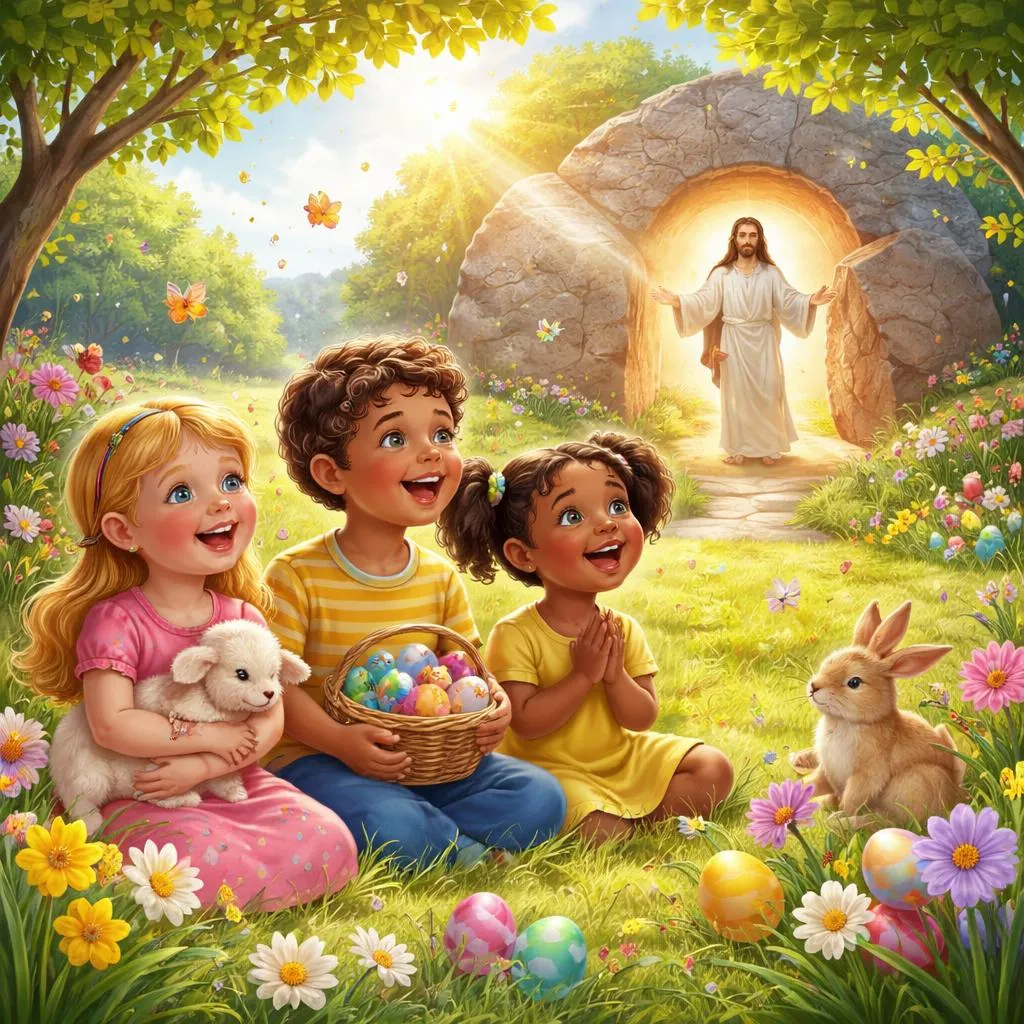

A donkey carries a king into town. Friends share a final meal together. A garden holds tears and prayers. An empty tomb brings joy beyond understanding. The children's story of Easter carries the most profound message in Christian faith. It tells of love stronger than death. This article explores methods for using this sacred story in teaching.
What Defines the Easter Story for Children?
The children's story of Easter presents the events of Holy Week in age-appropriate ways. The story begins with Jesus riding into Jerusalem on a donkey. Crowds welcome him with palm branches. This part brings joy and celebration.
Then the story turns. Jesus shares a special meal with his friends. He washes their feet to show humility. He gives them bread and wine to remember him. One friend betrays him. He is arrested.
The difficult parts follow. Jesus is treated unfairly. He dies on a cross. The story handles this gently but honestly. Darkness covers the land. Friends feel sad and scared.
But the story does not end there. Three days later, the tomb is empty. Jesus is alive again. He appears to his friends. Joy returns stronger than before. Hope wins.
Vocabulary Learning Through the Easter Story
The Easter story introduces rich vocabulary about Holy Week. Palm, donkey, and crowd name the triumphal entry. Bread, cup, and foot washing name the Last Supper. Cross, tomb, and stone name the death and burial. Empty, alive, and risen name the resurrection.
Emotion words fill this narrative. Happy, sad, scared, hopeful, joyful describe what followers felt. These adjectives help learners connect emotionally to the story.
Action words carry the narrative. Ride, wash, share, pray, die, rise describe key events. Each verb connects to crucial moments in the story.
The children's story of Easter also introduces words for faith concepts. Sacrifice, forgiveness, promise, and hope name deeper meanings. These abstract nouns gain meaning through story context.
Simple Phonics Points in the Easter Story
The Easter story offers useful phonics material through repeated names. Jesus has long e and soft s. Peter has long e. Pilate has long i. These names become familiar through repetition.
Key words provide sound practice. Cross has cr and short o. Tomb has long o and silent b. Alive has schwa and long i. Each word builds phonics foundations.
Alliteration appears in Easter language. "Palm branches" repeats p. "Empty tomb" features short e in both. "Risen indeed" highlights r. These patterns support phonemic awareness.
Exploring Grammar Through the Sacred Narrative
The Easter story provides clear grammar models. Past tense dominates narration. "Jesus rode into Jerusalem. The people welcomed him." This consistent past tense builds narrative familiarity.
Dialogue introduces present and future tenses. "This is my body," Jesus said. "I will rise again," he promised. These shifts occur naturally within story context.
Questions drive key moments. "Who do you say I am?" "Why are you crying?" "Where have you laid him?" These questions model inquiry forms.
Learning Activities with the Easter Story
Active engagement with the Easter narrative deepens learning. These activities bring the sacred story into productive language use.
Palm Branch Craft After reading about Palm Sunday, create simple palm branches from green paper. Wave them while retelling the welcoming part. This connects physical action to story memory.
Last Supper Discussion Talk about the special meal Jesus shared. Discuss what it means to remember someone special. Share a simple snack together while talking about remembrance. This builds personal connection to story events.
Empty Tomb Drawing After hearing about the resurrection, draw the empty tomb. Add angels and flowers. Discuss how the friends felt when they found it empty. This builds comprehension through visual expression.
Easter Emotions Chart Create a chart tracking emotions through the story. Happy at Palm Sunday. Confused at arrest. Sad at cross. Hopeful at tomb. Joyful at resurrection. This builds emotional vocabulary and story understanding.
Educational Games with the Easter Story
Games add playful interaction with the sacred narrative. These activities work well for groups.
Easter Story Bingo Create bingo cards with Easter story elements. Donkey. Palm. Bread. Cup. Cross. Tomb. Stone. As you describe story moments, learners cover matching squares. This builds listening comprehension and story knowledge.
Story Sequence Cards Write key events from the Easter story on separate cards. Palm Sunday. Last Supper. Arrest. Crucifixion. Burial. Resurrection. Learners arrange in correct order. This builds comprehension of narrative structure.
Character Guess Game Describe Easter story characters without naming them. "This friend ran away when Jesus was arrested. Later he said three times he didn't know Jesus." Learners guess Peter. This builds descriptive language and character recall.
Printable Materials for Easter Story Learning
Tangible resources support extended exploration of Easter themes. These materials work well for independent practice.
Easter Story Word Cards Create cards with Easter vocabulary on one side and simple definitions or pictures on the other. Palm, donkey, cross, tomb, risen. Use these for matching games or quick reviews.
My Easter Story Page Provide a template for responding to the Easter story. Favorite part, how people felt, what it teaches, what I wonder. This builds comprehension and personal connection.
Easter Story Map Template Create a simple map template for plotting the Easter story. Beginning in Jerusalem, Last Supper, Garden, Cross, Tomb, Resurrection. Learners fill in information. This builds comprehension of narrative structure.
Resurrection Promise Card Create a card with the Easter promise written simply. "Jesus is alive. Love is stronger than death." Learners decorate and keep as reminder. This builds connection to faith meaning.
The lasting value of the children's story of Easter lies in its message of hope. Darkness does not win. Love is stronger than death. Sadness turns to joy. Children who hear this story carry hope with them. They learn that difficult times can lead to better ones. They discover that love never truly ends. Each telling of this story builds vocabulary while planting seeds of faith that can last a lifetime. The classroom becomes a place where the greatest story ever told reaches new hearts.