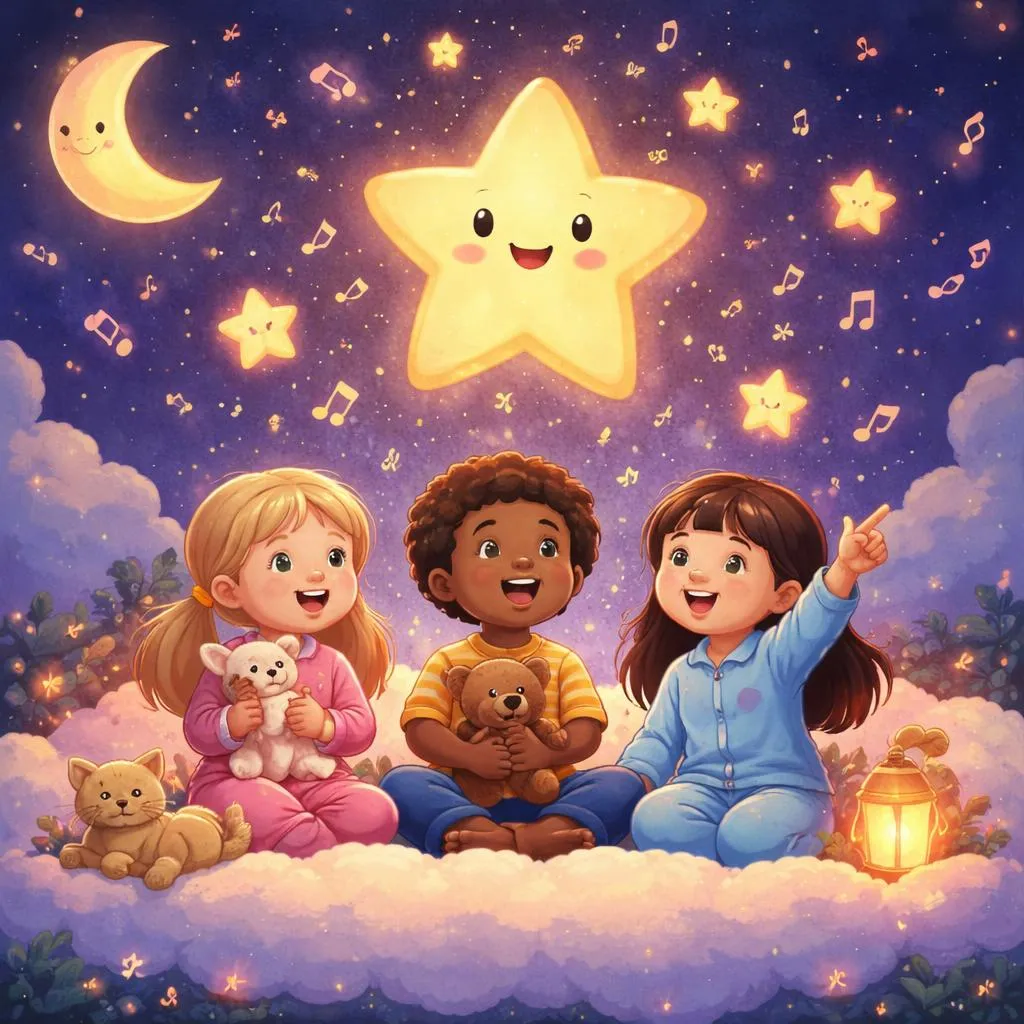

Hello, stargazers and wonderful teachers! Today we explore one of the most famous melodies in the world. It twinkles like stars in the night sky. It asks a simple, beautiful question. The song is "Twinkle, Twinkle, Little Star." The twinkle twinkle song lyrics are gentle and poetic. Children have sung this lullaby for centuries. It wonders what stars are and why they shine. This song teaches curiosity and wonder. It builds vocabulary about the night sky. Let us discover this classic together. Let us look up at the stars and sing.
What Is the Twinkle Twinkle Song Rhyme? "Twinkle, Twinkle, Little Star" is one of the most famous nursery rhymes in English. It is a lullaby that asks about the stars. The speaker wonders what stars are and why they shine. The song compares stars to diamonds in the sky.
The lyrics come from a poem by Jane Taylor. She wrote it in 1806. The poem was called "The Star." Later, people set it to a familiar melody. The tune is the same as "Baa, Baa, Black Sheep" and the French "Ah! Vous dirai-je, Maman." Mozart wrote variations on this melody when he was young.
The song has a gentle, rocking rhythm. It feels calm and soothing. Parents sing it to help children sleep. Teachers sing it to teach about the night sky. The simple words and beautiful tune have made it last for over two hundred years.
The Lyrics of the Nursery Rhyme Let us look at the complete twinkle twinkle song lyrics. Here is the most common version.
Twinkle, twinkle, little star, How I wonder what you are! Up above the world so high, Like a diamond in the sky.
Twinkle, twinkle, little star, How I wonder what you are!
When the blazing sun is gone, When he nothing shines upon, Then you show your little light, Twinkle, twinkle, all the night.
Twinkle, twinkle, little star, How I wonder what you are!
Then the traveler in the dark Thanks you for your tiny spark; He could not see where to go, If you did not twinkle so.
Twinkle, twinkle, little star, How I wonder what you are!
Some versions have only the first verse. Others include all verses. The full poem has more stanzas about stars and their role in the night sky.
Vocabulary Learning from the Song This beautiful song teaches many useful words. Let us explore them together.
Star words: The song introduces "star" and "twinkle." Children learn what stars are called. They learn that stars seem to twinkle or blink in the sky.
Question words: The song uses "how" and "what." "How I wonder what you are!" This shows curiosity. Children learn to wonder and ask questions about the world.
Comparison words: The song compares stars to "diamonds." This teaches children to make comparisons. They learn that stars look bright and sparkly like precious gems.
Sky words: The song mentions "up above the world" and "sky." Children learn words for talking about the heavens. They understand that stars are high above us.
Time words: The song talks about "when the blazing sun is gone." This teaches day and night. Children learn that stars come out when the sun goes away.
Phonics Points in the Rhyme The star song offers excellent phonics practice. Let us look at some important sounds.
Listen to the "tw" sound. It appears in "twinkle" throughout. The "tw" blend combines two sounds. Practice together. "Tw-tw-twinkle." This sound appears in many words like "twin" and "twice."
Listen to the long "i" sound. It appears in "twinkle" and "little" and "diamond." The long "i" says its name. Practice together. "Tw-igh-nkle." "L-igh-ttle." "D-igh-amond." This sound appears frequently in English.
Listen to the "ar" sound. It appears in "star" and "are." The "ar" sound is in the word "car." Practice together. "St-ar." "Ar." This sound appears in many words about the sky.
The rhyming words are clear and beautiful. Star and are. High and sky. Gone and upon. Light and night. Dark and spark. Go and so. This builds phonemic awareness. Children learn to recognize words that sound the same at the end.
Grammar Patterns in the Song The song contains useful grammar patterns for young learners.
Exclamations: The song uses "How I wonder!" This is an exclamation showing strong feeling. Children learn to express wonder and excitement.
Questions: The song asks indirectly. "How I wonder what you are!" This shows curiosity. Children learn to express wonder through questions.
Descriptions: The song uses beautiful descriptions. "Like a diamond in the sky." This teaches children to use similes. They learn to compare one thing to another.
Contrasts: The song contrasts day and night. "When the blazing sun is gone, then you show your little light." Children learn to talk about differences and opposites.
Learning Activities for the Song The song lends itself to many activities. Here are some ideas to extend learning.
Star Gazing: Go outside at night and look at the stars. Sing the song while looking up. Talk about what children see. Can they find a really bright star? Do some stars twinkle more than others? This connects the song to real experience.
Star Crafts: Make star crafts using paper, glitter, or foil. Cut out star shapes. Decorate them to look like diamonds. Hang them from the ceiling. When the light catches them, they twinkle. This makes the song visual.
Twinkle Hand Motions: Teach hand motions for the song. Open and close fingers for "twinkle." Point up for "up above." Make a diamond shape with fingers for "like a diamond." This adds movement to the singing.
Day and Night Discussion: Talk about why stars come out at night. Discuss the sun and the moon. Explain that stars are always there, but we cannot see them when the sun is shining. This builds science knowledge.
Printable Materials for the Song Printable resources support learning from the song. They provide visual reinforcement.
Star Flashcards: Create flashcards with star-related vocabulary. Star, twinkle, diamond, sky, sun, moon, night, light. Each card has a picture and the word. Use these for vocabulary review.
Lyrics Poster: Create a beautiful poster with the full lyrics. Add pictures of stars and a night sky. Display the poster during singing time. This supports reading development.
Star Counting Cards: Create cards with different numbers of stars. Children count the stars and match them to number cards. This combines the song with math practice.
Coloring Pages: Create coloring pages showing a night sky with stars. Children can add glitter or foil to make the stars shine. Coloring reinforces the vocabulary quietly.
Educational Games for the Song Games make learning from the song even more fun.
Twinkle Twinkle Memory: Place star cards face down. Each card has a number of stars. Children flip two cards and count the stars. If the numbers match, they keep the pair. This builds memory and counting skills.
Star Hunt: Hide paper stars around the room. Children search for them. When they find a star, they must say "Twinkle, twinkle, little star!" This combines movement with the song.
What Am I?: Describe something from the song without naming it. "I am up in the sky. I come out at night. I twinkle. What am I?" Children guess "a star." This builds listening and reasoning.
Star Patterns: Create pattern cards with different colored stars. Yellow star, blue star, yellow star, blue star. Children continue the pattern. This builds early math skills.
New Verse Creation: Challenge children to create new verses about other things in the sky. "Twinkle, twinkle, little moon." "Shine, shine, shiny sun." This builds creativity and extends vocabulary.
Through this gentle song, children learn about the night sky. They wonder about stars and why they shine. They compare stars to diamonds. The twinkle twinkle song lyrics create wonder and curiosity. The song builds vocabulary and phonemic awareness. It connects children to the natural world. Every time they look at the night sky, they remember the song. The stars become old friends that twinkle just for them.