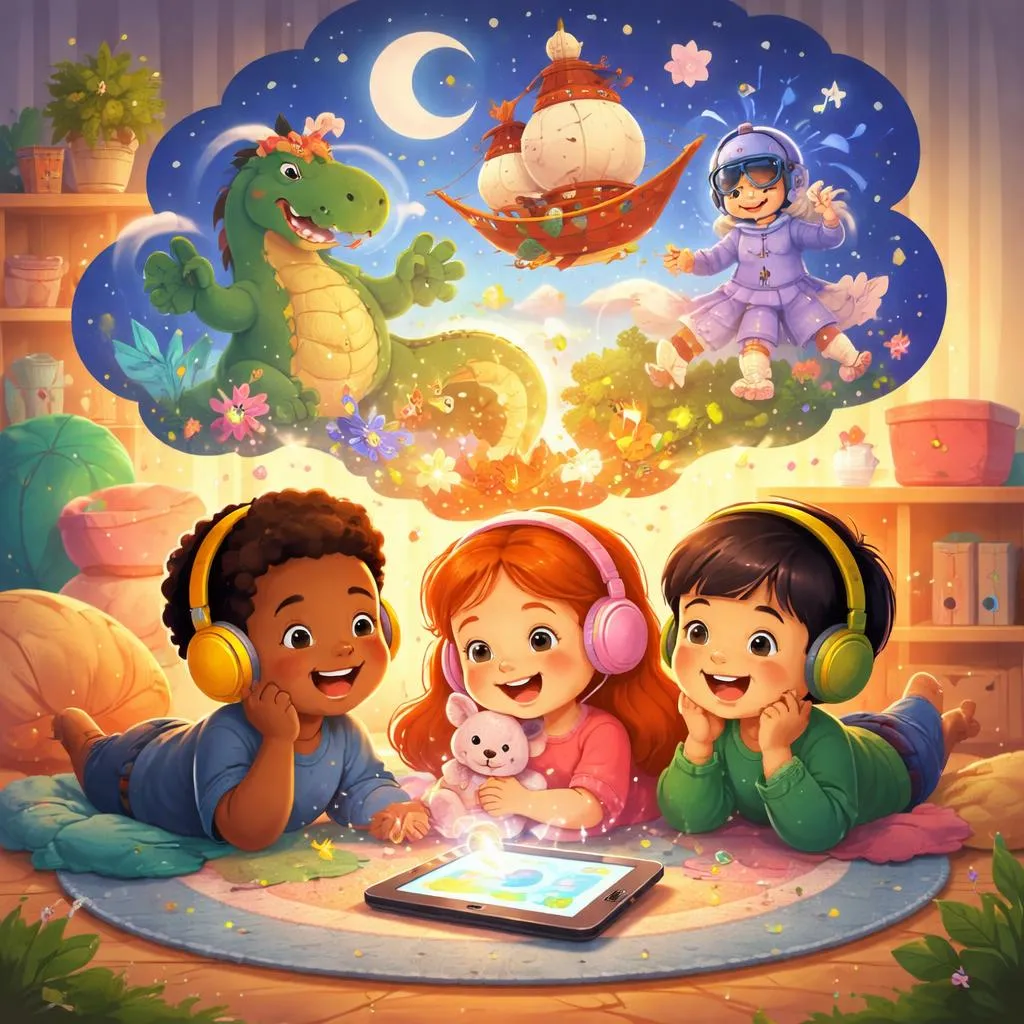

Listening forms the foundation of language acquisition. Before children speak, they listen. Before they read, they hear stories. This natural progression makes children's stories to listen to an essential tool for language development. Audio narratives build comprehension, vocabulary, and pronunciation in unique ways. This article explores effective methods for using these auditory resources in teaching.
What Makes Listening Stories Special for Language Learning?
A children's story to listen to engages the imagination without visual support. The voice carries the entire narrative. Tone, pace, and expression convey meaning. Sound effects might add atmosphere. Music might signal emotions or transitions. The listener builds mental pictures from words alone.
This format offers distinct advantages for language learning. Without pictures, learners must focus entirely on the words. They cannot rely on visual clues to guess meaning. This deepens listening comprehension skills. The voice becomes the primary source of information about characters, settings, and events.
Listening stories also model pronunciation naturally. Learners hear how words connect in fluent speech. They notice where stress falls in sentences. They absorb the rhythm of the language. This auditory input supports both comprehension and future speaking skills.
Vocabulary Learning Through Listening Stories
Listening stories introduce vocabulary in rich acoustic contexts. New words appear surrounded by explanatory language. The storyteller's tone might suggest meaning. A word spoken with fear sounds different from one spoken with joy. These vocal cues support understanding.
Repetition in listening stories helps vocabulary stick. Characters might repeat important phrases. Key words might appear multiple times in different contexts. This natural repetition reinforces learning without feeling like drill work.
Children's stories to listen to often use descriptive language vividly. The voice brings these descriptions to life. When the narrator describes a dark, spooky forest, the voice becomes darker and slower. When describing a bright sunny meadow, the voice lifts and brightens. This vocal variety makes descriptive words more memorable.
Action words benefit especially from this treatment. Verbs like whisper, shout, creep, and dash take on extra meaning through how the narrator speaks them. The sound matches the meaning, creating a stronger memory connection.
Simple Phonics Points in Listening Stories
Listening stories provide excellent phonics support. Learners hear the sounds of English clearly modeled. Narrators typically speak with careful articulation. This clarity helps learners distinguish similar sounds.
Rhyming becomes especially noticeable in audio format. The ear catches sound patterns that might be missed in print. Rhyming stories become games of prediction. Listeners guess what word comes next based on sound patterns.
Alliteration stands out when heard. "Peter Piper picked a peck of pickled peppers" delights the ear before the eye. This auditory experience builds phonemic awareness naturally and enjoyably.
Exploring Grammar Through Audio Narratives
Grammar patterns become audible in listening stories. Learners hear how sentences connect in natural speech. They notice where pauses fall. They hear how questions rise in pitch at the end. This prosodic information supports grammatical understanding.
Verb tenses gain meaning through story context. The narrator's voice might shift slightly when moving between past narration and present dialogue. Learners absorb these distinctions without explicit instruction.
Pronoun references become clear through story events. When the narrator says "he" after introducing a male character, listeners must track who "he" refers to. This builds anaphoric reasoning skills essential for language comprehension.
Learning Activities to Bring Listening Stories to Life
Active engagement helps listening skills develop. These activities move learning from passive hearing to active listening.
Prediction Pause Activity Play a listening story and pause at exciting moments. Ask what might happen next. Learners share predictions based on what they heard. Resume playing to check predictions. This builds comprehension and anticipatory thinking.
Sound Collection Game After listening to a story, ask learners what sounds they remember. Wind blowing. Door creaking. Birds singing. List these sounds. Discuss how they helped tell the story. This builds auditory attention and descriptive vocabulary.
Character Voice Exploration Discuss how the narrator used voice for different characters. Was the giant's voice deep? Was the fairy's voice light? Learners try imitating these voices. This builds awareness of vocal variety and expression.
Mental Picture Drawing After listening to a descriptive passage, ask learners to draw what they imagined. Compare drawings afterward. Notice how the same words created different mental images. This builds visualization skills and comprehension.
Educational Games Inspired by Listening Stories
Games transform listening practice into play. These audio-focused games provide engaging repetition.
Sound Bingo Create bingo cards with pictures of things that make sounds. Bell. Door. Bird. Car. Play recordings of these sounds. Learners cover matching pictures. This builds sound identification and vocabulary connections.
Story Sound Scavenger Hunt After listening to a story, list sounds that appeared. Learners listen for similar sounds in their environment. This connects story listening to real-world auditory awareness.
Whisper Game Whisper a sentence from a listening story to one learner. They whisper to the next. The last person says the sentence aloud. Compare with original. This builds careful listening and memory skills.
Printable Materials for Extended Listening Learning
Tangible materials support continued exploration of listening themes. These resources work well for independent practice or home connection.
Listening Response Page Create a simple page with prompts about a listening story. "My favorite part was..." "The characters were..." "I felt ______ when..." This builds comprehension and personal response.
Sound Word Collection Sheet Create a page for collecting sound words from listening stories. Learners add new onomatopoeic words as they encounter them. Splash. Creak. Rustle. Whoosh. This builds a personal sound vocabulary.
Story Map for Listeners Create a simple story map template for listeners to complete. Characters, setting, problem, solution. Learners fill this in after listening. This builds narrative comprehension without visual support.
Listening Log Create a simple log for tracking listening experiences. Date, story title, new words heard, and a rating. This encourages regular listening practice and reflection.
The unique value of using children's stories to listen to lies in their direct connection to how humans naturally learn language. Throughout history, stories passed orally from generation to generation. The voice carried culture, wisdom, and language. Modern listening stories continue this tradition. They free learners from decoding text and allow pure engagement with meaning. Eyes can close. Imagination can expand. The voice becomes a bridge between the story and the listener's inner world. Each story heard builds auditory discrimination, vocabulary, and comprehension in ways that complement reading instruction. The classroom becomes a place where listening receives the attention it deserves as a foundational language skill. Learners discover that stories live not just on pages but in the air between speaker and listener, ready to be heard again and again.