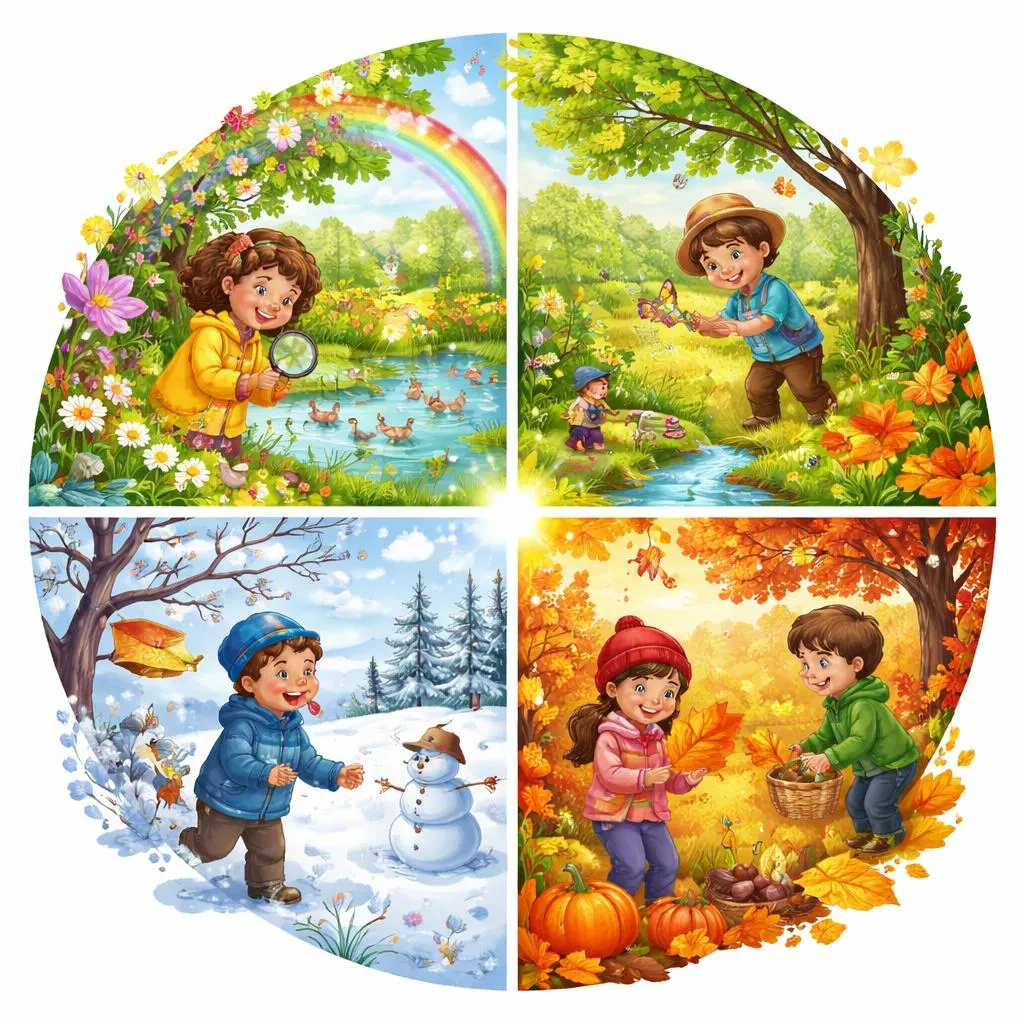

Hello, everyone! Today we talk about time. But not days or months. We talk about something bigger. We talk about the seasons of year.
The year has four seasons. Each season is special. Each season looks different. Each season feels different. Each season brings new things to see and do.
As a teacher, I love teaching the seasons. Children experience them directly. They feel the heat of summer. They see the snow of winter. They watch leaves change in autumn. They smell flowers in spring. The seasons are real to them. Let us explore the seasons of year together.
What Are the Seasons of Year? The seasons are four parts of the year. They repeat every year in the same order. Spring comes first. Then summer. Then autumn. Then winter. Then spring comes again.
The seasons happen because of Earth and the sun. Earth tilts as it goes around the sun. Different parts get more sun at different times. When your part gets more sun, it is summer. When it gets less sun, it is winter.
Children do not need to understand all this science. They just need to know the names. They need to know what happens in each season. They need to know what clothes to wear. What weather to expect. What holidays come.
Here are the four seasons in order:
Spring Summer Autumn (also called Fall) Winter
Each season lasts about three months. But in some places, the seasons feel different. Near the equator, it is warm all year. There is no snow. The seasons are less clear. But most children learn the four seasons as part of their English education.
Meaning and Explanation of Each Season Let us look at each season. What makes it special?
Spring comes after winter. The weather gets warmer. Snow melts. Rain falls. Flowers bloom. Trees grow new leaves. Baby animals are born. Birds build nests. People feel happy after the long cold winter.
Spring words: flowers, rain, grow, bloom, baby animals, warm, green.
Summer is the warmest season. The sun shines bright. Days are long. School ends for many children. Families take vacations. People go to beaches. They swim in pools. They eat ice cream. They play outside until late.
Summer words: hot, sun, beach, swim, ice cream, vacation, play.
Autumn is also called Fall. The weather cools down. Leaves change color. They turn red, orange, and yellow. Then they fall from trees. People rake leaves into piles. Children jump in them. Farmers harvest their crops. Halloween comes in autumn.
Autumn words: leaves, fall, cool, harvest, pumpkin, Halloween, colors.
Winter is the coldest season. Days are short. Nights are long. Snow falls in many places. Children build snowmen. They have snowball fights. They go sledding. Holidays come in winter. Christmas, Hanukkah, New Year. People stay inside where it is warm.
Winter words: cold, snow, ice, coat, hat, scarf, holidays, warm inside.
Each season has its own feeling. Its own colors. Its own activities. Children learn to love them all.
Daily Life Examples with Seasons Now let us see how seasons affect daily life.
Spring Mornings In spring, the sun rises earlier. Birds sing outside the window. The air smells fresh. A child puts on a light jacket. No more heavy winter coat. On the way to school, they see flowers growing.
Summer Afternoons Summer afternoons are hot. The sun beats down. Children play in sprinklers. They drink cold lemonade. They wear shorts and t-shirts. Sunscreen goes on before playing outside. The ice cream truck comes by.
Autumn Evenings Autumn evenings get dark earlier. The air feels crisp. Children wear sweaters. They walk through crunchy leaves. They see pumpkins on doorsteps. They think about Halloween costumes.
Winter Mornings Winter mornings are dark. The bed feels warm. Getting dressed takes longer. So many layers. Coat, hat, gloves, scarf. Outside, breath makes little clouds. Snow might cover the ground. School might even close for snow days.
Seasonal Foods Different foods come in different seasons. Spring has fresh peas and strawberries. Summer has watermelon and corn on the cob. Autumn has apples and pumpkins. Winter has soups and hot chocolate. Children learn to connect foods to seasons.
Seasonal Holidays Holidays follow the seasons. Spring has Easter. Summer has Independence Day in some countries. Autumn has Halloween and Thanksgiving. Winter has Christmas and New Year. Children learn to anticipate these special days.
Printable Flashcards for Seasons Flashcards help children learn season words.
Season Name Cards Make four cards. Write one season name on each. Spring, Summer, Autumn, Winter. Practice reading them in order. Mix them up and put them in order.
Weather Cards Make cards for weather in each season. Sun for summer. Snow for winter. Rain for spring. Wind for autumn. Match the weather to the season.
Clothing Cards Make cards for seasonal clothes. Swimsuit for summer. Coat for winter. Raincoat for spring. Sweater for autumn. Children match the clothes to the right season.
Activity Cards Make cards for seasonal activities. Building a snowman for winter. Swimming for summer. Jumping in leaves for autumn. Planting flowers for spring. Match activities to seasons.
Tree Cards Make cards showing a tree in each season. Spring tree with flowers. Summer tree with green leaves. Autumn tree with colored leaves. Winter tree with no leaves. This shows the cycle visually.
Holiday Cards Make cards for seasonal holidays. Easter eggs for spring. July 4th fireworks for summer. Halloween pumpkin for autumn. Christmas tree for winter. Match holidays to seasons.
Learning Activities for Seasons Here are activities to teach the seasons of year.
Activity 1: Season Walk Go outside in each season. Look around. What do you see? What do you feel? What do you smell? Talk about it. Use season words. This connects learning to real experience.
Activity 2: Season Art Give children paper divided into four parts. Label each part with a season. Children draw what that season looks like. Spring flowers. Summer sun. Autumn leaves. Winter snow. This creates a season picture.
Activity 3: Season Sorting Collect pictures from magazines. Pictures of weather, clothes, activities, holidays. Children sort them into four piles. One pile for each season. This builds categorization skills.
Activity 4: Season Songs Sing songs about each season. There are many. "Here Comes the Sun" for summer. "Frosty the Snowman" for winter. Songs help children remember season words.
Activity 5: Season Calendar Make a year calendar. Mark when each season starts. Mark seasonal holidays. Children can see the whole year at once. They can see how seasons change over time.
Activity 6: Season Dress Up Have clothes for each season. Children dress for a season. Others guess which season they are dressed for. This is fun and active. It teaches seasonal clothing vocabulary.
Activity 7: Season Food Tasting Bring foods from different seasons. Strawberries in spring. Watermelon in summer. Apple in autumn. Hot chocolate in winter. Taste and talk about when we eat these foods.
Educational Games for Seasons Games make learning about seasons fun.
Game 1: Season Spin Make a spinner with the four seasons. Spin it. Children must name something about that season. Weather, clothes, activity, holiday. This builds quick thinking.
Game 2: What Season Am I? Describe a season without naming it. "I am cold. Snow falls in me. People wear coats. Children build snowmen." Children guess. "Winter!" This builds listening and deduction.
Game 3: Season Bingo Make bingo cards with season pictures. Call out season words or descriptions. Children cover matching pictures. First to cover all wins. This builds listening and matching.
Game 4: Season Relay Divide into teams. Place season pictures at one end. Call out a season. One child from each team runs and touches the correct picture. First to touch it wins a point. This builds speed and recognition.
Game 5: Season Memory Make pairs of season pictures. Place them face down. Children turn over two. If they match, they keep the pair. If not, they turn them back. This builds memory and concentration.
Game 6: Season Charades Act out a season activity. Pretend to build a snowman for winter. Pretend to swim for summer. Others guess the season. This builds creativity and observation.
Game 7: Season Chain Start with spring. Next person says something about spring. Then name summer. Next person says something about summer. Continue through all seasons. This builds knowledge and turn-taking.
Game 8: Season Sort Race Give each child a mix of season pictures. On go, they sort them into four piles by season. First to sort correctly wins. This builds speed and categorization.
The seasons of year are a wonderful topic for children. They are real. They are visible. They affect every part of life. Learning season words gives children language to talk about the world around them.
Teachers can use the seasons throughout the school year. In September, talk about autumn. In January, talk about winter. In April, talk about spring. The seasons provide a natural curriculum. They change, and the lessons change with them.
Parents can talk about seasons at home too. "Look, the leaves are falling. It is autumn." "Feel the warm sun. It is summer." These small comments build understanding over time.
The seasons also teach about cycles. Things change, but they come back. Spring always follows winter. Summer always follows spring. This gives children a sense of order and prediction. They learn what comes next.
So let us explore the seasons together. Let us feel the warmth of summer. Let us watch the leaves of autumn. Let us smell the flowers of spring. Let us play in the snow of winter. The seasons are waiting to teach us. Happy learning, everyone