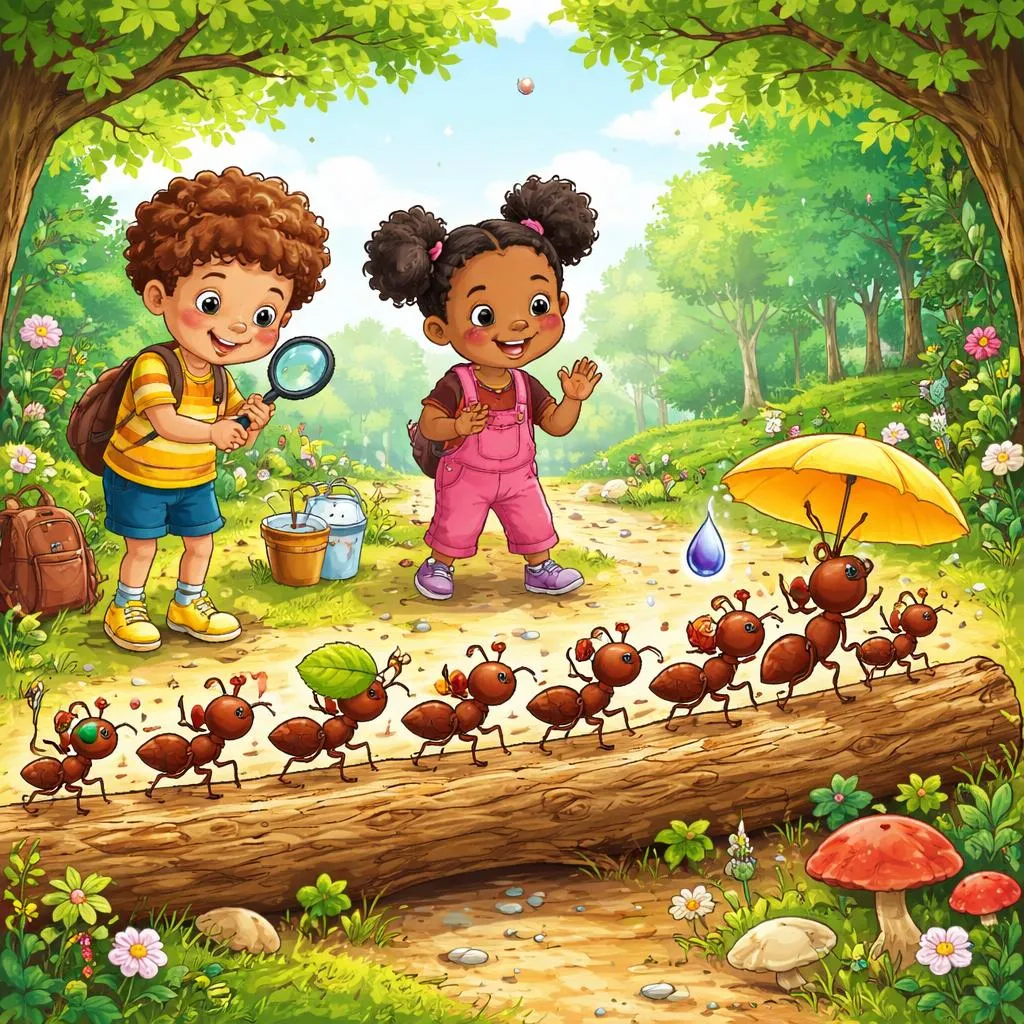

Hello, everyone! Today we follow some busy little creatures. They march one by one. They march in the rain. They are ants. And we explore the ants go marching with lyrics together.
This song is a favorite among children. It has a strong beat. It has counting. It has actions. It has a funny little story about ants who stop to do silly things.
As a teacher, I love using this song in class. It gets children moving. It teaches numbers in a natural way. It repeats patterns that help language stick. Let us discover the ants go marching with lyrics together.
What Is the "Ants Go Marching" Rhyme? This is a classic children's song. It is based on an old tune from the American Civil War. The tune was "When Johnny Comes Marching Home". Someone added words about ants. Children loved it. It became a nursery rhyme.
The song tells about ants marching in a line. They march one by one, two by two, three by three, and so on. Each verse adds one more ant. Each ant stops to do something. The little one stops to do a special action.
The song has many verses. Usually it goes up to ten. Sometimes it goes higher. Each verse follows the same pattern. This repetition helps children learn. They know what comes next. They can join in quickly.
The ants in the song are funny. They stop to tie their shoe. They stop to climb a tree. They stop to bump their knee. Children laugh at these silly actions. Laughter helps learning.
The Lyrics of the Nursery Rhyme Let us look at the ants go marching with lyrics. I will write the first few verses.
The ants go marching one by one. Hurrah! Hurrah! The ants go marching one by one. Hurrah! Hurrah! The ants go marching one by one. The little one stops to suck his thumb. And they all go marching down to the ground. To get out of the rain. Boom! Boom! Boom!
The ants go marching two by two. Hurrah! Hurrah! The ants go marching two by two. Hurrah! Hurrah! The ants go marching two by two. The little one stops to tie his shoe. And they all go marching down to the ground. To get out of the rain. Boom! Boom! Boom!
The ants go marching three by three. Hurrah! Hurrah! The ants go marching three by three. Hurrah! Hurrah! The ants go marching three by three. The little one stops to climb a tree. And they all go marching down to the ground. To get out of the rain. Boom! Boom! Boom!
The pattern continues for each number. Four by four, the little one stops to shut the door. Five by five, the little one stops to take a dive. Six by six, the little one stops to pick up sticks. Seven by seven, the little one stops to pray to heaven. Eight by eight, the little one stops to shut the gate. Nine by nine, the little one stops to check the time. Ten by ten, the little one stops to say "The End!"
The song has a strong rhythm. The "Hurrah! Hurrah!" parts are fun to shout. The "Boom! Boom! Boom!" at the end sounds like thunder. Children love to make these sounds.
Vocabulary Learning from the Song The ants go marching with lyrics teaches many words.
Ants are small insects. They live in groups. They work together. They march in lines. Children see ants outside. They know what ants are. This song gives them words to talk about ants.
Marching means walking in a steady rhythm. Soldiers march. Bands march. Ants march too. Marching has a strong beat. Left, right, left, right. Children can march while they sing.
One, two, three are numbers. The song counts from one to ten. Each verse uses a new number. This teaches number words in order. Children learn to count while having fun.
Hurrah is a cheer. People shout hurrah when they are happy. When a team wins, the crowd shouts hurrah. In this song, hurrah adds excitement. Children love to shout it.
Little means small. The little one is the smallest ant. This word teaches size comparison. Big and little. Large and small.
Stops means to not move anymore. The little ant stops marching. He does something else. This word is useful for daily life. Stop at the red light. Stop when the teacher says stop.
Suck means to pull with the mouth. Babies suck their thumbs. People suck juice through a straw. The little ant sucks his thumb. This is a common action for young children.
Thumb is the short thick finger. We have thumbs on our hands. Thumbs help us hold things. The little ant sucks his thumb. Children know this action well.
Tie means to fasten strings together. We tie our shoes. We tie ribbons. The little ant ties his shoe. This teaches a useful action word.
Shoe is something we wear on our feet. Shoes protect our feet. Shoes come in many colors. The little ant ties his shoe. Children wear shoes every day.
Climb means to go up. We climb trees. We climb stairs. The little ant climbs a tree. This is an action children enjoy.
Tree is a tall plant. Trees have trunks and leaves. Birds live in trees. The little ant climbs a tree. Children see trees everywhere.
Ground is the surface we walk on. The ground is under our feet. The ants march down to the ground. This word teaches location.
Rain is water from the sky. Rain falls from clouds. The ants get out of the rain. Children know rain. They use umbrellas in rain.
Boom is a loud sound. Thunder goes boom. Drums go boom. This word teaches sound words. Onomatopoeia. Words that sound like what they mean.
These words are all useful. Children can use them in daily talk. They can talk about insects. They can talk about actions. They can talk about weather.
Phonics Points in the Song Now let us look at the sounds. Phonics helps children read.
The "ANT" Sound in Ants Ants has the ant sound. This is the same sound in plant and can't. Say it: ant. Ants. Children learn this sound pattern. They can read ant, pant, slant.
The "ARCH" Sound in Marching Marching has the arch sound. This is the same in arch and march. Say it: arch. Marching. The letters "ar" make this sound. Children learn that r changes the vowel sound.
The "UR" Sound in Hurrah Hurrah has the ur sound. This is the same in hurry and furry. Say it: ur. Hurrah. The "u" here makes a special sound. Not like in cup. Like in hurry.
The "UCK" Sound in Suck Suck has the uck sound. This is the same in duck and truck. Say it: uck. Suck. This is a common word family. Children learn many words with uck.
The "UM" Sound in Thumb Thumb has the um sound. This is the same in drum and plum. Say it: um. Thumb. The b is silent. Children learn that some letters do not make sounds.
The "IE" Sound in Tie Tie has the ie sound. This is the same in pie and lie. Say it: ie. Tie. The letters "ie" together make the long i sound. Children learn this pattern.
The "OO" Sound in Shoe Shoe has the oo sound. This is the same in too and blue. Say it: oo. Shoe. The letters "oe" here make the oo sound. English has many spellings for this sound.
The "IM" Sound in Climb Climb has the im sound. This is the same in time and lime. Say it: im. Climb. The b is silent. Children learn that climb sounds like clime.
The "EE" Sound in Tree Tree has the ee sound. This is the same in see and bee. Say it: ee. Tree. The letters "ee" make the long e sound. This is a common pattern.
The "OUND" Sound in Ground Ground has the ound sound. This is the same in round and sound. Say it: ound. Ground. The letters "ou" make this sound. Children learn this pattern.
The "AIN" Sound in Rain Rain has the ain sound. This is the same in train and pain. Say it: ain. Rain. The letters "ai" make the long a sound. This is a common pattern.
The "OOM" Sound in Boom Boom has the oom sound. This is the same in room and zoom. Say it: oom. Boom. The letters "oo" make this sound. This is another spelling for the oo sound.
Grammar Patterns in the Song This song teaches grammar too.
Present Continuous Tense The song uses "are marching". The ants go marching means they are marching now. This is present continuous. It shows action happening at this moment. Children learn to describe what is happening now.
Repetition for Emphasis The song repeats lines. "The ants go marching one by one. Hurrah! Hurrah!" Repetition makes the song easy to remember. It also shows that in English, we repeat for effect.
Number Words The song uses number words as adjectives. One by one. Two by two. This shows how we use numbers to describe groups. Children learn that numbers can describe how things are arranged.
Action Verbs Each verse has an action. Suck, tie, climb, shut, dive, pick, pray, shut, check, say. These are all verbs. Children learn many action words from this one song.
Prepositional Phrases The song uses phrases like "to the ground" and "out of the rain". These are prepositional phrases. They tell where. Children learn to add location words to their sentences.
Conjunctions The song uses "and" to connect ideas. "And they all go marching down to the ground." This teaches how to join sentences. Children learn that and adds more information.
Learning Activities for the Song Here are activities to use with this song.
Activity 1: March and Count Children march around the room. They count as they march. One, two, three. For each number, they do the action from the song. For one, they suck their thumb. For two, they tie their shoe. This connects movement to learning.
Activity 2: Ant Craft Make ants from egg cartons. Cut apart the cups. Paint them black. Add pipe cleaner legs and antennae. Use them to act out the song. Children move their ants as they sing.
Activity 3: Number Line Make a number line on the floor. Write numbers one to ten. Children march to each number. They say the verse for that number. This combines counting with the song.
Activity 4: Draw the Ants Give children paper and crayons. Ask them to draw the ants marching. They draw one ant for the first verse. Two ants for the second verse. This builds counting skills and creativity.
Activity 5: Rainstorm Sounds Make rain sounds together. Rub hands for light rain. Pat legs for medium rain. Stomp feet for heavy rain. Say "Boom! Boom! Boom!" for thunder. Use these sounds with the song.
Activity 6: Action Charades Write the actions from the song on cards. Suck thumb, tie shoe, climb tree, shut door, take dive, pick up sticks, pray, shut gate, check time, say The End. Children act out the action. Others guess which verse it is.
Printable Materials for the Song Here are materials teachers can make.
Flashcards Make cards for each number and action. One with a picture of an ant sucking its thumb. Two with an ant tying its shoe. Use them while singing. Children match the card to the verse.
Mini Book Fold paper to make a small book. Each page has one verse. Page one: The ants go marching one by one. Page two: The ants go marching two by two. Children draw the pictures. They now have their own songbook.
Number Cards Make cards with numbers one to ten. Make another set with the actions. Children match the number to the action. One goes with suck thumb. Two goes with tie shoe. This builds number-word connection.
Coloring Pages Print pictures of marching ants. Children color them. They can add the action for each number. Draw the little one sucking its thumb on the one by one page.
Sequencing Cards Make picture cards for each verse. Mix them up. Children put them in order from one to ten. This builds sequencing skills. It also checks understanding of the song order.
Educational Games for the Song Games make learning fun. Here are some games.
Game 1: Ant March Relay Divide into teams. Children line up. They march to a wall and back. On the way, they must do the action for their number. First team to finish wins. This combines movement with learning.
Game 2: Number Hunt Hide number cards around the room. Children find them. Then they put them in order. Then they sing the verse for each number. This builds number recognition and song knowledge.
Game 3: Freeze March Play the song. Children march around. Stop the music. Call out a number. Children do the action for that number. Start the music again. This builds listening and quick thinking.
Game 4: Ant Bingo Make bingo cards with pictures of the actions. Call out verses. "One by one." Children cover the picture of sucking thumb. First to cover all wins. This builds listening and matching.
Game 5: What Comes Next? Sing the song. Stop at a number. Ask "What comes next?" Children say the next number and action. This builds prediction and memory.
Game 6: Action Dice Make a dice with pictures of the actions. Roll the dice. Do the action that comes up. Sing the verse for that number. This adds randomness and fun.
Game 7: Ant Parade Have a class parade. Children dress as ants. They march around the school. They sing the song. Other classes watch and learn. This builds confidence and community.
The ants go marching with lyrics is more than a fun song. It teaches counting. It teaches action words. It teaches rhythm. It teaches pattern recognition. All while children march and play.
Children remember what they do. They remember what they sing. They remember what makes them laugh. This song provides all three. The silly ants sticking thumbs, tying shoes, climbing trees. These images stick in young minds.
Teachers can use this song throughout the year. It works for math lessons about counting. It works for language lessons about verbs. It works for music lessons about rhythm. It works for physical education about marching.
Parents can sing it at home too. In the car, children can march their fingers. At bathtime, they can sing about the rain. Before bed, they can do quiet actions. The song fits many moments.
So let us march with the ants. Let us count from one to ten. Let us suck thumbs and tie shoes. Let us learn and laugh together. The ants are marching, and they are bringing English with them. Happy singing, everyone