
Fun Introduction
Last Saturday, Mia helped her mom in the kitchen. She washed plates with soapy water. The bubbles felt slippery. Later, Mia scrubbed a burnt pot. She rubbed hard with a brush. Both actions cleaned things. But one was gentle and quick. The other was tough and slow. Let’s learn the difference.
Word Breakdown
Core Principle
We reject boring dictionary definitions. We use pictures in your mind. We add functions and memory hooks. This helps you remember forever.
Wash To Do
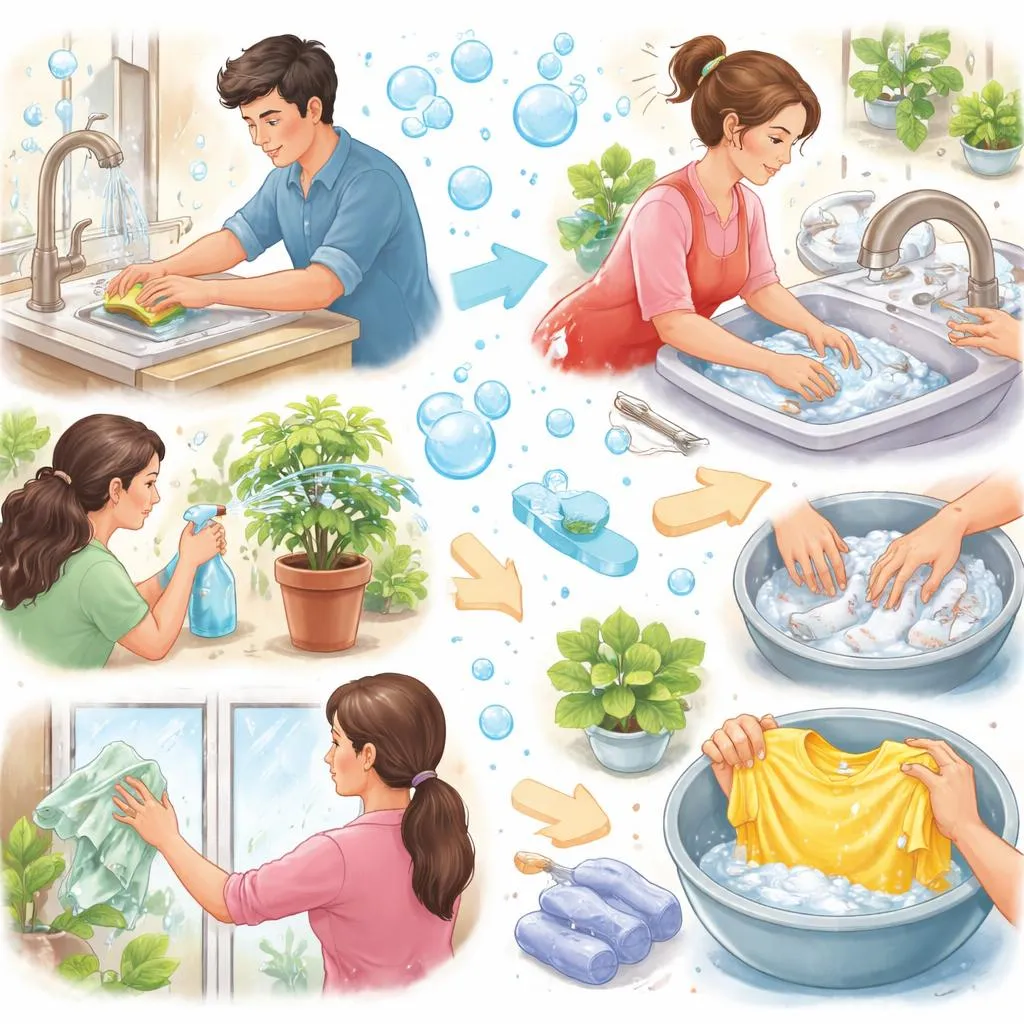
Image: Imagine rinsing an apple under the faucet. Water flows over the skin. That is wash to do. It means cleaning with water, often gently.
Function: It is for general cleaning. Like wash your face. Or wash the car.
Sensory Description: You feel cool water. You smell fresh soap. Your ears hear splashing.
Memory Anchor: A bar of soap with bubbles. See the foam? That is wash to do.
Scrub To Do
Image: Think of rubbing a dirty shoe with a stiff brush. You push hard to remove mud. That is scrub to do. It means cleaning by rubbing vigorously.
Function: It is for tough dirt. Like scrub the bathtub. Or scrub a stained shirt.
Sensory Description: You feel rough bristles. You hear scrubbing sounds. Your arms get tired.
Memory Anchor: A scrub brush with stiff bristles. See the scrubbing motion? That is scrub to do.
Advanced Comparison
Wash is gentle and watery. Scrub is vigorous and abrasive. Wash uses flowing water. Scrub uses friction. Use wash for everyday cleaning. Use scrub for stubborn grime.
Scene Comparison
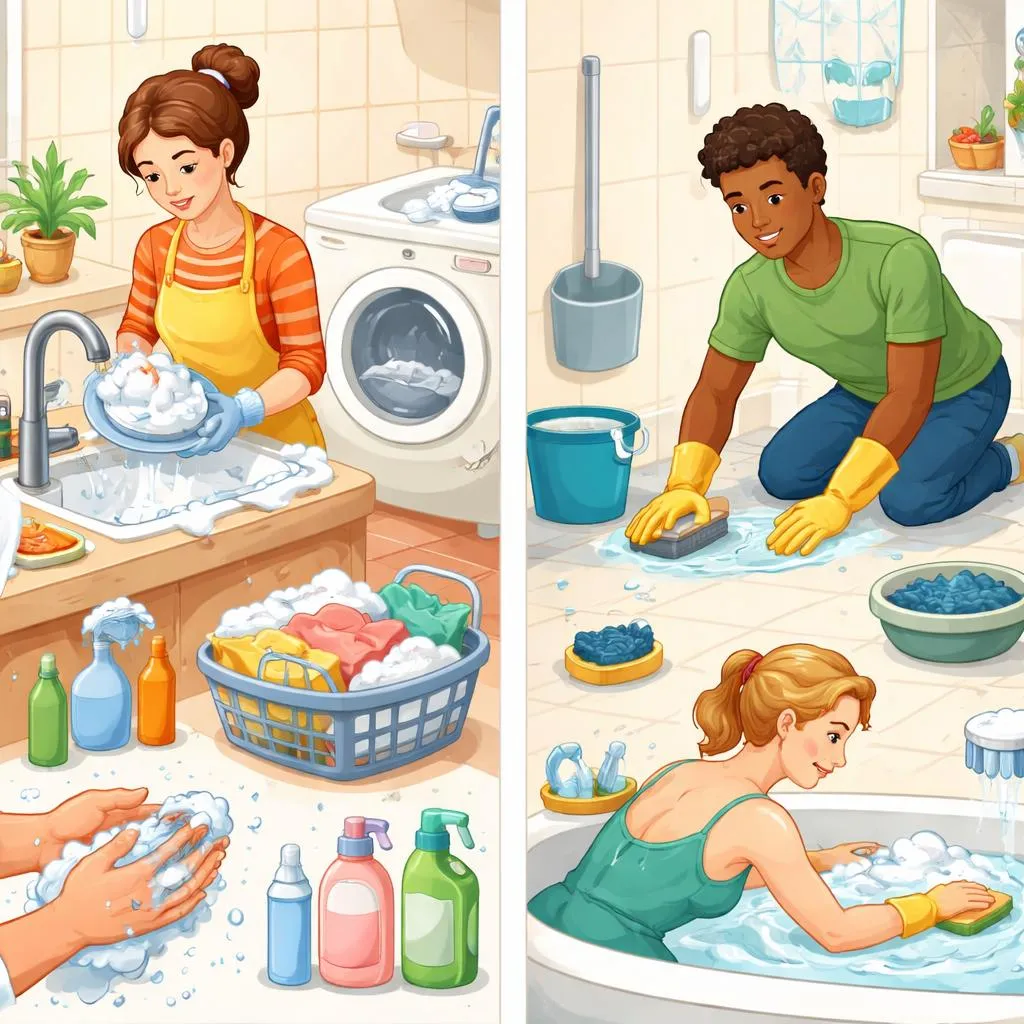
Scene One happens at the sink. Leo washes his hands before lunch. He uses warm water and soap. He sings the alphabet song. This is wash to do—gentle and quick.
Scene Two takes place in the bathroom. Emma scrubs the bathtub with a brush. She pushes hard to remove soap scum. Her arms ache a little. This is scrub to do—vigorous and tough.
Scene Three occurs in the garage. Ben washes his bike with a hose. Water rinses off dust. Later, he scrubs the greasy chain with a rag. Notice the shift. Washing is light. Scrubbing is intense.
Pitfalls Deep Reminder
Mistake One is saying “I scrubbed my face.” Why wrong? Faces are delicate. Scrubbing is too harsh. Funny result? Friends think you used sandpaper. Correct phrase is wash your face. Memory trick: Wash is for gentle skin.
Mistake Two is saying “I washed the crayon off the wall.” Why wrong? Crayon needs scrubbing. Washing alone leaves marks. Funny result? Mom sees colorful streaks. Correct phrase is scrub the crayon off. Memory trick: Scrub for stubborn marks.
Mistake Three is saying “I scrubbed my hair.” Why wrong? Hair needs gentle washing. Scrubbing tangles it. Funny result? Comb gets stuck in knots. Correct phrase is wash your hair. Memory trick: Wash is for hair.
Mistake Four is saying “I washed the burnt pan.” Why wrong? Burnt food needs scrubbing. Washing barely touches it. Funny result? Dad tries to eat crunchy bits. Correct phrase is scrub the burnt pan. Memory trick: Scrub for tough grime.
Interactive Exercises
Choose the Right Phrase
Read each sentence. Pick wash or scrub.
I ___ my hands before dinner. (wash/scrub)
She ___ the dirty grout between tiles. (wash/scrub)
We ___ the car with a soft sponge. (wash/scrub)
He ___ the mud off his cleats. (wash/scrub)
They ___ the lettuce for the salad. (wash/scrub)
Mini Theater
Act with a friend. Use the phrases.
Scene A: Gentle Cleaning
A: My hands are sticky from candy. I need to ___ them.
B: Use warm water and plenty of soap.
Scene B: Tough Cleaning
A: This pot has burnt oatmeal. I must ___ it hard.
B: Here is a steel wool pad.
Spot the Mistake
Which sentence sounds odd? Explain why.
Sentence: I scrubbed the fresh strawberries.
Reason: Berries are delicate. Use wash instead.
Sentence: I washed the grease off the engine.
Reason: Grease needs scrubbing. Use scrub instead.
Sentence: We scrubbed our hair with shampoo.
Reason: Hair needs gentle washing. Use wash instead.
Create Sentences
Use both phrases.
Wash to do: I wash my dog with mild shampoo.
Scrub to do: I scrub the patio furniture with a brush.
Bonus Challenge
You have dirt under your fingernails. Do you wash or scrub them? Answer: Scrub. It needs friction to remove.
Rhyme Time
Wash it light, scrub it strong.
One flows water, one scrubs along.
Gentle rinse? Choose wash.
Hard rub? Scrub to launch.
Homework Task
Pick one activity. Complete it this week. Share with family.
Option One: Drawing Journal. Get a small notebook. Draw three pictures. Write a sentence under each.
Picture One: You wash something. Sentence: I washed my face with cool water.
Picture Two: You scrub something. Sentence: I scrubbed the bathtub with a brush.
Picture Three: You wash something else. Sentence: I washed the car windows.
Show your journal to a parent. Explain the differences.
Option Two: Role Play. With a parent, act out moments. Use phrases correctly.
You: Mom, I will wash the salad greens.
Parent: Good. Be gentle with the leaves.
You: Dad, I need to scrub the grill grate.
Parent: Use the wire brush and elbow grease.
Practice until it feels natural.
Option Three: Sharing Time. Tomorrow at school, tell a friend. Describe one wash and one scrub. Say: Yesterday I washed my bike. I scrubbed my sneakers clean. Ask your friend about theirs.
Life Practice
Week Challenge: Try one task. Complete within seven days. Share your success.
Task One: Observation Log. For three days, note wash and scrub moments. Draw icons.
Day One: Wash a dish. Draw a soap bubble icon.
Day Two: Scrub a stain. Draw a brush icon.
Day Three: Wash a fruit. Draw a water droplet icon.
Show your log to your teacher. Place it on the classroom wall.
Task Two: Action Demo. Use both phrases in real actions.
Step One: Rinse a vegetable. Say: I wash this cucumber.
Step Two: Clean a dirty shoe. Say: I scrub this with a brush.
Demonstrate to a sibling. Explain the difference.
Task Three: Social Mission. Use phrases with others.
Wash a classmate’s lunch box. Say: I washed your box for you!
Scrub a friend’s muddy toy. Say: I scrubbed your truck clean!
Record a short voice message. Send it to your teacher.
Task Four: Creative Story. Write a short tale. Include both phrases.
Title: The Clean Team.
Story: I washed the dog gently. Then I scrubbed the dirty kennel. What a clean day!
Share your story in class.
Remember, practice makes perfect. Use these phrases often. Soon they will feel easy.