
Fun Introduction
Last Saturday, Mia helped her mom in the garden. She watered the thirsty plants. She wet the dry soil to help the seeds. Later, Mia cleaned her paintbrushes. She soaked them in a jar of water. Both actions made things wet. But one was light and quick. The other was deep and long. Let’s explore the difference.
Word Breakdown
Core Principle
We reject boring dictionary definitions. We use pictures in your mind. We add functions and memory hooks. This helps you remember forever.
Wet To Do
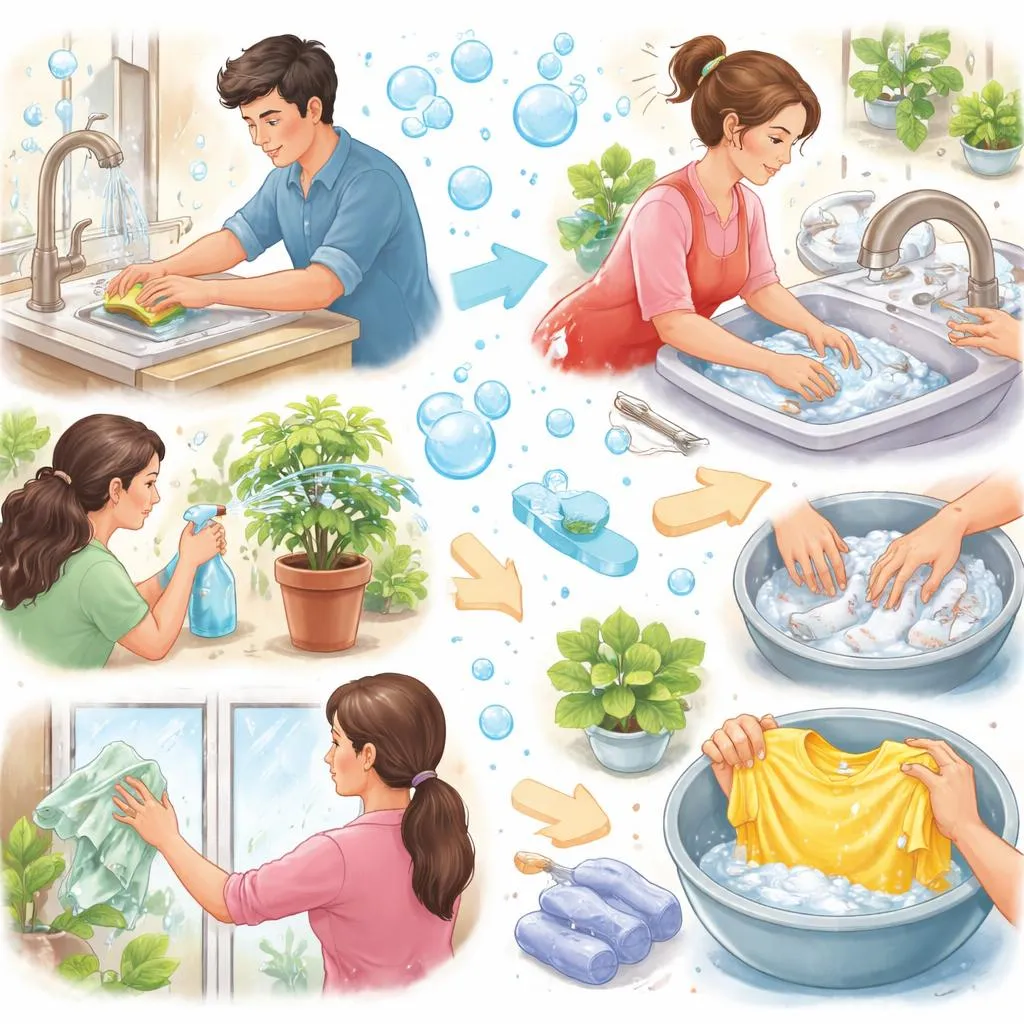
Image: Imagine spraying a plant with a mist bottle. Tiny drops land on leaves. That is wet to do. It means making something slightly damp.
Function: It is for light moisture. Like wet a sponge. Or wet your hair before shampoo.
Sensory Description: You feel cool droplets. You smell fresh water. Your ears hear a soft spray.
Memory Anchor: A spray bottle with a fine mist. See the tiny drops? That is wet to do.
Soak To Do
Image: Think of putting beans in a bowl of water. They sit and swell. That is soak to do. It means immersing something fully to absorb liquid.
Function: It is for deep saturation. Like soak dirty dishes. Or soak your feet in warm water.
Sensory Description: You feel heavy weight. You see bubbles rising. Your skin wrinkles over time.
Memory Anchor: A bowl of water with floating objects. See them submerged? That is soak to do.
Advanced Comparison
Wet is light and surface-level. Soak is deep and full immersion. Wet uses a little water. Soak uses enough to cover. Use wet for quick dampening. Use soak for thorough softening.
Scene Comparison
Scene One happens in the kitchen. Leo washes vegetables. He wets the lettuce under the faucet. Water runs off quickly. This is wet to do—light and fast.
Scene Two takes place in the utility room. Emma prepares to wash a stained shirt. She soaks it in soapy water overnight. The fabric drinks deeply. This is soak to do—deep and long.
Scene Three occurs during bath time. Ben steps into the shower. He wets his hair first. Later, he soaks his sore feet in a basin. Notice the shift. Wetting is brief. Soaking takes time.
Pitfalls Deep Reminder
Mistake One is saying “I soaked the towel.” Why wrong? Towels just need wetting. Soaking implies full immersion. Funny result? Friends imagine you dunking a towel in a bucket. Correct phrase is wet the towel. Memory trick: Wet is for light dampness.
Mistake Two is saying “I wet the beans before cooking.” Why wrong? Beans need soaking to soften. Wetting barely touches them. Funny result? Mom serves crunchy beans. Correct phrase is soak the beans. Memory trick: Soak is for hardening foods.
Mistake Three is saying “I soaked my hair.” Why wrong? Hair is wetted, not soaked. Soaking would mean submerging your head. Funny result? Barber thinks you went swimming. Correct phrase is wet your hair. Memory trick: Wet is for hair.
Mistake Four is saying “I wet the dirty dishes.” Why wrong? Dishes need soaking to loosen grime. Wetting does almost nothing. Funny result? Dad scrubs for hours. Correct phrase is soak the dishes. Memory trick: Soak is for tough dirt.
Interactive Exercises
Choose the Right Phrase
Read each sentence. Pick wet or soak.
I ___ the sponge before wiping. (wet/soak)
She ___ the stained shirt in detergent. (wet/soak)
We ___ the car windows with cleaner. (wet/soak)
He ___ his feet after a long hike. (wet/soak)
They ___ the seeds before planting. (wet/soak)
Mini Theater
Act with a friend. Use the phrases.
Scene A: Light Moisture
A: My hands are dusty. I need to ___ them.
B: Use this damp cloth quickly.
Scene B: Deep Soaking
A: These brushes are crusted with paint. I must ___ them.
B: Fill the jar with warm water.
Spot the Mistake
Which sentence sounds odd? Explain why.
Sentence: I soaked the sidewalk with a hose.
Reason: Sidewalks are wetted, not soaked. Use wet instead.
Sentence: I wet the dried beans overnight.
Reason: Beans need soaking. Use soak instead.
Sentence: We soaked our hair before swimming.
Reason: Hair is wetted. Use wet instead.
Create Sentences
Use both phrases.
Wet to do: I wet the stamp before sticking it.
Soak to do: I soak my feet in warm water.
Bonus Challenge
You have paint on your hands. Do you wet or soak them? Answer: Soak. Paint needs deep cleaning.
Rhyme Time
Wet it light, soak it deep.
One makes damp, one makes steep.
Quick spray? Choose wet.
Long bath? Soak to get set.
Homework Task
Pick one activity. Complete it this week. Share with family.
Option One: Drawing Journal. Get a small notebook. Draw three pictures. Write a sentence under each.
Picture One: You wet something. Sentence: I wet the plant leaves.
Picture Two: You soak something. Sentence: I soaked the dirty socks.
Picture Three: You wet something else. Sentence: I wet the window glass.
Show your journal to a parent. Explain the differences.
Option Two: Role Play. With a parent, act out moments. Use phrases correctly.
You: Mom, I will wet the sponge for washing.
Parent: Good. Don’t soak it yet.
You: Dad, I need to soak these paintbrushes.
Parent: Use the big jar in the sink.
Practice until it feels natural.
Option Three: Sharing Time. Tomorrow at school, tell a friend. Describe one wet and one soak. Say: Yesterday I wet my hair. I soaked my muddy shoes. Ask your friend about theirs.
Life Practice
Week Challenge: Try one task. Complete within seven days. Share your success.
Task One: Observation Log. For three days, note wet and soak moments. Draw icons.
Day One: Wet a cloth. Draw a spray bottle icon.
Day Two: Soak a dish. Draw a bowl of water icon.
Day Three: Wet a plant. Draw a leaf icon.
Show your log to your teacher. Place it on the classroom wall.
Task Two: Action Demo. Use both phrases in real actions.
Step One: Spray a surface. Say: I wet this counter.
Step Two: Submerge an item. Say: I soak this in soapy water.
Demonstrate to a sibling. Explain the difference.
Task Three: Social Mission. Use phrases with others.
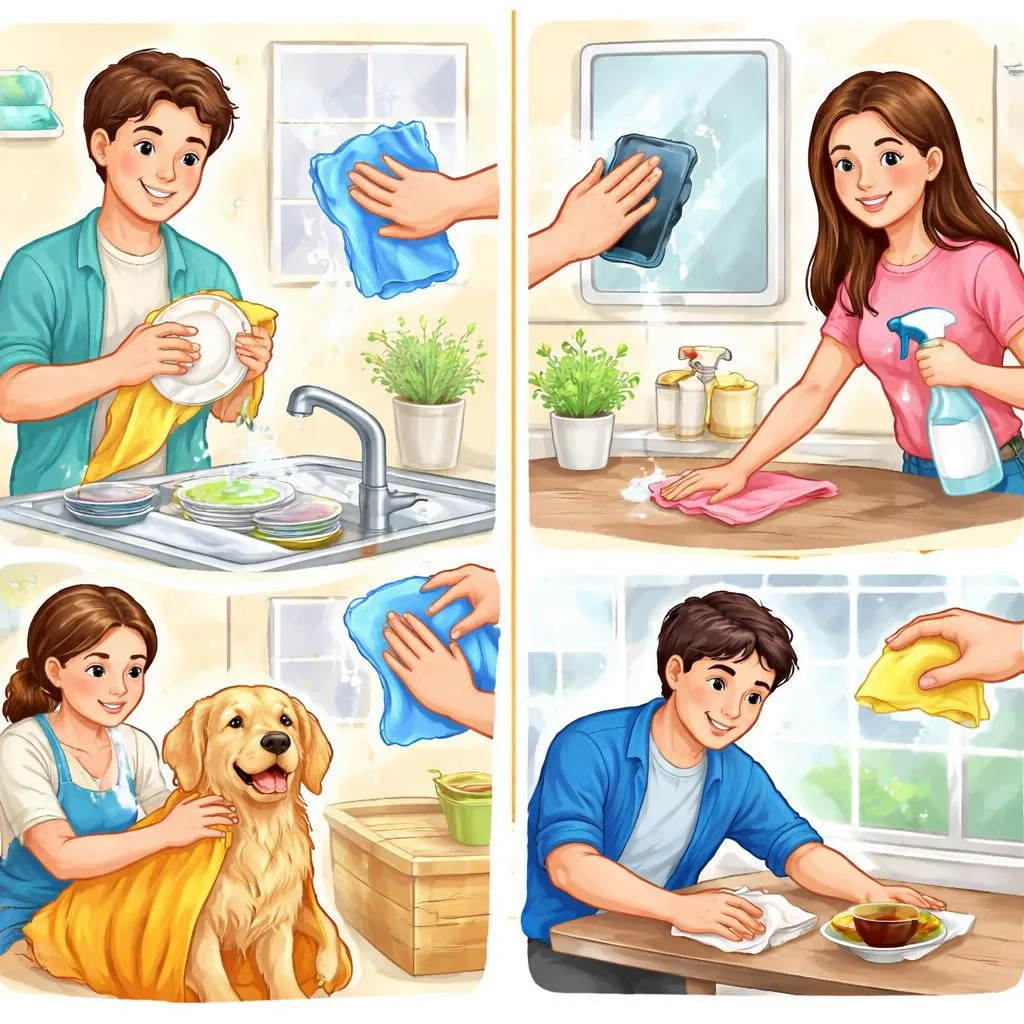
Wet a friend’s dusty hands. Say: I wet your hands for you!
Soak a classmate’s dirty eraser. Say: I soaked this to clean it!
Record a short voice message. Send it to your teacher.
Task Four: Creative Story. Write a short tale. Include both phrases.
Title: The Garden Helper.
Story: I wet the dry soil for seeds. Then I soaked the dirty tools. What a helpful day!
Share your story in class.
Remember, practice makes perfect. Use these phrases often. Soon they will feel easy.