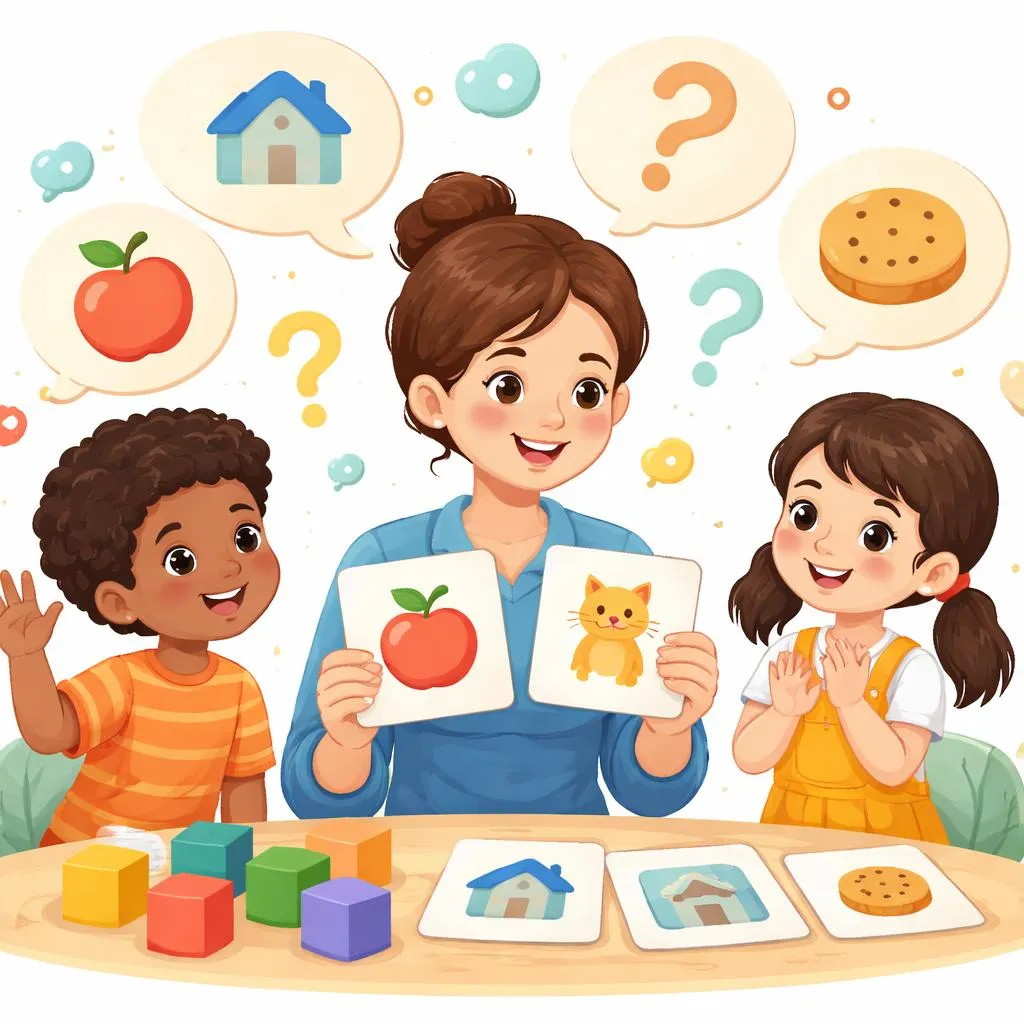

Small words do big jobs in English. Words like "a," "the," "this," and "my" appear in almost every sentence. They introduce nouns. They tell us which thing we mean. They show who owns what. These words are called articles and determiners. For young learners, mastering these small words makes a huge difference. Sentences sound right. Meaning becomes clear. Children sound more natural when they speak. Let us explore how to guide young learners through this essential grammar topic with clear explanations and engaging activities.
What Are Articles and Determiners? Articles and determiners are words that come before nouns. They give information about the noun. They tell us if the noun is specific or general. They show quantity. They indicate possession.
Articles are a type of determiner. English has three articles: a, an, and the.
A and an are indefinite articles. They introduce general or unknown nouns. I saw a dog. (Any dog, not a specific one) She ate an apple. (Any apple)
The is the definite article. It introduces specific or known nouns. I saw the dog. (A specific dog we both know) She ate the apple. (The apple we talked about before)
Determiners include many other words that come before nouns.
Possessive determiners: my, your, his, her, its, our, their This is my book. Where is your coat?
Demonstrative determiners: this, that, these, those I like this cookie. Please pass those crayons.
Quantifiers: some, any, many, much, several, few I have some pencils. Do you have any paper?
Numbers: one, two, three, first, second, third I have two sisters. This is my first day.
For young learners, start with the most common determiners. A, an, the, my, your, this, that appear constantly. Children need these words every day.
Meaning and Explanation of Articles and Determiners Each determiner has a specific job. Understanding these jobs helps children use them correctly.
A and an mean "one" or "any." They introduce singular nouns that are not specific. Use "a" before consonant sounds. Use "an" before vowel sounds. A cat (one cat, any cat) An apple (one apple, any apple) An hour (vowel sound, even though h is a consonant)
The means "this specific one." The speaker and listener both know which one. The teacher (our teacher, the one we know) The moon (there is only one)
My, your, his, her, its, our, their show who owns something. My pencil belongs to me. Her doll belongs to her.
This, that, these, those point to things. This and these are near. That and those are farther away. This book in my hand. That book across the room.
Some means an amount, but not exact. It is used in positive sentences. I have some stickers.
Any is used in questions and negative sentences. Do you have any stickers? I don't have any stickers.
Many means a large number. It is used with countable nouns. Many children like ice cream.
Much means a large amount. It is used with uncountable nouns. Much time passed.
For young learners, focus on the most common meanings first. Add complexity as children gain confidence.
Categories of Determiners Organizing determiners into categories helps children understand their functions.
Articles: A (before consonant sounds): a dog, a cat, a book An (before vowel sounds): an apple, an elephant, an hour The (specific): the sun, the teacher, the door
Possessive determiners: My: belongs to me Your: belongs to you His: belongs to him Her: belongs to her Its: belongs to it Our: belongs to us Their: belongs to them
Demonstrative determiners: This: singular, near That: singular, far These: plural, near Those: plural, far
Quantifiers: Some: positive sentences, offers Any: questions, negatives Many: large number, countable Much: large amount, uncountable Few: small number Little: small amount
Numbers: One, two, three (cardinal numbers) First, second, third (ordinal numbers)
Distributives: Each, every, either, neither
Use these categories in sorting activities. Children learn that different determiners do different jobs.
Daily Life Examples for Determiners The best learning happens in everyday moments. Here are examples of determiners in daily classroom life.
Morning routine: "Put your backpack in your cubby." "Please hang my coat on the hook." "I need a pencil." "Do you have an eraser?"
Snack time: "Would you like some crackers?" "I want an apple." "Can I have a cookie?" "This milk is cold."
Story time: "Let's read this book." "I like that story." "These pictures are beautiful." "Turn the page."
Art time: "Pass me the red crayon." "I need some glue." "Draw a picture." "Use your scissors."
Play time: "Can I play with that truck?" "These blocks are heavy." "I have a doll." "Where is the ball?"
Clean-up time: "Put these toys away." "Throw that paper in the trash." "Find your shoes." "Close the door."
Use these examples throughout the day. Point out determiners when they occur naturally. "You said 'a pencil.' Good job using a!"
Printable Flashcards for Determiners Flashcards provide visual support for learning determiners. Here are ideas for creating and using them.
Article cards: Create cards for a, an, the. Use example pictures. A card with "a" and a picture of one dog. "An" with a picture of one apple. "The" with a picture of the sun or moon.
Possessive cards: Create cards for my, your, his, her, its, our, their. Use pictures showing ownership. A child holding a toy for "my." A group standing together for "our."
Demonstrative cards: Create cards for this, that, these, those. Use pictures showing distance. A close object for "this." A far object for "that." Multiple close objects for "these." Multiple far objects for "those."
Quantifier cards: Create cards for some, any, many, much. Use pictures showing amounts. A bowl with some grapes. A question mark for "any." Many birds for "many." Much water for "much."
Sentence completion cards: Create cards with sentences missing determiners. "I see ___ dog." Children choose the correct determiner card to complete the sentence.
Laminate the cards for durability. Keep them in a pocket chart for easy access. Use them for games, sorting, and daily review.
Learning Activities for Determiners Active learning helps children understand determiners. Here are activities that work well.
Determiner Hunt: Read a story aloud. Every time children hear a determiner, they raise their hand. List the determiners on the board. Discuss what each one tells us.
Fill in the Blank: Write sentences on the board with missing determiners. "I see ___ cat." Children suggest possible determiners. "A cat." "The cat." "My cat." Discuss how meaning changes with each choice.
Determiner Match: Create cards with nouns. Create separate cards with determiners. Children match determiners to nouns to make phrases. "a" + "dog" makes "a dog." "my" + "book" makes "my book."
Show and Tell with Determiners: During show and tell, encourage children to use determiners. "This is my toy. It is a robot. The robot has red eyes." Point out the determiners they use naturally.
Determiner Sort: Create baskets labeled with determiner categories. Articles, possessives, demonstratives, quantifiers. Children sort determiner cards into the correct basket.
Classroom I Spy: Play I Spy using determiners. "I spy with my little eye, a red book." Children look for a red book. "I spy your pencil." Children identify their own pencil.
Determiner Chain: Start a sentence with a noun. "Dog." The next child adds a determiner. "A dog." The next adds more. "I see a dog." This builds sentences step by step.
Educational Games for Determiners Games make grammar practice joyful. Here are games for learning determiners.
Determiner Bingo: Create bingo cards with determiners in the squares. Call out sentences with missing determiners. "I see ___ elephant." Children cover the correct determiner "an." First to cover a row wins.
Determiner Memory Match: Create two sets of cards. One set has determiners. One set has nouns. Children match determiners to nouns that work together. "a" matches with "dog." "an" matches with "apple." "my" matches with "book."
Determiner Go Fish: Create a deck of cards with determiners and nouns. Children ask each other for matches. "Do you have a determiner for 'book'?" The other player gives "a," "the," or "my" if they have it.
Determiner Relay Race: Divide children into teams. Place noun cards at one end of the room. Place determiner cards at the other end. Call out a noun. One child from each team runs to find a determiner that works with that noun and brings it back. First correct match wins.
What's Missing?: Write a sentence on the board with the determiner missing. "I see ___ cat." Children guess what determiner could go there. Try different options and discuss how meaning changes.
Determiner Charades: Act out a phrase that includes a determiner without speaking. Point to yourself for "my." Point to a child for "your." Hold up one finger for "a." Children guess the determiner.
Spin a Determiner: Create a spinner with different determiners. Children spin and then create a sentence using that determiner. "My" might lead to "My dog is brown." "Those" might lead to "Those are big blocks."
Common Challenges with Determiners Young learners often struggle with certain determiners. Knowing these challenges helps teachers provide support.
A vs. an: Children may use "a" before vowel sounds. "A apple" is common. Explain that "an" sounds better before vowel sounds. Practice with many examples. An apple, an elephant, an octopus.
Forgetting determiners: Some children say "I see dog" without any determiner. Remind them that English usually needs a determiner before singular nouns. Practice with many examples.
Confusing this and that: Children may use "this" for things far away. Use gestures and clear examples. Hold a book close and say "this book." Point to a far book and say "that book."
Possessive confusion: Children may say "the my book" using two determiners together. Explain that we use only one determiner before a noun. "My book" not "the my book."
Some vs. any: Children may use "some" in questions. "Do you have some crackers?" Explain that we usually use "any" in questions. Model correct usage.
Many vs. much: Children may use "many" with uncountable nouns. "Many water" is incorrect. Explain that "much" goes with uncountable nouns. "Much water."
Address these challenges with patience. Use repetition and multiple modalities. Songs, games, and daily practice help all children succeed.
Using Books to Teach Determiners Children's books provide excellent examples of determiners in context. Here are ways to use books for determiner learning.
Determiner Hunt in Books: Give children sticky notes. Ask them to mark determiners they find in a familiar book. Count how many of each determiner appear.
Predictable Pattern Books: Books with repeating patterns help children predict determiners. "Brown Bear, Brown Bear, What Do You See?" uses "a" repeatedly. Children anticipate the pattern.
Create Class Books: Make books about the class using determiners. "This is our classroom. These are our chairs. That is our teacher." Children illustrate each page.
Big Book Activities: Use big books where text is large enough for all to see. Point to determiners as you read. Discuss why the author chose each one.
Story Rewrite: Take a simple story and remove all determiners. "___ cat sat on ___ mat." Children add determiners to make the story sound right again.
Articles and determiners are the small words that hold sentences together. They appear in every conversation. They make meaning clear. Teaching these words well gives children the foundation for all future language learning. With clear explanations, engaging activities, and plenty of practice, these small words become natural. Children use them without thinking. Their sentences sound right. And that is the goal of all grammar teaching.