
A Friendly Hello and First Impressions
Hola! (OH-lah). This is the common "Hello" in Spanish. Gracias! (GRAH-see-ahs). This is a warm "Thank you". People also speak Quechua and Aymara. Learning reading about Bolivia starts with these friendly, multilingual words.
Bolivia is in the heart of South America. Its shape looks like a geometric patchwork. The patchwork is made of mountains, valleys, and plains. The country is landlocked. It lost its coast to Chile long ago. Brazil and Peru are its large neighbors. The land is incredibly diverse and high.
People call it the "Tibet of the Americas". This is because of its high altitude. The capital, La Paz, is the highest in the world. Another nickname is the "Land of Two Nations". It has a president and also respects indigenous leadership. This makes its government unique. Are you ready to climb to the roof of the world?
Deep Dive into Culture and Stories
Echoes of History
Long ago, the Tiwanaku empire flourished here. It was a powerful pre-Inca civilization. Its people were master engineers and farmers. They built a great city near Lake Titicaca. Then, the Inca Empire took over the region. Later, the Spanish arrived. They looked for silver and other treasures. This history is a key part of learning reading about Bolivia.
A modern hero is Bartolina Sisa. She was an Aymara woman. She led an indigenous rebellion in 1781. She fought against Spanish rule. She was a brave and clever military leader. Today, she is a symbol of strength and resistance. Her story inspires many people. September 5 is Bartolina Sisa Day. It honors indigenous women.
A World-Changing Crop
Bolivia gave the world a superfood. It is quinoa. This ancient grain grows in the high Andes. The Incas called it the "mother grain". It is very nutritious. It has lots of protein and vitamins. It can grow in poor soil and harsh weather. Now, people all over the world eat quinoa. It is in salads, bowls, and bread. This is a Bolivian gift to global health.
A Land of Extreme Heights
Bolivia has incredibly diverse geography. The west has the high Andes mountains. The Altiplano is a vast, high plateau. It is between two mountain ranges. Lake Titicaca is here. It is the highest navigable lake in the world. The east has lowland plains and rainforests. The country goes from icy peaks to steaming jungles.
The climate changes with altitude. The Altiplano is cold and dry. The valleys are temperate. The lowlands are tropical and hot. This affects daily life. On the Altiplano, people grow potatoes and quinoa. They keep llamas and alpacas. Houses have thick adobe walls. The walls keep heat in. In the lowlands, people grow soybeans and sugarcane.
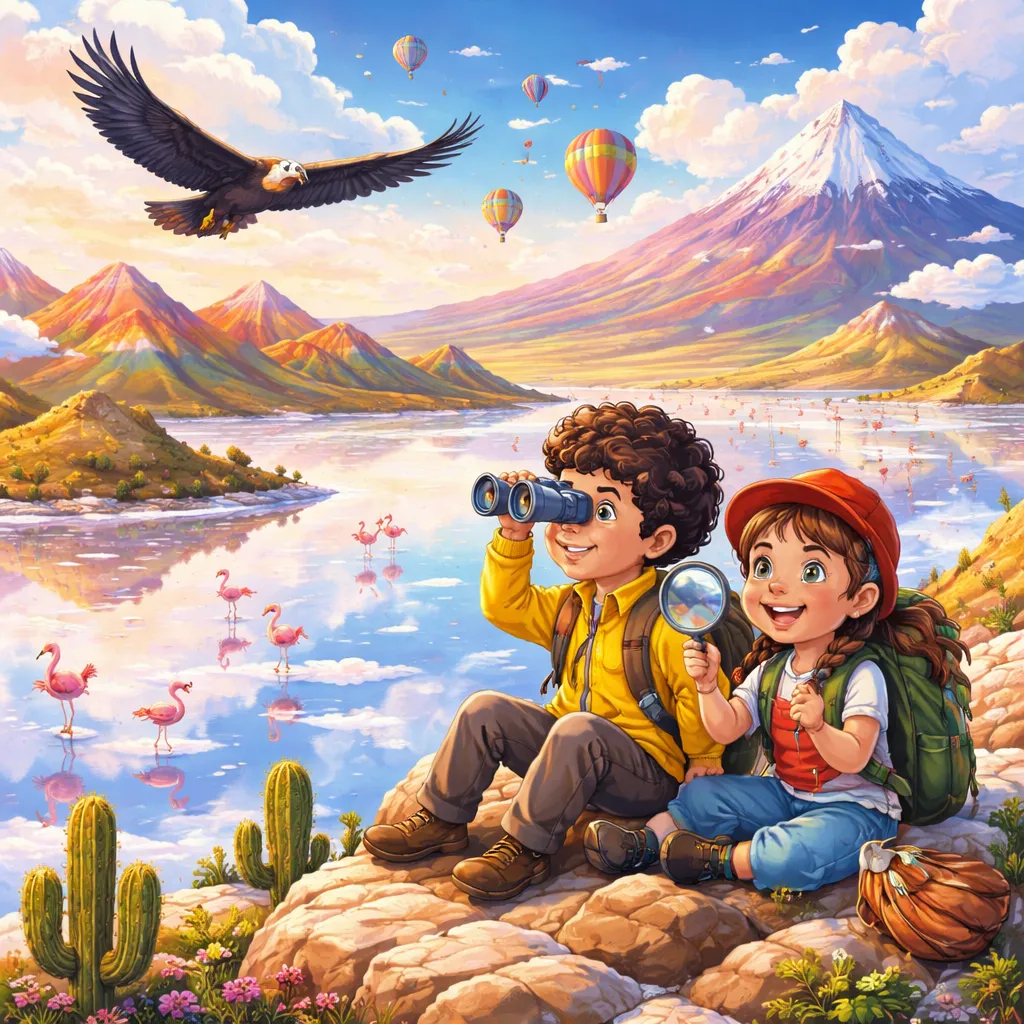
A special animal is the llama. It is a cousin of the camel. It has soft wool and a long neck. It is a beast of burden. It carries goods in the mountains. Its wool makes warm clothes. The national bird is the Andean condor. It is one of the world's largest flying birds. It soars over the mountains. It is a symbol of power and freedom.
Landmarks of Salt and Sky
Visit the Salar de Uyuni. It is the world's largest salt flat. It is over 10,000 square kilometers. The ground is pure white salt. It is incredibly flat. In the rainy season, a thin layer of water covers it. The salt flat becomes a giant mirror. The sky and clouds reflect perfectly. It feels like walking on the sky. A legend says the salt flats are the tears of a goddess. She cried for her lost love.
See the city of La Paz. It sits in a giant bowl-shaped canyon. The city spreads up the steep sides. Rooftops look like a colorful patchwork. A unique transport system is here. It is the cable car network. People call it "Mi Telef谷rico". The cable cars are like ski lifts. They float over the city. They help people avoid terrible traffic. The view from above is amazing.
Another wonder is Lake Titicaca. It is shared with Peru. It is a deep blue lake. The water is very cold. The Uru people live on floating islands. They make the islands from totora reeds. The reeds are thick and buoyant. The people build houses and boats from reeds. It is a unique way of life on the water.
Festivals of Color and Dance
The biggest festival is Carnaval de Oruro. It is a UNESCO masterpiece. It lasts for ten days before Lent. Thousands of dancers fill the streets. They wear incredible costumes and masks. The main story is the diablada. This is the dance of the devils. It shows the fight between good and evil.
The music is loud and rhythmic. Bands play with drums and wind instruments. Dancers practice all year for this. The parade goes on for 20 hours! The festival mixes Catholic and indigenous traditions. It is a burst of joy, faith, and color.
Another important day is Alasitas. It happens on January 24th. It is the festival of miniatures. People buy tiny versions of things. They want these things in real life. You can buy tiny houses, cars, or money. They give the miniatures to Ekeko. He is the god of abundance. They ask for good luck. The fair is full of tiny, detailed objects.
Food and Flavors
The national dish is Salte?a. It is a baked pastry. The filling is a juicy stew. The stew has meat, potatoes, peas, and olives. The pastry is sweet and slightly crunchy. It is the perfect mid-morning snack. Be careful when you take a bite. The hot, savory juice might spill. It tastes like a delicious, savory surprise.
You must try Silpancho. It is a classic plate from Cochabamba. A thin, breaded beef cutlet is the base. It is topped with rice, boiled potatoes, and a fried egg. A salad of tomatoes and onions goes on top. It is a huge, hearty meal. It tastes like layers of comfort and flavor.
A Culture of Weaving and Rights
Bolivia is famous for its textiles. Women weave beautiful cloth. They use backstrap looms. The patterns are geometric and colorful. Each pattern has a meaning. It can tell a story or show a community. The cloth is used for bags, blankets, and clothes. This weaving tradition is ancient. It is a beautiful art form. It is a colorful part of learning reading about Bolivia.
Bolivia made history in 2006. It elected its first indigenous president. His name is Evo Morales. This was a big moment. It showed greater inclusion for indigenous people. The country also recognizes Mother Earth's rights. A law says nature has the right to thrive. This is a unique and forward-thinking idea.
Tips for Young Explorers
Cultural Manners Matter
Greetings are important. Shake hands with everyone when you meet. Say "Buenos d赤as" (good morning). In rural areas, a simple nod is okay. Do not rush the greeting. Ask about a person's family. This shows you care.
Punctuality is flexible. People might be 15-30 minutes late. This is called "hora boliviana". But you should try to be on time. It is still polite.
At the dinner table, wait for the host to invite you to eat. Try everything on your plate. It is polite to leave a little food. This shows you are full. Always say "gracias" after the meal.
A Note on Staying Safe
Bolivia is generally safe. But be alert in big cities. Petty theft is common. Do not show expensive phones or cameras. Keep your backpack in front of you. Use official taxis. Ask your hotel to call one.
Altitude sickness is a real danger. La Paz is 3,650 meters high. You might feel dizzy or get a headache. Rest on your first day. Drink lots of water. Avoid heavy food. Coca tea can help. It is a local remedy.
Political protests can happen. They can block roads. Avoid large crowds. Follow local news. Your hotel can give you advice.
A Tasty Stop
Look for "anticuchos" on the street. They are grilled beef heart skewers. The meat is marinated in spices. It is cooked over charcoal. It is served with boiled potatoes and a spicy peanut sauce. The taste is smoky, tender, and spicy. Try a small piece. It is a beloved street food.
Healthy and Happy Travels
Drink only bottled or boiled water. This is the most important rule. Do not drink tap water. Avoid ice in drinks. Brush your teeth with bottled water. This keeps your stomach happy.
The sun at high altitude is very strong. Use a high SPF sunscreen. Wear a hat and sunglasses. The thin air lets more UV rays through. Protect your skin.
Dress in layers. The temperature changes quickly. A sunny day can turn cold fast. Wear comfortable walking shoes. The streets in old towns are often cobblestone.
Your Invitation to Explore
Start your journey with music. Listen to "Morenada" music from Bolivia. Hear the deep, rhythmic sound of the bass drums. Try to clap to the beat. Or, look at pictures of the Salar de Uyuni. See the amazing mirror effect. This is a wonderful start to learning reading about Bolivia.
Visit a Latin American market. Look for quinoa. Buy a small bag. Cook it at home. It is easy. Boil it like rice. Add some vegetables. Taste the ancient grain of the Andes. Imagine the farmers on the high Altiplano.
The world is a big, open book. Each country is a different chapter. Bolivia's chapter is about sky-high lakes, silver mines, and swirling dancers. Open it with curiosity. Read about its salt flats, silver, and spirit. Your curiosity is your guide.
Bolivian families share a plate of silpancho. Friends dance in the Carnival parade. Children play with miniature toys at Alasitas. We all know these feelings. We love sharing big meals. We enjoy colorful festivals. We hope for good luck. Learning about Bolivia shows us this. Our global family shares the same joys and hopes. Keep exploring, one page, one country, at a time. Your adventure has just begun.