
A Friendly Hello and First Impressions
Kuzuzangpo! (koo-zoo-ZANG-po). This is a warm, respectful "Hello" in Dzongkha. Kadrinchey! (kah-dreen-CHAY). This is a sincere "Thank you". People say it with hands clasped together. Learning reading about Bhutan starts with these kind, gentle words.
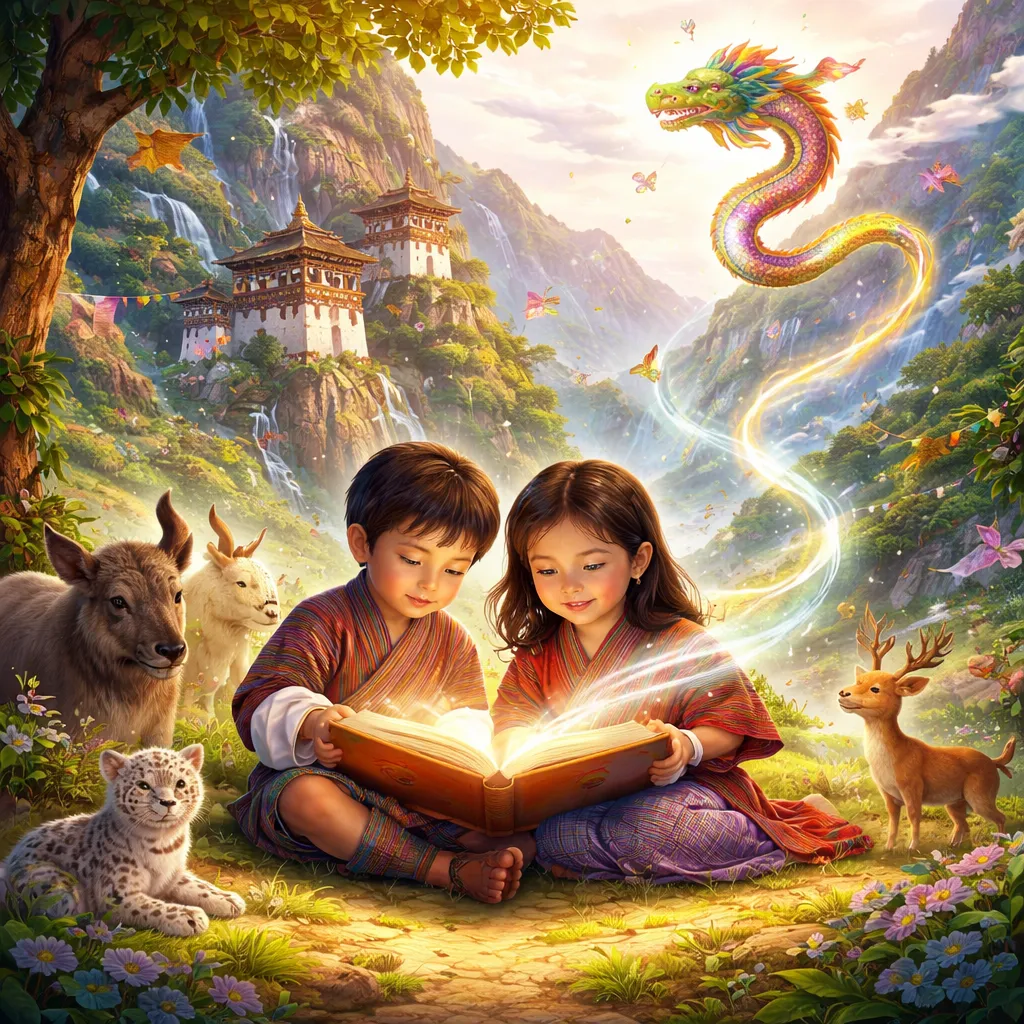
Bhutan is a small, landlocked kingdom. It is in the heart of the Himalayas. Its shape looks like a mythical dragon. The dragon is resting on the high mountains. The country is in Asia. It is between two giant neighbors. China is to the north. India is to the south. The air is pure and the scenery is breathtaking.
People call it the "Land of the Thunder Dragon". The name "Bhutan" may come from an old word. That word means "Highlands of Bhot". Bhot is another name for Tibet. The dragon is on the national flag. It represents the country's strength and culture. The roar of thunder in the mountains sounds like a dragon. Are you ready to visit a kingdom that measures happiness?
Deep Dive into Culture and Stories
Echoes of History
A great leader unified Bhutan long ago. His name was Zhabdrung Ngawang Namgyal. He was a Buddhist monk and leader. He came from Tibet in 1616. He built many fortress-monasteries called "dzongs". The dzongs were for government and religion. He created a system of laws. His work shaped modern Bhutan. His story is the foundation for learning reading about Bhutan.
Another important figure is the King. Bhutan is a constitutional monarchy. The people love their king. The fourth king had a revolutionary idea. He said "Gross National Happiness" is more important than money. This idea guides the country today. The fifth king continues this tradition. The kings are seen as protectors of the people.
A Gift to the World
Bhutan gave the world a brilliant idea. It is called Gross National Happiness (GNH). Most countries measure success with money. They use GDP, or Gross Domestic Product. Bhutan measures success with happiness. The government asks: Are the people happy? Are they healthy? Is culture strong? Is the environment protected? This is a holistic way to think. It is a gift of wisdom to the world.
A Land of High Mountains and Pure Air
Bhutan is a mountainous country. The Himalayas cover most of the land. The north has high peaks covered in snow. Some peaks are over 7,000 meters tall. The south has lower, forested hills. Deep valleys cut between the mountains. Rivers rush with icy, clear water. The landscape is dramatic and beautiful.
The climate changes with altitude. The south is subtropical and warm. The central valleys are temperate. The high mountains are alpine and cold. This variety affects life. People grow red rice in the valleys. They grow apples and potatoes higher up. Houses are built with rammed earth and wood. They have beautiful wooden windows. The roofs are slanted to shed snow.
A special animal is the takin. It is the national animal. It looks very strange. It has a nose like a moose and a body like a cow. A legend explains its creation. A saint named Drukpa Kunley made it. He put a goat's head on a cow's body. The takin lives high in the mountains. The national flower is the blue poppy. It grows above 4,000 meters. It is rare and beautiful. It represents purity and fragility.
Landmarks of Faith and Stone
Visit the Tiger's Nest Monastery. Its local name is Taktsang. It clings to a steep cliff. The cliff is 900 meters above the valley floor. Guru Rinpoche, a Buddhist saint, meditated here. Legend says he flew to the cave on a tiger's back. The monastery was built around the cave. You must hike for two hours to reach it. The view is incredible. It feels like a magical, floating temple.
See Punakha Dzong. It is the most beautiful dzong. It sits where two rivers meet. The rivers are called "Pho Chu" and "Mo Chu". This means Father and Mother River. The dzong is huge and majestic. It is white with golden roofs. Inside are gorgeous temples and courtyards. Kings are crowned here. The building is an architectural wonder. It survived many floods and fires.
Another wonder is the Buddha Dordenma statue. It is in the capital, Thimphu. It is a giant bronze statue of Buddha. It is 51 meters tall. It contains 125,000 smaller Buddha statues inside. The statue looks over the valley. It shines in the sun. It is a symbol of peace and stability.
Festivals of Color and Mask
The most famous festivals are called Tshechus. They happen in every district. The biggest is in Paro or Thimphu. The festival lasts for several days. Monks prepare for months. They make intricate sand mandalas. They practice sacred masked dances. The dances are called "cham".
On the festival day, people wear their best clothes. Men wear a "gho". It is a knee-length robe tied with a belt. Women wear a "kira". It is an ankle-length dress. Families have picnics in the festival grounds. The highlight is the unveiling of the "thongdrel". This is a giant silk tapestry. It shows a Buddhist saint. People believe seeing it cleanses their sins. The festival is joyful and spiritual.
Food and Flavors
The national dish is Ema Datshi. "Ema" means chili. "Datshi" means cheese. It is a spicy stew of chilies in cheese sauce. Bhutanese love chilies. They eat them like a vegetable. The dish is very, very spicy. People eat it with red rice. It is a common meal every day. It tastes like a fiery, creamy adventure.
You must try momos. They are steamed dumplings. The filling is usually meat or cheese. They are served with a spicy tomato sauce. People eat them as snacks or meals. They are perfect for sharing. A fresh, hot momo is soft and juicy. It is like a delicious, savory pillow.
A Culture of Balance and Nature
Bhutan is the world's only carbon-negative country. This means its forests absorb more carbon than the country produces. The constitution says 60% of the land must be forest. Today, over 70% is forest. The country uses hydropower from its rivers. It is like a giant, natural battery. This care for nature is central to learning reading about Bhutan.
The country also values its culture deeply. Television and the internet arrived only in 1999. The king wanted to protect traditions. People still wear national dress to work and school. This keeps their identity strong. The balance of old and new is carefully managed.
Tips for Young Explorers
Cultural Manners Matter
Respect is very important. Always be polite. Do not point your feet at people or altars. The feet are considered the lowest part. Do not touch anyone on the head. The head is sacred. Receive gifts with both hands. This shows respect.
When visiting a temple, dress modestly. Cover your shoulders and knees. Remove your hat and shoes. Do not take photos inside without permission. Always walk clockwise around stupas and temples. This is the correct direction.
The king and religion are highly respected. Never say anything bad about them. Always refer to the king as "His Majesty". This is a sign of the people's deep love.
A Note on Staying Safe
Bhutan is a very safe country. Crime is almost non-existent. But the mountains have their own dangers. Roads are narrow and winding. Travel can be slow. Always use a reliable tour company. They provide good drivers and guides.
Altitude sickness is a real risk. Some places are very high. Take your time to adjust. Drink lots of water. Tell your guide if you feel dizzy or sick. Do not hike alone in the mountains. Always go with a guide.
A Tasty Stop
Look for "khabzey" in local bakeries. They are sweet, fried biscuits. They are shaped like small knots. They are made from flour, sugar, and butter. They are crunchy and not too sweet. Eat them with a cup of "suja". This is butter tea. The tea is salty and creamy. The mix of sweet biscuit and salty tea is unique.
Healthy and Happy Travels
Do not drink tap water. Always drink bottled or boiled water. Your hotel will provide safe water. This simple step keeps your stomach happy.
The weather changes quickly in the mountains. Dress in layers. You can add or remove clothes easily. Wear a good sun hat and sunscreen. The high-altitude sun is strong. It can burn you quickly.
Wear sturdy, comfortable shoes. You will do a lot of walking. The paths to monasteries are often steep. Good shoes make the journey more enjoyable.
Your Invitation to Explore
Start your journey with a quiet moment. Find a peaceful spot. Sit and breathe deeply. Think about what makes you happy. Make a list. This is your personal Gross National Happiness. Or, look at pictures of the Himalayas. See the majestic mountains. Imagine the clear, thin air. This is a peaceful start to learning reading about Bhutan.
Try a simple craft. Make a paper prayer flag. Cut colorful paper into rectangles. Write a good wish on each one. String them together. Hang them where the wind can blow. In Bhutan, the wind carries prayers on flags. Your wishes travel on the breeze.
The world is a big, beautiful book. Each country is a different chapter. Bhutan's chapter is about balance, peace, and dragons. Open it with a calm heart. Read about its dzongs, dances, and devotion. Your curiosity is your guide.
Bhutanese families pray together each morning. Friends share a pot of spicy ema datshi. Children play in pristine forests. We all know these feelings. We love our families. We enjoy sharing meals. We cherish a healthy environment. Learning about Bhutan shows us this. Our global family shares the same hopes for happiness. Keep exploring, one page, one country, at a time. Your journey is just beginning.