
A Friendly Hello and First Impressions
Weh di go aan? (way dee go ahn). This is a friendly Kriol "What's going on?". Tenki! (TEN-kee). This is a warm "Thank you". People say it with a smile. English is the official language. But the Kriol language is widely spoken. Learning reading about Belize starts with these easy, musical words.
Belize is in Central America. Its shape looks like a vertical rectangle. The rectangle has a long, curved side. The Caribbean Sea is on its eastern coast. Mexico is to the north. Guatemala is to the south and west. It is the only Central American country with English as the official language.
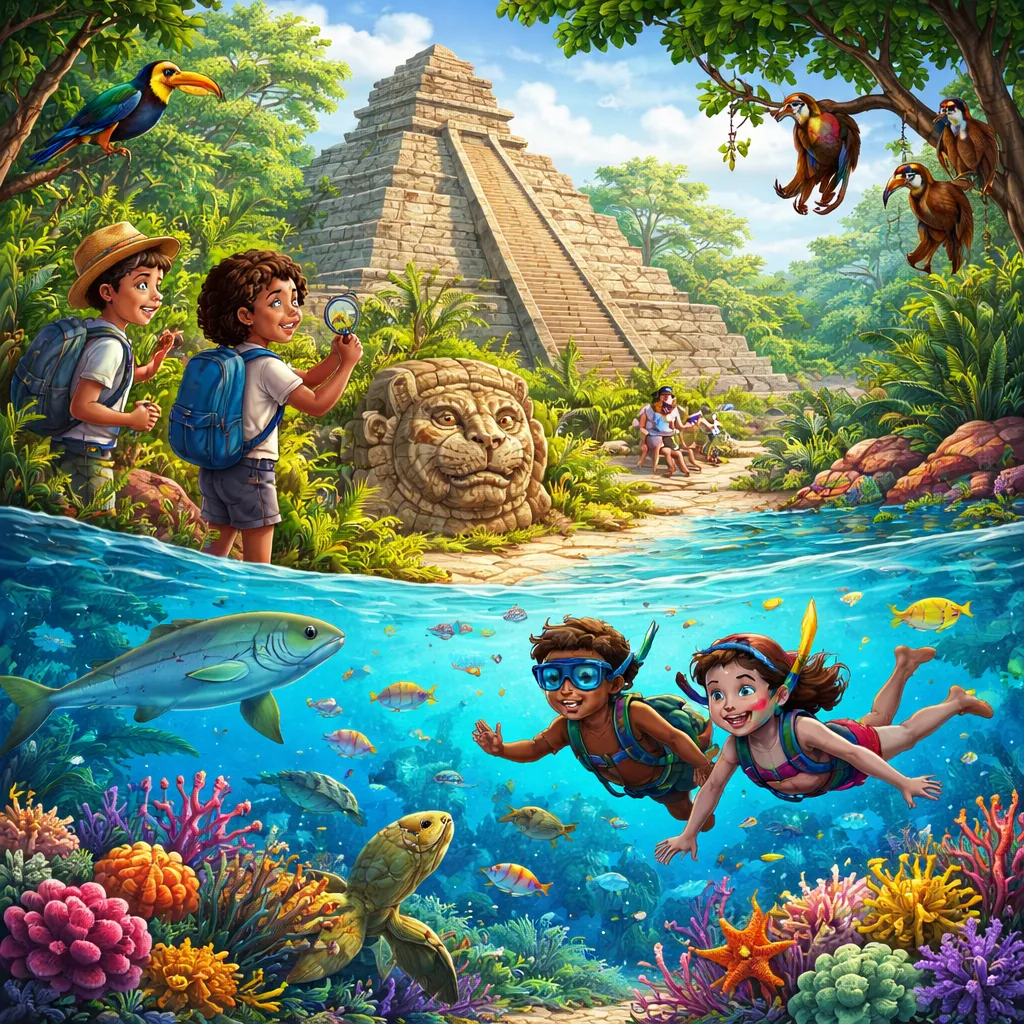
People call it "Mother Nature's Best Kept Secret". The nickname is well deserved. The country is small. But it has an amazing variety of nature. Lush rainforests, ancient ruins, and a huge coral reef. All are packed into one tiny country. What adventures are waiting in the jungle?
Deep Dive into Culture and Stories
Echoes of History
Long ago, the Maya civilization flourished here. Belize was the heart of the ancient Maya world. Powerful city-states like Caracol and Xunantunich rose. The Maya were advanced astronomers and mathematicians. They built towering stone pyramids. They traded with other cities. Then, around 900 AD, their cities were mysteriously abandoned. The jungle slowly covered the stone temples. Today, their ruins are silent and grand.
European settlers arrived later. British loggers came for mahogany wood. They called the land "British Honduras". Belize became a British colony. It gained full independence in 1981. The country kept the British parliamentary system. But it developed its own unique, multicultural identity. This mix is a key part of learning reading about Belize.
A Gift of Marine Protection
Belize gave the world a model for conservation. The Belize Barrier Reef is a UNESCO World Heritage site. It is the second largest reef system on Earth. In 2017, Belize took a big step. It banned offshore oil drilling near the reef. This was to protect the fragile coral. The country also created many marine reserves. It showed how a nation can choose nature over short-term profit. This is a gift of environmental leadership.
A Land of Jungle and Sea
Belize has two main geographical regions. The south and west are mountainous. The Maya Mountains are here. The north is mostly flat with many rivers. The coast has mangrove swamps and hundreds of small islands. These islands are called "cayes" (keys). The most famous is Ambergris Caye. The coastline is dotted with lagoons and estuaries.
The climate is tropical. It is hot and humid all year. The dry season runs from February to May. The rainy season is from June to November. Hurricanes can sometimes hit the coast. The environment shapes life completely. Houses on the coast are often built on stilts. This protects them from flooding and lets air circulate. The main crops are citrus fruits, bananas, and sugarcane.
A special animal is the jaguar. It is the largest wild cat in the Americas. It is sleek, powerful, and golden with black spots. It is a symbol of the wild rainforest. The national bird is the keel-billed toucan. It has a huge, colorful bill. The bill is green, red, and orange. The national tree is the mahogany tree. It gives strong, beautiful timber. The national flower is the black orchid. It is rare and exotic.
Landmarks of Stone and Water
Visit Caracol. It is the largest Maya site in Belize. It was a powerful city. Its main pyramid is "Caana". This means "Sky Palace". It is 43 meters tall. It is still the tallest building in Belize! From the top, you see only green jungle. A fun story is about its discovery. A woodcutter found it in 1937. He was looking for mahogany trees. He found a giant stone pyramid instead. The site is deep in the Chiquibul Forest.
Snorkel or dive at the Great Blue Hole. It is a giant marine sinkhole. It is perfectly circular. It is over 300 meters across and 125 meters deep. From the air, it looks like a dark blue eye. It was formed during the last ice age. Stalactites and stalagmites are inside. Famous explorer Jacques Cousteau made it famous. It is a mysterious and beautiful natural wonder.
Another special place is the Actun Tunichil Muknal cave. Its name means "Cave of the Stone Sepulchre". You must swim to enter the cave. Inside, you walk in an underground river. You see ancient Maya pottery and artifacts. You also see skeletal remains. The most famous is the "Crystal Maiden". It is the skeleton of a young girl. Minerals have covered her bones in sparkling calcite. The cave is a sacred, ancient site.
Festivals and Drumbeats
The biggest national festival is September Celebrations. The month is full of parades and parties. It starts with the Battle of St. George's Caye Day on September 10. This remembers a naval battle in 1798. Then comes Independence Day on September 21. People dress in the national colors. The colors are red, white, and blue. There are street fairs and concerts. The main parade is in Belize City. The energy is electric and patriotic.
A unique cultural festival is Garifuna Settlement Day. It is on November 19. It celebrates the arrival of the Garifuna people. They are descendants of West African and Carib people. The day starts before dawn. People re-enact the first landing in dugout canoes. Then there are parades with drumming and dancing. People wear traditional clothes. They eat traditional foods like hudut. Hudut is fish cooked in coconut milk. The day is full of pride and cultural strength.
Food and Flavors
The national dish is rice and beans with stewed chicken. The rice and beans are cooked together in coconut milk. This gives a rich, creamy flavor. The chicken is stewed with spices. It is often served with potato salad or fried plantains. Families eat it for Sunday lunch. It is a hearty, comforting meal. It tastes like a celebration of local ingredients.
You must try fry jacks. They are a popular breakfast food. They are deep-fried pieces of dough. They puff up and become golden and crispy. People eat them with eggs, beans, or jam. They are also delicious with honey. A hot fry jack is light, fluffy, and a little sweet. It is like a delicious, fried pillow.
A Culture of Rhythm and Reef
Belize is a cultural melting pot. The people are Mestizo, Creole, Maya, Garifuna, and more. This mix creates a rich culture. The Garifuna people have a special music style. It is called Punta. It features fast drumming and call-and-response singing. The rhythm makes everyone want to dance. This music is a UNESCO masterpiece. Listening is a vibrant part of learning reading about Belize.
The country is a leader in eco-tourism. It protects its natural treasures. Many lodges are in the rainforest. They are built with sustainable materials. They use solar power and collect rainwater. Tour guides teach visitors about the jungle. This way, tourism helps protect the environment. It is a smart way to share nature's beauty.
Tips for Young Explorers
Cultural Manners Matter
Belizeans are generally relaxed and friendly. Greet people with a smile and a "Good morning". A handshake is common. Be respectful to elders. Use "Mr.", "Mrs.", or "Miss" with the last name. This shows good manners. Wait to use first names until invited.
"Island time" is real on the cayes. Things may not start exactly on time. Do not get upset. The pace is slower. Enjoy the moment. Do not rush people. This is the Belizean way.
Dress modestly in towns and villages. Swimwear is for the beach only. Cover up when you leave the sand. This shows respect. In the evening, people dress casually but neatly.
A Note on Staying Safe
Belize is generally safe. But be smart in cities. Belize City has some unsafe areas. Always ask your hotel for advice. Do not walk alone at night. Do not wear flashy jewelry. Keep your belongings close.
The ocean and rivers need respect. Only swim where it is recommended. Be careful of boat traffic. Never swim alone. The reef is beautiful but fragile. Do not touch or stand on the coral. It is a living animal.
Wildlife is amazing but wild. Never feed or touch wild animals. Monkeys and iguanas are cute. But they can bite. Keep a safe distance. In the jungle, always go with a guide.
A Tasty Stop
Find a street vendor selling "panades". They are delicious fried corn patties. The filling is often fish or beans. They are served with a spicy onion sauce. The outside is crispy. The inside is soft and savory. Eat them hot and fresh. The mix of textures and spice is wonderful.
Healthy and Happy Travels
The sun is very strong near the equator. You can burn quickly. "Slip, Slop, Slap" is the rule. Slip on a shirt. Slop on sunscreen. Slap on a hat. Use reef-safe sunscreen. This protects the coral. Reapply after swimming.
Drink lots of bottled water. The tropical heat can dehydrate you. Do not drink tap water. It is not safe. Drink water even if you are not thirsty. This keeps your energy high.
Use insect repellent. Mosquitoes can be bad, especially at dusk. They can carry diseases. Wear long sleeves in the evening. Sleep under a mosquito net if needed. This keeps the bites away.
Your Invitation to Explore
Start your adventure with music. Look up "Garifuna Punta music" online. Listen to the fast, complex drumming. Try to clap to the rhythm. Or, watch a documentary about the Great Blue Hole. See the amazing underwater formations. This is a thrilling start to learning reading about Belize.
Try a simple recipe. Make homemade tortillas. Mix masa harina (corn flour) with water and salt. Press into flat circles. Cook in a dry frying pan. Eat with beans and cheese. Imagine you are in a Maya village.
The world is a big, wonderful book. Each country is a new chapter. Belize's chapter is full of jungle whispers and ocean waves. Open it with curiosity. Read about its pyramids, punta, and parrots. Your curiosity is your guide.
Belizean families share a pot of rice and beans. Friends drum on the beach at sunset. Children learn about the reef in school. We all recognize these scenes. We love sharing meals. We enjoy music and nature. We want to protect our planet. Learning about Belize shows us this. Our global family shares a beautiful, fragile home. Keep exploring, one page, one country, at a time. Your journey is just beginning.