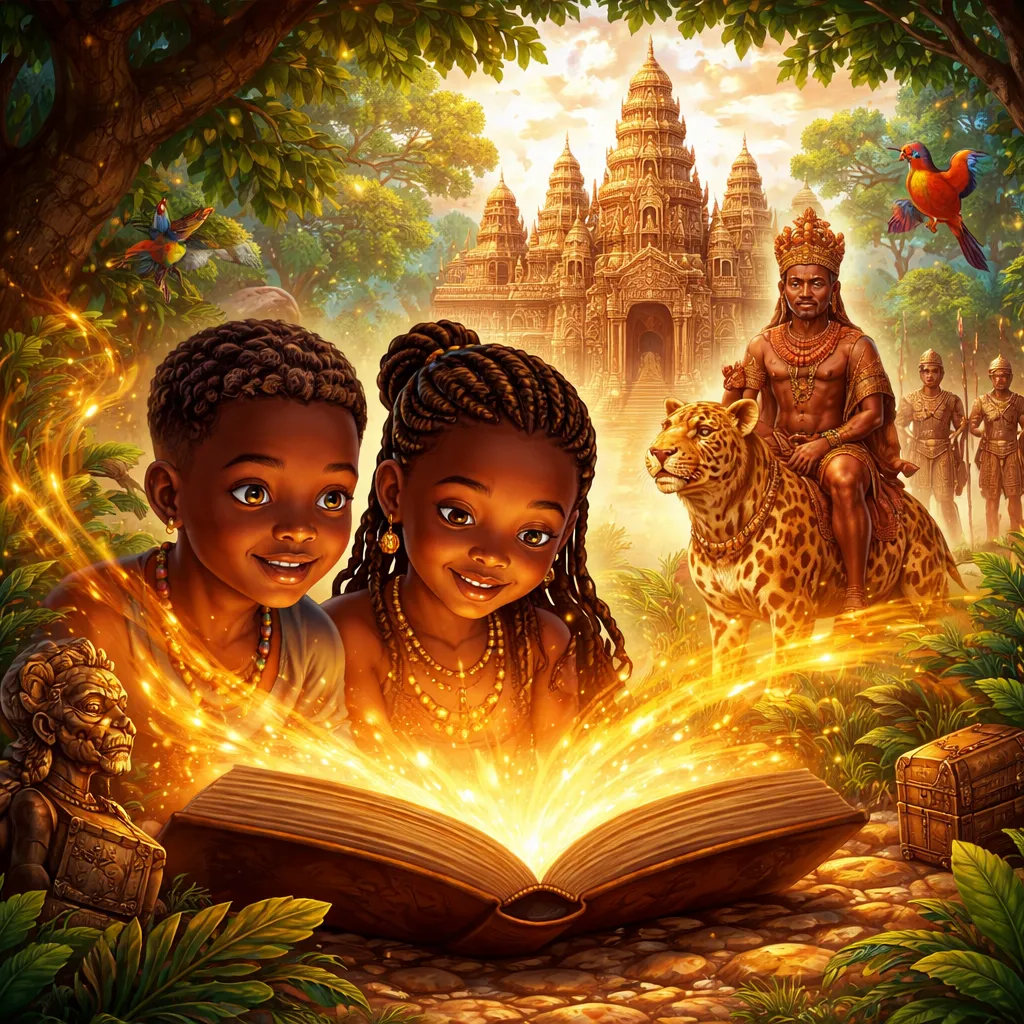

A Friendly Hello and First Impressions
Bonjour! (bohn-ZHOOR). This is the official "Hello" in French. Merci! (mehr-SEE). This is a warm "Thank you". French is the language of government and school. But people also speak many local languages at home. Learning reading about Benin starts with these simple, friendly words.
Benin is in West Africa. Its shape looks like a vertical key. The keyhole is the coastal area. The long handle points north into the continent. The Bight of Benin is part of the Atlantic Ocean. It touches the southern coast. Togo, Nigeria, Burkina Faso, and Niger are its neighbors. It is a land of great historical importance.
People call it the "Cradle of Vodun". Vodun is often called Voodoo. It is one of the world's oldest religions. It started in this region. Benin is also called the "Land of the King's Salt". Long ago, kings controlled the valuable salt trade. This brings us to the first story. What tales do the ancient palaces hold?
Deep Dive into Culture and Stories
Echoes of History
A powerful kingdom once ruled here. It was the Kingdom of Dahomey. It lasted from the 1600s to 1900. The kings were powerful and wealthy. They built magnificent palaces in Abomey. The kingdom had a famous army. The army included an all-female regiment. They were the "Dahomey Amazons". They were fearless and skilled warriors. Their story is a powerful part of Benin's past.
King B谷hanzin was the last independent king. He fought against French colonization. He was a symbol of resistance. He is a national hero today. The history of the kingdom is complex. It includes the painful slave trade. Many people were taken from these shores. This history is a key part of learning reading about Benin. It teaches us about strength and resilience.
A Gift of Spirit and Art
Benin gave the world the Vodun religion. It is a spiritual tradition. It believes in one supreme god and many spirits. These spirits are called "Vodun". They connect people to nature and ancestors. The religion traveled across the Atlantic. Enslaved Africans took it to Haiti, Brazil, and the USA. It changed and grew in new lands. Today, millions of people follow Vodun. It is a religion of community and balance.
Benin is also famous for its bronze art. The artists of the Kingdom of Dahomey were masters. They made beautiful bronze plaques and statues. The art told stories of the kings and their deeds. The technique is called "lost-wax casting". It is very skillful. These artworks are in museums worldwide. They are a gift of beauty and history.
A Land of Coast and Savannah
Benin has five natural regions. A sandy coastal strip is in the south. It has lagoons and lakes. North of the coast is a fertile clay plateau. Then comes a rocky plateau with hills. Further north is the fertile Niger River valley. The far north is the Atakora Mountains. These are low mountain ranges. The land is mostly flat, rising gently to the north.
The climate is tropical. It is hot and humid. There are two rainy seasons in the south. The north has one long rainy season. The Harmattan wind blows from the Sahara in winter. It brings a fine, dusty haze. The environment affects life. In the south, houses are often made of concrete. In the north, they use mud brick with thatched roofs. People grow cotton, corn, cassava, and yams. The sea provides fish.
A special animal is the West African manatee. It is a large, gentle water mammal. It lives in the coastal lagoons. It is shy and endangered. The national animal is the leopard. It represents strength and royalty. The silk cotton tree is important. It is very tall and has a thick trunk. People believe spirits live in it. It is often a meeting place in villages.
Landmarks of Kings and Memory
Visit the Royal Palaces of Abomey. They are a UNESCO World Heritage site. The kings of Dahomey built them. The complex has many courtyards and buildings. The walls have colorful clay bas-reliefs. The carvings tell the kingdom's history. They show battles, animals, and symbols. A legend says a secret treasure is buried under the palaces. The treasure is the king's gold. No one has found it. The site is powerful and historical.
See the Door of No Return in Ouidah. It is a simple, white arch on the beach. It is a memorial to the slave trade. Enslaved people walked through a door like this. They left their homeland forever. The arch faces the ocean. It is a sad and important place. Today, people come to remember and honor their ancestors. It is a symbol of a painful past and hope for the future.
Another special place is the Pendjari National Park. It is in the far north. It is one of West Africa's best wildlife parks. You can see elephants, lions, and hippos. The landscape is beautiful savannah and cliffs. The park is a success story for conservation. It protects many animals from extinction. It is a place of wild, natural beauty.
Festivals and Spirits
The biggest festival is the Vodun Festival. It is on January 10th. It is a national holiday. Thousands of people come to Ouidah. Vodun priests and followers from all over the world gather. They wear special white clothes. They make offerings to the spirits. The celebrations include drumming, dancing, and rituals.
People sacrifice animals like chickens and goats. This is to thank the spirits. The festival is colorful and full of energy. It is not scary. It is a celebration of faith and culture. The festival shows the living tradition of Vodun. It is a unique part of learning reading about Benin.
Another important day is Independence Day. It is on August 1st. It marks freedom from France in 1960. There are parades in the capital, Porto-Novo. People wear clothes made of bright, colorful fabric. The national flag is everywhere. The day is full of pride and patriotism.
Food and Flavors
The national dish is Kuli-Kuli. It is a popular snack. It is made from crushed peanuts. The peanuts are mixed with spices. Then they are shaped into balls or sticks. They are deep-fried until crunchy. People eat kuli-kuli alone or with porridge. It is high in protein. It tastes nutty, savory, and a little spicy. It is a delicious, energy-packed bite.
You must try Ayimolou. It is a hearty stew. The main ingredients are fish, vegetables, and red palm oil. The palm oil gives it a rich, red color. The stew is often served with pounded yam. People eat it with their right hand. It is a common family meal. The stew is thick, savory, and filling. It tastes like the sea and the garden together.
A Culture of Fabric and Democracy
Benin is famous for its vibrant fabrics. The most famous is the "wax print". These are colorful cotton fabrics. They have bold patterns and designs. Each pattern can have a name and a meaning. Women wear them as wrapped dresses called "pagnes". Tailors make beautiful clothes from the fabric. Wearing these prints is a source of pride and identity.
Benin is known as a model of democracy in Africa. The country has peaceful changes of government. People vote in elections. Freedom of speech is respected. This is a big achievement. It shows the people's commitment to peace and dialogue. This political stability is a modern lesson for learning reading about Benin.
Tips for Young Explorers
Cultural Manners Matter
Greetings are very important. Always greet people when you meet them. Shake hands with your right hand. A common greeting is "Bonjour, ?a va?" (Hello, how are you?). You should ask about the person's health and family. This shows you care. It is polite.
Use titles to show respect. Say "Monsieur" for Mr., "Madame" for Mrs., and "Mademoiselle" for Miss. Use the person's last name. Wait until you are invited to use first names. This is especially true with elders.
Eating is often done with the right hand. The left hand is considered unclean. Wash your hands before and after the meal. If food is shared from a common bowl, take only from the part in front of you. Always accept food and drink offered by a host. It is a sign of friendship.
A Note on Staying Safe
Benin is generally safe. But be careful in big cities. Petty theft can happen in crowded markets. Keep your money and phone hidden. Do not walk alone at night. Always travel with a trusted adult or guide.
Road safety is important. Traffic can be chaotic. Use pedestrian crossings. Be very careful with motorbike taxis called "zemidjans". Always wear a helmet if you ride one. It is the law and it keeps you safe.
A Tasty Stop
Look for "Pate" on the street. It is a popular street food. It is a ball of fried dough. The dough is made from corn or wheat flour. It is often filled with a spicy sauce. The sauce can have fish, meat, or eggs. The pate is crispy outside and soft inside. Eat it hot. The combination of crispy dough and spicy filling is delicious.
Healthy and Happy Travels
Drink only bottled or boiled water. This is the most important rule. Do not drink tap water. It is not safe. Avoid ice in drinks. Brush your teeth with bottled water. This keeps your stomach happy.
Malaria is a risk. Take anti-malaria medicine if your doctor says. Use insect repellent on your skin. Wear long sleeves and pants in the evening. Sleep under a mosquito net. This keeps the mosquitoes away.
The sun is very strong. Wear a hat and use sunscreen. Wear light, loose, cotton clothing. This helps you stay cool. Drink lots of water to avoid dehydration.
Your Invitation to Explore
Start your journey with art. Look up "Benin Bronzes" online. See the beautiful metal plaques and statues. Notice the detailed figures. Or, listen to the music of Angelique Kidjo. She is a famous singer from Benin. Her music is full of energy and joy. This is a wonderful way of learning reading about Benin.
Try a simple craft. Make a paper fabric design. Use colored paper or markers. Create a repeating pattern with shapes and symbols. Imagine it printed on bright cloth. You have just made your own wax print design.
The world is a huge, ancient library. Each country is a different book. Benin's book is written on palace walls and spoken in drumbeats. Open it with respect. Read about its kings, spirits, and courage. Your curiosity is the key.
Beninese families share a meal from a common bowl. Friends gather to listen to a storyteller. Children learn dances from their elders. We all know these scenes. We love sharing food. We enjoy music and stories. We cherish our community. Learning about Benin shows us this. Our global family is connected by shared traditions. Keep exploring, one page, one country, at a time. Your adventure has just begun.