
A Friendly Hello and First Impressions
Ol芍! (oh-LAH). This is the happy "Hello" in Portuguese. Obrigado! (oh-bree-GAH-doo) 每 boys say this. Obrigada! (oh-bree-GAH-dah) 每 girls say this. Both mean "Thank you". Learning reading about Brazil starts with these musical, warm words.
Brazil is the largest country in South America. Its shape looks like a giant triangle. The triangle points toward the bottom of the continent. The mighty Atlantic Ocean kisses its long eastern coast. It borders ten other countries! The Amazon River flows through its heart. It is a land of incredible scale and energy. What is the first sound you hear?
Deep Dive into Culture and Stories
Echoes of History
A unique figure in history was Dom Pedro II. He was the second emperor of Brazil. He ruled for 49 years in the 1800s. He was a kind and curious man. He loved science and education. He helped end slavery in Brazil. His reign was a time of peace and progress. Many Brazilians remember him fondly. His story is a gentle part of learning reading about Brazil.
Another key moment was the arrival of the Portuguese. Pedro 芍lvares Cabral landed in 1500. Brazil became a Portuguese colony. The Portuguese brought their language and customs. They also brought enslaved Africans. The indigenous people already lived here. This mix created modern Brazilian culture. It is a culture of blending and strength.
A Gift to the Skies
Brazil gave the world a pioneer of flight. His name was Alberto Santos-Dumont. He was an inventor and aviator. In 1906, he flew his airplane "14-bis" in Paris. The flight was public and certified. Many consider him the father of aviation. He was the first to fly a powered aircraft in Europe. He did this before the Wright brothers' famous flight. His work inspired people everywhere. He showed that humans could truly fly.
A Land of Forest and Coast
Brazil's geography is amazingly diverse. The north has the Amazon Rainforest. It is the largest rainforest on Earth. The center has the Pantanal. This is the world's largest tropical wetland. The south has rolling hills and grasslands. The east has a long, beautiful coastline. The landscape changes from dense jungle to open plains.
The climate is mostly tropical. It is warm and humid in the Amazon. The coast is also warm. The south has a more temperate climate. The environment shapes life. In the Amazon, people build houses on stilts. This protects them from floods and animals. The main crops are coffee, soybeans, and oranges. Brazil is the world's top coffee producer.
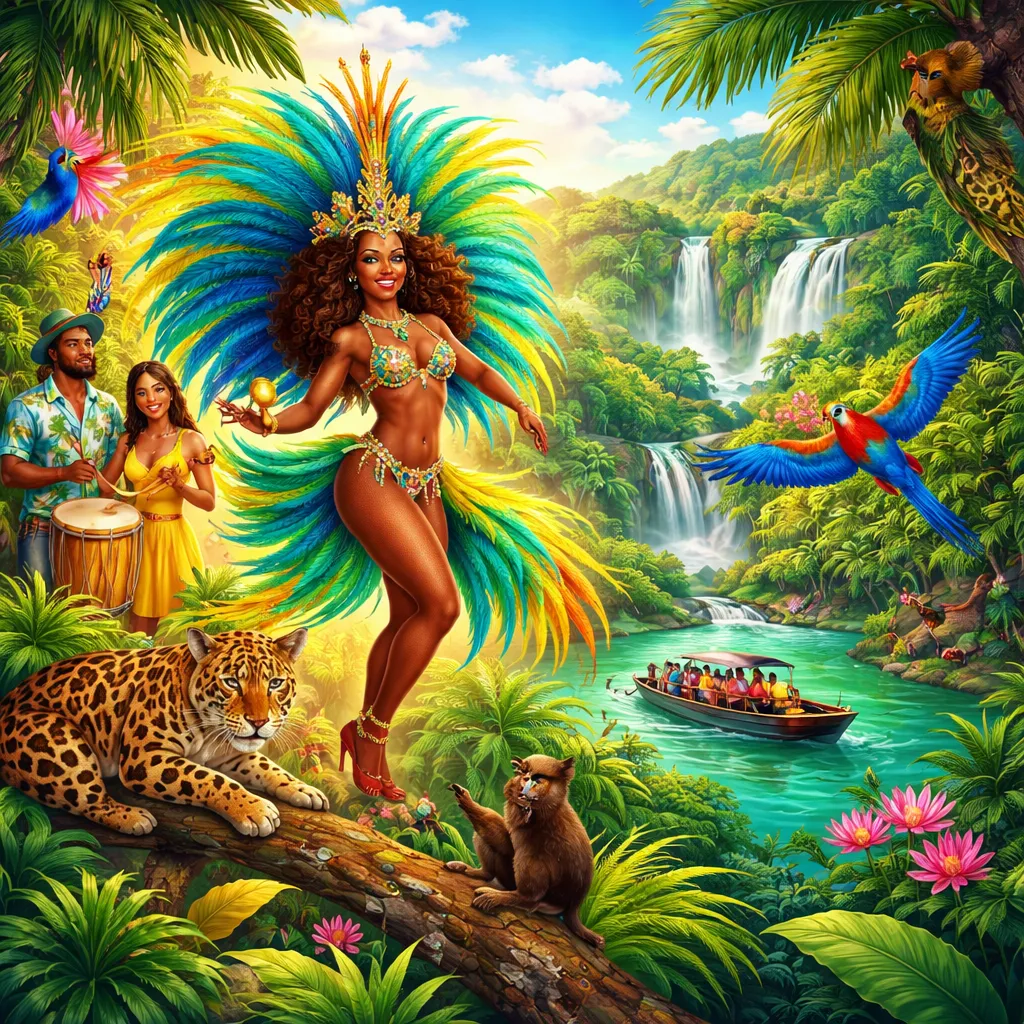
A special animal is the jaguar. It is the largest cat in the Americas. It is golden with black spots. It is a symbol of power and stealth. The national bird is the rufous-bellied thrush. It has a beautiful song. The national flower is the corsage orchid. It is colorful and exotic. The Brazil nut tree is also famous. Its nuts are delicious and nutritious.
Landmarks of Stone and Faith
Visit Christ the Redeemer in Rio de Janeiro. It is a giant statue of Jesus. It stands on top of Corcovado mountain. The statue is 30 meters tall. Its arms stretch 28 meters wide. It was built between 1922 and 1931. The statue is made of concrete and soapstone. A fun story is about its construction. Workers carried materials up the mountain by train. They built the statue without modern cranes. The view from the top is breathtaking.
See the Amazon Theatre in Manaus. It is a stunning opera house. It is in the middle of the rainforest. It was built during the rubber boom. Rubber barons wanted a fancy cultural center. They used materials from all over the world. The dome is covered with 36,000 ceramic tiles. The tiles are colored in the Brazilian flag. Inside, the ceiling painting shows the meeting of the rivers. The theatre is a symbol of grand dreams.
Another wonder is Iguazu Falls. They are on the border with Argentina. The falls are a series of 275 waterfalls. The most famous is "Devil's Throat". It is a huge U-shaped cascade. The roar is incredibly loud. A fine mist covers everything. A legend says a god created the falls. He was angry at a warrior. The god carved the river in his rage. The falls are a powerful natural spectacle.
Festivals of Rhythm and Color
The biggest festival is Carnival. It happens every year before Lent. Preparations take all year. Samba schools practice their dances. Artists design amazing costumes. The main parade is in Rio de Janeiro. It is at the Sambadrome. Each samba school has a theme. Their floats and costumes tell a story. The music is loud and infectious. The parade lasts all night. The energy is incredible. Carnival is a celebration of life and joy.
Another important day is Festa Junina. It is the June Festival. It celebrates Catholic saints. But it is also a harvest festival. People dress as country farmers. Men wear checked shirts and straw hats. Women wear pigtails and painted freckles. They dance the quadrilha. This is a type of square dance. People eat corn-based foods and drink quent?o. This is a hot, spiced wine. The festival is cozy and fun.
Food and Flavors
The national dish is feijoada. It is a rich, black bean stew. The stew has many types of pork and beef. It is served with rice, collard greens, and orange slices. Families eat it on Saturdays. It is a social meal that lasts for hours. It tastes deep, savory, and hearty. It is a taste of history and home.
You must try brigadeiro. It is the national sweet. It is a chocolate truffle. It is made with condensed milk, cocoa, and butter. The mixture is rolled into balls. Then it is covered in chocolate sprinkles. People eat it at birthday parties. A fresh brigadeiro is soft, sweet, and creamy. It tastes like a chocolate hug.
A Culture of Rhythm and Renewable Energy
Brazil is the home of samba. This music and dance is the soul of Carnival. The rhythm is fast and infectious. People dance samba in the streets. Another dance is capoeira. It is a martial art disguised as dance. Enslaved Africans created it. It involves kicks, flips, and music. It is beautiful and powerful. This love for rhythm is a joyful part of learning reading about Brazil.
Brazil is a world leader in renewable energy. Over 80% of its electricity is renewable. The country uses hydropower from its many rivers. It also makes ethanol from sugarcane. This ethanol powers many cars. It is like turning plants into fuel. This smart use of resources helps the planet.
Tips for Young Explorers
Cultural Manners Matter
Brazilians are very friendly and physical. Greetings often involve a kiss on the cheek. Women kiss women. Women kiss men. Men may kiss women but shake hands with other men. Always greet people with a smile. Say "Tudo bem?" (TOO-doo bang?) meaning "All good?".
Punctuality is relaxed. Being 15-30 minutes late is normal. This is called "hor芍rio brasileiro". But you should try to be on time for business meetings. For social events, it is okay to be a little late.
Dress is casual but neat. Beachwear is for the beach only. Cover up when you leave the sand. In cities, people dress stylishly. Wearing flip-flops everywhere is not common.
A Note on Staying Safe
Brazil is a beautiful country. But it has safety challenges. In big cities, be very careful. Do not wear expensive jewelry or watches. Do not show your phone on the street. Keep your backpack in front of you. Use only official taxis or ride-sharing apps.
Do not walk alone at night. Stick to well-lit, busy areas. Avoid favelas (informal neighborhoods). Do not accept drinks from strangers. Always be aware of your surroundings.
A Tasty Stop
Find an "a?a赤 na tigela" stand. This is a?a赤 in a bowl. A?a赤 is a purple berry from the Amazon. It is blended into a thick smoothie. It is served in a bowl with granola and banana. It is healthy, cold, and delicious. Eat it with a spoon. It tastes like a frozen, fruity chocolate.
Healthy and Happy Travels
Drink only bottled or filtered water. Tap water is not safe in all areas. Avoid ice in drinks. Brush your teeth with bottled water. This simple habit keeps your stomach happy.
The sun is very strong. Wear a high SPF sunscreen. Reapply it often. Wear a hat and sunglasses. The beach sun can burn you quickly.
Use insect repellent. Mosquitoes can carry diseases like dengue and Zika. Wear long sleeves in the evening. Sleep under a mosquito net if needed.
Your Invitation to Explore
Start your journey with music. Listen to samba or bossa nova. Feel the rhythm. Try to dance a few steps. Or, watch a soccer match highlight. See the skill of players like Pel谷 or Neymar. This is a fun start to learning reading about Brazil.
Try a simple recipe. Make brigadeiro at home. Mix one can of condensed milk, 2 tablespoons of cocoa, and 1 tablespoon of butter. Cook until thick. Let it cool. Roll into balls and cover with sprinkles. Taste the sweetness of Brazil.
The world is a big, wonderful book. Each country is a different chapter. Brazil's chapter is full of rainforests, rhythm, and football. Open it with a smile. Read about its Carnival, capoeira, and Christ. Your curiosity is your guide.
Brazilian families share a feijoada on Saturday. Friends play soccer on the beach. Children make music with simple instruments. We all know these feelings. We love sharing big meals. We enjoy playing games. We cherish time with friends. Learning about Brazil shows us this. Our global family shares the same joys. Keep exploring, one page, one country, at a time. Your adventure has just begun.