
Like the flashcards in Colours – Set A , this set of images shows only a simple shape and a single colour: no nouns, no objects, just the target colour presented in a dot shape. However, the colour words in this flashcard set go a little beyond the commonly taught vocabulary of Set A. If you do want to stick to basic words you’ll find them together on page one of the small set: red, yellow, blue (primary colours) orange, green, purple (secondary colours) black, white and brown (to talk about tints, shades, and… earth?)
Page two offers more ambitious colour vocabulary, including some tertiary colours and tints: pink, lime, sky blue amber, teal, indigo grey, peach and tan Although the words light and dark are not printed in the word cards or labels, you could teach “light blue”, “light brown” and “dark purple”, instead of sky blue , tan, and indigo . You could also go with “yellow green” instead of lime , “yellow orange” instead of amber , and “blue green” instead of teal, if those were the words in your childhood Crayola crayon set ?? One more thing: these 18 colours match up exactly with the Shapes flashcards . Regional Spellings Like Set A, Colours – Set B and a few other sets on this site, you can choose to download the word cards and images with labels for Colours Set C in either American English or British English spelling variations. The American English word cards have two spelling variations: color, gray. The British English option features the preferred spellings grey and colour. Both gray and grey are acceptable spellings in Canada, but color is not.
Word list: amber, black, blue, brown, green, grey/gray, indigo, lime, orange, peach, pink, purple, red, sky blue, tan, teal, white, yellow
Click here to download the full Colours Flashcards – Set C PDF — free
By practicing with flashcards, children can:
Flashcards are a fun and effective tool for young learners to recognize and remember colors. Using simple shapes and single colors, children can focus on identifying and naming each color without distractions. This method helps build foundational vocabulary in an engaging way. As children progress, they can learn more advanced color words, including tertiary colors and shades, expanding their descriptive language skills. Flashcards also support visual memory, concentration, and language development, making learning colors an enjoyable experience.
How to Teach Colours – Set C Flashcards with Flashcards
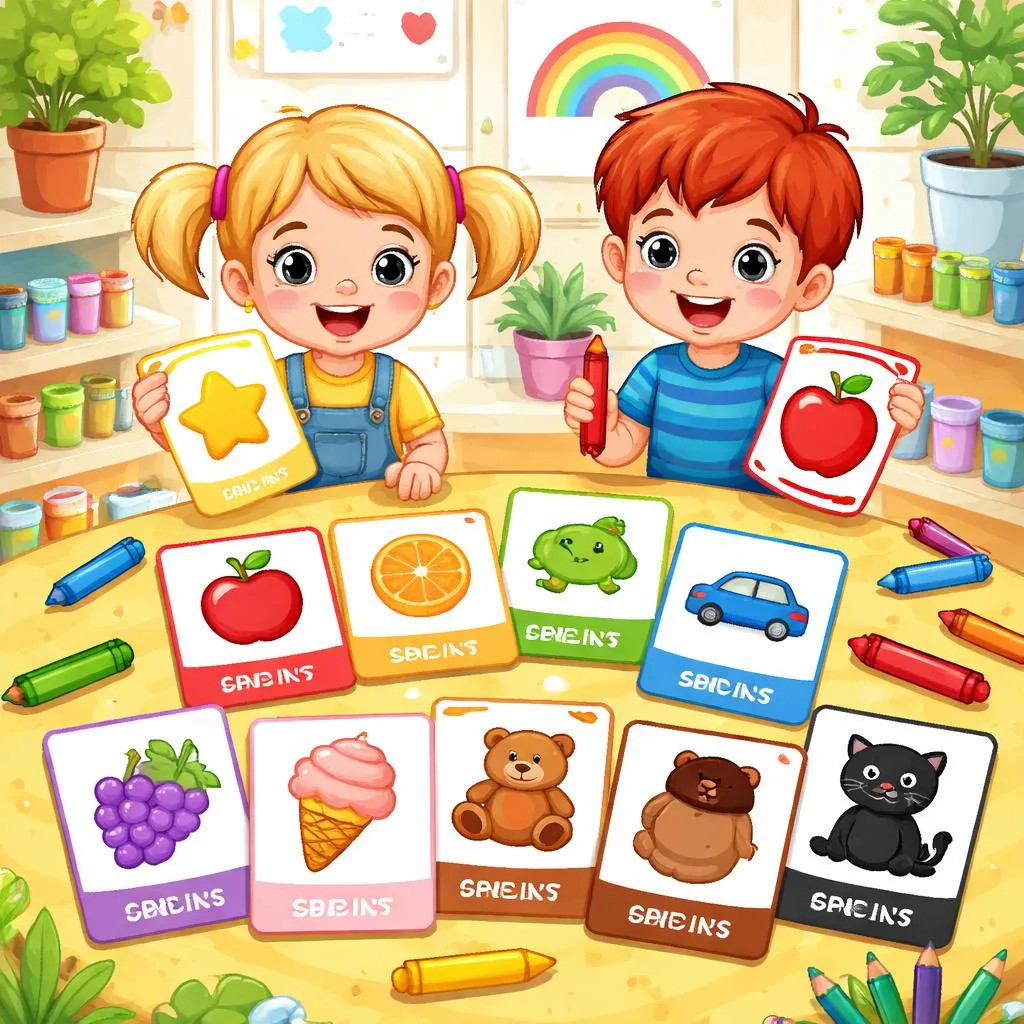
Parents and educators can start by showing each flashcard clearly, naming the color aloud and encouraging the child to repeat it. Using consistent pronunciation and pointing to the colored dot helps reinforce recognition. To add variety, you can introduce light and dark versions of colors by describing “light blue” or “dark purple” even if the flashcards do not explicitly say so. Pairing the flashcards with everyday objects or drawing activities can deepen understanding. Keep sessions short and playful to maintain children’s interest.
(1) Fun Colours – Set C Flashcard Games
Games like “Color Hunt” where children find objects matching the flashcard colors around the room make learning active and memorable. Another game is “Memory Match,” where pairs of color cards are placed face down and children take turns flipping them to find matches. You can also play “I Spy” using the color words from the flashcards to encourage listening and speaking skills. These games reinforce color vocabulary while promoting social interaction and cognitive skills.
(2) Example Sentences with Colours Vocabulary
Using simple sentences helps children practice color words in context. For example: “The sky is sky blue today,” “I have a pink balloon,” or “The cat is black and white.” Encouraging children to describe their clothes or toys using the flashcard colors builds expressive language. Adding emotions, such as “I feel happy when I see yellow,” connects colors with feelings and enhances communication skills.
Free Colours – Set C Flashcards PDF Download
Our full set of Colours – Set C flashcards is available for free download and printing. The PDF includes all 18 colors with clear, simple dot shapes and labels in both American and British English spellings. This makes it easy for families and teachers to access and use the flashcards at home or in the classroom. Visit the provided link to download and print the flashcards on sturdy paper for repeated use.
FAQ about Colours – Set C Flashcards
Q: Can these flashcards be used for children of all ages?
A: Yes, they are designed for preschool and early elementary learners but can be adapted for older children needing color vocabulary practice.
Q: How often should children practice with the flashcards?
A: Short daily sessions of 5-10 minutes are best to keep engagement high and reinforce learning.
Q: Can I use these flashcards to teach color mixing?
A: Absolutely! Use the primary and secondary colors to explain how colors combine to make new ones, enhancing science and art learning.
Q: Are there activities to practice spelling the color words?
A: Yes, you can create matching games or simple writing exercises using the flashcard words to support literacy development.