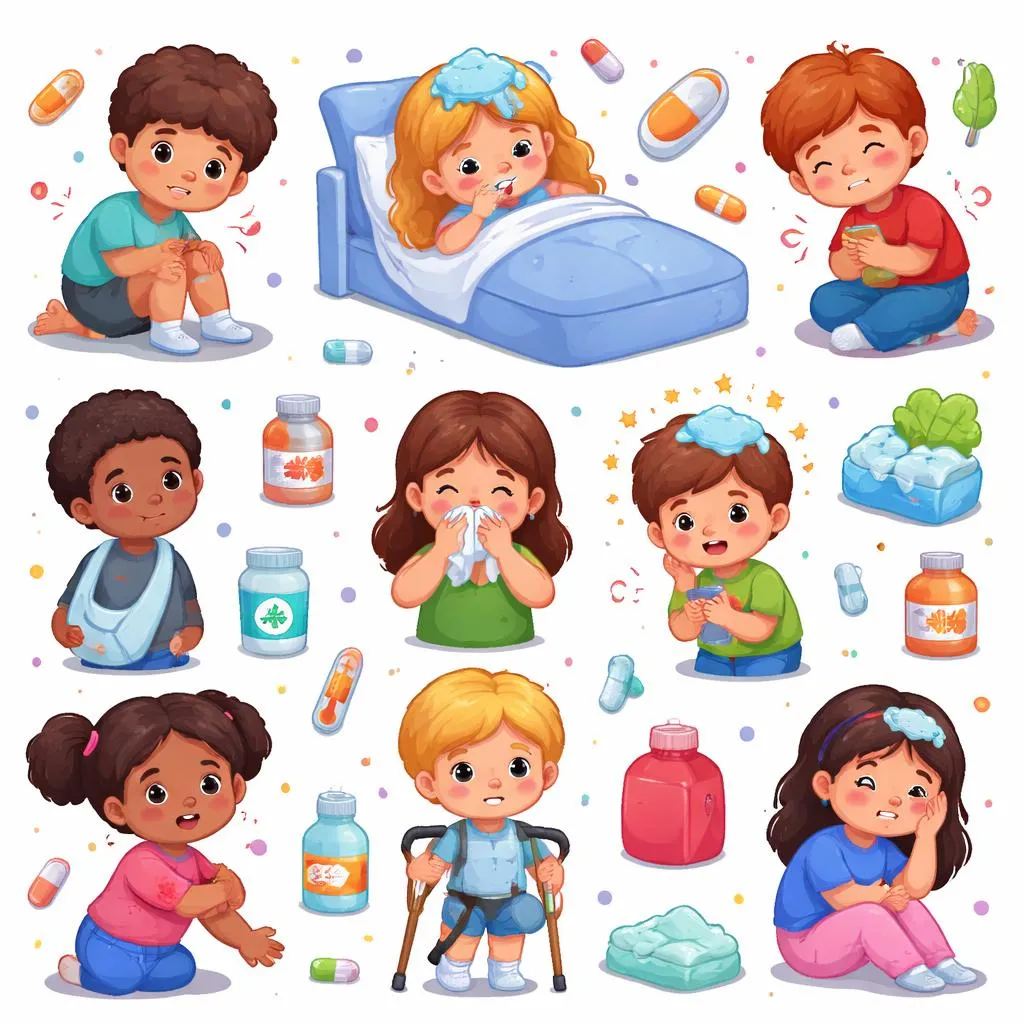

This set collects images of minor injuries and ailments. Nothing too graphic, except the sneeze card ?? Most of the cards depict nouns and can be used to complete the sentence “She/He has a ________”. Two exceptions are sick and sneeze . Five of the vocabulary words follow the body part + ache pattern. Although there is only one fracture (broken arm), you could also review the Body Parts Flashcards and elicit other common breakables, such as finger, leg, and foot.
Word list: backache, bee sting, broken arm, burn, cough, cut, earache, fever, headache, rash, runny nose, sick, sneeze, stomachache, toothache
Click here to download the full Injuries and Illnesses PDF — free
By practicing with Injuries and Illnesses flashcards, children can:
- Learn common vocabulary related to minor injuries and ailments, such as backache, bee sting, broken arm, and fever.
- Understand how to describe symptoms and health conditions using simple sentences like "He has a headache" or "She has a rash."
- Improve their ability to recognize body parts and associate them with specific aches or injuries.
- Develop speaking and listening skills through interactive activities and games.
- Build confidence in using health-related language in everyday conversations.
How to Teach Injuries and Illnesses Flashcards with Flashcards
Parents and educators can use these flashcards to introduce children to basic health vocabulary in a fun and engaging way. Start by showing each card and pronouncing the word clearly, encouraging children to repeat after you. Use the cards to form simple sentences, such as "He has a cough" or "She has a burn," helping children connect the word to its meaning. Incorporate real-life examples or role-play scenarios where children can act out symptoms or injuries to reinforce understanding. Consistent practice with these flashcards helps children become familiar with common ailments and how to express them.
(1) Fun Injuries and Illnesses Flashcard Games
To make learning more enjoyable, try games like "Memory Match," where children find pairs of cards with the same injury or symptom, or "Charades," where one child acts out an ailment and others guess using the flashcards. Another engaging activity is "Sentence Building," where children pick a flashcard and create a sentence describing the injury or illness. These games encourage active participation and help solidify vocabulary retention.
(2) Example Sentences with Injuries and Illnesses Vocabulary
- "She has a stomachache because she ate too much candy."
- "He sneezed loudly when he caught a cold."
- "My friend has a bee sting on his arm."
- "I feel sick and have a fever today." Using these sentences, children learn how to describe symptoms and relate them to everyday experiences, improving both comprehension and communication skills.
Free Injuries and Illnesses Flashcards PDF Download
To support learning at home or in the classroom, a free downloadable PDF of the Injuries and Illnesses flashcards is available. This resource includes colorful images and clear labels for each word, making it easy to print and use repeatedly. Accessing these flashcards allows children to practice anytime and helps parents and teachers provide consistent language exposure.
FAQ about Injuries and Illnesses Flashcards
Q: What age group are these flashcards suitable for? A: They are ideal for young learners aged 4 to 8 who are beginning to expand their vocabulary related to health and the body.
Q: How often should children practice with these flashcards? A: Short, daily sessions of 10-15 minutes are effective for steady progress without overwhelming the child.
Q: Can these flashcards be used for children learning English as a second language? A: Yes, they are excellent tools for ESL learners to acquire basic health-related vocabulary and practice sentence structures.
Q: Are there any suggested follow-up activities? A: Yes, role-playing doctor-patient conversations, drawing and labeling body parts, and creating simple storybooks about injuries and illnesses can deepen understanding and use of the vocabulary.