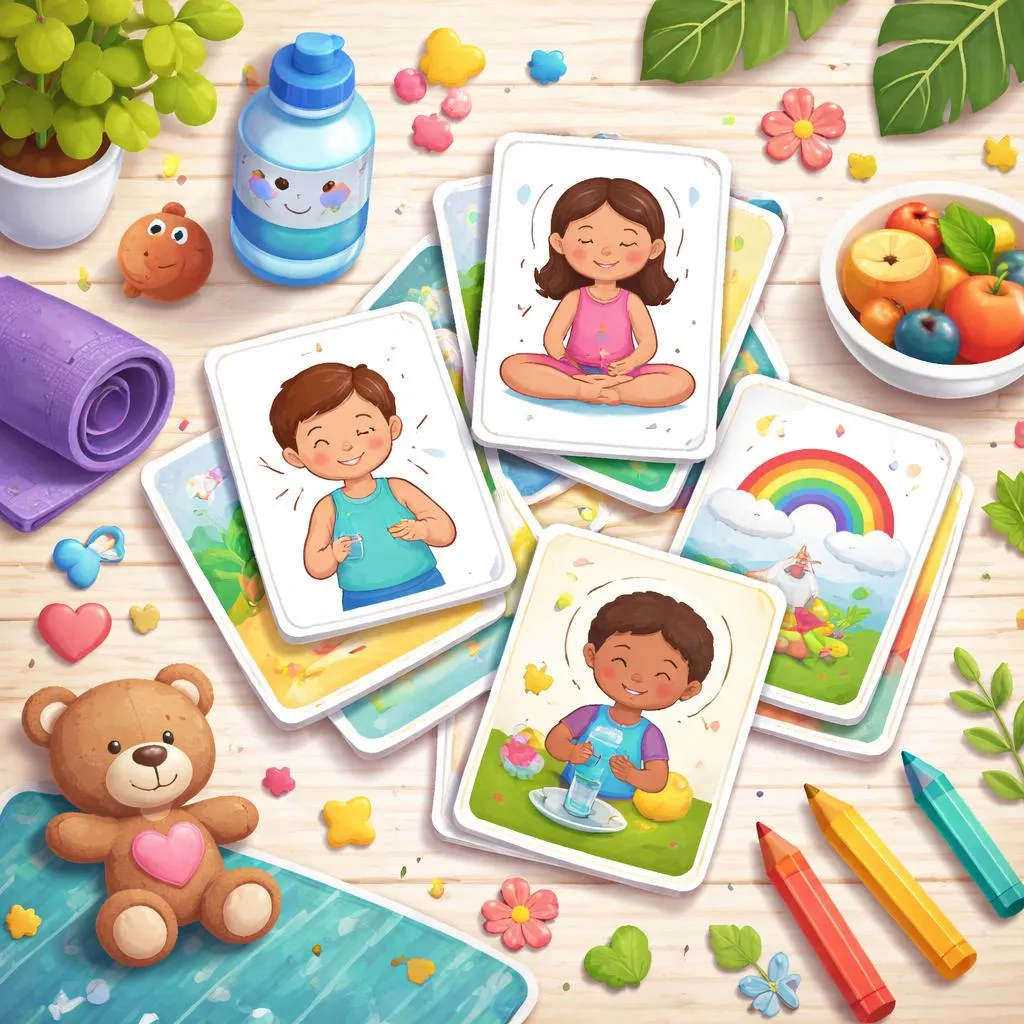

Feeling stressed? As the anxiety and bickering levels have increased in our household over the last few weeks, I searched for lists of tips for calming down. The 18 flashcards in this set are a collection of advice gathered from mental health websites and blogs. The Canadian Mental Health Association has a good article about maintaining wellness here: “ Pandemic pushing your anxiety buttons ?” The ideas in this set are useful tips for dealing with the social isolation that the COVID-19 pandemic is causing at the moment, but are equally helpful for reducing stress in normal times as well. Like the COVID-19 Hygiene Flashcards set, I put together these cards with icons from the The Noun Project . If you need simple images to customize a lesson plan, the Noun Project is a great place to look.
Word list: do yoga, drink water, eat healthy food, exercise, get facts, get fresh air, get rest, get sunshine, keep a journal, keep a routine, keep in touch, laugh, limit news intake, listen to music, meditate, practice a hobby, relax, take a walk
Click here to download the full Wellness Flashcards PDF — free
By practicing with Wellness Flashcards, children can:
These flashcards introduce children to simple, healthy habits that help manage stress and promote overall wellness. By engaging with the words and images, children learn vocabulary related to self-care activities like drinking water, exercising, and relaxing. This helps them understand the importance of taking care of their mental and physical health in an accessible and fun way. The flashcards also encourage children to develop routines and positive habits that support emotional well-being, making it easier for them to cope with challenges and feel calm.
How to Teach Wellness Flashcards with Flashcards
Parents and educators can use these flashcards to start conversations about healthy habits and emotional wellness. Begin by showing each card and explaining the activity or tip it represents, using simple language that children can understand. Encourage children to repeat the words and act out the activities, such as pretending to do yoga or drinking water. This interactive approach helps reinforce learning. Parents can also use the cards as daily reminders or prompts to practice these wellness habits together as a family, creating a supportive environment for children to build healthy routines.
(1) Fun Wellness Flashcard Games
To make learning more engaging, try games like “Flashcard Charades,” where children pick a card and act out the activity while others guess. Another game is “Memory Match,” pairing cards with their matching images or actions to improve recall. You can also play “Routine Race,” where children arrange cards in the order of a healthy daily routine. These games build vocabulary and understanding while promoting active participation.
(2) Example Sentences with Wellness Vocabulary
Using the flashcards, children can practice sentences such as: “I drink water to stay healthy,” “Let’s take a walk outside,” or “I like to listen to music when I relax.” These simple sentences help children connect words with real-life actions, improving their language skills and reinforcing the importance of wellness activities.
Free Wellness Flashcards PDF Download
You can download and print the full set of Wellness Flashcards for free from the provided link. Having physical copies allows children to handle the cards, sort them, and use them in various learning games. The printable format is convenient for parents and teachers to incorporate into lesson plans or home activities without extra cost.
FAQ about Wellness Flashcards
Q: What age group are these flashcards suitable for?
A: They are ideal for young children aged 4 to 10 who are beginning to learn about health and emotions.
Q: How often should children practice with these flashcards?
A: Daily short sessions of 5-10 minutes work best to build familiarity and encourage habit formation.
Q: Can these flashcards be used for children with special needs?
A: Yes, the clear images and simple words make them accessible for diverse learners, including those with language delays.
Q: Are there any follow-up activities recommended?
A: Yes, journaling about feelings, practicing mindfulness, or creating a daily wellness chart can deepen understanding and application.
These Wellness Flashcards offer a practical and enjoyable way for children to learn valuable life skills that support their health and happiness.