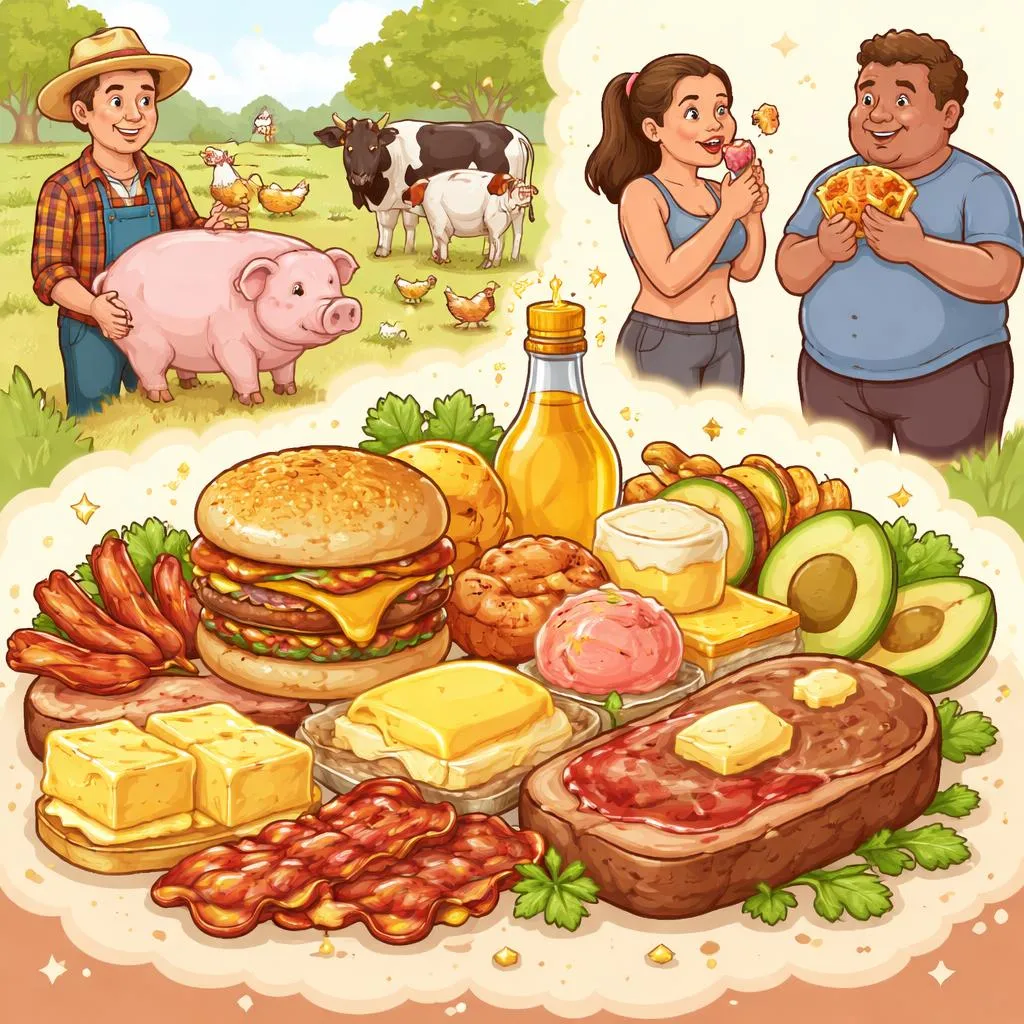

Fat is not a bad word. Our bodies need some fat to stay healthy. The family of "fat, fatty, fatten, fatness" helps children talk about this important nutrient without shame.
Children see fat in many places. Butter on toast. Oil in a pan. The rich part of meat. These words help them describe what they see and eat.
This article helps parents and children explore these important words together. No body shaming. No fear. Just honest, gentle talk about food and health.
Let us see how one noun grows into adjectives and a verb. These words describe a natural part of our world.
What Does "Same Word, Different Forms" Mean?
The root "fat" means the oily substance in animals and plants. It also means "plump" or "thick." This word family focuses on the nutrient and its qualities.
Each form does a different job. "Fat" is a noun or adjective. "Fatty" is an adjective. "Fatten" is a verb. "Fatness" is a noun.
Your child already knows "fat" from food labels or cooking. Now we add "fatty" to describe oily foods. "Fatten" to talk about growing animals. And "fatness" to name the quality.
Personal Pronouns Change Their Form
Pronouns do not change "fat" as a noun. "This fat comes from butter. That fat comes from oil." As an adjective: "The fat cat sleeps. The fat dog rests."
"Fatty" stays the same. "This is a fatty fish. That is a fatty nut."
"Fatten" is a verb. It changes with pronouns. "I fatten the pig. He fattens the cow. She fattens the chicken. They fatten the goats."
That small "s" on "fattens" matches he, she, or it. The verb also changes for past tense. "I fattened the calf."
"Fatness" stays. "The fatness of the avocado makes it creamy. The fatness of the cheese adds flavor."
From Verb to Noun to Adjective to Adverb – One Family, Many Words
This family has no adverb. But we can see the growth.
"Fat" – noun or adjective. As noun: "Cooking oil is a type of fat." As adjective: "The bear is fat before winter."
"Fatty" – adjective. Describes something containing a lot of fat. "Fatty fish like salmon are healthy."
"Fatten" – verb. Shows the action of making someone or something fatter. "Farmers fatten turkeys for Thanksgiving."
"Fatness" – noun. Names the quality of being fat. "The fatness of the soil helps plants grow."
See how one root gives us four useful tools? Each helps talk about fat in a different way.
One Root, Many Roles – How Words Grow from Actions to Qualities
From "fat" we get "fatty" by adding "-y." This suffix turns nouns into adjectives meaning "like or full of." "Fat" + "y" = "fatty" – full of fat.
We get "fatten" by adding "-en." This suffix turns adjectives into verbs meaning "to make." "Fat" + "en" = "fatten" – to make fat.
We get "fatness" by adding "-ness." This suffix turns adjectives into nouns meaning "the state of being." "Fat" + "ness" = "fatness" – the state of being fat.
This pattern works for many words. "Dark, darken, darkness." "Sweet, sweeten, sweetness."
Focus first on "fat" as a noun in food. Children see it in cooking. Then add "fatty" for describing foods. Save "fatten" for farm or nature talks. "Fatness" is for older children.
Same Meaning, Different Jobs – Is It a Verb or a Noun?
Let us check each word's job in a sentence.
"Fat" – noun or adjective. "This recipe uses animal fat." Noun. "The fat puppy waddled." Adjective.
"Fatty" – adjective. "Fatty foods taste rich but eat them in moderation." Ask: Does it describe foods? Yes. So it is an adjective.
"Fatten" – verb. "The mother bird fattens her chicks before winter." Ask: Can I do it? Yes. So it is a verb.
"Fatness" – noun. "The fatness of the avocado makes good guacamole." Ask: Can I name it as a quality? Yes. So it is a noun.
Teach your child to ask "Can I do it?" If yes, verb. "Does it describe a noun?" If yes, adjective. "Can I name it?" If yes, noun.
Adjectives and Adverbs – When Do We Add -ly?
We can add -ly to "fat" to make "fatly." That is rare. It means in a fat or plump way. Do not teach it to young children.
We can add -ly to "fatty" to make "fattily." Also rare. Skip it.
Focus on the main forms. "Fat, fatty, fatten, fatness." These four cover everything a young child needs for talking about food and bodies.
Watch Out for Tricky Spelling Changes (Double Letters, y to i, and More)
"Fat" – simple. F A T.
"Fatty" – add -y to fat. Double the T. "Fat" has one T. When adding -y, we double the final consonant? Yes. Short vowel + one consonant = double the consonant. "Fat" becomes "fatty." Double T.
"Fatten" – add -en to fat. Double the T. Same rule. "Fat" + "en" = "fatten." Double T.
"Fatness" – add -ness to fat. Double the T. Same rule. "Fat" + "ness" = "fatness." Double T.
The main trick: all forms that add a suffix double the T. "Fatty, fatten, fatness" all have double T. Only the base "fat" has one T. Show your child the pattern. "Fat" (one T). "Fatty" (two Ts).
Let's Practice – Can You Choose the Right Form?
Try these sentences with your child. Fill in each blank. Use fat, fatty, fatten, or fatness.
Butter is a type of _____. It makes food taste rich.
Salmon is a _____ fish. It contains healthy oils.
The farmer will _____ the pigs before the county fair.
The _____ of the soil helps vegetables grow large and healthy.
Answers:
fat (noun – names the nutrient)
fatty (adjective – describes the fish)
fatten (verb – action of making fatter)
fatness (noun – names the quality of being fat)
Read the sentences aloud. Ask why each answer fits. Let your child explain. That builds understanding.
Now play a simple game. Look at food packages. Find the word "fat" on nutrition labels. Point to "fat" as a noun. Then say "This is a fatty food" for cheese or nuts.
Tips for Parents – Help Your Child Learn Word Families in a Fun Way
Start in the kitchen. Show your child butter, oil, or avocado. Say "These contain fat. Fat gives us energy." Keep it positive.
Talk about fatty foods. "Fatty fish like salmon are good for your brain." "Nuts are fatty but healthy in small amounts." No food shaming.
Read books about farm animals. "Farmers fatten pigs and cows." Explain that fattening helps animals grow strong before winter.
Use art. Draw a healthy meal. Label the fat sources. "Olive oil – a healthy fat." "Avocado – a fatty fruit." Celebrate all foods.
Play the "Fatten or Not?" game. Name an animal. "A bear before hibernation? Farmers fatten bears? No, bears fatten themselves." Silly questions make learning fun.
Talk about body fatness gently. "All bodies need some fatness to stay warm and have energy." Avoid judgment. Focus on health.
Create a "Word Garden." Write "fat" on a flower. Then write "fatty, fatten, fatness" on leaves. Draw the double T in each leaf. See the pattern.
Celebrate when your child uses any form correctly. If they say "This food has fat," nod. If they say "That is a fatty nut," praise the adjective.
One evening, ask "What foods do you know that contain fat?" Your child might say "Butter, cheese, peanut butter." Then ask "How do farmers fatten animals?" Connect food to farming.
Remember that fat is essential. Children need healthy fats for brain growth. Never make "fat" a bad word in your home. Use it neutrally, like "carbohydrate" or "protein."
Keep the tone light and educational. No body comments about people. Only talk about food, animals, and plants. This keeps the learning safe and kind.
Soon your child will say "Avocados have healthy fat." They will read "fatty fish" on a menu. They will understand why farmers fatten animals. You gave them neutral, scientific words for a natural part of life. And that builds healthy relationships with food.