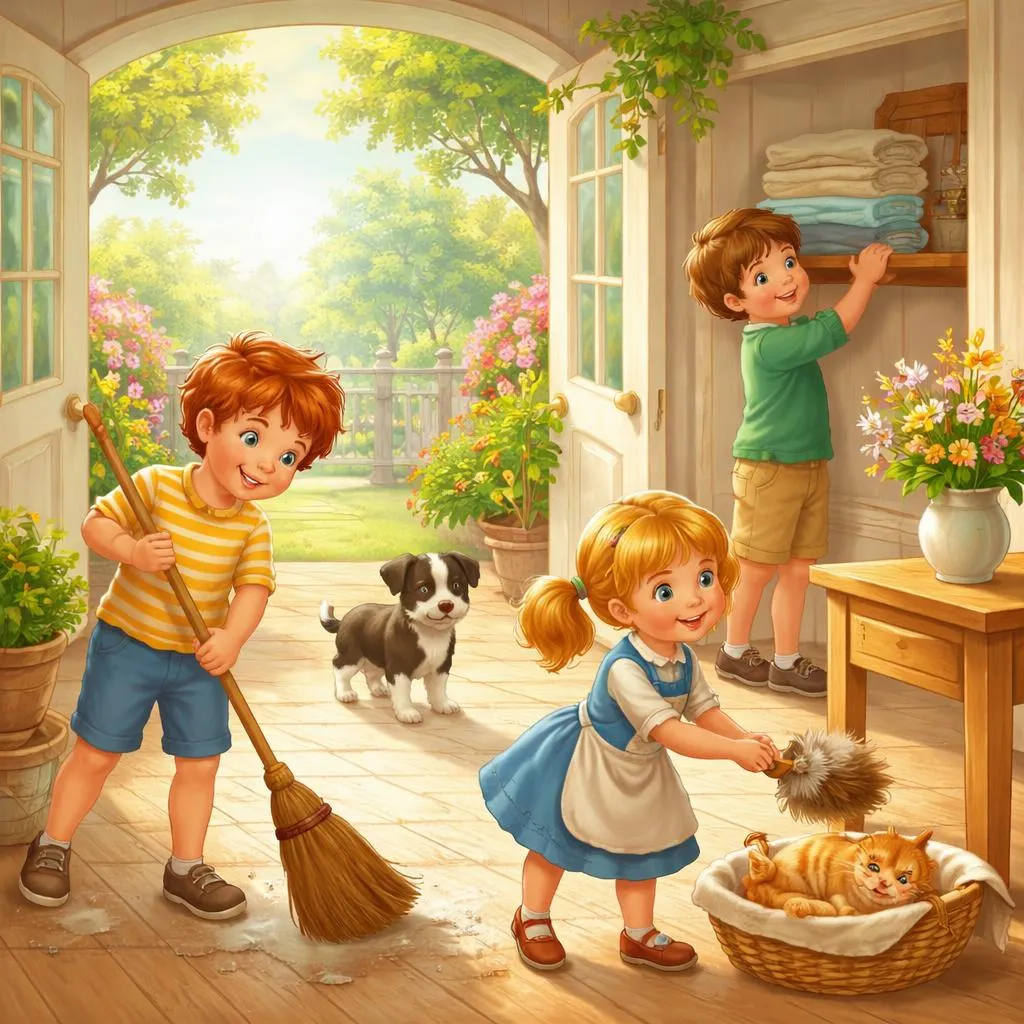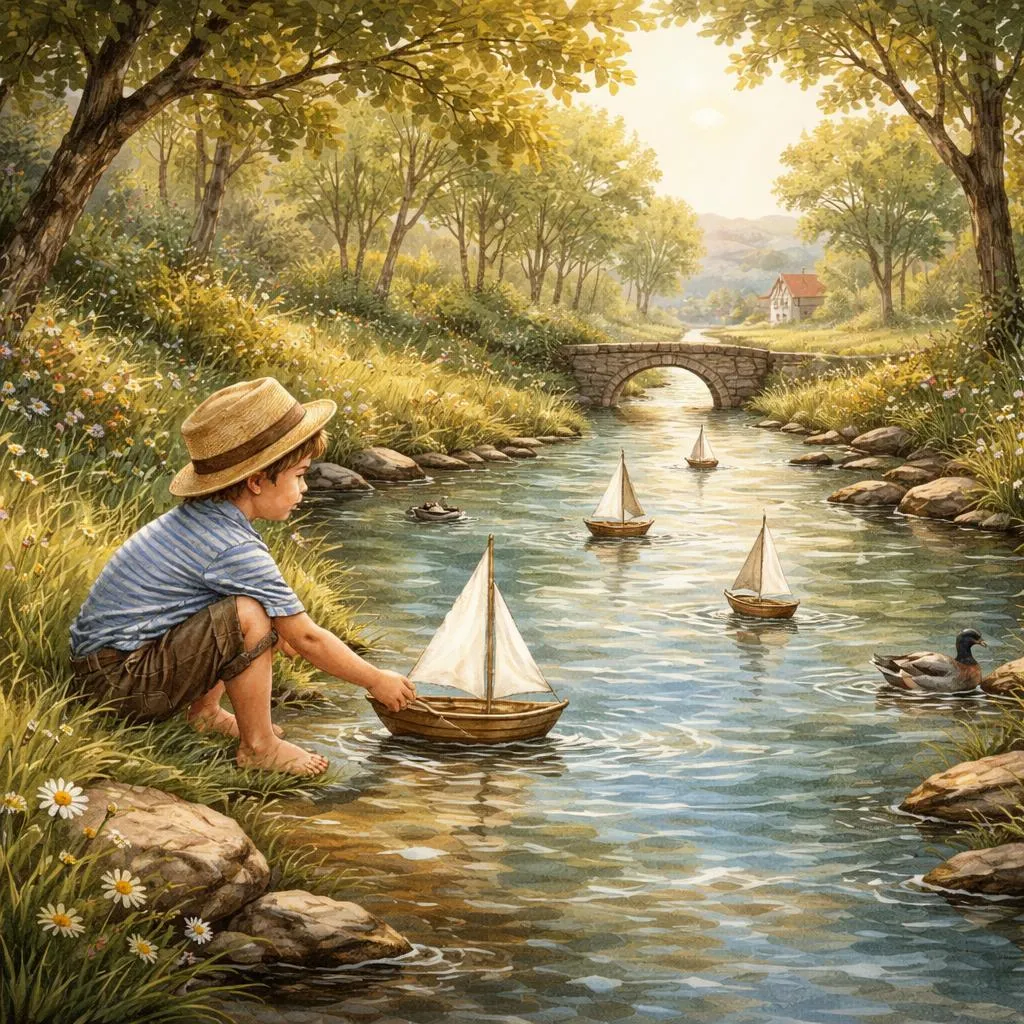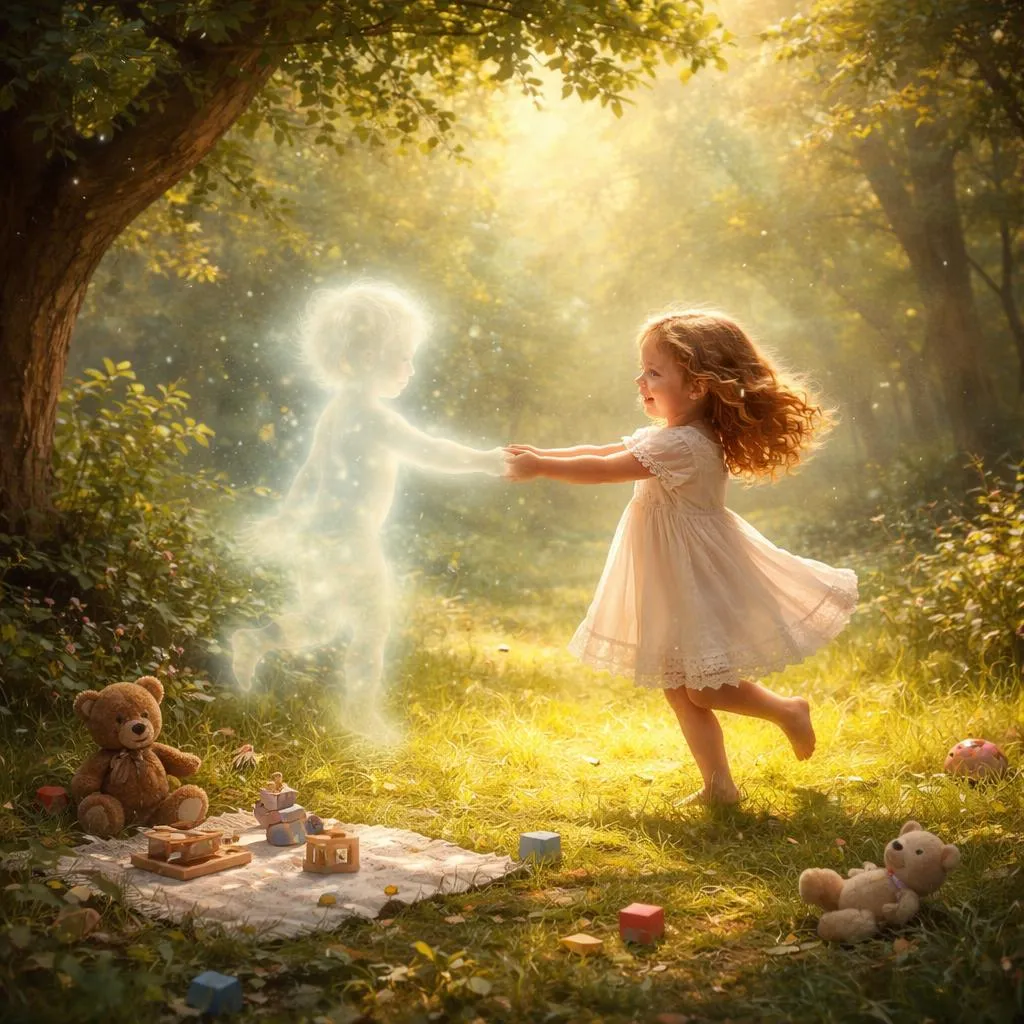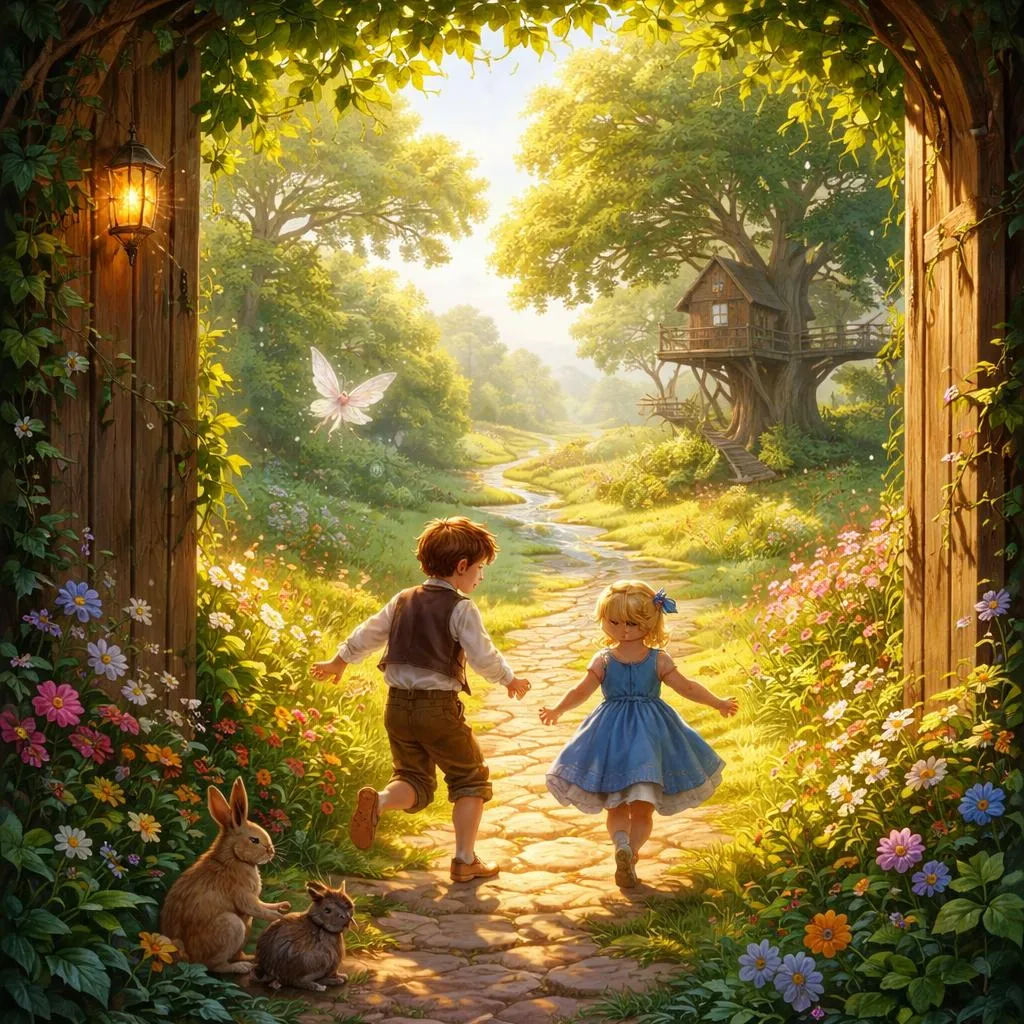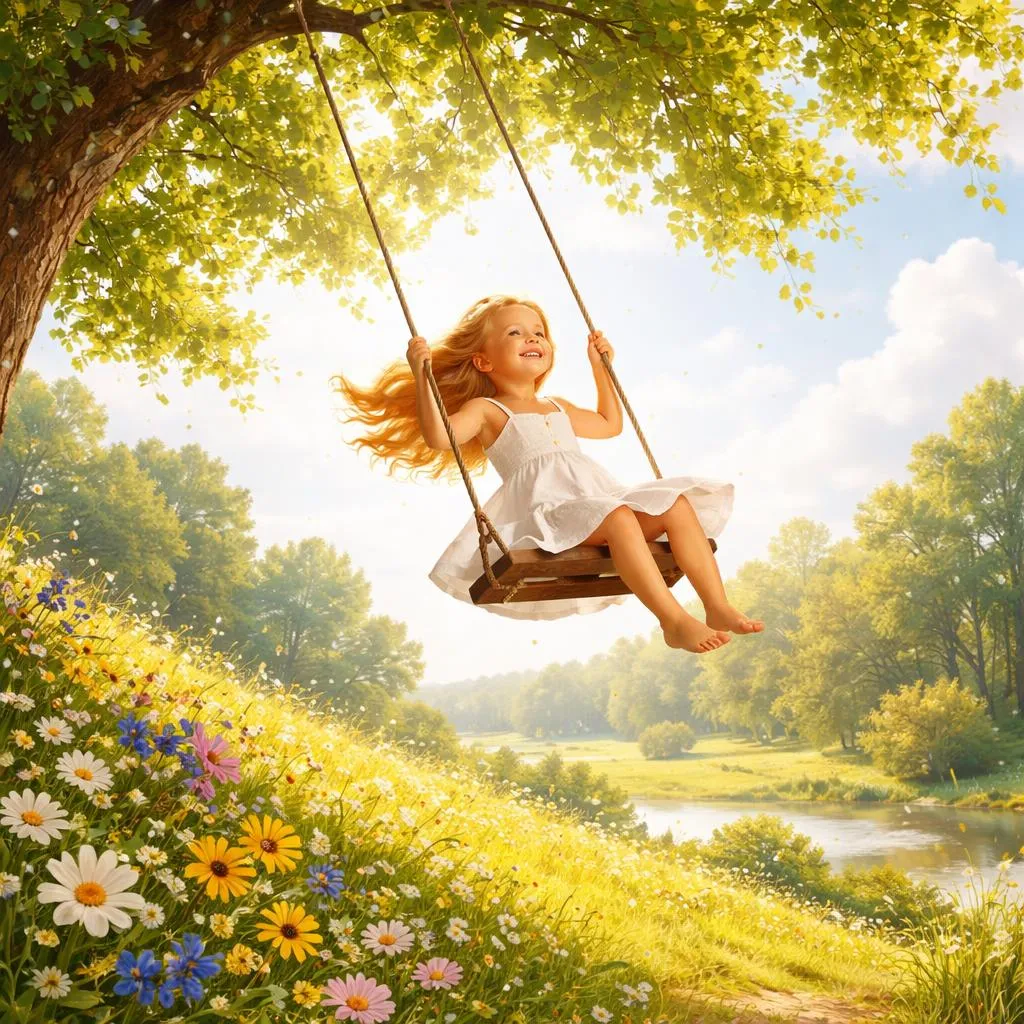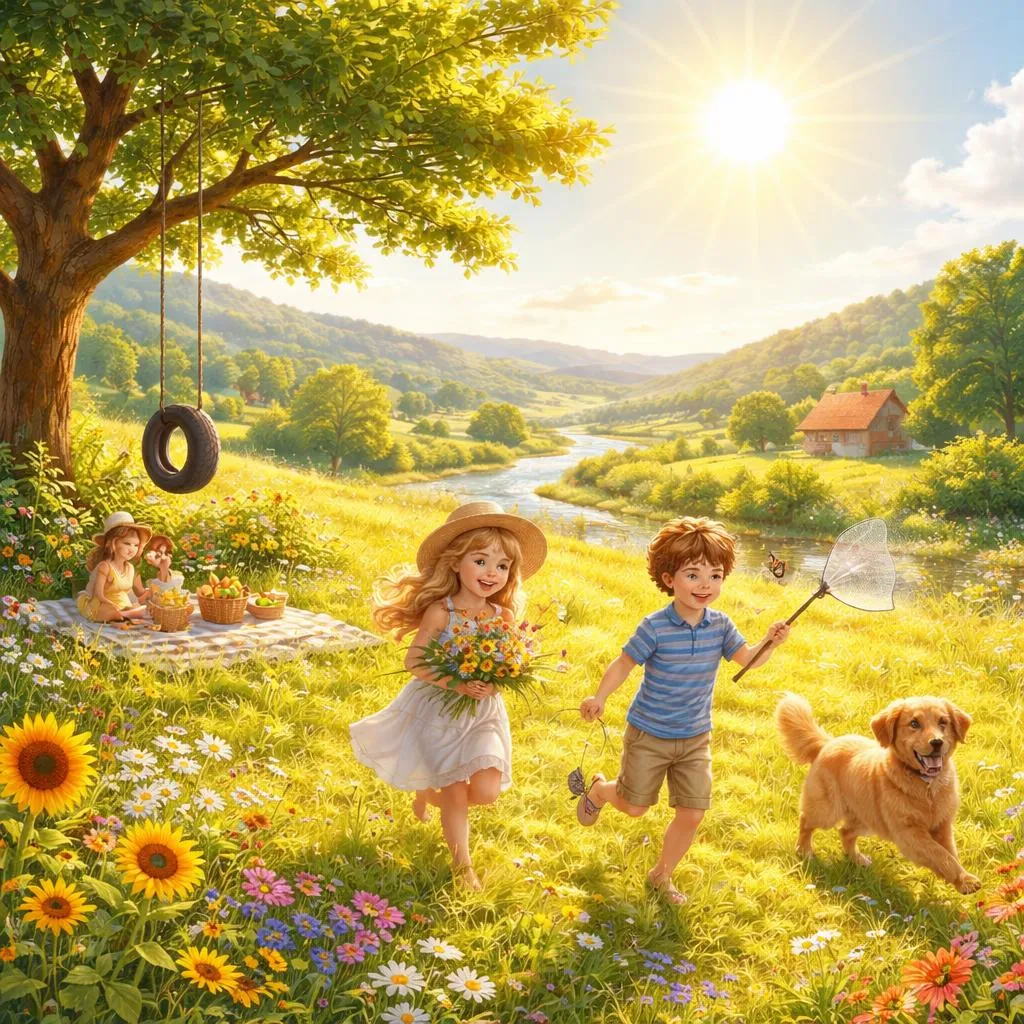

When the golden day comes to an end, everything begins to change. Through the closing door, the child, the garden, the flowers, and the sun all seem to disappear. As shadows grow longer and the sunlight fades, everything rolls away and vanishes under the evening’s dark cloak.
The garden becomes dark, the daisy closes its petals, and the child goes to bed, falling into a peaceful sleep. Glow-worms light up the hallway, and little mice scurry among the wooden floorboards. In the darkness, the houses glow softly as parents move the candles to light the rooms. Slowly, the quiet night takes over, and the bedroom doors are gently closed.
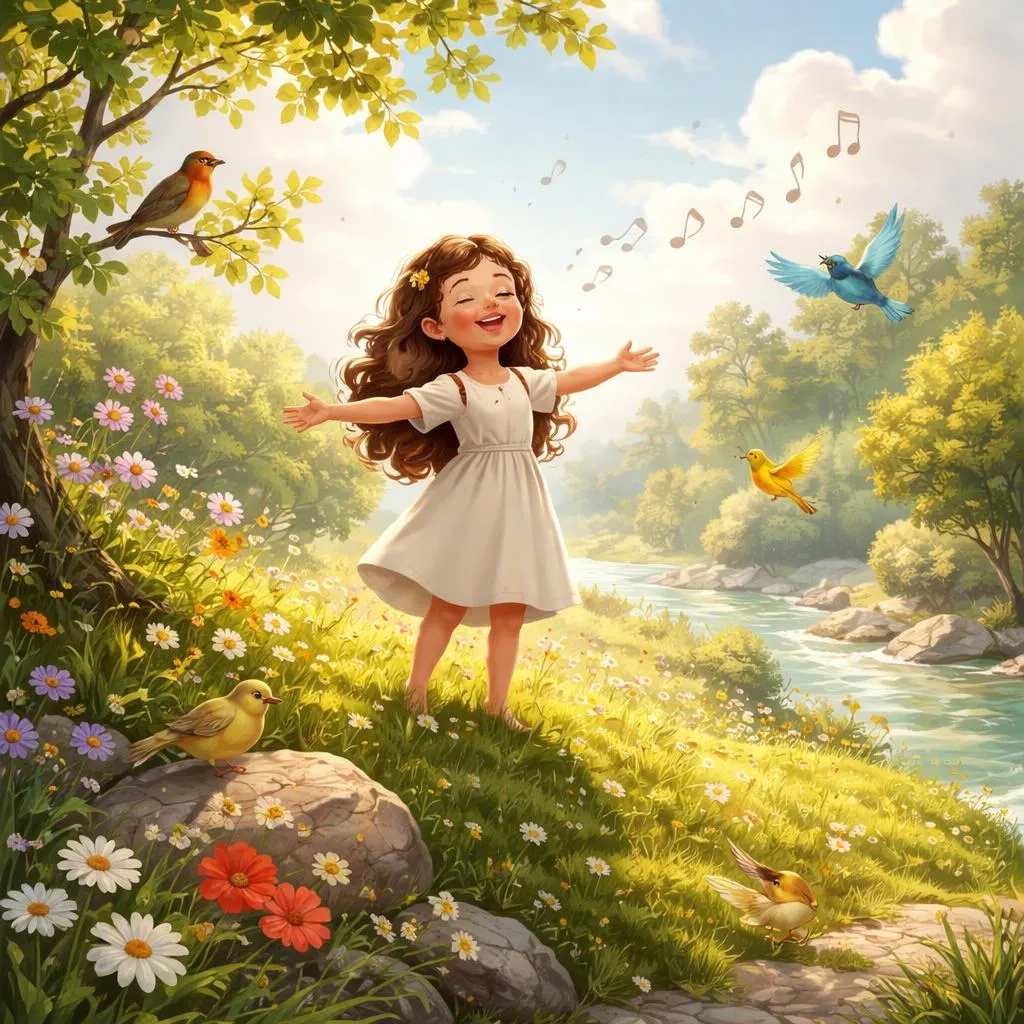
But then, a new day begins. In the east, the sun rises, breaking the darkness. Birds that were sleeping in the bushes and thorns start to wake up. Shapes of houses, trees, and hedges become clearer in the morning light. Sparrows flap their wings on the window ledges, waking the yawning child. She opens the door and finds the garden covered with fresh dew and the morning light shining bright.
The garden grows green and rosy again, just like it was before, behind the windowpane where it seemed to disappear. Now, in the daylight under the glowing sky, the garden glows with life. Every path and flower, every rose and blue forget-me-not covered with dew, seems to call out, “Wake up! The day has come! The valleys are smiling! We have beaten the morning drum! Come, playmate, join your friends!”
Background of the Story
This beautiful poem captures the magical transition from day to night and back to day again, showing the natural rhythms of life. It was written by a poet who loved nature and wanted to share the wonder of the world with children. The poem uses simple yet vivid images to describe the garden, the child, and the creatures that come alive at different times of the day. It helps readers feel the peacefulness of night and the fresh promise of morning.
About the Author
The author of this poem was a writer who cared deeply about children’s experiences and the beauty of the natural world. They believed that children learn best when they connect with nature and their surroundings. Through their work, they encouraged young readers to observe the world closely and appreciate the small details of everyday life, like the closing of a flower or the fluttering of a bird’s wings.
Detailed Interpretation and Meaning
This poem is more than just a description of day and night. It teaches us about cycles and change. Just like the day ends and night begins, everything in life has its own rhythm. The closing of the garden and the child going to sleep shows rest and renewal, while the morning’s return reminds us of new beginnings and opportunities.
The poem also highlights the importance of nature and the connection between humans and the environment. The child and the garden are part of the same world, sharing the same rhythms. The gentle imagery of glow-worms, mice, sparrows, and flowers invites readers to notice the small wonders around them.
What Children and Students Can Learn
- Appreciation of Nature: Children learn to observe the beauty of the natural world, noticing how plants and animals behave differently at night and during the day.
- Understanding Cycles: The poem helps children understand natural cycles like day and night, rest and activity, which can be related to their own daily routines.
- Calmness and Reflection: The peaceful tone encourages children to value quiet moments, rest, and the gentle transitions in life.
- Imagination and Creativity: The vivid descriptions inspire children to use their imagination to picture the scenes and feel connected to the story.
Applying These Lessons in Life
- In Daily Life: Children can practice observing nature around them, such as watching how flowers open and close or listening to birds in the morning. This builds mindfulness and appreciation.
- In Learning: Understanding natural cycles can help students manage their own schedules, recognizing when it’s time to work and when it’s time to rest.
- In Social Settings: The poem’s themes of renewal and connection encourage kindness and patience, reminding children that everyone needs time to rest and grow.
- Cultivating Positive Habits: By embracing the calm and rhythm shown in the story, children can learn to balance activity with rest, helping their mental and physical health.
How to Foster the Positive Spirit and Behavior from the Story
- Encourage children to spend time outdoors and observe nature daily.
- Teach them about the importance of rest and sleep as part of a healthy routine.
- Use the poem to inspire creative activities like drawing or writing about their own garden or favorite natural scenes.
- Discuss the idea of cycles in life, helping children understand change and growth are natural and positive.
- Promote empathy by relating the garden’s need for care and attention to how we should treat each other kindly.
This story is a gentle reminder that every day brings new chances to grow, learn, and enjoy the world around us. By paying attention to the simple wonders of nature and embracing the rhythms of life, children can develop a deeper connection to themselves and the environment, leading to a happier and more balanced life.