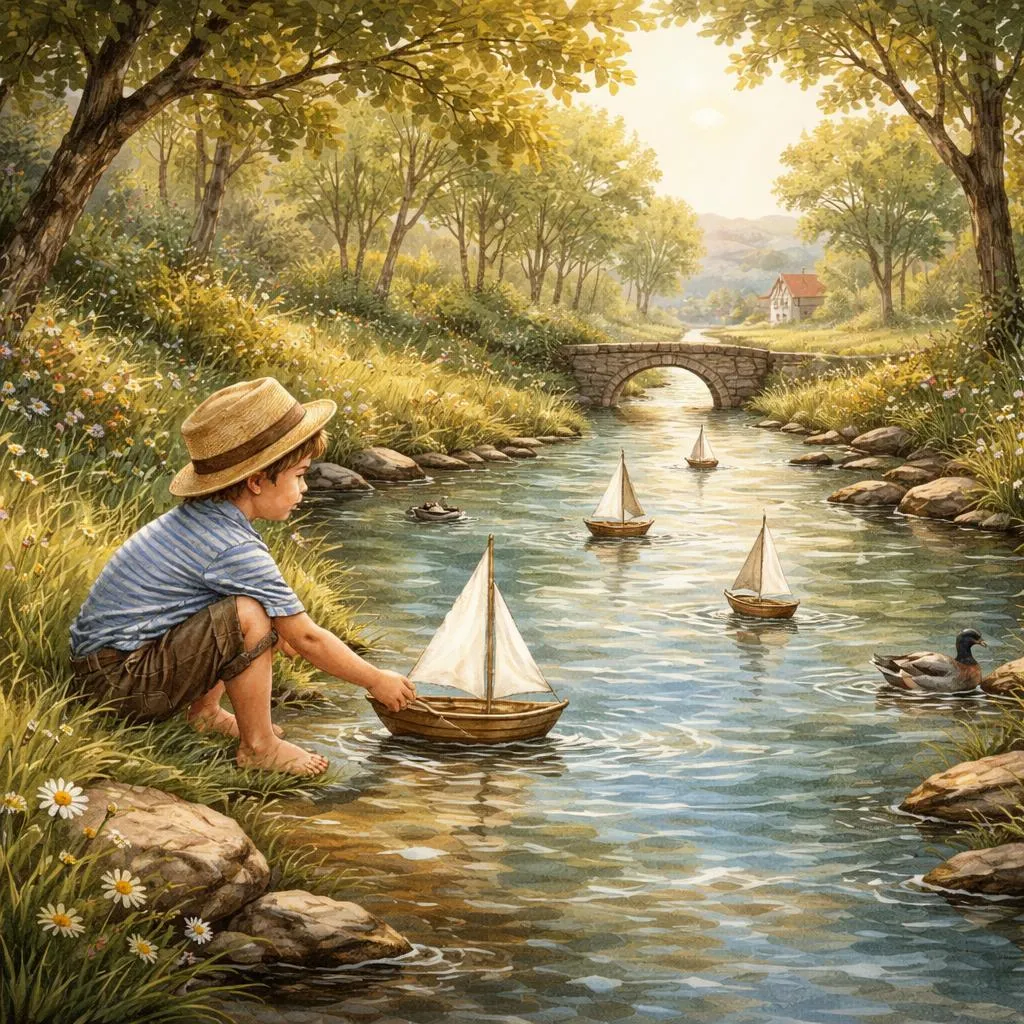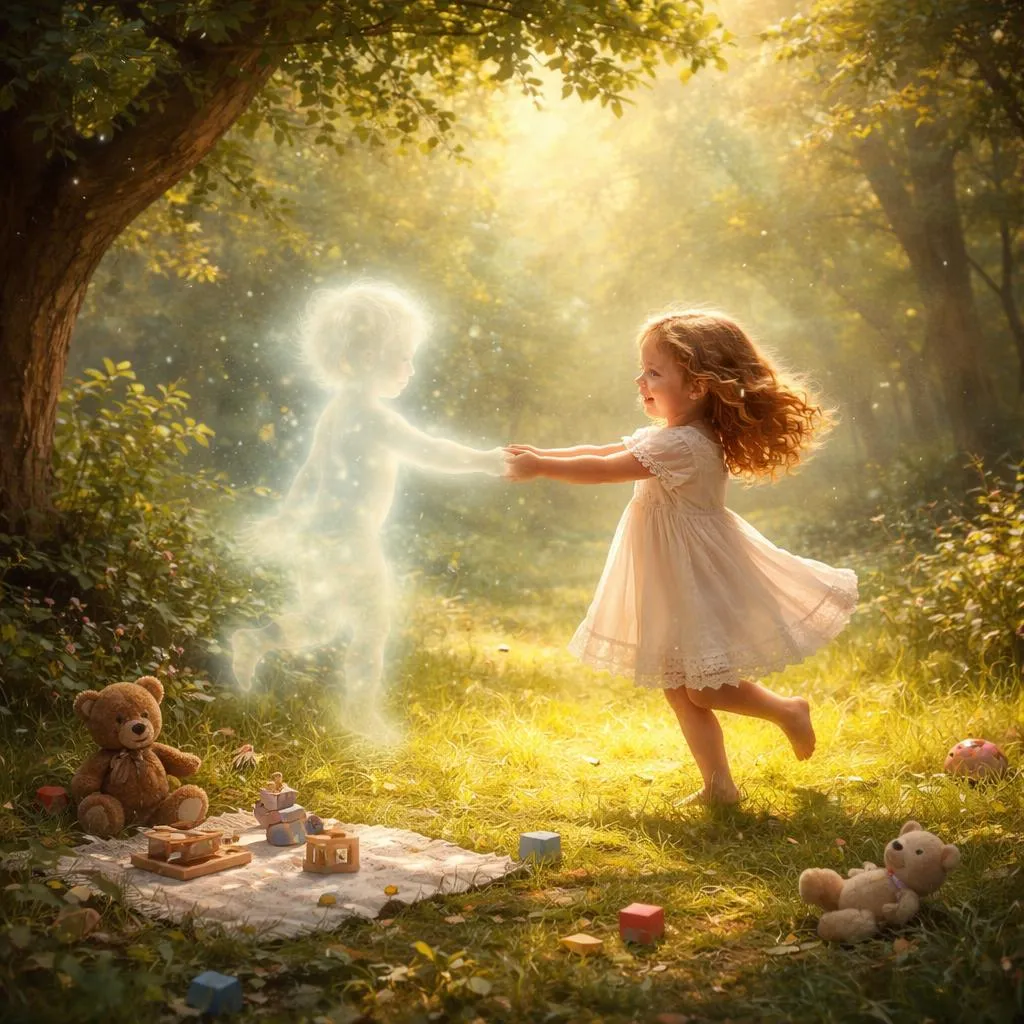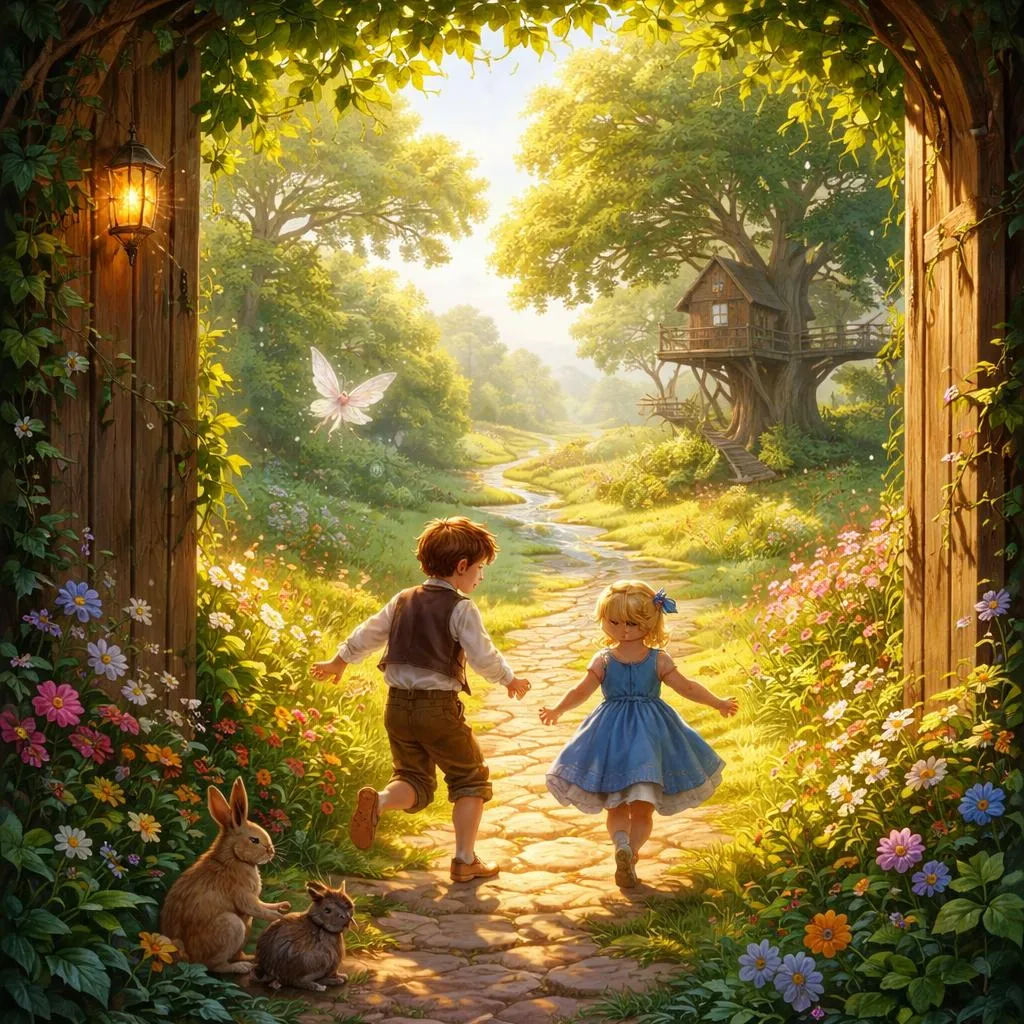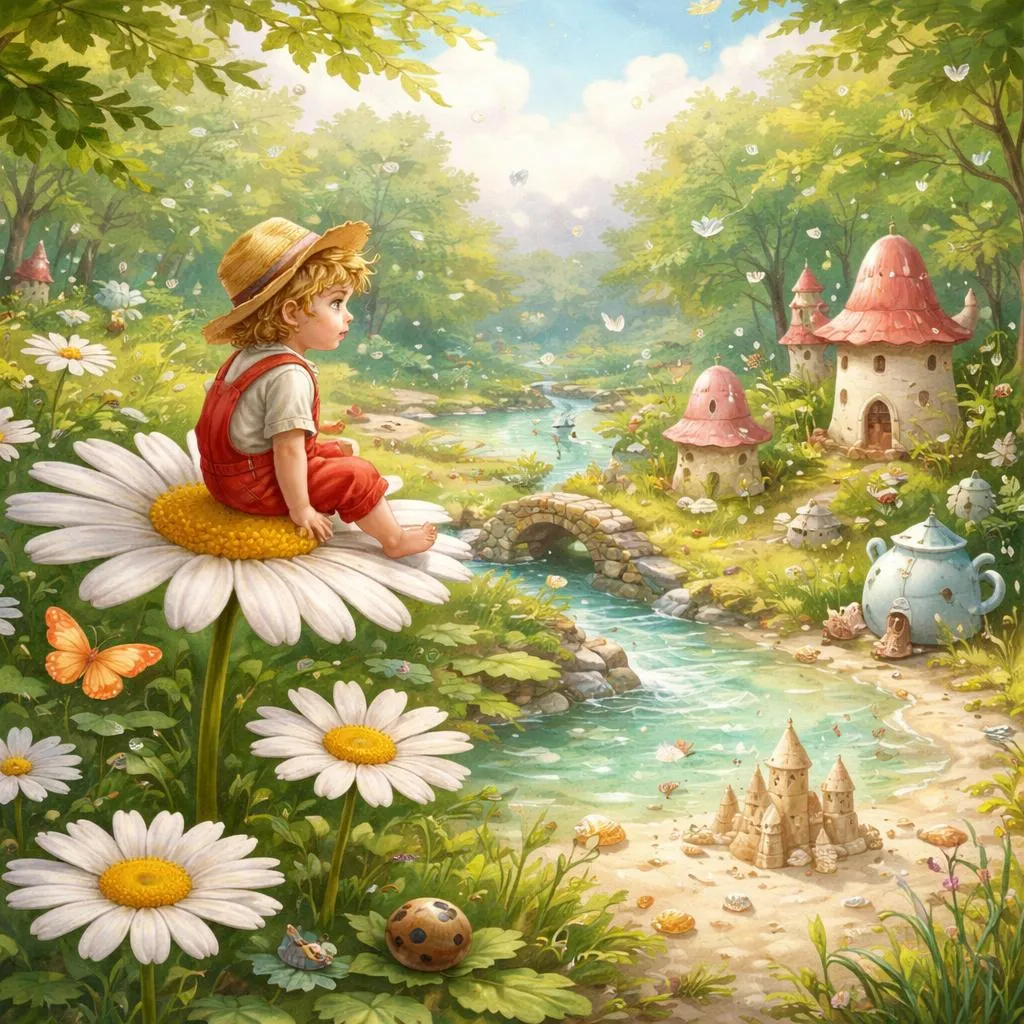

When at home alone I sit And am very tired of it, I have just to shut my eyes To go sailing through the skies— To go sailing far away To the pleasant Land of Play; To the fairy land afar Where the Little People are; Where the clover-tops are trees, And the rain-pools are the seas, And the leaves, like little ships, Sail about on tiny trips; And above the Daisy tree Through the grasses, High o’erhead the Bumble Bee Hums and passes. In that forest to and fro I can wander, I can go; See the spider and the fly, And the ants go marching by, Carrying parcels with their feet Down the green and grassy street. I can in the sorrel sit Where the ladybird alit. I can climb the jointed grass And on high See the greater swallows pass In the sky, And the round sun rolling by Heeding no such things as I. Through that forest I can pass Till, as in a looking-glass, Humming fly and daisy tree And my tiny self I see, Painted very clear and neat On the rain-pool at my feet. Should a leaflet come to land Drifting near to where I stand, Straight I’ll board that tiny boat Round the rain-pool sea to float. Little thoughtful creatures sit On the grassy coasts of it; Little things with lovely eyes See me sailing with surprise. Some are clad in armour green— (These have sure to battle been!)— Some are pied with ev’ry hue, Black and crimson, gold and blue; Some have wings and swift are gone;— But they all look kindly on. When my eyes I once again Open, and see all things plain: High bare walls, great bare floor; Great big knobs on drawer and door; Great big people perched on chairs, Stitching tucks and mending tears, Each a hill that I could climb, And talking nonsense all the time— O dear me, That I could be A sailor on a the rain-pool sea, A climber in the clover tree, And just come back a sleepy-head, Late at night to go to bed.
Story Background and Author Introduction
This enchanting poem invites readers into a magical world of imagination, where a child, feeling bored at home, closes their eyes and embarks on a fantastical journey to the "Land of Play." The poem was written by A.A. Milne, the beloved English author best known for creating Winnie-the-Pooh. Milne’s works often celebrate childhood wonder, curiosity, and the power of imagination, making them timeless treasures for children and adults alike.
Detailed Story Interpretation and Meaning
The poem beautifully captures the essence of a child’s imaginative play. It describes how, through simple acts like closing the eyes, a child can transform an ordinary moment into an extraordinary adventure. The "Land of Play" is depicted as a fairyland where nature is alive with tiny creatures, and everyday objects become vast landscapes—clover-tops turn into trees, rain-pools become seas, and leaves become little ships. This vivid imagery encourages children to see the world around them with fresh eyes, appreciating the small wonders often overlooked.
The poem also touches on themes of exploration and observation. The child notices ants carrying parcels, ladybirds resting on sorrel leaves, and swallows flying high—all details that nurture curiosity and a connection with nature. The return to reality at the poem’s end, with the child waking up to "high bare walls" and "great big people," reminds readers that while imagination is a powerful escape, it also enriches our everyday lives.
What Children and Students Can Learn
-
Imagination and Creativity: The poem encourages children to use their imagination to create adventures and stories, fostering creativity that is essential for problem-solving and innovation.
-
Observation Skills: By paying attention to small details in nature and their surroundings, children develop keen observation skills, which are vital for learning and understanding the world.
-
Appreciation of Nature: The poem highlights the beauty and complexity of the natural world, inspiring children to respect and care for their environment.
-
Emotional Comfort: The idea of escaping to a safe, joyful place through imagination can help children manage feelings of boredom, loneliness, or anxiety.
Applying These Lessons in Daily Life
-
In Learning: Teachers and parents can encourage children to create their own stories or drawings inspired by nature, helping them connect classroom lessons with their experiences.
-
In Social Settings: Sharing imaginative stories with peers can enhance communication skills and build friendships through shared creativity.
-
In Personal Growth: Children can learn to use imagination as a tool for relaxation and emotional resilience, finding comfort in their inner world during challenging times.
Cultivating Positive Spirit and Behavior
To nurture the positive qualities exemplified in the poem, children should be encouraged to:
- Spend time outdoors exploring and observing nature, which fosters curiosity and mindfulness.
- Engage in creative activities like storytelling, drawing, or role-playing to develop their imagination.
- Practice empathy by imagining themselves in the lives of others, including animals and insects, promoting kindness and understanding.
- Balance imaginative play with real-world responsibilities, learning to appreciate both fantasy and reality.
By embracing these practices, children not only enjoy the magic of stories like this one but also develop important life skills that support their growth as thoughtful, creative, and compassionate individuals.