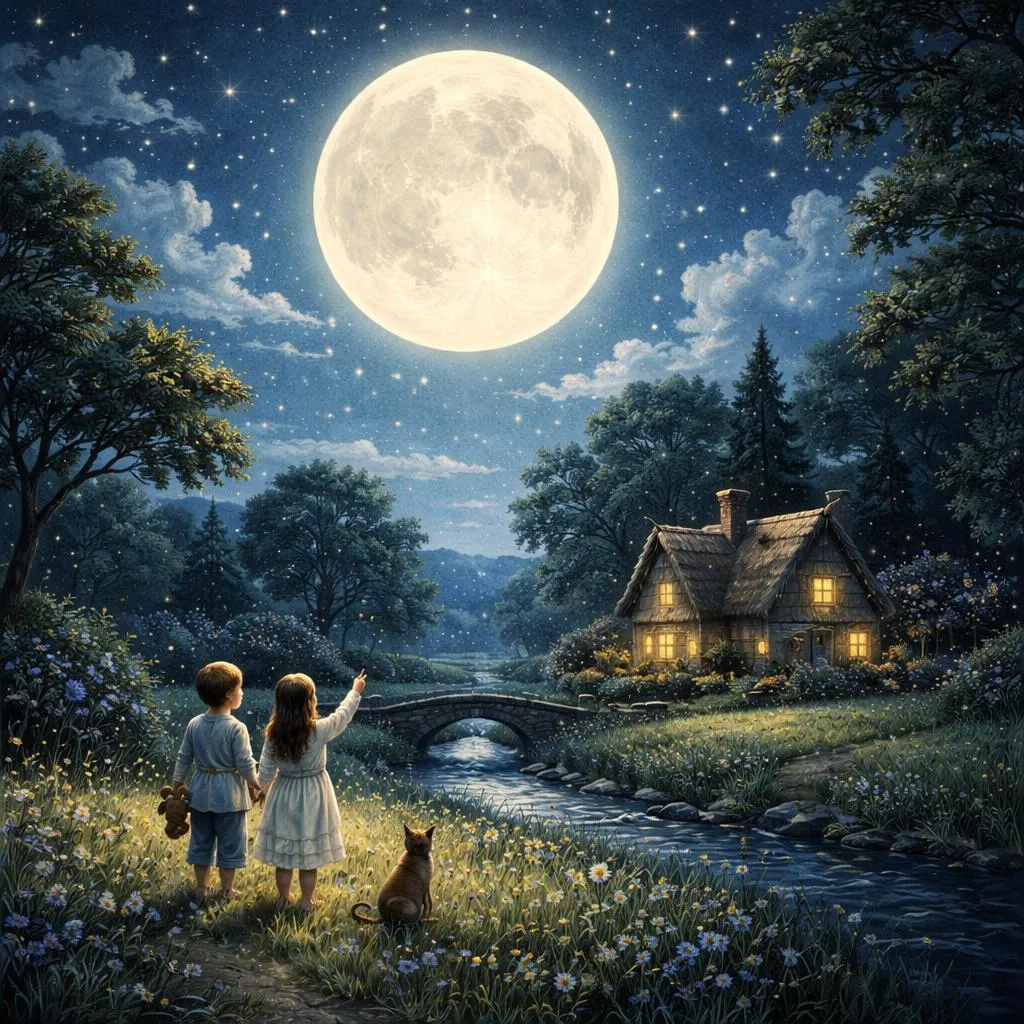

The moon has a face like the clock in the hall; She shines on thieves on the garden wall, On streets and fields and harbour quays, And birdies asleep in the forks of the trees. The squalling cat and the squeaking mouse, The howling dog by the door of the house, The bat that lies in bed at noon, All love to be out by the light of the moon. But all of the things that belong to the day Cuddle to sleep to be out of her way; And flowers and children close their eyes Till up in the morning the sun shall arise.
Story Background and Author Introduction
This poem, often known as "The Moon," was written by the famous English poet and author, Robert Louis Stevenson. Stevenson is best known for his adventure stories like Treasure Island and The Strange Case of Dr Jekyll and Mr Hyde, but he also wrote beautiful poetry for children. This particular poem is part of his collection called A Child’s Garden of Verses, published in 1885, which contains many poems that capture the imagination and everyday experiences of childhood.
Stevenson wrote these poems to celebrate the simple joys and wonders of being a child. He used gentle language and vivid imagery to bring to life the world as seen through a child’s eyes. The poem "The Moon" personifies the moon as a friendly, watchful face that lights up the night and watches over all creatures, big and small.
Detailed Interpretation and Meaning
In this poem, the moon is described as having a face like a clock, suggesting it is a familiar and comforting presence in the night sky. The moonlight shines on various scenes: thieves sneaking on garden walls, birds sleeping in trees, and animals like cats, mice, dogs, and bats going about their nighttime activities. The poem contrasts the lively night with the quiet daytime, where flowers and children sleep peacefully until the sun rises again.
The poem highlights the natural rhythm of day and night, showing how different creatures have their own times to be active and rest. It also suggests a peaceful coexistence between all living things under the moon’s gentle light.
What Children and Students Can Learn
-
Appreciation of Nature’s Cycles: The poem teaches children about the natural cycle of day and night and how different animals and plants behave differently depending on the time of day. This can spark curiosity about the natural world and encourage observation and respect for living things.
-
Imagination and Personification: By giving the moon a face and describing it as a gentle guardian, the poem invites children to use their imagination. Understanding literary devices like personification helps students appreciate poetry and storytelling.
-
Calmness and Comfort at Night: The poem reassures children that the night is not something to fear but a time when the world rests and the moon watches over everyone. This can help ease nighttime anxieties and promote a sense of safety.
-
Respect for Different Lifestyles: The poem shows that while some creatures are active at night, others rest, teaching children about diversity and the importance of respecting different ways of life.
Applying the Lessons in Life, Learning, and Social Situations
-
In Daily Life: Children can learn to observe the world around them more carefully, noticing how animals and plants behave at different times. This can foster mindfulness and a deeper connection to nature.
-
In Learning: Teachers and parents can use this poem to introduce concepts of time, nature, and poetry. It can be a starting point for activities like drawing scenes from the poem, writing their own verses, or exploring nocturnal animals.
-
In Social Settings: The poem’s theme of peaceful coexistence can inspire children to appreciate differences among their friends and classmates, understanding that everyone has their own rhythms and ways of being.
Cultivating Positive Spirit and Behavior
-
Curiosity and Wonder: Encouraging children to ask questions about the moon, night, and animals helps develop a lifelong love of learning.
-
Empathy and Respect: Seeing the moon as a gentle protector teaches kindness and care for others, including animals and the environment.
-
Patience and Rest: Understanding the importance of rest and quiet time can help children develop healthy habits for sleep and relaxation.
-
Creativity: Using imagination to see the moon as a friendly face nurtures creative thinking and expression.
By engaging with this poem, children not only enjoy beautiful language and imagery but also gain valuable insights into the world and themselves. It encourages them to be curious, kind, and thoughtful, qualities that will benefit them throughout their lives.