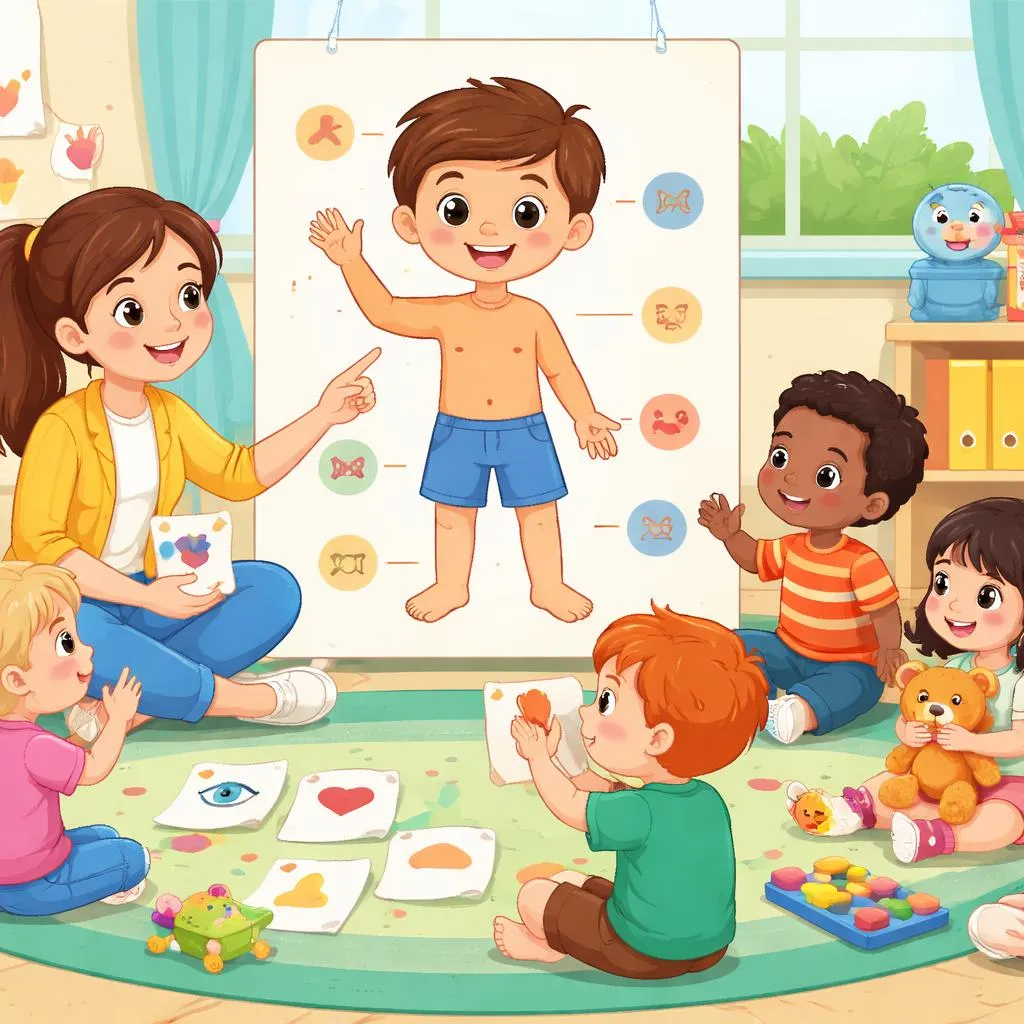

The human body is the most personal thing children own. They use it every moment. They see it in the mirror. They feel it move. Teaching body parts connects directly to children's lives. The words are concrete and visible. Children can point to each part as they learn its name. This makes body vocabulary some of the easiest and most enjoyable to teach. From head to toes, every part has a name. Let us explore how to guide young learners through this essential vocabulary with engaging and effective methods.
What Are Body Parts for Kids Learning? Body parts are the different pieces that make up the human body. Each part has a name and a function. Children need to know these names for many reasons. They need to describe where something hurts. They need to follow instructions like "raise your hand" or "close your eyes." They need to understand stories and songs that mention body parts.
Basic body parts include: Head, eyes, ears, nose, mouth Arms, hands, fingers, legs, feet Shoulders, knees, toes, tummy, back
More advanced body parts: Elbows, wrists, ankles, heels, chest Eyebrows, eyelashes, chin, cheeks, lips Neck, waist, hips, thighs, calves
Start with the most common parts. Head, shoulders, knees, and toes appear in the famous song. Eyes, ears, nose, and mouth are on the face. Hands and feet do so many things. These words appear constantly in daily conversation.
Children learn body parts naturally through songs, games, and daily routines. Pointing to parts while naming them helps build connections. Repetition in different contexts makes the words stick.
Meaning and Explanation of Body Parts Each body part has a specific function. Explaining these functions helps children remember the names.
Head: The top part of the body. It holds the brain. The brain thinks and controls everything.
Eyes: Used for seeing. They are on the face. They come in different colors. They open and close.
Ears: Used for hearing. They are on the sides of the head. Some ears are big. Some are small. All ears help us hear sounds.
Nose: Used for smelling and breathing. It is in the middle of the face. Air goes in and out through the nose.
Mouth: Used for eating, drinking, and talking. Teeth are inside the mouth. The tongue helps taste food.
Arms: Used for reaching and carrying. They connect to the shoulders. Elbows bend in the middle.
Hands: Used for holding and touching. Fingers are on hands. Thumbs help grip things.
Legs: Used for walking and running. They connect to the hips. Knees bend in the middle.
Feet: Used for standing and walking. Toes are on feet. Heels are at the back.
Shoulders: Connect arms to the body. They carry bags and move up and down.
Knees: Bend in the middle of legs. They help us sit and squat.
Toes: Small parts at the end of feet. They help with balance.
Use these explanations during daily routines. When children run, talk about legs. When they eat, talk about mouths. This connects vocabulary to real experiences.
Categories of Body Parts Organizing body parts into categories helps children understand relationships. Here are useful categories for teaching.
Head parts: Face: eyes, nose, mouth, ears, cheeks, chin Hair: on top of the head Teeth: inside the mouth Tongue: inside the mouth for tasting
Upper body parts: Shoulders: connect arms to body Arms: from shoulders to wrists Elbows: bend in the middle of arms Wrists: connect arms to hands Hands: at the end of arms Fingers: on hands Thumbs: special fingers that grip
Lower body parts: Hips: connect legs to body Legs: from hips to feet Knees: bend in the middle of legs Ankles: connect legs to feet Feet: at the end of legs Toes: on feet Heels: back part of feet
Torso parts: Chest: front upper body Back: back of the body Tummy: front middle body Waist: middle narrow part
Inside parts: Bones: hard parts inside Heart: pumps blood Brain: thinks and controls Lungs: help breathing
Use these categories in sorting activities. Children learn that parts belong to different areas of the body. This builds a complete picture of human anatomy at their level.
Daily Life Examples for Body Parts The best body part learning happens in everyday moments. Here are ways to use body vocabulary throughout the day.
Morning routine: "We brush our teeth." "We wash our face." "We comb our hair." Each action names a body part.
Getting dressed: "Put your arms through the sleeves." "Pull socks onto your feet." "Put the hat on your head." Clothing routines naturally involve body parts.
Snack time: "Open your mouth." "Chew with your teeth." "Taste with your tongue." Eating involves many body parts.
Outdoor play: "Run on your legs." "Catch with your hands." "Look with your eyes." Play naturally highlights body parts.
Art time: "Draw with your fingers." "Hold the crayon in your hand." "Rest your arm on the table." Art activities use many parts.
Clean-up time: "Pick up toys with your hands." "Carry with your arms." "Walk on your feet." Clean-up involves the whole body.
Story time: "Point to the picture with your finger." "Sit on your bottom." "Listen with your ears." Stories offer body part opportunities.
Use these moments as teaching opportunities. Name the body part. Ask children to point to it. This casual naming builds vocabulary naturally.
Printable Flashcards for Body Parts Flashcards provide visual support for learning body parts. Here are ideas for creating and using them.
Basic body part cards: Create cards with clear pictures of each body part. A picture of an eye. A picture of a hand. Write the name below. Use real photos if possible.
Full body cards: Create a large card showing a complete person. Children point to parts on the big card. This shows how parts fit together.
Part to whole cards: Create matching cards. One set shows individual parts. One set shows the whole body with that part highlighted. Children match the part to its location.
Action cards: Create cards showing actions. A child jumping. A child clapping. A child eating. Children name the body parts used in each action.
Clothing connection cards: Create cards showing clothing items. A hat. A shoe. A glove. Children match each clothing item to the body part it covers.
Laminate the cards for durability. Keep them in a pocket chart for easy access. Use them for games, sorting, and daily review.
Learning Activities for Body Parts Active learning helps children remember body parts. Here are activities that work well in the classroom.
Head, Shoulders, Knees, and Toes: Sing this classic song daily. Touch each part as it is named. Speed up for fun. Slow down for emphasis. The song teaches many parts in a joyful way.
Simon Says Body Parts: Play Simon Says using body parts. "Simon says touch your nose." "Simon says wiggle your fingers." "Simon says stomp your feet." This builds listening and body awareness.
Body Part Drawing: Give children large paper. They trace each other's bodies. Then they draw and label the parts they know. Display these life-size drawings.
Hokey Pokey: Put body parts in and shake them all about. "You put your right hand in." "You put your left foot in." This teaches left and right along with body parts.
Body Part Match: Place two sets of body part cards face down. Children play memory match, finding pairs. When they make a match, they touch that part on their own body.
Mirror Play: Give children small mirrors. They look at their faces. They name what they see. Eye, nose, mouth, ear, hair. This makes learning personal.
Body Part Hunt: Call out a body part. Children race to touch that part. "Touch your elbow!" "Touch your chin!" "Touch your ankle!" This builds quick recognition.
Educational Games for Body Parts Games make learning joyful. Here are games specifically for body parts.
Body Part Bingo: Create bingo cards with body part pictures. Call out part names. Children cover the matching picture. The first to cover a row wins.
Pin the Part: Draw a large outline of a body on poster board. Create separate paper parts with tape. Blindfolded children try to place the part in the correct spot. This is a fun variation of a classic game.
Body Part Twister: Adapt the game Twister for the classroom. Call out "Right hand on your head!" "Left foot on the floor!" "Elbow on the table!" This gets children moving and thinking.
Doctor Game: Set up a pretend doctor office. One child is the doctor. One is the patient. The doctor asks "Where does it hurt?" The patient points and names the body part. This builds vocabulary in context.
Body Part Relay Race: Divide children into teams. Call out a body part. One child from each team runs to a pile of cards, finds the correct part card, and brings it back. First correct card wins.
Guess the Part: Describe a body part without naming it. "This part is on your face. You use it to smell. What is it?" Children guess "nose!" This builds listening and inferencing.
Body Part Song Creation: Create new verses for familiar songs using body parts. To the tune of "Row Your Boat": "Touch your nose, touch your nose, touch your nose right now. Touch your ears and touch your toes, touch your nose right now."
Connecting Body Parts to Other Learning Body parts connect to many curriculum areas. Here are ways to extend learning.
Health and hygiene: Teach about keeping body parts clean and healthy. Brush teeth. Wash hands. Cover mouth when coughing. This connects body parts to healthy habits.
Senses: Each sense connects to a body part. Eyes see. Ears hear. Nose smells. Tongue tastes. Skin touches. This links body parts to the five senses unit.
Movement: Different body parts enable different movements. Arms reach. Legs run. Hands grab. Feet kick. This connects to physical education.
Math: Count body parts. One nose. Two eyes. Ten fingers. Ten toes. This connects to counting practice.
Art: Draw and paint people. Include all the body parts. Label them. This connects to creative expression.
Music: Sing songs about body parts. Play instruments using hands. March using feet. This connects to music and rhythm.
Stories: Read books about bodies. "From Head to Toe" by Eric Carle works well. Children imitate the animals moving different body parts.
Common Challenges with Body Parts Young learners sometimes struggle with certain body parts. Knowing these challenges helps teachers provide support.
Left and right: Many children confuse left and right. Use stickers on one hand. Sing songs that emphasize left and right. Practice daily with directions.
Similar parts: Elbow and ankle can be confusing. Both are joints. Both bend. Spend extra time distinguishing them. Point to each. Use them in actions.
Multiple names: Tummy, belly, stomach all mean the same area. Explain that people use different words. Stick with one for consistency, then introduce others.
Hard-to-see parts: Back of neck, heels, and spine are hard to see. Use mirrors. Have children touch each other's parts gently. Use diagrams.
Abstract inside parts: Heart, brain, and bones are inside. Use models or pictures. Explain their functions simply. "The heart pumps blood."
Address these challenges with patience. Use repetition and multiple modalities. Songs, games, and daily practice help all children succeed.
Body parts for kids learning is one of the most rewarding topics. Children already know their bodies. They just need the words to describe them. Through songs, games, and daily routines, these words become natural. Children learn to name what they see in the mirror. They learn to describe where something hurts. They learn to follow directions involving their bodies. This vocabulary stays with them forever. Every day, they use these words without thinking. And that is the goal of all language teaching.