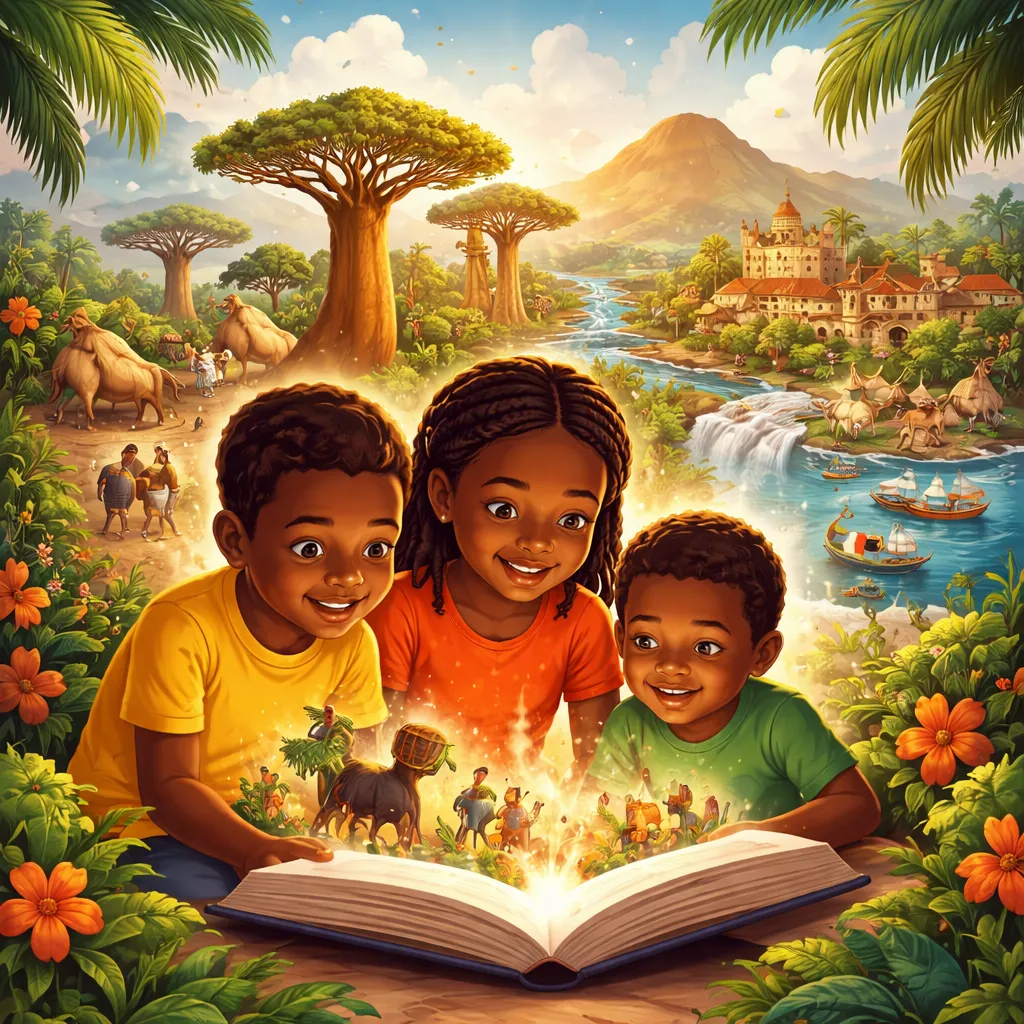

A Friendly Hello and First Impressions
Bom dia! (bom DEE-ah). This Portuguese phrase means "Good day". Obrigado! (oh-bree-GAH-doo) 每 boys say this. Obrigada! (oh-bree-GAH-dah) 每 girls say this. Both mean "Thank you". Learning reading about Angola starts with these warm words.
Angola is on the west coast of Africa. Its shape looks like a giant square diamond. The mighty Atlantic Ocean hugs its long coastline. It is the seventh-largest country in Africa. Namibia and the Democratic Republic of Congo are its neighbors.
People call it the "Land of Seven Provinces". This name comes from its main rivers. Angola has seven major rivers. They are like watery roads across the land. The Kwanza River is the most famous. The national money is named after it. Ready to explore this land of rivers and rhythm?
Deep Dive into Culture and Stories
Echoes of History
Long ago, a queen named Nzinga Mbandi ruled. She was brilliant and brave. Portuguese traders wanted her land. They came to a meeting. They gave her only a mat on the floor. A mat was for servants. Queen Nzinga did not sit on it. She signaled to her servant. The servant knelt on the floor. Queen Nzinga sat on the servant's back. She spoke as an equal to the Portuguese. She became a symbol of resistance. Her story is a key part of learning reading about Angola.
Angola was a Portuguese colony for centuries. It gained independence in 1975. A long civil war followed. The war finally ended in 2002. The country is now at peace. It is rebuilding and growing fast. Its story is one of great strength and hope.
The country has a special connection to the world. It is a top producer of coffee beans. People also call it the "Land of the Morning Coffee". Its beans are known for their quality. The rich soil and climate are perfect for it. Angolan coffee wakes up people around the world.
A Land of Contrasts and Colors
Angola's landscape is wonderfully diverse. A high plateau covers the center. It is like a giant, flat table. The land slopes down to a narrow coastal plain. The south has part of the Namib Desert. It is one of the driest places on Earth. The far north is lush rainforest.
The climate has two main seasons. The "Cacimbo" is a cool, dry season. It lasts from May to October. The rainy season brings warm, heavy rains. Rivers swell and plants grow wildly. The coast is often cooler because of a sea current. It brings fog to the beach cities.
One amazing animal is the Giant Sable Antelope. It is only found in Angola. It is very rare and beautiful. The males have long, curved, ridged horns. The horns can reach over five feet long. It is a national symbol of Angola. A beautiful tree is the Imbondeiro. It is the baobab tree. It has a huge, thick trunk. It stores water like a giant bottle. People call it the "Tree of Life".
Landmarks of Water and Stone
Visit the Kalandula Falls. They are in the north. They are one of Africa's largest waterfalls. The Lucala River plunges over a wide cliff. The water thunders down 105 meters. A fine mist fills the air. You can see a rainbow in the spray. A local story says spirits live behind the waterfall. They protect the river and the people.
Travel to the capital, Luanda. See the Fortress of S?o Miguel. Portuguese built it in 1576. It sits on a hill overlooking the bay. Its thick white walls are shaped like a star. It was for defense and a prison. It is now the Museum of the Armed Forces. It holds history inside its walls. The view of the bay is amazing.
Another special place is the Miradouro da Lua. It means "Viewpoint of the Moon". It is south of Luanda. Erosion carved the cliffs into sharp shapes. The cliffs look like a moon landscape. The colors are red, orange, and white. It feels like you are on another planet. It shows the powerful art of wind and rain.
Festivals and Dance
Angola loves Carnival. It is the biggest party of the year. It happens before Lent. Preparations take months. Groups create amazing costumes and dances. The main parade is in the capital. Dancers move to the beat of Semba music. The energy is electric and joyful.
Music and dance are central to life. The national dance is called Semba. It is fast and full of hip movement. Partners dance very close. It is the root of the Brazilian Samba. Another dance is the Kizomba. It is slower and more romantic. People dance it in clubs and at parties. The whole body moves with grace.
Food brings everyone together. Try Muamba de Galinha. It is a delicious chicken stew. The sauce is made with palm oil, garlic, and okra. It is often served with funge. Funge is a soft dough made from cassava flour. You eat it with your hands. The stew tastes rich, spicy, and comforting. It is a dish for family celebrations.
Another favorite is Calulu. It is a stew of dried fish or meat. It has tomatoes, onions, and leafy greens. People serve it with rice or funge. The flavor is tangy and savory. It tastes like the sea and the garden together. It is a traditional meal full of history.
A Culture of Rhythm and Art
Music is in Angola's soul. The beat of the drum is its heartbeat. A music style called Kuduro was born here. It is fast, electronic, and full of energy. Young people created it after the war. They used what they had. They made music on old computers. It is a sound of joy and resilience. It makes everyone want to dance.
Angola is famous for its story quilts. Artists make them in the Huila province. They sew colorful scenes onto cloth. The scenes show daily life, history, and fables. Each quilt tells a story without words. It is like a colorful, soft book. This is a beautiful form of learning reading about Angola.
They are also masters of sand art. In the south, the Mucubal people create them. They draw huge, geometric patterns in the sand. They use rakes and their hands. The drawings are for special ceremonies. The wind will erase them later. The art is temporary but very beautiful. It is a lesson in enjoying the moment.
Tips for Young Explorers
Cultural Manners Matter
Greetings are very important. Always shake hands with everyone present. A light handshake is fine. Use your right hand. Ask about a person's health and family. This shows you care. You can say "Tudo bem?" (TOO-doo beng?) meaning "Is all well?".
Use titles to show respect. Say "Senhor" (sen-YOR) for Mister. Say "Senhora" (sen-YOR-ah) for Miss or Mrs. Use first names only if invited. This is polite, especially with elders.
Gift-giving has rules. Always give and receive gifts with both hands. This shows respect and care. Do not open a gift right away. Open it later in private. It is the polite custom. If invited to a home, bring a small gift. Flowers or sweets are good choices.
A Note on Staying Safe
Angola is peaceful now, but be smart. Big cities like Luanda are busy. Keep your belongings close in crowds. Do not show expensive phones or cameras. Always travel with a trusted adult or guide. They know the safe areas.
Outside cities, roads can be rough. Travel with a reliable driver. Always wear your seatbelt. Do not travel at night in rural areas. Wildlife is amazing but wild. Always watch animals from a safe distance. Never try to feed or touch them.
A Tasty Stop
You must try Acaraj谷 on the street. It is a delicious bean cake. Vendors mash black-eyed peas. They add onions and spices. Then they deep-fry the balls in red palm oil. The outside is crispy. The inside is soft and fluffy. They often cut it open. They fill it with spicy shrimp or sauce. Try it fresh and hot. The mix of textures and spice is wonderful.
Healthy and Happy Travels
Visit a travel clinic before your trip. You may need yellow fever and other vaccines. This protects you and keeps you healthy. Carry your vaccination card with you.
Malaria is a risk in some areas. Take anti-malaria medicine if your doctor says. Always sleep under a mosquito net. Wear long sleeves at dusk. Use bug spray with DEET. These steps keep the mosquitoes away.
The sun near the equator is very strong. Wear a high SPF sunscreen every day. Wear a hat and sunglasses too. Drink only bottled or boiled water. This simple habit keeps your adventure fun.
Your Invitation to Explore
Start your journey with music. Search online for "Angolan Kuduro" music. Listen to the fast, happy beat. Try to move to the rhythm. Feel the energy of Luanda. Or, look for traditional Semba dance videos. See the amazing skill of the dancers. This is a fun start to learning reading about Angola.
Find an African market in your city. Look for Angolan coffee or hot sauce. The sauce is called Piri-Piri. It is spicy and flavorful. Try a little on your food. Imagine the flavors of Luanda. You can also draw your own story quilt. Use paper and colorful markers. Draw scenes from your favorite day. It tells a story without words.
The world is a big, beautiful library. Each country is a different book. Angola's book is full of rhythm, resilience, and color. Open it with an open heart. Turn its pages with curiosity. The story of dance, drums, and diamonds awaits you.
Angolan families share a pot of funge. Children listen to elders' stories. People dance under the stars. We all share these simple joys. We love sharing meals. We enjoy music and celebration. We value our families and friends. Learning about Angola teaches us this. Our global family sings in harmony. Your passport is your curiosity. Never stop using it.