
A Friendly Hello and First Impressions
Nomoshkar! (no-MOHSH-kar). This is a respectful "Hello" in Bengali. Dhonnobad! (DOHN-noh-bahd). This is a warm "Thank you". People say it with sincerity. Learning reading about Bangladesh starts with these musical, gentle words.
Bangladesh is in South Asia. Its shape looks like a cupped hand. The hand holds the mighty Ganges and Brahmaputra rivers. The country is on the continent of Asia. India surrounds it on three sides. The Bay of Bengal is to the south. It is a land shaped by water.
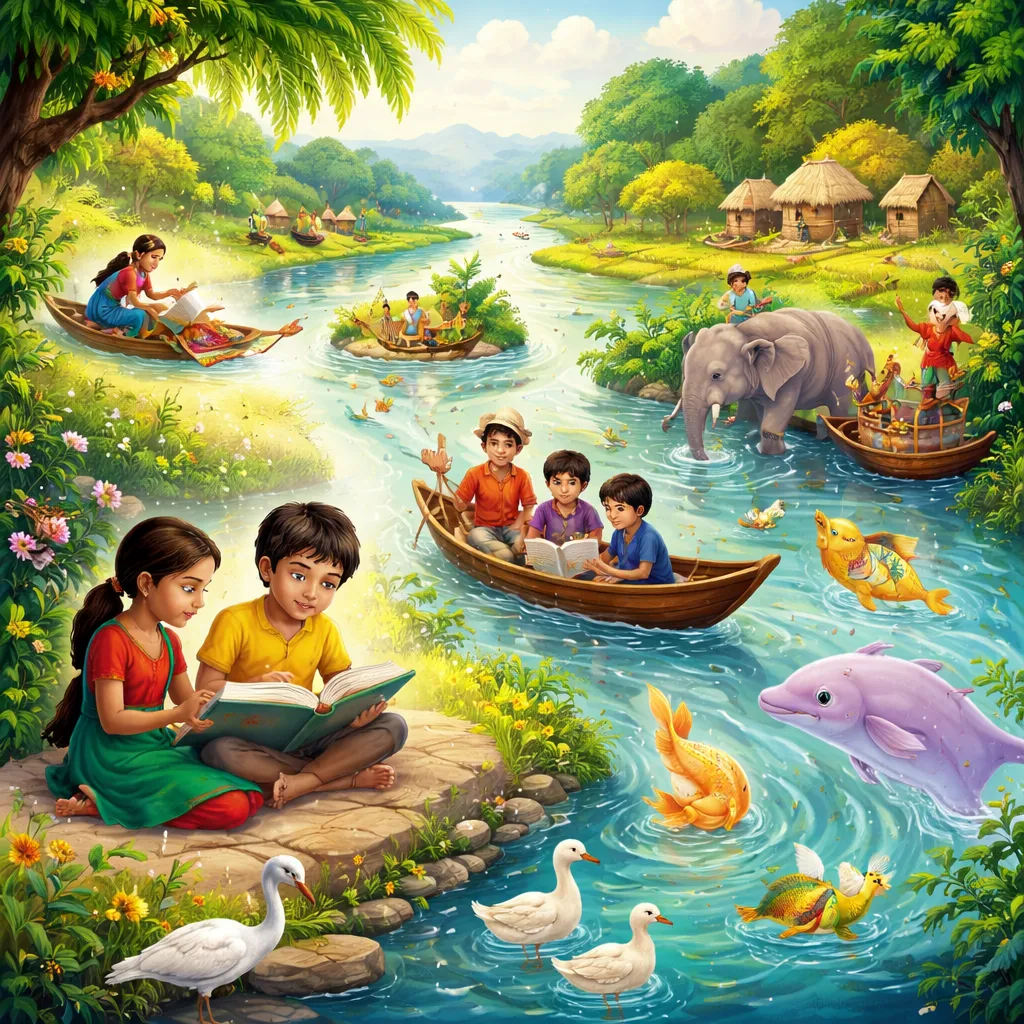
People call it the "Land of Rivers". Over 700 rivers flow through Bangladesh. They are like liquid roads. They bring life and sometimes floods. The rivers carry rich soil. This makes the land very fertile. Another name is "Sonar Bangla". This means "Golden Bengal". It speaks of its natural beauty. What stories do these rivers tell?
Deep Dive into Culture and Stories
Echoes of History
Bangladesh's history is about language and freedom. In 1952, people in Dhaka protested. They wanted Bengali to be an official language. The government said no. Police shot and killed student protestors. This day is now International Mother Language Day. The people's love for their language was very strong. This love finally led to independence.
A father of the nation is Sheikh Mujibur Rahman. People called him "Bangabandhu". This means "Friend of Bengal". He led the fight for independence. Bangladesh became a country in 1971. The war was short but very difficult. Millions of people showed great courage. His story is central to learning reading about Bangladesh.
A Gift of Peace and Hope
Bangladesh gave the world a brilliant idea. Muhammad Yunus started the Grameen Bank. He had a simple idea. Give small loans to very poor people. These people had no banks. They were mostly women. The women used the loans for tiny businesses. They sold eggs or wove baskets. They paid back the loans. This is called "microcredit". It has helped millions escape poverty. It is a powerful tool for hope.
A Land of Water and Green
Bangladesh is a river delta. It is mostly flat, low land. The Ganges and Brahmaputra rivers meet here. They form the world's largest delta. The soil is rich and black. The land is perfect for growing rice. The north has some small hills. The south has the Sundarbans. This is the world's largest mangrove forest. The coast has a long, sandy beach.
The climate is tropical monsoon. There are three main seasons. The hot summer is from March to June. The rainy monsoon is from June to October. The cool, dry winter is from October to March. Heavy rains cause floods every year. Floods can be destructive. But they also bring new soil. People build houses on raised land. They use bamboo and tin roofs. Boats are as common as bicycles.
A special animal is the Royal Bengal Tiger. It lives in the Sundarbans. It is a strong swimmer. It is the national animal. The magpie robin is the national bird. It has a sweet song. The water lily is the national flower. It floats on ponds and lakes. It is a symbol of purity. The jackfruit is the national fruit. It is huge and prickly outside. It is sweet and yellow inside.
Landmarks of Faith and Nature
Visit the Sixty Dome Mosque. Its Bengali name is "Shat Gombuj Masjid". It is in Bagerhat. It was built in the 15th century. It has 77 domes, not sixty! The name is a mistake. The mosque is made of baked brick. It has many stone pillars inside. It feels cool and peaceful. A local story says a saint built it. He used his spiritual power to move the bricks. It is a UNESCO World Heritage site.
Travel to the Sundarbans. It is a vast mangrove forest. The trees have tangled roots above the water. The roots look like stilts. Tigers, deer, and crocodiles live here. You explore by boat. The air is salty and still. The forest is a maze of water and trees. It is a world of shadows and whispers. It is a place of great wild beauty.
In the city, see the Lalbagh Fort. It is in old Dhaka. It is an incomplete Mughal fort. It was started in 1678. It has a mosque, a tomb, and a audience hall. The fort is famous for a mystery. Prince Muhammad Azam lived here. His daughter died suddenly. Some say her ghost still walks the grounds. The fort is a quiet escape from the busy city.
Festivals and Colors
The biggest celebration is Pohela Boishakh. It is the Bengali New Year. It happens in mid-April. People wake up very early. They wear new clothes. The traditional color for the day is red and white. Artists paint faces with elaborate patterns. There are big parades called "Mongol Shobhajatra". These are processions for peace.
Families eat special foods. They eat "panta bhat". This is fermented rice. They eat it with fried fish. The day is full of music and dance. The national anthem by Tagore is sung. The festival welcomes the new year with hope. It is a day of joy and fresh starts.
Another important holiday is Eid-ul-Fitr. It marks the end of Ramadan. Everyone wears beautiful new clothes. They go to the mosque for prayer. Then they visit family and friends. Children get "salami", which is gift money. Special sweets are made at home. The smell of "sheer khurma" fills the air. It is a vermicelli pudding. The day is about gratitude and community.
Food and Flavors
The national dish is Hilsa fish curry. Hilsa is a silvery fish. It is very popular and tasty. The curry is called "Ilish Macher Jhol". It has mustard oil and turmeric. The fish is cooked with spices. It is served with plain rice. Families eat it with their hands. The fish is bony but delicious. It tastes like the rich, flowing river.
You must try Biryani. Specifically, "Kacchi Biryani". It is a festive rice dish. Layers of rice and meat are cooked together. The meat is often mutton or chicken. The dish is flavored with saffron and rose water. It is cooked in a sealed pot. The flavors mix perfectly. It is served at weddings and parties. It tastes like a celebration in every bite.
A Culture of Poetry and Resilience
Bangladesh has a rich literary tradition. The national poet is Kazi Nazrul Islam. He wrote poems of rebellion and love. He is called the "Rebel Poet". Another giant is Rabindranath Tagore. He wrote the national anthem of Bangladesh. He also wrote India's national anthem. His poems and songs are beloved. This love for words is key for learning reading about Bangladesh.
The country is a world leader in green garments. The garment industry is huge. But it is also becoming greener. Some factories use less water. They recycle materials. They use solar power. This makes clothes in a better way. It is an important step for the planet. The people are creative and adaptable.
Tips for Young Explorers
Cultural Manners Matter
Greetings are often with a nod and smile. A handshake is common in cities. But wait for the other person to offer their hand. Say "Nomoshkar" with a slight bow. This shows respect. Use titles like "sir" or "madam" for elders.
Use your right hand for everything. Give gifts, eat food, and shake hands with your right hand. The left hand is considered unclean. This rule is very important. Eating with your hands is common. Wash your hands before and after.
Hospitality is generous. Guests are treated with great honor. Always accept tea or a drink. It is polite to try a little of all the food offered. Leave a little food on your plate. This shows you are full. A clean plate means you want more.
A Note on Staying Safe
Bangladesh is generally safe for visitors. But be smart in big cities. Traffic in Dhaka is very heavy and chaotic. Always use pedestrian bridges or crosswalks. Be careful with rickshaws and cars. Keep your belongings close in crowds.
The monsoon season brings heavy rains and floods. Avoid travel to flooded areas. Listen to local weather warnings. Cyclones can hit the coast. Follow the advice of local authorities. Always have a plan.
In rural areas, drink only bottled or boiled water. Be careful with street food. Eat only at busy stalls. The food should be cooked fresh in front of you. This reduces the chance of sickness.
A Tasty Stop
Find a street vendor selling "Fuchka". It is also called "Panipuri". It is a popular snack. The vendor gives you a hollow, crispy puri. You make a hole in the top. The vendor fills it with spicy tamarind water. Then you eat the whole thing in one bite. It is crunchy, tangy, and spicy. It is an explosion of flavor. Eat it right away. It is messy and fun.
Healthy and Happy Travels
Drink only bottled or boiled water. This is the most important rule. It keeps your stomach happy. Avoid ice in drinks. Brush your teeth with bottled water. This simple habit makes your trip smoother.
The sun can be very strong. Wear a hat and use sunscreen. The humidity is high. Wear light, loose, cotton clothing. This helps you stay cool. Drink lots of water to avoid dehydration.
Use insect repellent. Mosquitoes can carry diseases like dengue. Wear long sleeves in the evening. Sleep under a mosquito net if needed. This keeps the bites away.
Your Invitation to Explore
Start your journey with sound. Listen to the song "Amar Shonar Bangla". It is the national anthem. It was written by Rabindranath Tagore. Feel the love for the land. Or, watch a documentary about the Sundarbans. See the Royal Bengal Tiger in its home. This is a wonderful way of learning reading about Bangladesh.
Visit a local Bangladeshi restaurant. Look for a "bhoj" or buffet. Try the different vegetable dishes and fish curries. Eat with your hands (right hand only!). Feel the textures and spices. Imagine you are in a home in Dhaka.
The world is a big, wonderful library. Each country is a different book. Bangladesh's book is written on river clay and monsoon clouds. Open it with care. Read about its poets, paddies, and perseverance. Your curiosity is the key.
Families in Dhaka share a plate of biryani. Children fly kites on Pohela Boishakh. Friends drink sweet tea and talk. We all know these scenes. We love sharing meals. We enjoy festive days. We cherish time with family. Learning about Bangladesh shows us this beautiful connection. Our global family shares the same simple joys. Keep exploring, one page, one country, at a time. Your adventure has just begun.