
Introduction to Namibia
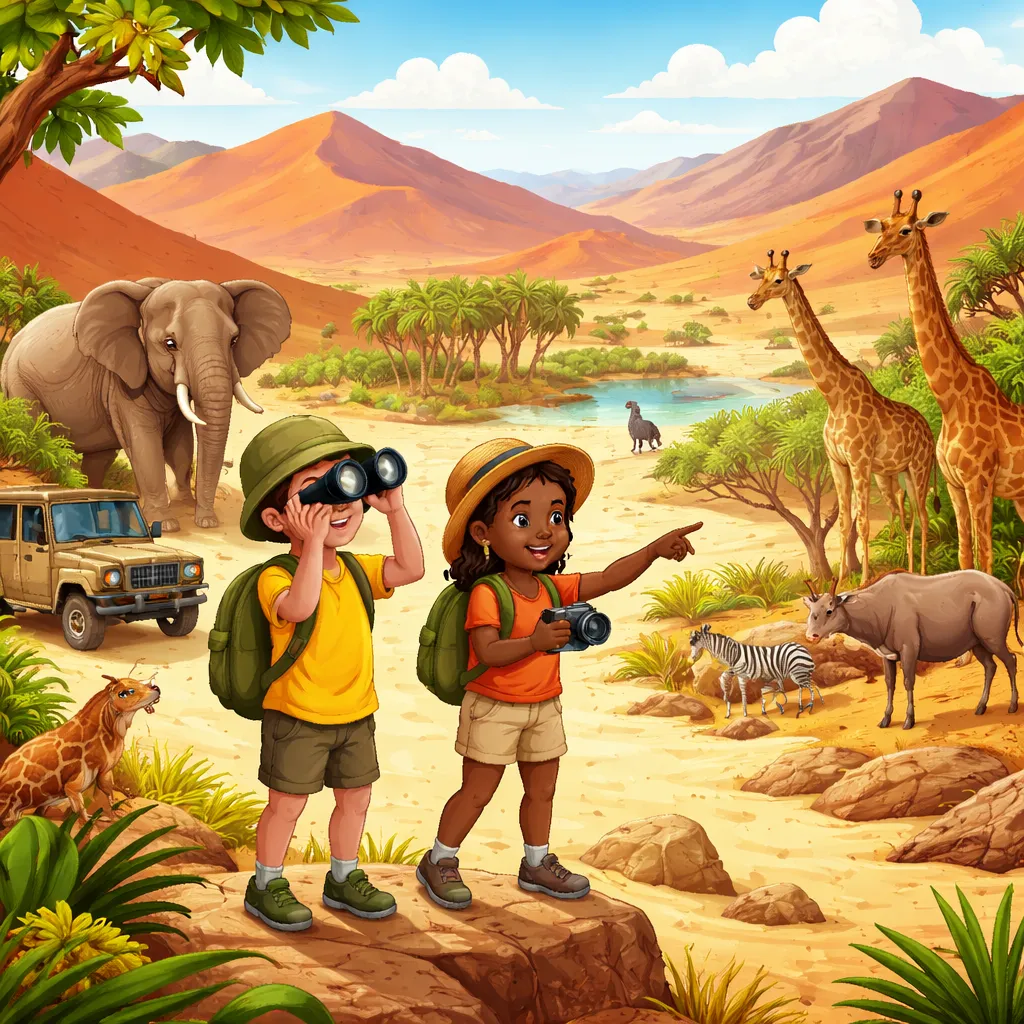
Language learning transports us to a land of towering red dunes and vast open plains. Today we explore a southern African nation with some of the most dramatic landscapes on Earth. This country holds the oldest desert in the world. Children will discover animals that have adapted to survive in extreme conditions. They will learn about conservation efforts that protect rare wildlife. Exploring Namibia builds reading skills while revealing a land of natural wonders. Every fact uncovers a new marvel. Every word invites young readers to imagine this rugged and beautiful country.
Where Is Namibia?
Namibia lies in southern Africa along the Atlantic Ocean. It shares borders with Angola and Zambia to the north, Botswana to the east, and South Africa to the south. The Atlantic Ocean forms its western boundary. The capital city is Windhoek. Windhoek sits in the center of the country. Namibia covers over three hundred thousand square miles. It ranks as one of the driest countries in Africa. The Namib Desert stretches along the entire coast. The Kalahari Desert covers part of the east. Finding Namibia on a map shows a large country on the southwest coast of Africa. Its location gives it a unique blend of desert and coastal environments.
Interesting Facts About Namibia
Namibia offers countless remarkable facts for young learners. It is home to the oldest desert in the world. The Namib Desert has existed for at least fifty-five million years. Its red sand dunes rank among the highest on Earth. Some dunes rise over one thousand feet. Another interesting fact involves wildlife. Namibia has the largest population of free-roaming cheetahs in the world. The country also protects black rhinos, elephants, and lions in its national parks.
Namibia also has a unique coastal desert. The Skeleton Coast gets its name from the whale bones and shipwrecks that once littered its shores. Fog rolls in from the ocean, giving moisture to desert-adapted plants and animals. Another fun fact involves a remarkable plant. The Welwitschia plant lives only in Namibia and southern Angola. Some specimens are over two thousand years old. This plant has only two leaves that grow continuously throughout its life.
The country also has a unique geological feature. Fish River Canyon ranks as the second largest canyon in the world. It stretches over one hundred miles long and drops nearly eighteen hundred feet. Namibia also has a fascinating conservation model. Many communities manage their own wildlife conservancies. This approach has helped restore animal populations. These facts show children a country of ancient landscapes, unique wildlife, and innovative conservation.
Key Vocabulary About Namibia
Let us build vocabulary for this desert nation. These words help children describe what they learn.
Dune: a hill of sand formed by wind.
Conservancy: an area managed to protect wildlife and natural resources.
Cheetah: a large, fast-running wild cat with spotted fur.
Skeleton: the framework of bones supporting a body.
Fog: thick cloud of tiny water droplets near the ground.
Canyon: a deep gorge carved by a river.
Endemic: native to a particular place and found nowhere else. Introduce these words with pictures and stories. Show the red sand dunes of the Namib Desert. Show a cheetah running. Let children say each word aloud. These vocabulary words give children the language to explore Namibia's desert wildlife and landscapes.
Simple Sentences for Reading Practice
Short sentences help new readers build confidence. Use these sentences about Namibia for practice.
Namibia is a country in southern Africa.
The Atlantic Ocean borders Namibia to the west.
The capital city is Windhoek.
The Namib Desert is the oldest desert in the world.
Red sand dunes rise high above the desert floor.
Cheetahs roam freely in Namibia.
The Skeleton Coast has fog and shipwrecks. Read each sentence together. Let children point to the words. Encourage them to repeat after you. Use pictures to show each fact. These simple sentences prepare young readers for longer passages.
Short Reading Passage About Namibia
Here is a short passage for children to read together.
“Namibia sits on the southwest coast of Africa. The Atlantic Ocean meets its shores. The Namib Desert stretches along the coast. This desert has existed for over fifty million years. It holds some of the tallest sand dunes in the world. The dunes glow red in the morning light. Animals have adapted to this dry land. Elephants walk long distances to find water. Lions survive without drinking from rivers. Cheetahs race across the plains. Namibia protects more cheetahs than any other country. Along the coast, the Skeleton Coast earns its name from fog and shipwrecks. Thick fog rolls in from the ocean. It gives moisture to desert plants. The Welwitschia plant grows only here. Some have lived for over two thousand years. In the south, Fish River Canyon cuts deep into the earth. Hikers walk along its rim. Namibia shows how life can thrive in harsh places.”
Read this passage slowly together. Pause to talk about each idea. Ask children to find vocabulary words in the text. This activity builds reading fluency and deepens understanding.
Fun Questions About Namibia
Questions make reading interactive and engaging. Use these to start conversations with young learners.
What ocean borders Namibia to the west?
What is the capital city of Namibia?
How old is the Namib Desert?
What large cat does Namibia protect more than any other country?
Why is the Skeleton Coast called that?
What plant lives for over two thousand years in Namibia? Let children answer in complete sentences. Encourage them to use new vocabulary. Ask them to imagine climbing a red sand dune. What would they see from the top? Creative questions make the topic personal and exciting.
Tips for Learning English with This Topic
Use Namibia to create rich English learning experiences. Start with a map activity. Let children find Namibia on the southwest coast of Africa. Point out the Atlantic Ocean and the neighboring countries. Discuss how the desert reaches the ocean.
Next, introduce the vocabulary through a hands-on activity. Create a desert scene using sand in a shallow tray. Form dunes with your hands. Add toy animals like cheetahs and elephants. Talk about how these animals survive in dry conditions. For the Skeleton Coast, add toy boats or driftwood to represent shipwrecks.
Read the passage aloud with awe and wonder. Let your voice reflect the ancient age of the desert and the beauty of the red dunes. After reading, let children draw a scene from Namibia. One child might draw red sand dunes under a blue sky. Another might draw a cheetah running across the plains. Let them label their drawings with vocabulary words. Add red for the dunes and blue for the ocean.
Incorporate a science and conservation connection. Talk about how animals adapt to dry environments. Discuss why Namibia's conservation model works. Explain that communities working together help protect wildlife. This shows children that language learning reading connects to science and caring for nature.
Use music and movement to enhance the experience. Listen to African music with drums and rhythms. Let children move like cheetahs running or elephants walking. Pretend to climb a sand dune and slide down. Physical activity reinforces learning in joyful ways.
Encourage children to share their knowledge. Let them tell a family member about the oldest desert in the world. They can explain how cheetahs live in Namibia. Teaching others builds confidence and deepens understanding.
Connect Namibia to your child's world. Ask, “What deserts or sandy places have we visited?” Compare them to the Namib Desert. Ask about fast animals you have seen. Compare them to cheetahs. These connections help children see that language learning reading is about understanding different landscapes and wildlife. By exploring Namibia together, you give children a rich experience. They learn new words, discover a land of ancient deserts, and grow their love for reading. This southern African nation becomes a meaningful part of their learning journey.