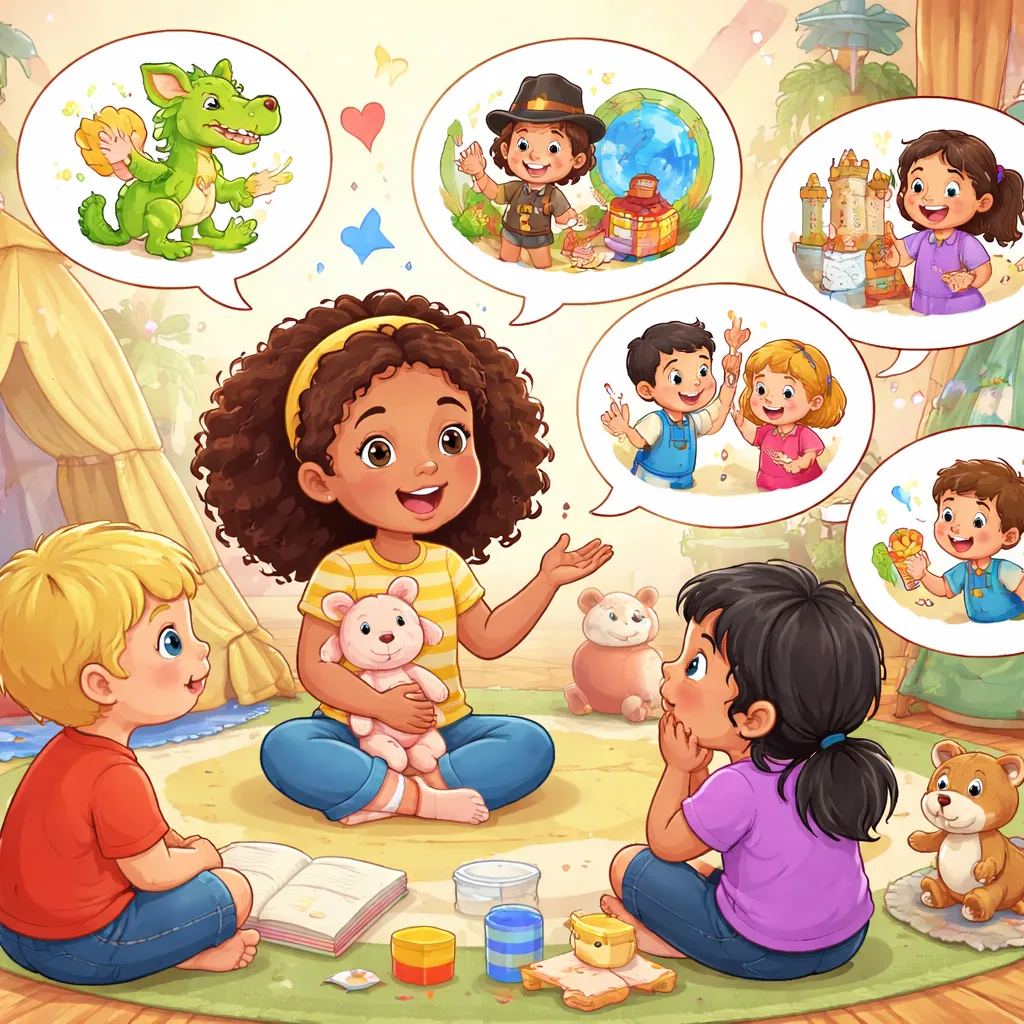

Children love to share what someone said. "Mommy said I can have a cookie!" "Daddy asked if I was hungry." "My friend told me to come play." These are examples of direct and indirect speech. Direct speech repeats exact words. Indirect speech reports what someone said without using their exact words. Today we explore the 70 most common direct and indirect speech patterns for 6-year-old children and how these skills help them become better storytellers.
Reporting speech is a big part of daily conversation. Children need to tell parents what teachers said. They need to share what friends told them. They need to report conversations accurately. Learning to use direct and indirect speech helps them do this clearly.
What Are Direct and Indirect Speech? Let us begin with a clear definition we can share with our children. Direct speech uses the exact words someone said. We put quotation marks around the words. Indirect speech reports what someone said without using their exact words. We do not use quotation marks.
Think of direct speech as playing a recording of someone's words. You hear exactly what they said. "I am hungry," said Sarah. Those are Sarah's exact words. The quotation marks show where her words begin and end.
Think of indirect speech as telling someone what was said in your own words. Sarah said that she was hungry. You are reporting the message, not the exact words. The word that often introduces indirect speech.
For young children, we can explain it simply. Direct speech is when you say someone's words exactly. You use quotation marks to show their words. Indirect speech is when you tell what someone said without using their exact words. The 70 most common direct and indirect speech for 6-year-old learners are the patterns children use every day to share conversations.
Meaning and Explanation for Young Learners How do we explain direct and indirect speech to a six-year-old in ways they understand? We use examples from their world and show how both ways work.
Tell your child that sometimes we want to tell someone exactly what another person said. We use direct speech for that. We put their words in quotation marks. "I want juice," said Emma. Those are Emma's exact words.
Here are some direct speech examples children use. "Mommy said, 'Time for bed.'" The words in quotes are exactly what Mommy said. "Daddy asked, 'Are you ready?'" The question is exactly what Daddy asked. "My friend yelled, 'Come here!'" Those are the exact words.
Indirect speech reports the message without the exact words. "Mommy said it was time for bed." Not the exact words, but the message. "Daddy asked if I was ready." The question is reported. "My friend told me to come there." The message is shared.
Indirect speech often uses words like that, if, whether, and changes words like here to there, now to then. "I am hungry now" becomes "She said she was hungry then." Words shift.
These explanations help children understand the 70 most common direct and indirect speech for 6-year-old speakers. They see that both ways are useful for different situations.
Categories of Direct and Indirect Speech Direct and indirect speech follow patterns. Understanding these categories helps children use them correctly.
Direct speech statements use quotation marks. "I like pizza," said Tom. The reporting clause can come before, after, or in the middle. Tom said, "I like pizza." "I like pizza," Tom said. "I like," Tom said, "pizza." All are correct.
Direct speech questions keep the question form. "Are you coming?" asked Mom. The question mark stays inside the quotation marks. "Where is my shoe?" cried Emma. Questions keep their question form.
Direct speech exclamations keep the excitement. "Watch out!" yelled Dad. The exclamation mark stays inside. "I won!" shouted Ben. Excitement is preserved.
Indirect speech statements use that. Tom said that he liked pizza. The word that is optional. Tom said he liked pizza. The verb tense often shifts back. Like becomes liked.
Indirect speech questions use if or whether for yes/no questions. Mom asked if I was coming. The question becomes a statement. The question mark disappears. Word order changes from "Are you coming?" to "if I was coming."
Indirect speech wh-questions keep the question word. "Where is my shoe?" becomes She asked where her shoe was. The question word where stays. The word order changes to statement order.
These categories make up the 70 most common direct and indirect speech for 6-year-old learners. Each helps children report different kinds of speech.
Daily Life Examples Direct and indirect speech appear constantly in family conversations. Here are examples from a typical day with a six-year-old.
Morning time brings many speech reports. "Mommy said, 'Time to wake up.'" Direct speech. "Daddy asked if I was hungry." Indirect speech. "Grandma called and said she would visit." Indirect. "My teacher said, 'Bring your library book.'" Direct. "My friend told me to wait for her." Indirect.
During play, speech reports multiply. "You said, 'Let's play house.'" Direct. "She asked if she could be the mommy." Indirect. "He told me to stop." Indirect. "I said, 'That's not fair!'" Direct. "They asked why I was sad." Indirect.
Mealtime produces many speech reports. "Daddy said, 'Eat your vegetables.'" Direct. "Mom asked if I wanted more milk." Indirect. "Grandma said that dinner was ready." Indirect. "My brother yelled, 'Pass the salt!'" Direct. "The teacher said we should eat healthy." Indirect.
Bedtime brings its own speech reports. "You promised, 'One more story.'" Direct. "Mom said it was time for bed." Indirect. "Daddy asked if I brushed my teeth." Indirect. "My bear said, 'Good night.'" Direct. "Grandma told me to sleep tight." Indirect.
Throughout the day, children use direct and indirect speech without thinking about it. The 70 most common direct and indirect speech for 6-year-old children appear again and again in these everyday moments.
Present Tense in Direct and Indirect Speech Present tense works differently in direct and indirect speech. Children need to understand how tenses shift.
In direct speech, the tense stays as originally spoken. "I am happy," she says. Present tense am stays. "I like cookies," he says. Present tense like stays. Direct speech preserves the original words exactly.
In indirect speech, when the reporting verb is present tense, the tense often stays the same. She says that she is happy. He says that he likes cookies. The present tense can stay present.
But when the reporting verb is past tense, the tense usually shifts back. She said that she was happy. He said that he liked cookies. Present becomes past. This is called backshift.
Some things stay the same even in indirect speech. Universal truths often keep present tense. The teacher said that the sun is hot. Still present because always true. She said that water is wet. Still present.
Children learn these patterns through exposure. "She said she was tired" sounds right. Their ears tell them.
These present tense patterns appear in the 70 most common direct and indirect speech for 6-year-old speakers. They help children report accurately.
Past Tense in Direct and Indirect Speech Past tense reporting is very common. Children often tell what someone said earlier.
In direct speech with past reporting verb, the tense in quotes stays as originally spoken. She said, "I am tired." The am is what she said then. He said, "I like pizza." The like is what he said.
In indirect speech, when the reporting verb is past, the tense shifts back. She said that she was tired. Am becomes was. He said that he liked pizza. Like becomes liked.
Past tense in direct speech becomes past perfect in indirect sometimes. She said, "I ate lunch." Direct. She said that she had eaten lunch. Indirect. Ate becomes had eaten. This is more advanced but appears.
Modal verbs also shift in indirect speech. "I can swim," he said. Direct. He said that he could swim. Indirect. Can becomes could. "I will come," she said. She said that she would come. Will becomes would.
Children gradually learn these shifts. At age six, they may still say "She said she is tired" instead of "she was tired." That is normal development. Gentle exposure helps them learn.
These past tense patterns form part of the 70 most common direct and indirect speech for 6-year-old learners. They help children report past conversations.
Future Tense in Direct and Indirect Speech Future tense in indirect speech also shifts. Children need to understand how will changes.
In direct speech with future, the words stay as spoken. He said, "I will come tomorrow." Direct. The will and tomorrow are exact.
In indirect speech, will often becomes would. He said that he would come tomorrow. Will becomes would. Tomorrow can stay or become the next day depending on context.
Time words often shift in indirect speech. Now becomes then. Today becomes that day. Tomorrow becomes the next day. Yesterday becomes the day before. These shifts make the report accurate from the new time perspective.
Place words can shift too. Here becomes there. This becomes that. These become those. Words shift to match the new situation.
Children learn these shifts gradually. "She said she would come" sounds right. "She said she will come" is also common in casual speech. Both are acceptable at this age.
These future tense patterns appear in the 70 most common direct and indirect speech for 6-year-old speakers. They help children report future plans.
Questions in Direct and Indirect Speech Questions have special patterns in direct and indirect speech. Children ask and report questions constantly.
Direct speech questions keep question form and punctuation. "Are you coming?" she asked. The question mark stays inside quotes. "Where is my shoe?" he cried. The question word and order stay.
Indirect questions become statements. They do not use question marks. She asked if I was coming. The word if introduces the question. The word order changes from "are you" to "I was."
Wh-questions keep the question word. "Where is my shoe?" becomes He asked where his shoe was. Where stays. The word order changes to statement order. Is his shoe becomes his shoe was.
Yes/no questions use if or whether. "Are you hungry?" becomes She asked if I was hungry. "Do you like pizza?" becomes He asked whether I liked pizza. Either if or whether works.
Children use indirect questions naturally. "I asked if I could have a cookie." "She asked where I was going." "He wanted to know why I was sad." Each reports a question indirectly.
These question patterns appear in the 70 most common direct and indirect speech for 6-year-old learners. They help children report what others asked.
Other Uses of Direct and Indirect Speech Direct and indirect speech serve many purposes beyond simple reporting. Children use them in varied ways.
Storytelling uses both forms. "The bear said, 'Who ate my porridge?'" Direct brings stories to life. "Goldilocks said she was sorry." Indirect moves the story along. Mixing both creates good stories.
Reporting rules and instructions. "The teacher said we must be quiet." Indirect reports rule. "Mom said, 'Clean your room.'" Direct gives exact instruction. Children share rules with each other.
Sharing secrets and gossip. "She told me that she has a new puppy." Indirect shares news. "He said, 'I don't like broccoli.'" Direct shares opinion. Children love sharing what others said.
Reporting promises and threats. "You promised you would play with me." Indirect reminds of promise. "Daddy said, 'If you're good, we'll get ice cream.'" Direct quotes the promise. These have real-world consequences.
Retelling conversations. "First she said hi, then I said hi, then she asked if I wanted to play." Children reconstruct whole conversations using indirect speech.
These varied uses appear throughout the 70 most common direct and indirect speech for 6-year-old children. Each helps children share information.
Learning Tips for Parents Supporting your child's use of direct and indirect speech happens naturally through conversation. Here are gentle ways to encourage this growth.
Model both forms in your own speech. Use direct speech sometimes. "Daddy said, 'I'll be home soon.'" Use indirect other times. "Grandma said that she misses you." Your child hears both patterns naturally.
Notice speech reports during read-aloud time. When you encounter direct speech in a book, point out the quotation marks. "Look, these little marks show that the character is speaking." When you see indirect speech, notice the word that.
Ask questions that invite speech reports. "What did your teacher say about the field trip?" Invites indirect speech. "What exactly did she say?" Invites direct speech. Both are useful.
Play the reporter game. Have your child deliver messages. "Tell Daddy that dinner is ready." That's indirect. Then have them deliver exact words. "Tell Daddy, 'Dinner is ready!'" That's direct. Practice both.
Correct gently by modeling. If your child says "She asked me am I coming," you can respond with "She asked if you were coming? What did you say?" This models the correct form naturally.
These tips support mastery of the 70 most common direct and indirect speech for 6-year-old children through natural, positive interaction.
Printable Flashcards for Practice Flashcards can help children practice direct and indirect speech. Here are ideas for making your own set.
Create direct speech cards with quotes. "I am hungry." "I like pizza." "Are you coming?" "Where is my shoe?" "Watch out!" Include quotation marks on the cards.
Create reporting verb cards. said, asked, shouted, whispered, cried, told, promised, wondered.
Create indirect speech cards that match. She said that she was hungry. He said that he liked pizza. She asked if I was coming. He asked where his shoe was. She shouted to watch out.
How to play with the cards. Lay out direct speech cards. Ask your child to find the matching indirect speech card. Match "I am hungry" with "She said that she was hungry." Discuss the changes.
Try the conversion game. Take a direct speech card and practice turning it into indirect speech aloud. "I am hungry" becomes "He said that he was hungry." "Are you coming?" becomes "She asked if I was coming."
Create sentence building with reporting verbs. Use "said" with indirect speech. "Mom said that dinner was ready." Use "asked" with questions. "Dad asked if I was tired." Practice different reporting verbs.
These flashcards make the 70 most common direct and indirect speech for 6-year-old learners tangible and fun. Children see how speech changes when reported.
Learning Activities and Games Games make learning about direct and indirect speech playful and memorable. Here are some activities to enjoy together.
The Telephone Game practices accurate reporting. Whisper a message to your child. Have them whisper it to someone else. Compare the final message to the original. This shows how speech can change when reported.
The Reporter Game practices both forms. One person plays a character who says something. "I love ice cream!" The other person reports to someone else. "She said that she loves ice cream." Switch roles and practice.
The Quotation Mark Hunt finds direct speech in books. Look through favorite books and find all the quotation marks. Count how many you find. Talk about who said what. This builds awareness of direct speech in print.
The What Did They Say Game uses puppets or stuffed animals. Have two puppets talk to each other. Then have your child report what one puppet said to the other. "Bear said that he wanted honey." Practice indirect speech.
The News Reporter Game pretends to report news. One person acts as a witness to an event. They tell what happened using direct speech. "The king said, 'I declare a holiday!'" The reporter then reports indirectly. "The king declared that it was a holiday."
The Memory Game recalls what people said. After a family conversation, take turns reporting what someone said. "Grandma said that she would bring cookies." "Daddy asked if we wanted to go to the park." See how many you can remember.
These games turn learning the 70 most common direct and indirect speech for 6-year-old children into active family fun. No pressure, just playful language exploration.
Direct and indirect speech are essential tools for sharing conversations. They let children report what teachers said, what friends told them, and what parents promised. Direct speech brings drama and exactness. "She said, 'I love you'" carries more emotional weight than reporting indirectly. Indirect speech is efficient and smooth. "He said he would come" flows naturally in conversation. Both have their place. Children learn to use both as they develop as communicators. The next time your child reports a conversation, notice whether they use direct or indirect speech. Both show sophisticated language skills. They are learning to be reporters of the human interactions around them. This skill will serve them well in building relationships, sharing experiences, and understanding the social world.