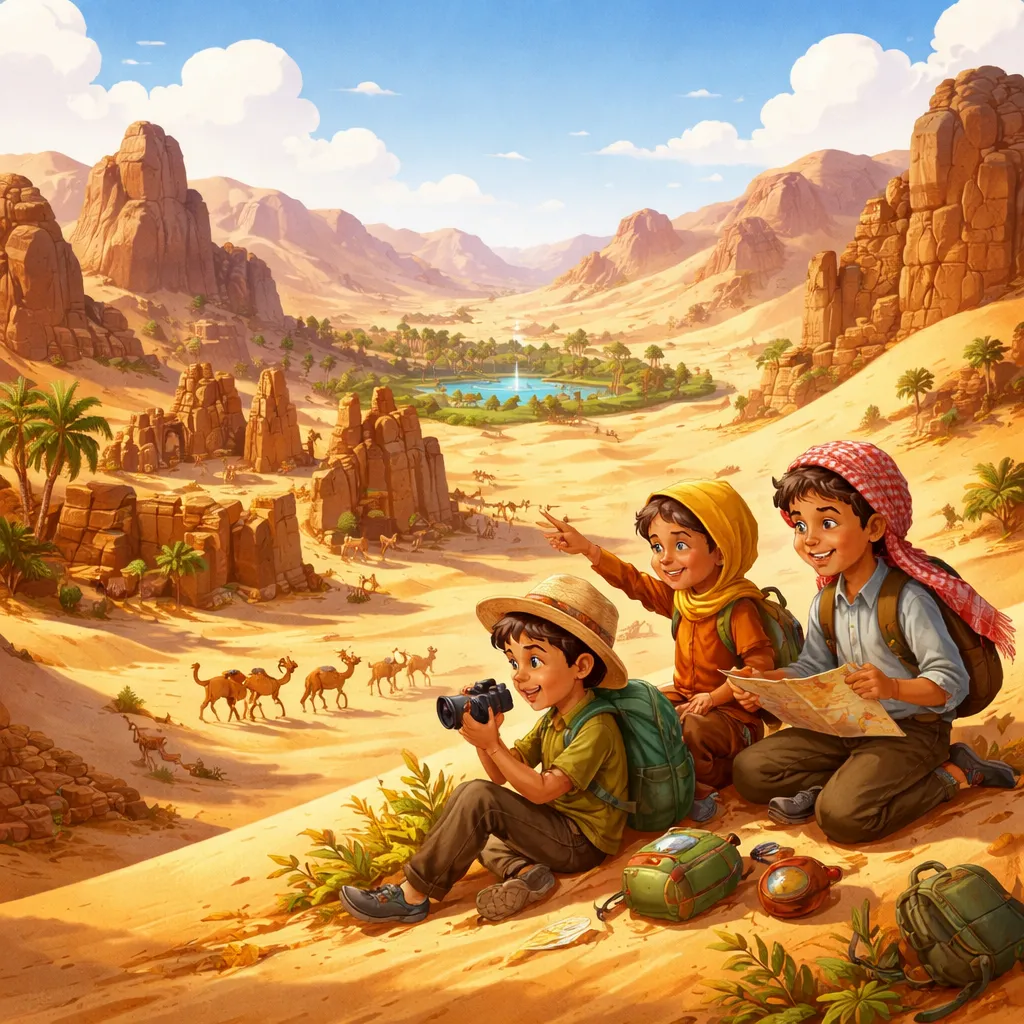

Introduction to Libya
Language learning opens doors to distant lands. Today we explore a North African country with ancient roots. This nation holds stories from thousands of years ago. It sits where vast deserts meet the blue Mediterranean Sea. Children will discover a land of contrasts. They will learn about old cities and endless sand dunes. This journey builds reading skills while sparking curiosity. Every new fact becomes a stepping stone. Every word helps young learners see the world differently. Let us begin this adventure together.
Where Is Libya?
Libya lies in North Africa along the Mediterranean coast. It shares borders with Egypt, Sudan, Chad, Niger, Algeria, and Tunisia. The country stretches from the sea deep into the Sahara Desert. Tripoli serves as the capital city. Tripoli sits on the coast with white buildings facing the water. The country has a long coastline. That coastline offers beautiful views of the sea. Most people live near the coast. The desert covers much of the southern part. Finding Libya on a map shows its place between continents. It connects Africa to the Mediterranean world. Understanding location helps young readers picture the landscape. This makes the reading experience more vivid.
Interesting Facts About Libya
Libya holds many surprises for young learners. The Sahara Desert covers over ninety percent of the country. That makes it one of the driest places on Earth. Yet ancient people thrived here long ago. The city of Leptis Magna stands as one of the best-preserved Roman cities. You can still see its columns and arches today. Another fact involves the desert itself. Massive sand dunes rise like golden mountains. Some dunes reach over five hundred feet high. Libya also has unique wildlife. Fennec foxes live in the desert. They have huge ears that help them stay cool. Another interesting fact involves water. Beneath the desert lies a vast underground lake. Engineers built a huge river project to bring water to cities. These facts show how people adapt to challenging environments. They give children a sense of wonder about the natural world.
Key Vocabulary About Libya
Let us introduce important words for this topic. Each word helps describe Libya’s land and history.
Desert: a dry area with little rain and few plants.
Mediterranean: the sea connected to the Atlantic Ocean between Europe and Africa.
Oasis: a place in the desert with water and plants.
Ancient: very old, from a time long ago.
Dune: a hill of sand formed by wind.
Coast: the land next to the sea.
Ruins: what remains of old buildings or cities. Use these words in everyday conversation. Show pictures of each item. Let children say the words aloud. Connecting words to images builds strong memory. These vocabulary terms give children tools to talk about what they read.
Simple Sentences for Reading Practice
Short sentences help new readers gain confidence. Use these sentences about Libya for practice.
Libya is a country in North Africa.
The capital city is Tripoli.
The Sahara Desert covers most of Libya.
Sand dunes rise high in the desert.
The Mediterranean Sea touches Libya’s coast.
Ancient Roman ruins stand in Libya.
People speak Arabic in Libya. Read each sentence clearly. Let children point to the words. Encourage them to repeat after you. Use a map to show where each fact fits. These simple sentences build a foundation. They prepare children for longer reading passages.
Short Reading Passage About Libya
Here is a short passage for children to read together.
“Libya is a country in North Africa. The Mediterranean Sea lies to its north. Most people live in cities near the coast. The capital, Tripoli, overlooks the blue water. If you travel south, you enter the Sahara Desert. This desert covers most of Libya. You will see huge sand dunes shaped by the wind. Hidden in the desert are oases. These green spots have water and date palms. Libya also holds ancient secrets. The city of Leptis Magna contains Roman ruins. You can walk among old columns and arches. People have lived in this land for thousands of years. They learned to survive in a hot, dry place. Today, Libyans speak Arabic and share a rich culture.”
Read this passage together slowly. Pause to talk about each idea. Ask children to find vocabulary words in the text. This activity builds reading fluency and comprehension.
Fun Questions About Libya
Questions turn reading into a conversation. Use these to engage young learners.
What sea lies to the north of Libya?
What covers most of the country?
What is the capital city of Libya?
What is a green spot in the desert called?
Which ancient civilization left ruins in Libya?
How do fennec foxes stay cool in the heat? Let children answer in their own words. Encourage them to use new vocabulary. Ask them to imagine visiting the desert. What would they bring? What would they want to see? Creative questions make the topic personal. They help children connect with the material.
Tips for Learning English with This Topic
Use Libya as a theme to make English learning engaging. Start with a map activity. Let children find Libya and its neighbors. Point out the Mediterranean Sea and the Sahara Desert. Visual tools create strong first impressions. Next, introduce the vocabulary through a matching game. Place pictures of dunes, oases, and ruins on one side. Place word cards on the other. Let children match them. This builds word recognition in a playful way.
Reading the passage aloud together builds confidence. Take turns reading sentences. Let children choose their favorite fact. Then encourage them to draw it. A child might draw a fennec fox with big ears. Another might draw Roman columns. Art reinforces learning in a creative way. After drawing, ask children to label their pictures with vocabulary words. This combines writing with art.
Incorporate simple research activities. Ask children to find one more fact about Libya. Help them look in books or safe websites. Share what you find together. This shows that learning continues beyond the page. Children learn to ask questions and seek answers.
Use sensory experiences when possible. Play sounds of wind or waves while reading. If you have sand, let children feel it as you talk about dunes. Connecting senses to words deepens understanding. You can also act out animal movements. Pretend to be a fennec fox cooling its ears. Movement makes learning active and memorable.
Encourage children to share their knowledge. Let them tell a family member one new fact about Libya. Teaching someone else builds mastery. It also gives children a sense of pride in their learning. They realize they have become experts on a topic.
Finally, connect Libya to their world. Ask, “What is the climate like where we live?” Compare it to the desert. Ask about ancient places near your home. Every place has history. Making these connections helps children see that language learning reading is not just about faraway places. It is about understanding the world and their own place in it. By exploring Libya together, you give children a rich experience. They gain new words, new knowledge, and a love for discovery that will serve them well.