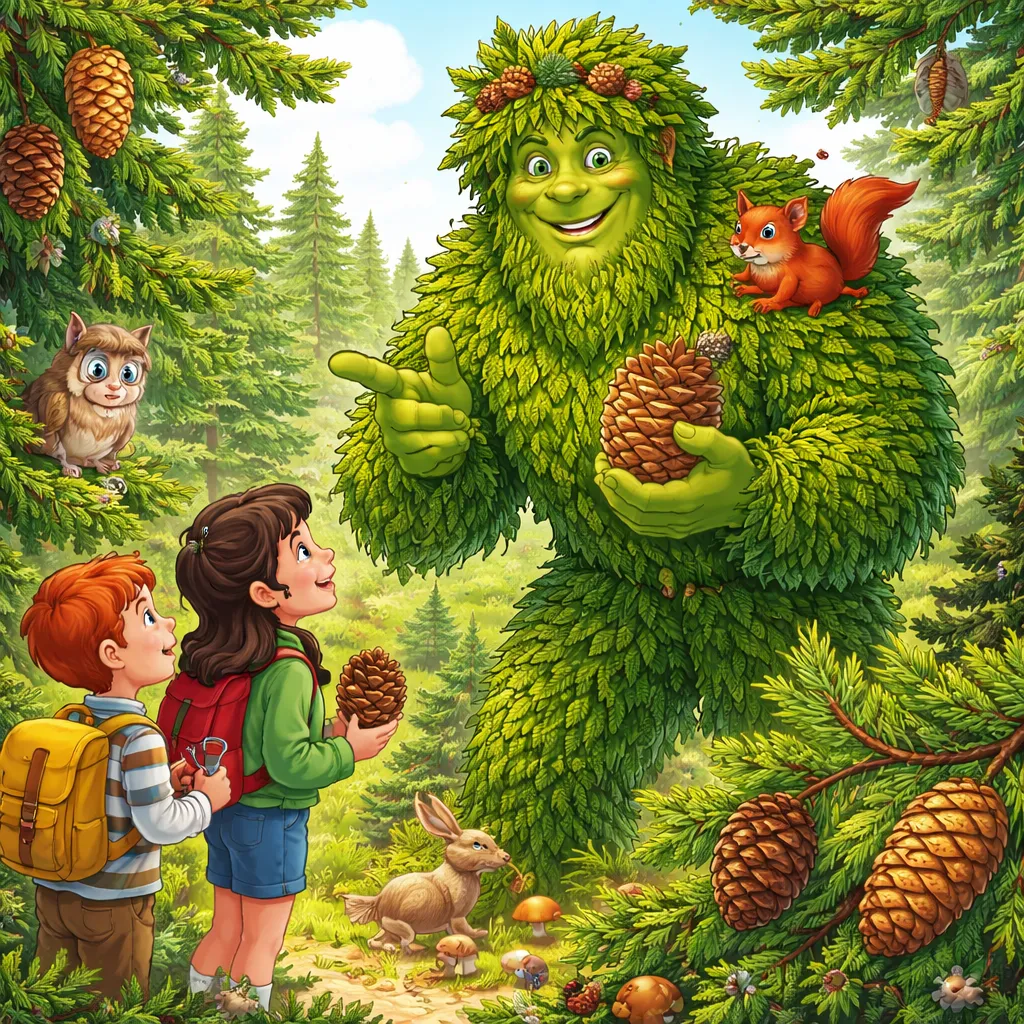

Imagine a tall, pointy green tree that stands proudly even in the snowy winter. Have you seen one? Many people bring a small version of this tree into their homes during a special holiday, decorating it with shiny balls and twinkling lights. This famous tree is the Christmas tree! In the wild, it is a mighty, towering giant that creates whole forests on cold mountain sides. This amazing, tough tree is called a Spruce. Let’s go on an adventure to learn about the Spruce plant.
Let’s Learn the Word! – Open the Treasure Box of Language
Formal Name and Pronunciation Its formal name is Spruce. You can sound it out like this: /spruːs/ (sprooss). It rhymes with “moose”! Say it with me: Spruce. Its name sounds crisp and sharp, just like the feel of its needles.
The Etymology Tale Where did this name come from? A long time ago, English speakers called it the “Spruce fir.” They got the word from an old French name for Prussia, a place in Europe. People thought the best wood for making things like musical instruments came from Prussia, so they called the tree the “Spruce tree.” The name stuck!
Nicknames and Friendly Aliases The Spruce has many friendly names! People often call it the “Spruce Fir” or “Spruce Pine,” even though it is its own special type of tree. Because it is so popular at Christmas, one of its most famous nicknames is the “Christmas Tree.” In a forest, a group of them is called a “Spruce woods.”
Building Your Word Web: Core Parts Let’s meet the parts of the Spruce. Needles are its thin, pointy, green leaves. They are stiff and feel sharp, not soft. Cones are the brown, woody fruits that hold the tree’s seeds. They hang down from the branches. Branches are the tree’s strong arms, growing out from the trunk in layers. The Trunk is the tall, straight, brown main body of the tree. Bark is the rough, scaly skin that protects the trunk. Roots are the hidden parts under the ground that drink water and hold the giant tree steady. A Sapling is a cute, young Spruce tree, just starting its life.
Action and State Words Trees are always busy! A Spruce tree grows very tall towards the sky. Its cones mature and then open to release tiny seeds that flutter in the wind. The tree provides shelter for birds and food for squirrels. It stands firm during strong winds and snowy winters, showing it is resilient and evergreen.
Ecosystem Friends Vocabulary Many creatures live with the Spruce. Crossbills are special birds with beaks that cross at the tips, perfect for prying seeds from Spruce cones. Red Squirrels love to eat the seeds and sometimes hide the cones. Some owls and hawks nest high in its strong branches. Even tiny insects live under its bark.
Cultural Imprint in Language There is a wise old saying: “A society grows great when people plant trees whose shade they know they shall never sit in.” Planting a Spruce is like that—a gift for the future. A beautiful poem by Robert Bridges, “A Spruce Fir in Winter,” describes it: “A spruce fir lifts its pyramidal tower of shade, Alone in its magnificence.” This means the tree stands grand and magnificent, like a green pyramid, all on its own. It shows the tree’s proud and strong character.
Ready for Discovery Now that we know its name and its friends, are you ready to become a nature detective? Let’s discover the Spruce plant’s amazing secrets.
Discover the Plant’s Secrets! – A Nature Detective’s Notebook
The Plant Passport The Spruce belongs to the Pine family, called Pinaceae. Its scientific group is the Picea genus. Picture a giant green pyramid wearing a shaggy coat! Its shape is tall and pointy at the top. The needles are dark green, stiff, and four-sided—you can roll them between your fingers. Tiny, pretty flowers appear in spring. The male flowers are like little red or yellow pouches. The female flowers become the famous cones, starting soft and green, then turning hard and brown. In spring, it grows new, lighter green tips, called “candles.” Its life is a slow, steady dance with the seasons, staying green all year round.
Survival Smarts One super-smart trick is its waxy needles. They have a tiny, white waxy coating. This wax helps the tree keep water inside during freezing winters and dry winds. Its cone scales are also clever. They stay tightly closed when the air is damp, protecting the seeds. When the air is dry and sunny, the scales pop open to let the wind take the seeds flying! Spruce trees love cool places. You can find them in big forests across the cold northern parts of the world, like Canada, Scandinavia, and Russia, and high up on mountains.
Its Role and Gifts The Spruce is a busy food and home provider. Its seeds are a winter food bank for birds and squirrels. Its thick branches are perfect cozy apartments for bird nests. Deer sometimes munch on its young shoots. As an environment engineer, its roots hold the soil on hillsides to stop mudslides. Its forest is a giant sponge that soaks up rainwater and cleans the air we breathe by taking in carbon dioxide.
Stories and Symbols In many cultures, because it stays green in winter, the Spruce is a symbol of hope, everlasting life, and protection. A famous old story from Latvia tells of a magical Spruce tree that brought gifts to good children, an early idea of the Christmas tree tradition! For centuries, people have used its straight, resonant wood to make violins, guitars, and the soundboards of pianos. Its sap was even used to make chewing gum long ago!
Fun “Wow!” Facts Here’s a cool secret: that fresh, clean smell of a Christmas tree or a walk in a Spruce forest? That’s the smell of the oils in the needles! It’s like the tree’s own natural perfume. And why is it the top Christmas tree? Prince Albert, husband of Queen Victoria, made it popular in England in the 1840s, and the tradition spread worldwide!
Time for Action Learning about the Spruce plant is wonderful, but how about growing a friendship with one? Let’s see how you can become a Spruce guardian.
Let’s Grow It Together! – A Little Guardian’s Action Guide
Good for Home Growing? Yes, you can! While wild Spruces become giants, you can grow a dwarf Spruce variety in a large pot on a sunny balcony or in a small garden. It will stay much smaller, like a cute, mini green tower. It needs space for its roots, so a big pot is important.
Little Gardener’s Toolkit You will need a packet of Spruce seeds or one small Spruce sapling from a garden store. Find a large pot with holes at the bottom for water to drain. Get some well-draining potting soil, the kind for trees and shrubs. Have a small watering can ready. A little bit of slow-release plant food made for evergreens is helpful too.
Step-by-Step Growing Guide
Planting Your Friend The best time to plant is in early fall or spring. If using a seed, press it gently into the soil. Cover it with just a sprinkle of soil. If you have a sapling, dig a hole in the pot big enough for its roots. Place it in, fill the hole with soil, and pat it down softly. Give it a good first drink of water to help it feel at home.
Care Calendar Your Spruce will tell you when it’s thirsty. Touch the soil. If the top feels dry, it’s time for a gentle drink. It loves lots of bright sunlight, at least six hours a day. Feed it just once in the spring with a little evergreen food, following the instructions on the package. Less is more!
Watch and Be Friends Get a notebook and be a scientist! Draw your tree each month. How tall is it? What color are the new “candles”? Are there any cones? Write down or draw the little insects or birds that come to visit it. Talk to your tree as you water it.
Problem Patrol If needles turn yellow, it might be getting too much water. Let the soil dry out more between waterings. If you see tiny bugs or webs, spray the needles gently with a mix of water and a tiny drop of mild soap. Wiping the needles with a damp cloth can also help.
Your Rewards and Gifts Your gift is watching a living thing grow because of your care! You will have a green friend for years. This teaches you amazing things: responsibility for another life, patience as it grows slowly, and the joy of nurturing. You are helping our planet, one small tree at a time.
Creative Fun Keep a Growth Diary with your drawings and notes. Make art! Do a bark rubbing by placing paper on the trunk and shading over it with a crayon. Use fallen needles and small cones to create a nature collage picture. Learn the poem about the Spruce fir and draw your own illustration for it.
A Journey of Growth By caring for a Spruce, you are not just growing a tree; you are growing your own heart and mind. You have learned its words, uncovered its secrets, and now you are its guardian.
Conclusion and Forever Curiosity What a journey! You started by learning the word “Spruce,” discovered its secrets as a tough, towering giant, and even learned how to welcome one into your world. You now know the Spruce is not just a Christmas tree; it is a home, a protector of the earth, a musician’s instrument, and a symbol of green hope. Remember, every time you see one—in a forest, in a park, or in your own pot—you can smile. You are someone who took the time to learn about the Spruce plant. Keep looking closely, asking questions, and planting kindness. The natural world is full of friends like the Spruce, waiting for a curious detective like you to say hello.