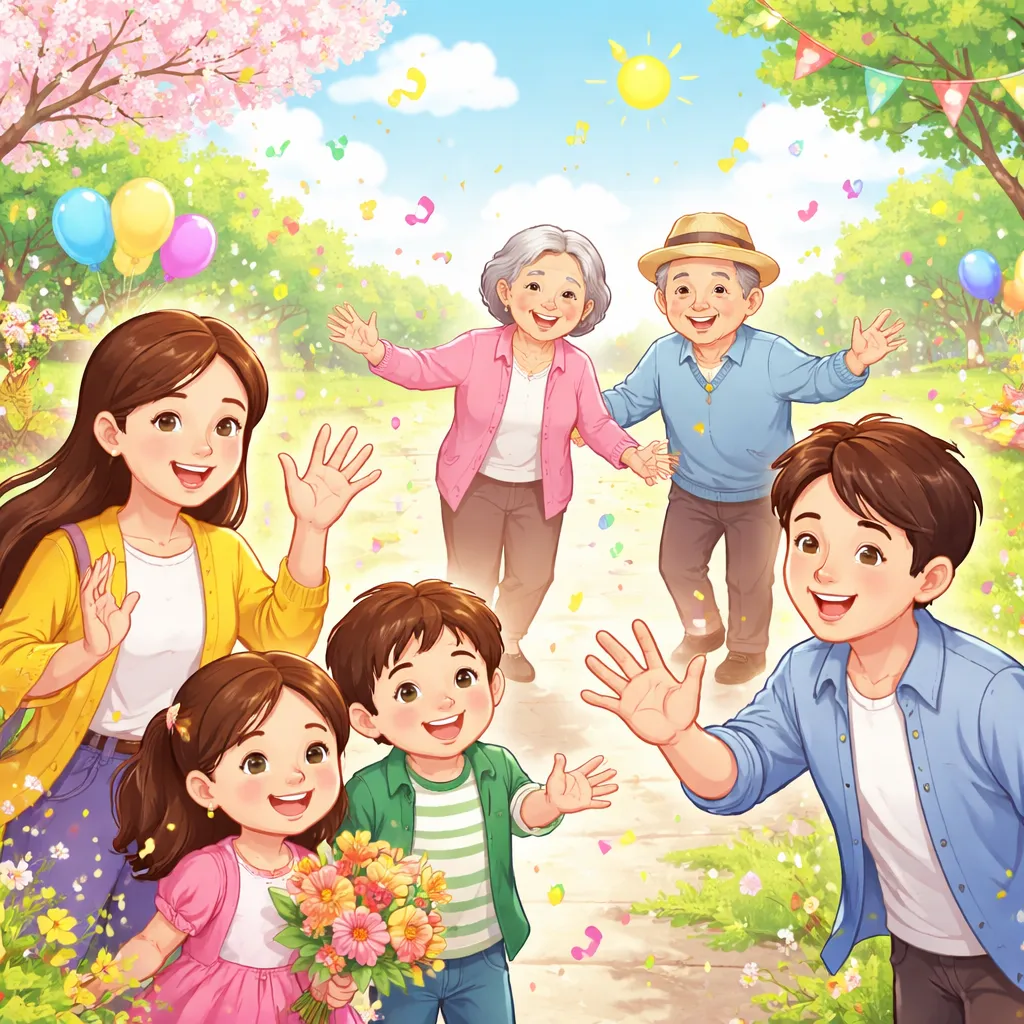

Do you know the feeling when a friend walks into the room and your face lights up with a smile? What’s the first word you say? “Hi!” or “Hello!” In Korea, a country that values respect and warm relationships, the first word you learn is a special one. Let’s open the door to friendship with the Korean Song: Welcome (반갑습니다).
About the Song
Here are the warm, welcoming lyrics of this essential Korean song:
반갑습니다, 반갑습니다
(Bangapseumnida, bangapseumnida)
Welcome, welcome
안녕하세요, 만나서 반갑습니다
(Annyeonghaseyo, mannaseo bangapseumnida)
Hello, nice to meet you
우리 친구가 되어요
(Uri chinguga doeeoyo)
Let's become friends
함께 노래 불러요
(Hamkke norae bulleoyo)
Let's sing together
This song’s original Korean name comes from its key word, “반갑습니다” (Bangapseumnida), which is a formal and polite way to say “I am glad (to see you)” or “Welcome.” It is a fundamental Korean song for beginners. The song is a musical handshake, a way to practice the most important first step in any meeting. The music is often bright, clear, and uplifting. The Korean Song: Welcome (반갑습니다) is a musical lesson in kindness, teaching the building blocks of friendship and respect through simple, joyful singing.
What the Song is About
The song is a step-by-step guide to a friendly meeting. First, we say the key word twice: “Welcome, welcome.” This repetition helps you remember it. Then, we use a full greeting: “Hello, nice to meet you.” This combines a common greeting (Annyeonghaseyo) with the feeling of happiness (Bangapseumnida). Next, we express a wish: “Let's become friends.” The song actively tries to build a connection. Finally, we propose a shared activity: “Let's sing together.” The whole song models a perfect, polite, and warm introduction, turning a simple greeting into the start of a potential friendship.
Who Made It & Its Story
This song is a staple in Korean language education, often found in textbooks and classes for young children and foreign learners. The specific creator isn’t widely known because it is a pedagogical tool created to teach a core cultural value: 정 (Jeong), the deep feeling of connection and affection. In Korea, how you greet someone sets the tone for the entire relationship. The Korean Song: Welcome (반갑습니다) is cherished for three foundational reasons. First, it makes learning a crucial, polite phrase fun and easy through music. Second, it immediately pairs language with intention—you’re not just saying words, you’re offering friendship. Third, its melody is incredibly simple, repetitive, and positive, lowering anxiety and encouraging even the shyest speaker to join in.
When to Sing It
You can sing this song at the beginning of a playdate, greeting your friend at the door. It’s perfect for the first day of a new class or club, to introduce yourself to others. You could also sing it when meeting a relative you haven’t seen in a while, showing your respect and happiness.
The Korean Song: Welcome (반갑습니다) gives us the first tool for connection. But to build a strong friendship, we need more tools. This song is our toolbox for social learning. It teaches us the vocabulary of greeting, the grammar of politeness, and the cultural importance of first impressions. Let’s unpack this toolbox and see what we can build.
What Children Can Learn
Vocabulary
This song teaches the most essential words for social interaction.
Greeting: A polite word or sign of welcome. Saying “hello” is a greeting.
Introduction: The action of making one person known to another. The song is a musical introduction.
Politeness: Behavior that is respectful and considerate. Using “니다” endings shows politeness.
Formality: The following of formal rules or customs. “습니다” is a formal ending.
Relationship: The way in which people are connected. A greeting starts a relationship.
Harmony: A pleasing combination of elements in a whole. A good greeting creates harmony.
Language Skills
This song is a masterclass in using Polite Sentence Endings (“-습니다/-ㅂ니다”). In Korean, the way you end a sentence changes based on who you are talking to and the level of respect required.
What Is It?: Think of these endings as your “politeness markers.” They are attached to verbs or adjectives to make your sentence formal and respectful. “-습니다” is used after a consonant, and “-ㅂ니다” after a vowel.
Finding the Secret: Listen for the “-mnida” sound at the end of a sentence. It’s a clear sign of formal, polite speech. Ask: “Does the sentence end with a sound that shows special respect?”
Using It:
◦   The word “반갑다” (bangapda) means “to be glad.” To make it formal and polite, you change it to “반갑습니다” (bangapseumnida).

◦   In the song, every key phrase uses this polite form: “반갑습니다,” “안녕하세요” (which also ends politely).
Sounds & Rhythm Fun
Listen to the clear, respectful rhythm. The Korean Song: Welcome (반갑습니다) has a measured, steady, and upbeat tempo. The repetition of “반갑습니다” and the clear enunciation help lock the pronunciation in your memory. The melody is designed to be easy and confidence-building. This clear, positive rhythm makes the formal phrases less intimidating and fun to practice, turning a language lesson into a cheerful chant. You can use this same clear, upbeat rhythm to practice any new polite phrase you want to learn.
Culture & Big Ideas
This song is the gateway to Korean 인사 문화 (insa munhwa), or greeting culture. A proper greeting often includes a bow, with the depth of the bow and the choice of words depending on the person’s age and status. A major holiday where greetings are key is 설날 (Seollal, Lunar New Year), when people perform a deep bow called 세배 (sebae) to their elders and say special greetings. The Korean Song: Welcome (반갑습니다) teaches three fundamental ideas. First, Respect Starts First: The first thing you do when meeting someone shows your respect for them and sets a positive tone. Second, Language Builds Bridges: Even a few simple, polite words can open the door to friendship and understanding. Third, Joy in Connection: Expressing happiness at meeting someone (“I am glad to see you”) is a powerful way to make them feel valued.
Values & Imagination
Imagine you are singing this song to someone who is new to your school and feels a little lost. How does your smile look? How does your voice sound? This song teaches you that a warm, respectful welcome is a superpower that can make someone’s day. It shows that friendship begins with a choice to be open, kind, and polite. A simple idea: Tomorrow, try to greet at least three people with your brightest “Hello!” and a smile. See how it changes the moment.
Your Core Takeaways
The Korean Song: Welcome (반갑습니다) is a foundational lesson in respect, connection, and the power of a kind first word. You learned key social words like “greeting,” “politeness,” and “formality.” You discovered the importance of polite sentence endings in Korean, like “-습니다.” You chanted along to the song’s clear, upbeat rhythm. You also connected the greeting to deep Korean cultural practices like bowing on Seollal. Most importantly, the song teaches that a good beginning makes everything better, that polite words are keys to opening hearts, and that expressing joy in meeting someone is the first step in making a friend.
Your Practice Missions
- Be a “Greeting Detective.” For one day, notice how people greet each other (in person, on TV, in books). Do they wave, bow, shake hands? What words do they use? Try to imitate one new, polite greeting you saw. This makes you aware of different social customs.
- Host a “Welcome Party” for a Toy. Choose a stuffed animal or doll and give it a name. Practice the song by singing it to your new “friend.” Then, introduce your toy to another family member or toy using the phrases from the song. This playful practice builds confidence in using greeting language.