
What is the Rhyme "Hickory Dickory Dock"?
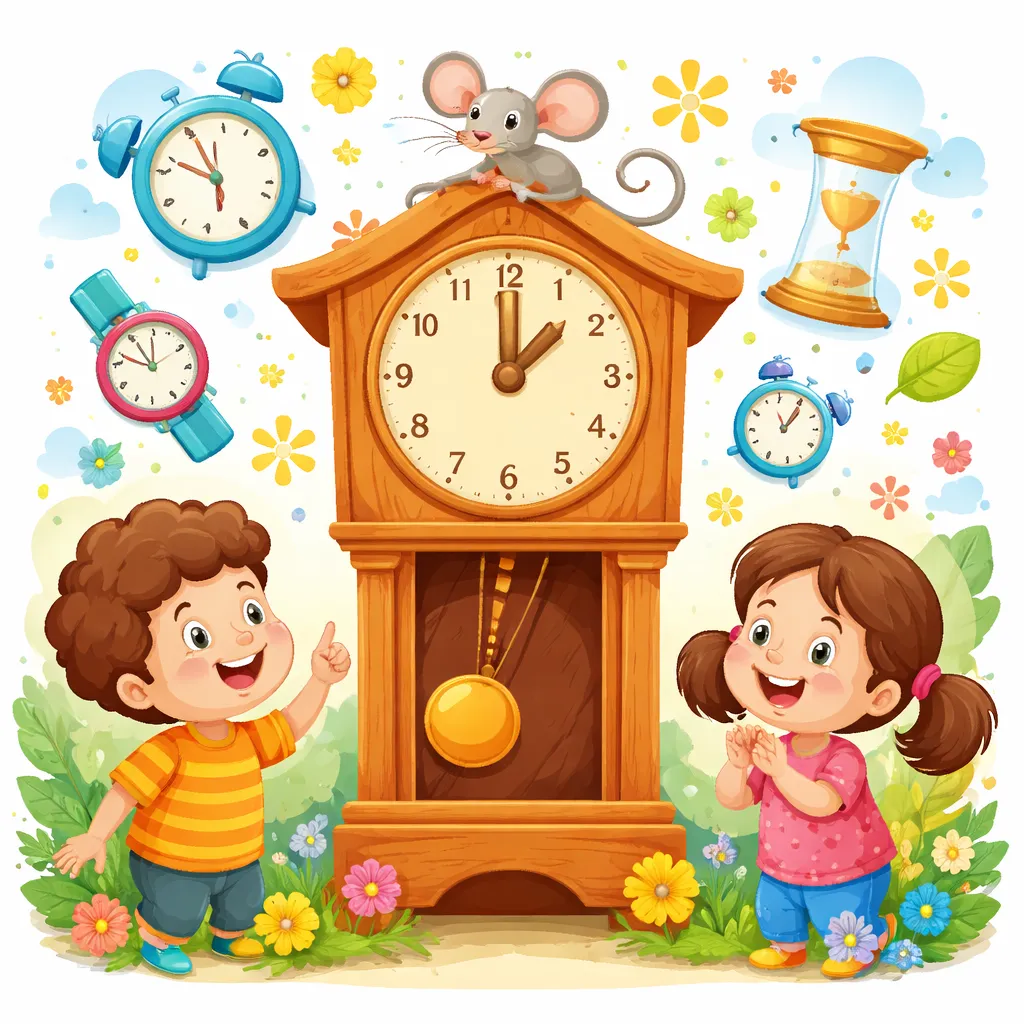
"Hickory Dickory Dock" is a playful and engaging English nursery rhyme that has helped children learn about time for generations. The song tells the simple story of a mouse who runs up a clock. The clock strikes the hour, and the mouse runs down again. The rhyme adds different animals for each hour, making it a delightful way to practice counting and time vocabulary. The English song: Hickory Dickory Dock introduces young learners to the concept of time passing and the sounds clocks make. The repetitive structure makes it easy to remember. The animal visitors keep children excited to hear what comes next. This rhyme turns learning about clocks into a joyful adventure.
The Complete Lyrics of the Nursery Rhyme
Let us look at the words together. The main verse is very simple. Many families add extra verses for different animals and times.
Hickory dickory dock,
The mouse ran up the clock.
The clock struck one,
The mouse ran down,
Hickory dickory dock.
Here are some popular extra verses children love to add.
Hickory dickory dock,
The bird flew up the clock.
The clock struck two,
The bird flew down,
Hickory dickory dock.
Hickory dickory dock,
The cat climbed up the clock.
The clock struck three,
The cat climbed down,
Hickory dickory dock.
Hickory dickory dock,
The dog jumped up the clock.
The clock struck four,
The dog jumped down,
Hickory dickory dock.
Hickory dickory dock,
The bee buzzed up the clock.
The clock struck five,
The bee buzzed down,
Hickory dickory dock.
Vocabulary Learning from the Song
This English song: Hickory Dickory Dock introduces children to important words about time, animals, and movement. Each word builds their understanding of the world.
First, the song teaches time words. "Clock" is the object that tells time. "Struck" means the clock made a sound to mark the hour. "One" through "five" are number words that name the hours. You can point to clocks in your home and practice reading the numbers together.
The song introduces animal names. "Mouse" is the main character. Then children meet a "bird," "cat," "dog," and "bee." Each animal brings its own personality to the rhyme. You can talk about where these animals live and what sounds they make.
Action words appear in each verse. The mouse "ran" up and down. The bird "flew." The cat "climbed." The dog "jumped." The bee "buzzed." These verbs help children describe how different creatures move. You can practice moving like each animal. Run like a mouse. Fly like a bird. Climb like a cat. Jump like a dog. Buzz like a bee.
The rhyming words "dock" and "clock" and "down" create a satisfying sound pattern. Children learn to predict what word comes next based on the rhyme.
Phonics Points to Practice
Let us listen for special sounds in the song. Phonics helps children connect letters to the sounds they hear. This English song: Hickory Dickory Dock gives us many sounds to explore.
Listen to the "h" sound at the beginning of "Hickory." It is a gentle breath sound. Put your hand in front of your mouth and say "Hickory." Feel the air? Practice other "h" words like "happy," "house," and "hello."
The "ck" sound appears in "Hickory," "dickory," "dock," and "clock." It is a sharp, quick sound at the end of words. Say "dock" and "clock" slowly. Feel how your tongue lifts at the back. Practice other "ck" words like "duck," "truck," and "stick."
Listen to the "r" sound in "ran" and "run." It is a rolling sound made with the tongue. Practice other "r" words like "rabbit," "red," and "round."
The "str" blend in "struck" is a bit tricky. Say "struck" slowly. First you hear the "s," then "t," then "r" all together. Practice other "str" words like "strong," "string," and "straw."
Grammar Patterns We Can Learn
This playful rhyme teaches important grammar in a very natural way. The English song: Hickory Dickory Dock introduces past tense verbs, time expressions, and cause-and-effect relationships.
The song uses past tense throughout. The mouse "ran" up. The clock "struck" one. The mouse "ran" down. These are all past tense verbs. You can talk about your own day using past tense. "We ran in the park." "The clock struck lunchtime." "The cat climbed the tree." This helps children understand how we talk about things that already happened.
The song teaches time expressions. "The clock struck one" tells us when the mouse ran down. You can practice using time words in daily life. "We eat lunch when the clock strikes twelve." "Bedtime comes when the clock strikes seven."
The rhyme shows cause and effect. The clock striking causes the mouse to run down. You can talk about cause and effect in everyday situations. "When the timer rings, our cookies are done." "When the sun goes down, we turn on the lights."
Learning Activities to Do at Home
Bringing this English song: Hickory Dickory Dock into your daily life is simple and joyful. Here are some activities you can try with materials you already have.
A wonderful activity is the "Clock Craft" project. Take a paper plate and write numbers around the edge like a clock. Cut two arrows from paper for the hour and minute hands. Attach them with a brass fastener so they can move. As you sing the song, move the big hand to the number for each hour. This makes the concept of time visual and tangible.
Another activity is the "Animal Race" game. Draw or print pictures of a mouse, bird, cat, dog, and bee. As you sing each verse, move the animal picture up the side of a real clock or a paper clock. When the clock "strikes," move the animal down again. This builds understanding of the story sequence.
You can also have a "Clock Sound" adventure. Listen for clocks in your home that make sounds. A ticking watch. A chiming grandfather clock. A beeping alarm clock. Talk about how clocks tell us about time passing.
Printable Materials for Learning
Creating simple printables can make this English song: Hickory Dickory Dock more visual and engaging. You can make these materials together with your child.
Animal and clock cards are perfect for this song. Draw or print pictures of a clock showing different hours. Draw pictures of the animals from the song. Your child can match the animal to the correct hour. The mouse with one o'clock. The bird with two o'clock. This builds number recognition and matching skills.
A Hickory Dickory Dock coloring page is always popular. Draw a large grandfather clock. Add a little mouse running up the side. Let your child color the scene. Add numbers to the clock face together. Display their artwork proudly.
You can also create simple word cards. Write words from the rhyme on cards. "Hickory," "dickory," "dock," "clock," "mouse," "ran," "struck," "down." Show each card as you sing that word. This builds early reading skills in a gentle, supportive way.
A lift-the-flap clock is a wonderful printable. Draw a clock face on cardstock. Cut small flaps over each number. Under the flap for one, draw a mouse. Under two, draw a bird. Under three, draw a cat. Your child can lift each flap as you sing about that hour.
Educational Games for Deeper Learning
Games make learning active and exciting. They encourage children to use the language from the English song: Hickory Dickory Dock in new and creative ways.
The "What Time Is It?" game builds number recognition. Use your paper clock from the craft activity. Set the clock to different hours. Ask your child, "What time is it?" When they answer correctly, make up a new verse together. "Hickory dickory dock, the mouse ran up the clock. The clock struck four, the mouse ran down, hickory dickory dock."
The "New Animal" game encourages creativity. Ask your child, "What animal should visit the clock at six o'clock?" A snake that slithers? A frog that hops? A fish that swims? Create new verses together. "Hickory dickory dock, the snake slithered up the clock. The clock struck six, the snake slithered down, hickory dickory dock." This shows children how they can create their own versions of the song.
The "Clock Sounds" game builds listening skills. Make different clock sounds with your voice or with instruments. Tick tock for a quiet clock. Bong bong for a striking clock. Ding ding for an alarm. Your child guesses what kind of clock is making the sound.
The "Daily Routine Clock" game connects the song to real life. Draw a simple clock showing important times in your child's day. Seven o'clock for waking up. Twelve o'clock for lunch. Three o'clock for playtime. Seven o'clock for bedtime. Sing about each time. "Hickory dickory dock, the child wakes at seven o'clock." This helps children understand their daily schedule and builds time awareness in a meaningful way.
The "Mouse Hide and Seek" game brings the story to life. Hide a small toy mouse somewhere in the room. Give clues using time words. "The mouse ran up at one o'clock. Now it is hiding near something round." This builds listening skills and connects the song to active play.